Oct 312012
 

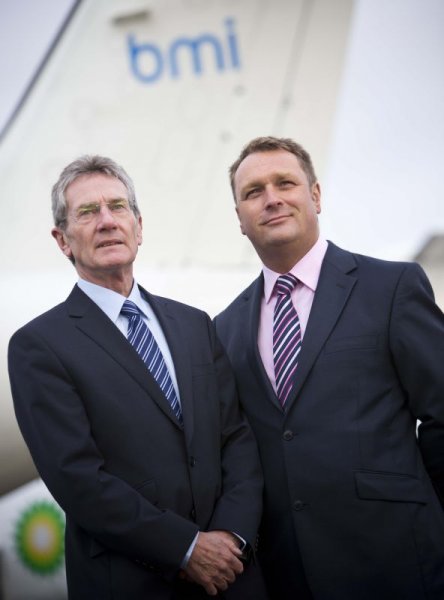
First passengers take off on bmi regional’s inaugural Bristol-bound flight.  With thanks to Dave MacDermid.

Copyright: Newsline Scotland The first passengers have taken off on leading UK business airline bmi regional’s new service from Aberdeen to Bristol after the air operator launched its inaugural flight on Monday 29th October.

The airline’s twice-daily, Bristol-bound flights offer the only direct air link between Aberdeen and Bristol.

To mark this week’s official launch bmi regional presented all passengers boarding the maiden journey and the successive flight, with a certificate to commemorate their trip while musician Julie Brinklow was on hand to pipe the passengers on arrival and departure.

bmi regional chief operating officer Graeme Ross said:

“The number of passengers who have already booked the new Bristol service demonstrates our confidence in it being a popular route.  It also reinforces our commitment to building upon our vital air links between Scotland and England through delivering a value-for-money and excellent customer service.

“As the largest centre of culture, employment and education in the vibrant south-west England region, Bristol attracts a considerable number of visitors and business people from the north-east of Scotland.  We anticipate great demand for our new service which not only provides customers with a greater choice and flexibility for travelling directly to Bristol and offering speedy access to the South west of England.”

One way fares for the new services will start at £52.99 and are on sale at www.bmiregional.com

Aberdeen Airport managing director Derek Provan said.

“Adding this service into our portfolio of flights demonstrates bmi regional’s commitment to the Aberdeen market.  I have confidence that it will be a popular service amongst business and leisure passengers alike, and wish them every success.”

Copyright: Newsline Scotland A second new route announced by bmi regional sees flights commence between Manchester and Antwerp also started on Monday.

bmi regional operates over 600 flights a week throughout the UK and Europe, and has received the accolade of being the UK’s most punctual airline for the seventh year in a row.  The company also operates services from Aberdeen to Manchester, Norwich, Esbjerg and Groningen.

The company is committed to retaining the airline’s iconic brand values and high levels of service which include check-in up to 30 minutes prior to departure, a free 20kg hold baggage allowance and complimentary catering on board.

From today, the BD code used on all of bmi regional’s domestic and international flights will be replaced with BM although flight numbers will remain the same with, for example, BD 1366 becoming BM 1366.

TIMETABLE

Monday – Saturday           

Depart Bristol 07:00             Arrive Aberdeen 08:25

Depart Aberdeen 08:55      Arrive Bristol 10:20

Monday – Friday and Sunday

Depart Bristol 16:40             Arrive Aberdeen 18:05

Depart Aberdeen 18:35      Arrive Bristol 20:00

Apr 062012
 

If you are of the opinion that the City Garden Project controversy was all about what flavour of city centre park Aberdeen should have – think again. There seems to have been a much bigger picture involved here, and the politics are murky.  Mike Shepherd writes.

The power of the print media in shaping opinion

utgsunsquarpic The public referendum has been held, and the City Garden Project won by the smallest of margins: 52-48%. Feelings are still poisonous in the city, as it is clear that a marginal result was swung by dubious means.

On the City Garden Project side, unregistered groups spent a disproportionately large sum of money on campaign material, whereas the officially registered groups were restricted to spending about £8,000 only.

Some of the claims made by supporters of the City Garden Project were outrageous and substantially misleading. One newspaper advert is now being investigated by the Advertising Standards Authority.

Even Aberdeen Council were responsible for punting a justification for the City Garden Project with the questionable claim that a new park could create 6,500 new jobs in the city.

The local papers showed a bias in favour of Sir Ian Wood’s project and framed their reports to show one side in a much better light than the other (“Yes, vote for change” or “No, don’t vote for change”). Ludicrous claims were accepted uncritically – such as oil companies leaving Aberdeen if the scheme did not go ahead.

I had been advised by an expert that:

 “Newspapers are very powerful at shaping public opinion”

and:

 “You will need the support of a PR company during the campaign.”

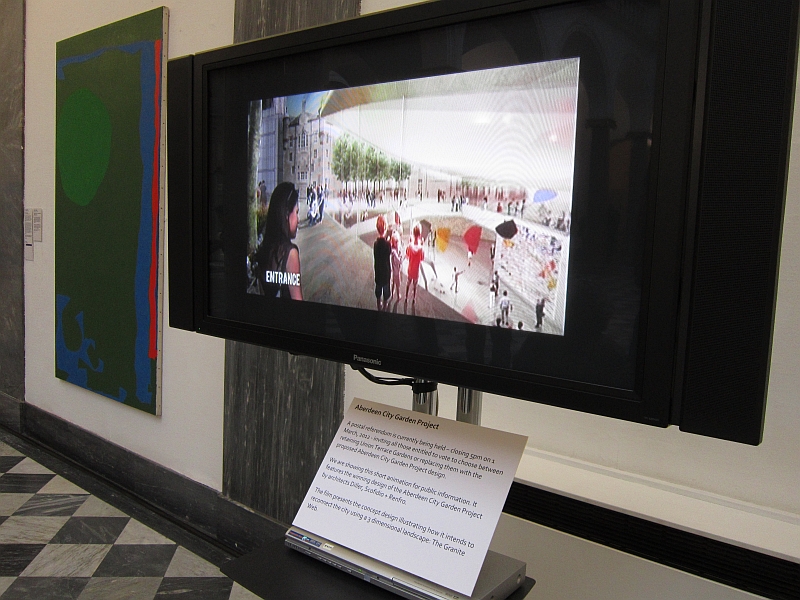
utgscreenpic It was very good advice, but in practice not something that a campaign group of limited influence and funds could realistically put in place. Yet, it was clear from canvassing in the street that the combined effort of relentless advertising, the glossy brochures and the press bias was having an effect.
Whereas many would stop and give me a considered analysis of how they would vote, a large minority were reflecting City Garden propaganda back at me, phrases recognizable from glossy brochures or Evening Express headlines.

Our society today is witnessing a battle between democracy and political lobbyists / PR companies. Out of this, democracy is not doing that well. It’s a shock to see this writ large in Aberdeen, but at least the Gardens Referendum result has made this crystal clear to any thinking person in the city.

Local politics

After two years of campaigning to keep the Gardens, I have been able to observe how local politics works. It is clear that the current council administration is very business friendly and they will tend to make decisions that primarily favour business interests. At just about every council meeting you will hear the phrase “Aberdeen is open for business.”

Local democracy commonly involves a conflict between what business wants and what is in the interests of the general public. For example, if Aberdeen Airport is allowed to land flights at night, Dyce residents will get woken up by the noise. The conflict between business and public interests came to the fore after the consultation on Sir Ian Wood’s scheme two years ago. Over 50 local businessmen wrote to the council asking for the result to be ignored:

‘due to misunderstanding of the project among the public’

and an ‘inability’ to appreciate its impact. The council – to their shame – did this. The current Council administration (an SNP / Lib Dem coalition) appears to favour business almost every time.

There are a number of reasons why business gets its own way with the council. Many councillors are instinctively business friendly and will tend to support projects that are favoured by local commercial interests. This is certainly true of the Conservatives on the council and of many councillors from the other parties too.

There is also a powerful business lobby. Businessmen make up two thirds of the Aberdeen City and Shire Economic Forum (ACSEF), a “public-private partnership that drives economic development in the region”. Funded by both Aberdeen City and Aberdeenshire Councils, ACSEF is a non-elected body that have been given a significant degree of control over local economic policy. There is no doubt that ACSEF exerts power and influence over the activities of both councils.

  advanced societies work by a system of checks and balances between moneyed interests and the public regard

ACSEF were involved with the City Garden Project in the early days and described it as one of their flagship projects. Two of the board members, including the Chairman Tom Smith, are directors of the Aberdeen City Garden Trust, the group that organised the architectural competition and who hope to take the project forward to completion.

Extensive networking appears to go on amongst the “great and the good”. Politicians, local businessmen, council officials and senior figures in local organisations turn up and meet at parties, functions, charity events and business meetings. One Freedom of Information request gives an indication of how much hospitality is provided to council officials for instance:
http://www.whatdotheyknow.com/request/76531/response/199821

To the worldly wise, this will not come as a surprise. However, advanced societies work by a system of checks and balances between moneyed interests and the public regard. This does not appear to be working too well in Aberdeen.

The SNP and the City Garden Project

The SNP have been intimately involved with the City Garden Project since its inception. Alex Salmond was present at the project launch  in 2008.
http://www.eveningexpress.co.uk/Article.aspx/933616

But only recently have both Alex Salmond and Callum McCaig, the SNP leader in the council, explicitly endorsed the City Garden Project.

Yet, the majority of SNP councillors have supported it throughout (the notable exception being Clr. Muriel Jaffray). This is clear from the voting records every time the project has come up for debate in the Council. The SNP support has been instrumental for the progress of the City Garden Project through successive council votes.

  Major businessmen such as David Murray, Brian Souter, Jim McColl and Martin Gilbert have now endorsed the SNP.

The SNP have a reputation for populist politics and it may seem surprising that they have embraced such a controversial project for the city. I believe that there is a much bigger picture here, and one that takes precedent over local politics. The SNP are essentially a single-issue party; they want independence for Scotland. The realpolitik of the SNP is that much of what they do is focussed towards this end.

A key aim for the SNP has been to secure the support of major business figures in Scotland. This is partly financial; the party has no natural source of funds apart from membership fees, but they are also trying to secure influence leading up to and beyond any independence date. Major businessmen such as David Murray, Brian Souter, Jim McColl and Martin Gilbert have now endorsed the SNP.

Sir Brian Souter, founder of the bus company Stagecoach, caused controversy when he donated £500,000 to the SNP in 2007. Shortly afterwards, the SNP dropped an election commitment to bus re-regulation, although they denied that there was any connection to Sir Brian Souter’s donation.

Sir Ian Wood has not given open support to the SNP, yet the SNP continue to court the billionaire’s favour. Not only has Alex Salmond given his own backing to the City Garden Project, the machinery of Government has also been used to bankroll the scheme.

Scottish Enterprise funded the public consultation two years ago and also allowed grant money to be used for the technical feasibility study. Although the public rejected Sir Ian Wood’s project in the consultation, it didn’t stop Scottish Enterprise from giving Aberdeen City Garden Trust £375,000 of public money from its available funds for major infrastructure projects.

Another niggly problem has been the concerns of Audit Scotland

The Scottish Government are keen to provide investment money for the project through TIF funding. Yet it has been established that the initial proposal did not rank very highly by comparison to other investment and infrastructure projects elsewhere in Scotland.

The Scottish Futures Trust, who carried out the ranking, has refused to make their calculations public in spite of Freedom of Information requests to do so. Another niggly problem has been the concerns of Audit Scotland, who have questioned the long term capability of the indebted Aberdeen Council to pay back a risky loan for the project.

The proposed use of valuable investment and infrastructure funds for something as trivial as building a new park is shocking. The business case is dubious and the council can’t afford the risk. Political considerations seem to have taken precedence to a strict business evaluation on the Aberdeen TIF case.

Sir Ian Wood discussed independence recently and gave an indication of what he wants from the Scottish Government:

“The Wood Group will not endorse a Yes or No vote on independence. But Sir Ian added: “What’s key is the extent to which our clients, and to some extent ourselves, anticipate that a Scottish Government would continue with a similar oil and gas policy to the UK.

“The suggestion right now, from the discussions I’ve heard, is that there’s a lot of overlap between the present Scottish Government’s thinking on the development of the oil and gas industry and the UK government’s thinking.”

He went on:

 “What’s important – and I think the First Minister realises this – is that they must provide as much clarity as possible over the next two years towards the vote in 2014, so that we minimise the uncertainty.”
http://www.scotsman.com/captains-of-industry-and-finance-join-clamour-for-clarity

I have no doubt that this will happen.

The SNP are hoping to secure a majority at the council elections on May 3rd. This is possible, but as a one-issue party they tend to do better in national elections than local elections. They are also heavily identified with the Union Terrace Gardens issue and this appeared to have cost them votes in the Scottish elections last year.
http://aberdeenvoice.com/2011/05/the-election-the-utg-effect/

If they do not get a majority, this raises the intriguing possibility of an administration run by a Labour-SNP coalition. The Lib-Dems are likely to see their vote collapse outside the West End of the city. The Labour group are vehemently opposed to the City Garden Project and it could be that a condition for agreeing to form a coalition is that the scheme is dropped.

The “Union” in Union Terrace Gardens refers to the union of the United Kingdom and Ireland in 1800. Perhaps it is ironic that the park has ostensibly become a pawn in the big game of Scottish independence. It would be immensely sad if this was the case. Aberdeen’s heritage could end up sacrificed for the sake of political wheeling and dealing.

This would not bode well for a future Scotland. As Paul Scofield, playing Thomas More, said in A Man For All Seasons:

“I think that when statesmen forsake their own private conscience for the sake of their public duties, they lead their country by a short route to chaos.”

Dec 152011
 

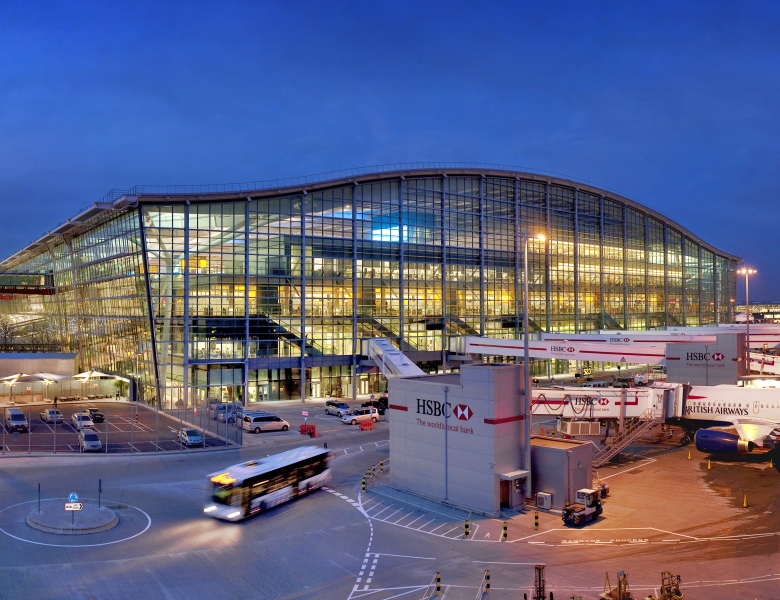
terminal5pic With thanks to Dave Macdermid.

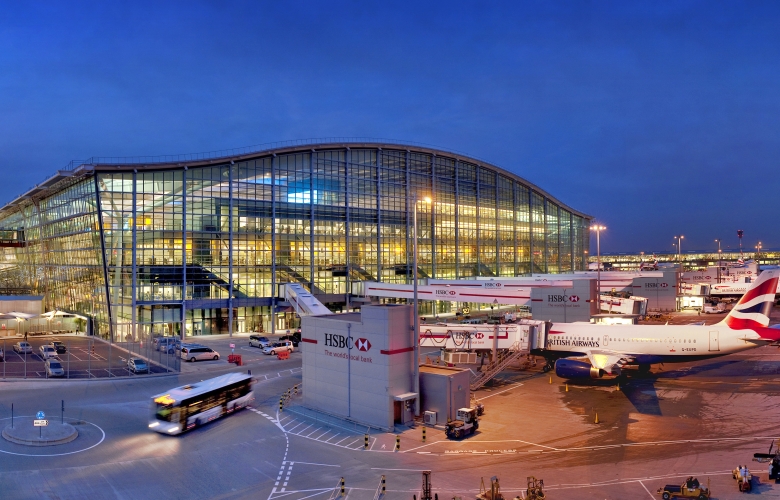
The campaign undertaken by Nestrans, the statutory regional transport partnership for the North-east of Scotland, to urge the European Union to exert powers to protect the current level of slots to and from Aberdeen at London’s Heathrow Terminal 5 has received the support from the airports concerned.

Derek Provan, Managing Director at Aberdeen Airport, commented.

“The regular connection into Heathrow is essential to the area as it gives access to one of the major international airline hubs and also a short connection into the centre of London. Scotland is geographically distant from the main European hub airports and, particularly in the north of the country; we have no viable surface access to them. We are also seeking to rebalance our economy by growing our exports, increasing inward investment and attracting more tourists, in line with the UK Government’s Economic Strategy.

“We are building on the increasing exports derived from the knowledge and skills base of our energy supply chain expertise and from our premium food and drinks industry, both of which are making a substantial contribution to the UK economy with significant potential for growth.

“In addition, it gives easy access from the south to the international businesses located in and around Aberdeen and the economic benefit of having this link cannot be overestimated.”

These views are complemented by BAA Strategy Director Andrew Macmillan, who is based at Heathrow.

“Heathrow’s position as the leading international hub airport in Europe gives the UK, and the companies that operate here, direct access to the global markets upon which strong economic growth depends. Connectivity has been central to building and maintaining the UK’s global trading position over the past three hundred years, and it is essential in these difficult economic times that we maintain and improve links between as many different economies as possible.”

Nestrans is collating the views of businesses, politicians and individuals in advance of the UK Government’s aviation consultation, from which the EU will consider options for aviation policy going forward.

Nov 082011
 

nestrans1 Issued on behalf of Nestrans by The BIG Partnership. With thanks to Dave Macdermid. 

Nestrans, the statutory regional transport partnership for the North-east of Scotland, has written to the Department of Transport (DfT) as part of the UK Government’s aviation consultation and in response to questions posed by the DfT in its scoping document looking to develop a sustainable framework for UK aviation.

Chair of Nestrans Ian Yuill believes any future air travel policy implemented by the European Union, which is currently considering changes to the landing slot rules, has the potential to make a hugely significant impact, both positive and negative.

“In what was a fairly detailed response, we have highlighted the impact aviation has on our economy and the impact of our economy in the north east on the UK economy as well as the different impacts of aviation for the peripheral regions of the UK compared to the more central areas where surface transport is a viable option.

“While we welcome the proposed introduction of High Speed Rail to central Scotland, it is not, and never will be, viable to extend it to the North east and therefore it is absolutely crucial that existing air links between ourselves and Heathrow are protected. As a region, our economy is dependent on international travel and the logical hub to achieve this is Heathrow.

“Within our submission, we have included many key statistics including the fact the percentage of Scotland’s air traffic through Aberdeen is 13.3% for a population catchment of 8.9% while the proportion of business travellers is 56% compared to 30% for Edinburgh and Glasgow.

“The link between Aberdeen Airport and Heathrow is particularly important in several ways, including access to other parts of organisations, particularly headquarters functions, for inward investors; access to markets for indigenous companies and for inward investors seeking to use a region as a base of operations within a world area; access to suppliers of goods and services from around the world and access to knowledge partners and complementary businesses.

“The recent news that BA is set to purchase BMI, and the likely resultant consolidation of services only highlights the need to be able to protect the current BA service of six rotations each weekday between Aberdeen and Heathrow and we are sincerely hoping this is given due and proper consideration by the Government as part of this consultation which will impact future air policy.”

The EU is currently considering the European regulations separately from the UK policy consultation and any UK policy developed will have to suit any amended EU rule. 

Nov 082011
 

terminal5pic  Air travel is crucial for business investment and for Aberdeen’s future as an energy hub.  The Big Partnership explains all on behalf of NESTRANS in a press release sent to the Aberdeen Voice.

Leading bodies in the tourism industry have backed the campaign undertaken by Nestrans,  to urge the European Union to exert powers to protect the current level of slots to and from Aberdeen at London’s Heathrow airport.

Andrew Martin, of the Scottish Centre of Tourism, is under no illusion as to the importance of the service.

“For Aberdeen to remain a significant business centre, the city has to have fast and easy links to the capital. Major oil and gas companies need to be able to send their executives to London and likewise the energy capital has to be able to receive business tourists into Aberdeen.

“While Aberdeen has been successful with business tourism and the four day midweek market and the three day leisure market is vitally important. Leisure tourists from Heathrow are vital for this high spending niche.

 “The link is also crucial for the conference market, vital to the local economy, while most international tourists route through Heathrow.”

These views are echoed by Stephen Gow, Chairman of the Aberdeen City and Shire Hotel Association.

“The regular connection into Heathrow is essential to the area as it gives access to one of the major international airline hubs and also a short connection into the centre of London.

“In addition,  it gives easy access from the south to the international businesses located in and around Aberdeen and the economic benefit of having this link cannot be overestimated.”

In addition to collating the views of businesses and  individuals, Nestrans is currently looking for politicians to add their weight to the debate in advance of the UK Government’s aviation consultation, from which the EU will consider options for aviation policy going forward.

Oct 272011
 

Local organisations are backing calls from NESTRANS, the statutory regional transport partnership for North East Scotland, to urge the European Union to exert powers to protect the current slots enjoyed by Aberdeen at London’s Heathrow Airport, particularly in light of the proposed development of High Speed Rail to Edinburgh and Glasgow. With thanks to Dave Macdermid.

Rita Stephen, ACSEF Development Manager stated:

terminal5pic “The North-east of Scotland is a truly global economy, largely due to the oil and gas industry, which accounts for around £7.2 billion of economic output from this region.
Our export success relies on the ability of our companies to reach their markets easily and efficiently. In most cases this is through a hub airport and Heathrow is a vital hub for many of the oil and gas provinces around the world.”

“This is underlined by the fact that Aberdeen Airport has an exceptionally high percentage of business travellers – 56% compared to around 30% for Edinburgh and Glasgow.

“The economic consequences for both Aberdeen City and Shire and the UK as whole of losing Heathrow as a hub would be disastrous, particularly at a time when the Government is relying on export activity to help drive the country out of recession.

“Air travel reduces peripherality and while efforts are rightly being made to switch to more sustainable modes of transport, locations such as Aberdeen and Inverness, must continue to have reliable and regular access to an airport hub.”

Ian Diamond, Principal and Vice Chancellor, University of Aberdeen:

“The University of Aberdeen is in the top one per cent of the world’s Universities, As such it competes and collaborates in a global market. Frequent and easy access to Heathrow is a critical to enable our staff to collaborate with the world’s best and to access the leading conferences; and for our students, many of whom come from around the world or from the south of England.

“Without these regular links to Heathrow and thence elsewhere in the world it would become increasingly difficult to recruit and to retain the best staff and students.”

Executive Chairman at Romar International, George Yule:

Romar is a local company expanding its business interests into more overseas markets, as are many other Aberdeen-based SME’s, and it is important that effective links to international hub airports are retained in NE Scotland, otherwise our geographic positioning will become a real hurdle to doing business on an international scale.

“This area contributes significantly to the UK economy and there is more that companies such as Romar can do – but we need the connections to the likes of Heathrow for incoming visitors to our business, many of whom fly into Heathrow from overseas locations.”

Duncan Fraser, Dons’ Chief Executive:

“Given our location, we sometimes have to really ‘sell’ the idea of coming to Aberdeen from players outwith this country and any dilution of the air links between Aberdeen and Heathrow would seriously damage the attraction to players moving forward. Rob Milsom, who we signed from Fulham, is a case in point while the connectivity from London was a significant factor to the likes of Rory Fallon, whose family are in New Zealand.”

In addition to collating the views of businesses and individuals, NESTRANS is currently looking for politicians to add their weight to the debate in advance of the UK Government’s aviation consultation, from which the EU will consider options for future aviation policy.

Oct 212011
 

Individuals and organisations throughout the North of Scotland are being encouraged to get behind a campaign to ensure current connectivity to and from London and the rest of the world is maintained in future years. In this piece issued on behalf of Nestrans & HITRANS by The BIG Partnership, Nestrans sets out its position.

terminal5pic2 Nestrans and HITRANS, the statutory regional transport partnerships for the North-east and Highlands and Islands respectively, are hoping to persuade the European Union to exert powers to protect the current slots enjoyed by Aberdeen and Inverness, particularly in light of the proposed development of High Speed Rail to Edinburgh and Glasgow.

Chair of Nestrans Ian Yuill explains the rationale behind the move:

“The business case for High Speed Rail being extended to Edinburgh and Glasgow is significantly stronger than the case for London to Birmingham and supporting such an extension would provide significant benefits to London and England. This will not only come from increased connectivity between the central belt of Scotland and the North and Midlands of England benefiting both sides of the border but will also reduce very substantially the numbers of flights between the major cities of the UK and London. This reduction in flights will free up slots at London airports that can be used for other destinations.

“Nestrans and HITRANS have argued that for the small proportion of the country’s population not directly benefiting from this huge national investment, that proportion whose surface journey time to London would be over the recognised three hours cut off time, which would include Aberdeen, Inverness, Belfast, Newquay, Isle of Man and the Channel Islands, alternative arrangements should be made to secure the connectivity required.

“This would mean securing access for existing landing slots at south east airports for these peripheral regions and, speaking on behalf of the North-east of Scotland, it cannot be overemphasised how important an issue this is. This is not about improving the level of service and through it access to our key markets but maintaining it at a time when the critical south east airports are full and pressure is on regional services to give way to long haul routes. “

In addition to collating the views of businesses and individuals, Nestrans and HITRANS are currently looking for politicians to add their weight to the debate in advance of the UK Government’s aviation consultation, from which the EU will consider options for aviation policy going forward.

HITRANS chairman Duncan MacIntyre said:

“The whole country can benefit from the massive investment in High Speed Rail and the bright economic future of the North of Scotland can be achieved to the benefit of the UK economy as well as locally if our air connectivity is not compromised.

“Our global businesses are making it clear that they wish to anchor in the North but that this is a decision that will be influenced greatly by their ability to do business from their current location.”

Oct 012010
 

By Bob Smith.

louse Trump flees in fae New York toon
Maybe wi flechs on University goon
Some micht say the “louse” is the wearer
Nae his claes fit are the bearer

New York city it is bug infested
At Dyce Airport Trump should be tested
Ti see if he is the cairrier o
Thae beesties fit loup ti an fro’

The thocht o flechs gyaan fae fowk ti fowk
Is aneuch ti mak some hae a cowk
Fit fin Trump is gettin’ his degree
A louse it lans on a wifie’s knee?

Her skirls wid be heard up in Turra
As she leaves the hall in a hurra
Itchin’ ti scratch the bit fit’s yockie
Fowk’ll think she’s deein’ the hokey cokey

The flech o coorse is haein’ gran’ fun
As aa the fowk are on the run
Trump’s fans they micht hae a grouse
The rest o us toast “Ti A Louse”

Here’s ti you wee loupin’ beestie
Awa ye go an hae a feastie
On Donald’s bleed hae a gweed sook
Maybe on his erse ye’ll raise a plook

©Bob Smith “The Poetry Mannie “ 2010

See also Former Principal Returns Award

Jul 022010
 

By Simon Gall and George Chubb.

The trial of a group of 9 climate activists came to a close last week in Aberdeen with the jury finding them guilty of Breach of the Peace. In March 2009, two protesters climbed onto the roof of the terminal building at Aberdeen Airport while 7 occupied a runway and set up a mock golf course in a direct action against it’s planned expansion, C02 emissions and Donald Trump’s enormous planned golf course and hotel complex.”(1)

The action caused delays to 10 flights as well as “23 helicopter flights from the North Sea oil field operator CHC.”(2). A spokesman for Aberdeen Airport described the action as “dangerous and irresponsible”(3) while another stated that “the actions of these individuals was not acceptable.”(4)

The occupation came to an end when the activists were informed that their actions had delayed an air ambulance from collecting a child from the Islands but according to Steven Wright of Gama Aviation Ltd. – the firm which operates the only Government funded Air Ambulance service in the UK – the “flight was scheduled to take off at 8.00am this morning, but in fact took off about 8.35am, but this was due to our operational delay by the medics and not the protestors. This incident has had no financial or life threatening or operational impact on our operation. I have no complaint regarding this matter.”

The group were to be charged with Vandalism but, when staff at the airport reported that there was no sign of damage to the roof and the prosecution was unable to prove the group had damaged the fencing, the charges were dropped.

The protesters aimed to defend themselves through the necessity clause, which states that if an action taken was necessary to prevent something worse from happening it will not be deemed a punishable offense. The argument was that it is becoming necessary for people to stand up and take action on climate change or we will soon hit the ‘point of no return’.

What made this case remarkable was that climate experts from all over came to defend the actions of Climate9 – part of the pressure group Plane Stupid – and to give evidence to the jury about why C02 emissions must be swiftly and drastically cut. The scientists focused on the effects of global warming and warned that the UK Government’s environmental targets are not ambitious enough, Dr. Alice Bows explained “The UK Government’s Committee on Climate Change policy of 80% reduction in emissions by 2050 only gives us a 50:50 chance of avoiding dangerous climate change. You wouldn’t go to sleep in a house that had a 50:50 chance of burning down in the night, so we need even tougher targets. In fact we need a complete de-carbonisation of the economy in the next few decades. Because we need to tackle emissions right now, the actions of both governments and individuals are important.”

Dr. Geoff Meaden, an expert in Biogeography and Coastal Hazards added “At present I see little evidence that governments at all levels are taking sufficient action on climate change. Therefore, like those who have committed civil disobedience in the past I believe that groups such as Plane Stupid must take every opportunity to bring the urgency of climate change to the public attention.”

The Climate9 were found guilty of Breach of the Peace on June 25th 2010 and will be sentenced in August. For more information on the trial and the group visit www.climate9.com

(1) Johnny Agnew – climate9

(2)  http://www.guardian.co.uk/environment/2010/jun/15/plane-stupid-protesters-air-ambulance-aberdeen

(3) Spokesman for Aberdeen Airport

(4) http://news.bbc.co.uk/1/hi/scotland/north_east_orkney_and_shetland/10417813.stm