Nov 222012
 

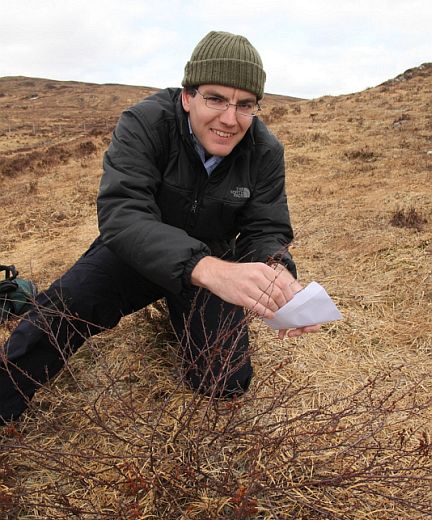
richard_buggs__dwarf_birch_feat Scientists have announced the sequencing of the entire genetic code – the genome – of a dwarf birch from Trees for Life’s Dundreggan Estate near Loch Ness in Glen Moriston, where the conservation charity is working to conserve a natural population of the species. With thanks to Richard Bunting.

Dwarf birch (Betula nana) is a nationally scarce species in Britain, occurring mainly in small populations on Scottish mountains.
The genome sequencing – a laboratory process identifying the complete DNA sequence of an organism – lays the foundations for genetic research into the birch genus, which includes up to 60 tree species.

This will benefit studies on the conservation of dwarf birch. Project lead scientist Richard Buggs, based at Queen Mary University of London, told Aberdeen Voice:

“Increasing our understanding of tree genomes is essential for our long-term ability to conserve and grow tree species in the UK.”

 Award-winning charity Trees for Life’s executive director Alan Watson Featherstone added:

“This is a tremendous breakthrough. Together with our woodland restoration work at Dundreggan, where we have one of the greatest concentrations of dwarf birch in Scotland, it will do much to benefit the conservation of this important species.”

Dwarf birch forms part of the mountain tree line, where woodland gives way to open moorland. This tree-line contains a unique assemblage of species and should be a miniature, waist-high species-rich woodland; in reality, it has become a ‘forgotten forest’ in the UK, overgrazed and in poor condition.

As part of its Million More Trees campaign, Trees for Life has launched an appeal to restore the ‘wee trees’ that form the natural tree-line, including those growing at their altitudinal limit as well as specially-adapted species such as dwarf birch.

By restoring the ‘wee trees’ of the Caledonian Forest, the charity also hopes to create a woodland link between Glen Affric and Glen Moriston, providing an expanded habitat for many species.

A healthy population of dwarf birch will also benefit the black grouse living along the woodland edge, and ptarmigan and golden plover nesting on the upland moors.

“Dundreggan offers a unique opportunity to restore the complete tree-line community and all its species,” said Alan Watson Featherstone.

The genome sequencing project was funded by the Natural Environment Research Council, and is being published in the journal Molecular Ecology.

Queen Mary University of London, Trees for Life and Highland Birchwoods are partnering to supervise PhD student James Borrell, who will survey the genetic diversity of dwarf birch populations in Scotland over the next three years.

Trees for Life has demonstrated the benefits of conservation action for this declining tree species.

In 2002 they fenced an area of dwarf birch to protect it from grazing deer, with astonishing results: dwarf birches now grow healthily above the surrounding vegetation and support a unique assemblage of species, including a rare moth that is a conservation priority for Scotland and three different sawflies, two of which were unknown in the UK until they were discovered at Dundreggan.

Such finds have established the Inverness-shire estate’s reputation as a ‘lost world’ for the Highlands.

The charity’s work at Dundreggan is a key part of its restoration of Scotland’s ancient Caledonian Forest to a spectacular wilderness region of 1,000 square miles to the west of Loch Ness and Inverness.

You can support Trees For Life by funding dedicated trees and groves, while the charity’s Conservation Weeks allow people to gain practical conservation experience in beautiful locations. For more details, see www.treesforlife.org.uk or call 0845 458 3505

For details of Trees for Life’s Return of the Wee Trees Appeal, please visit http://treesforlife.org.uk/tfl.appeal_dwarfbirch.html

  • Comments enabled – see comments box below. Note, all comments will be moderated.

Oct 082012
 

There are three films I’ve really enjoyed this year, all seen at Vue.  Prometheus comes tops, easily, along with Batman: The Dark Knight Rises, an unexpected surprise for me. And then there’s Looper. So says Andrew Watson who mans the Voice celluloid review desk this week.

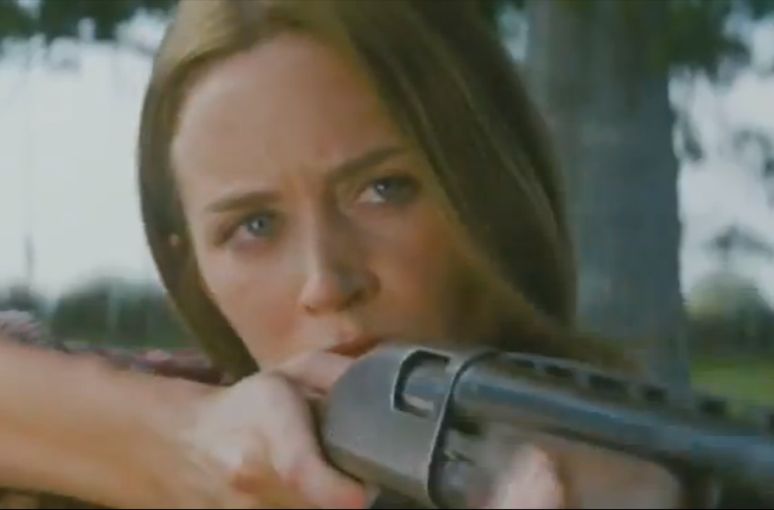
looper Looper is a mind-bender, with a script that twists and turns to its conclusion I will try to do its complexity justice without giving away too much of the plot, to help give you the will to stick with it until the very end.
Joe, played by Dark Knight Rises actor Joseph Gordon-Levitt, ekes out an existence as a mercenary of sorts.

He obliterates, from point-blank range, mob hits teleported from the future into the present and is more of a dispatcher than mercenary. He disposes of the bodies and therefore any evidence connecting his criminal employers with these disappearances. One of the corpses is actually Joe’s future self, played by Bruce Willis!

Very early on, I was quite impressed. Maybe I’m a bit dim in this respect, but I was honestly trying to see where Bruce Willis’s character would fit into the storyline. Joe seemed like the bad guy in the trailers, but would he turn out to be the cold-blooded killer, albeit complete with three-dimensional, if not redeemable, traits?

Thankfully, there are varying degrees of good and bad between his present and future selves; neither character, as the scales weigh alternatively up and down throughout the film, seems dastardly enough to make such judgements anything but a close call. All part of the film’s complexity.

All films need lighter moments and Looper has them. Jeff Daniels, best known to me for Dumb & Dumber, plays head minion Abe, who only lords it over Joe and company in the present because his superiors in the future have positioned him there. He doesn’t quite convince in displaying the menacing aspects of his character and is perhaps deliberately cast in the role for that reason, funny being something he does well.

His poor son, some slack-jawed paragon of ineptitude with a large gun, acts as his foil in a way you’d think Daniels’ comic sparring partner of yesteryear, Jim Carrey, could just about replicate. Both, particularly Daniels, are reminiscent of the perennial jobbing actor, desperate to avoid being bullied into typecast roles over and over again.

How can actors like John Goodman, for example, play roles like badass black market gun dealers in Kevin Bacon’s Death Sentence when they’ve already starred as Fred Flintstone? Probably not Goodman’s finest performances, but certainly the two I seem to remember.

Looper also tackles the fate versus freewill argument

I suppose, paradoxically, that the little comic nods here and there give a sense of reality, despite the film being way, way into the realms of science fiction.

Life’s not all doom and gloom, and we don’t inhabit a world where people want to be super-serious and watch films like Inception all the time.

Don’t get me wrong, that’s a fine film but my only reservation about Looper was that it would surely just be another Inception? There are similar, intertwined aspects in both films, but, thankfully, another Inception it isn’t.

Rounding off my attempt to sell you this film, I feel you should know that thematically it tackles some of my favourite subjects, including the nature versus nurture debate.  There’s a chosen one in the film too and Looper also tackles the fate versus freewill argument. Is it destiny to save or wreck humankind, or can conscious efforts be made to change a supposedly inevitable future? The way these two issues are conflated appealed to me immensely.

On the other hand, some of the dialogue is clunky. Swearing should be an art form, not something thrashed through by tongues of unthinking thespians, and there’s a Freudian slip by the scriptwriter implying accidental incest. I’ll let you weather that storm, one of many, lateral and literal; yet one of few that’s aesthetically offensive to the filmgoer’s eye.

Oct 082012
 

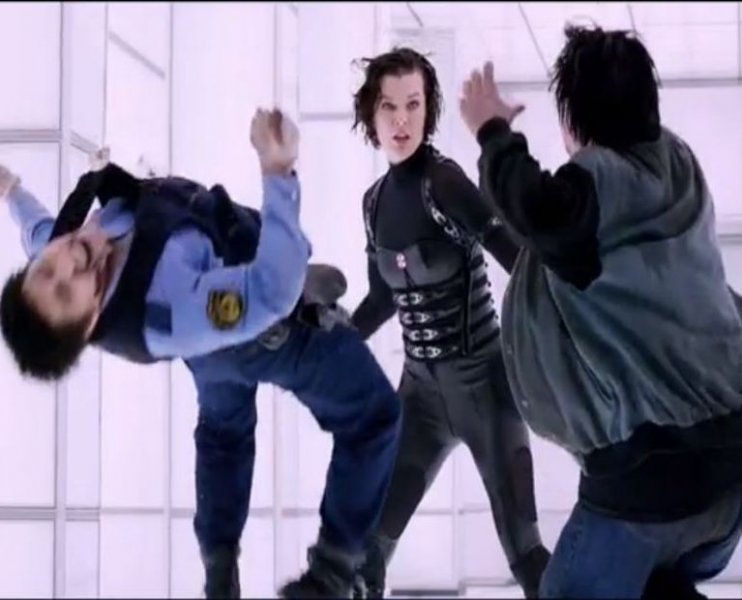
Resident Evil: Retribution, on release at Aberdeen’s Vue Cinema, has its moments, but, latterly, seems to descend into realms of the ridiculous, a departure from the franchise’s previous four outings, writes Andrew Watson.

milla-jovovich3 I hesitate to describe it as a saga, because this film is principally a money-making exercise; one which doesn’t seem to have the decency to stay even remotely faithful to the B-movie but superbly intriguing plots which unfold on your computer screen.
However, this is the most successful and highest-grossing video-game-to-silver-screen adaption ever and one should expect consistency with the four other films in the series.

In that sense, Retribution delivers – plenty of stunts, swords, goring, guns, beasties, beauties and a good dose of apocalyptic foreboding.

The strikingly and unusually beautiful Milla Jovovich plays Alice, a former employee of the Umbrella Corporation who sets her sights on nemesis Wesker, a man to whom, in a perplexing sense, she is grateful. In the previous film, Afterlife, he has injected her with an antidote to the zombifying T-virus that reverses her superhuman abilities. Her chemical and physical reaction to the biohazard is a miracle in the story’s scope of modern medicine yet it helps her become and feel more human. Awww….

Films aren’t films without twists, though, and Alice, captured by Umbrella for the umpteenth time, finds herself in a compromising position which necessitates the help of Wesker, who, since Afterlife, has severed ties with the company. Not exactly the most trusting person at this juncture, Alice resigns herself to a fate in the hands of the perpetual and proverbial devil’s advocate. And so it goes, until the end. Let’s just leave it at that.

When the plot sags, when eyelids are drooping, when your boredom-dependent insanity is fighting and winning against every other impulse in mind, body and soul, the moments of comic relief somehow bring clarity to vision. Without sufficient prescription of hilarity, you’ll be as well signing up for the T-virus and becoming a zombie yourself. Because let’s face it, you are one in all but name

Did this film deliver laughs, then?

To be honest, the film wasn’t that bad.  Believe it or not, this film tricked me into believing it really was absolute crap, rather than decidedly average, and that’s why I’m giving this film a kicking!

You see Michelle Rodriguez already died in the first film. So what the hell was she doing in this, four sequels later, and not as a rotting corpse? “Hah, bet they’re running out of money; using the same actors and actresses to play different characters,” I deducted.

Er…no.

Perhaps giving away too much, even about a bad or decidedly-average film, is unfair, but when a kid, knowing glint in the eye – OK, that last part isn’t true – tells Michelle’s character that her sister isn’t a particularly nice person, you know you’ve been hoodwinked.

Audience? Laughing. Me? Scraping the egg off my face.

The only thing funnier than this, though, is the ending. An ending, tragically, delivered in all seriousness. Think Resident Evil 6: Dungeons, Dragons & Castles.

Seriously, though, if you want an action film with big dollops of horror thrown in the mix, you’ll probably enjoy it. I enjoyed it in that sense. However, if you’re somehow hoping for an overhaul of an already-established franchise, one which has resolved to undo all past wrongs in one fell swoop, and with sublime attention to detail of the video game series, then you can forget about it.

Sep 212012
 

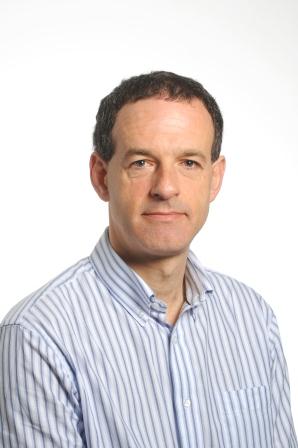
steve_turner Suzanne Kelly reports on the results of some important research presented at the recent Science Festival.

Aberdeen Science Festival had an amazing array of lectures, talks, trips and cabaret events which thousands of visitors enjoyed.

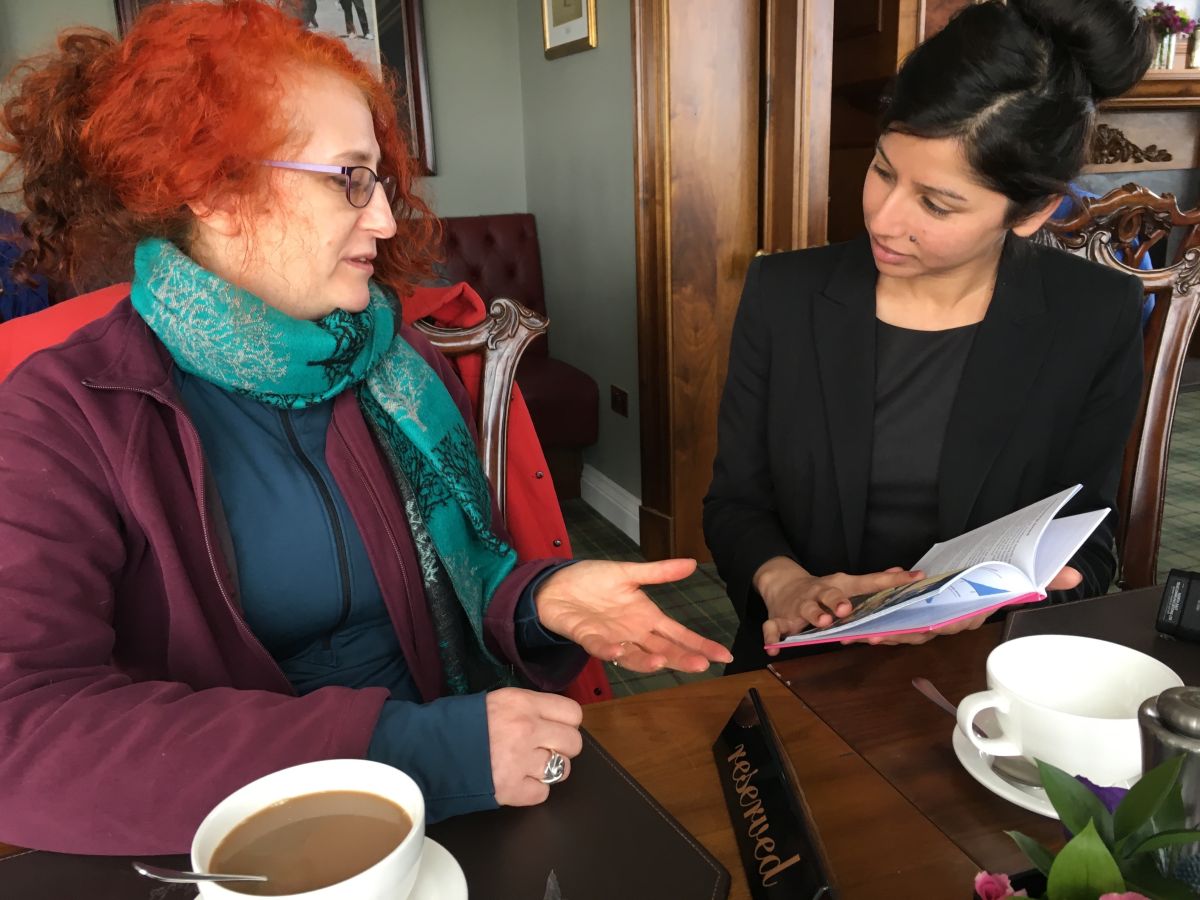
One of the more important issues covered was the very serious subject of second-hand smoke and its effect on children.  I took the  opportunity to talk to Dr Stephen Turner ( pictured ) of Aberdeen University and Rachel O’Donnell of ASH Scotland on a promising initiative to attempt to tackle this complex problem.

You smoke, or your partner smokes; you have a couple of children and a cat.  No harm in smoking around them in the house – just open a window and the smoke can’t bother them.  Can it?

You close the window when you’re done smoking.  You don’t smell much smoke and you can’t see any clouds of smoke at all, so there’s no risk to anyone.

The truth is that ANY smoke residue can definitely harm your children and your pets.  Smoke that you can see and other chemicals in smoke that you can’t see or smell are injuring kids.   About 85% of cigarette smoke is invisible.

You might not believe this to be true, but please remember the old ‘canary in a coal mine’ story.  Miners would take canaries down into the mines and if the bird suddenly died, either the oxygen was running out, or there was something dangerous, but invisible and scentless.  Things you don’t see can indeed hurt you and your children.

REFRESH is an intervention aimed at reducing the exposure children get to second-hand smoke which was presented during the Aberdeen Science Festival.  Dr Stephen Turner and Rachel O’Donnell were available to explain how they worked with smoking families when they did their research.  They were not trying to make parents stop smoking, but instead were making people aware what the consequences can be on children’s lives.  The full details are written in a paper called ‘REFRESH – reducing families’ exposure to second-hand smoke in the home:  a feasibility study.’

Families where young children were living with regular smokers were asked to take part in a study which would measure indoor air quality in their homes.  The personalised air quality data were presented to the smoker, then a motivational interview was held and positive solutions were suggested for cleaner, healthier air for the child.

There were about 60 Aberdonian participants in this study with each receiving four visits.  At the first meeting a questionnaire was filled in to get a picture of the household members and their smoking habits; saliva samples were taken for chemical testing and monitoring equipment was set up.  At the second visit the indoor air quality result was given to half of the households in addition to the motivational interview.

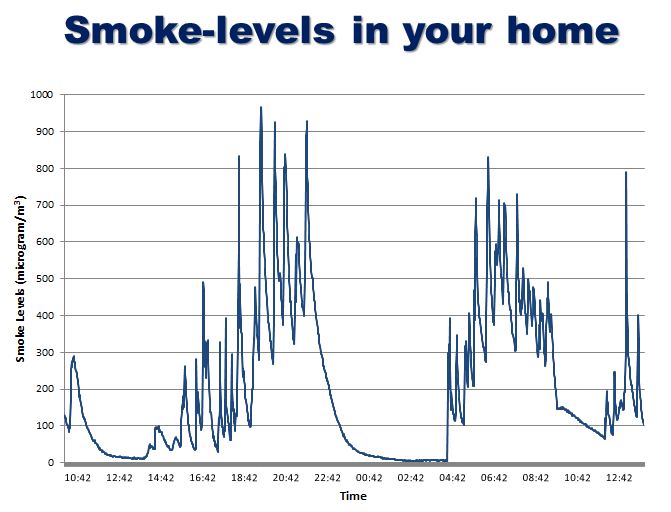
The chart below shows smoke levels in one study household.  

smoke-levels-in-your-home Any quantity over 25 micrograms of smoke in a cubic metre of air space is harmful; the higher the figure, the more harm.

When the smoker was asleep, the levels dropped to non-existent.  When the smoker lit that first cigarette, the levels went up to between 500 and 950 micrograms of smoke in a cubic metre of air.

Throughout the day, the smoke lingered – even when the smoker assumed the room was clear of smoke.

This came as quite a revelation for the smokers.  Here is what some of them had to say:

“Seeing the results made a big difference.  It was like a shock because I didn’t realise.  Like I don’t sit here and smoke in front of my child, I do it in the kitchen, but for the readings to be high like that when I’m not like anywhere near it, if you know what I mean, it’s like a shock factor to realise what it can do.  So I think that’s the best thing that like helped me.”

“I showed them how high it was, and some of them was like – you’re  joking?  And I was like no…”

“For it (monitoring) to be done in your own home and for you to know that the level of smoke is so high and you’re putting your children at risk of asthma, emphysema, all kinds of things, it’s quite shocking.”

One comment in particular shows the strength of the motivational factor provided by caring about children’s health:

“For me I think my son’s health, that’s my priority.  So I would like to think that all mothers would think like that, that their kids come first no matter what.  My bad habits shouldn’t be put onto my child.  Because I can’t stop smoking doesn’t mean he has to suffer.”

After one month the research team revisited the houses, repeated the air quality measurements and, this time, gave all the households their results.  During the month the air quality had not changed in the houses where air quality data was not initially given but air quality had improved by more than one third where the graph was used as part of the initial motivational interview.

  personalised measurements of smoke in the home, while shocking, can also be very motivational

The trial was not large, but its results show that a future, large-scale programme would be beneficial.  Like everything else, budgetary constraints are a factor.  The vast sums that the NHS has to spend treating smoke-related illnesses should be sufficient to show that prevention should be actively pursued as one solution to the smoking issue.

The study has shown that lay people can most definitely engage with science and can understand complex matters when it is presented using clear, audience-appropriate, audience-relevant formats.   Crucially, the personalised measurements of smoke in the home, while shocking, can also be very motivational.  As the paper concludes:

“…in almost all participating households, indoor air (quality) approached a threshold considered unhealthy, suggesting a need to reduce indoor air (quality) in many households across the UK, and that many people would benefit from such an intervention.” 

It seems that this combination of personalised data, positive suggestions and active participation of smokers might be the way to tackle smoke exposure to children.  It is hoped this small study won’t be the end of the matter.  The research goes on but, in the meantime, parents who smoke can create smoke free homes and smoke free cars to protect their children from the harmful effects of second hand smoke.

Smoking is still a social norm for many families but in the same way as drink driving and not wearing a seat belt are no longer acceptable, in future smoking will be considered as not acceptable by society.

PS for animal lovers -  according to Dr Turner, the incidence of feline leukaemia is twice as high in cats that live in a smoker’s home than for cats that live in a smoke free environment.

  •  Comments enabled – see comments box below. Note, all comments will be moderated.

Sep 072012
 

photo2063 By Suzanne Kelly.

This year’s TechFest is bigger than ever before, and it’s not too late to catch a host of lectures, activities and events.  TechFest runs through Sunday 9 September at various venues throughout Aberdeen. Archaeology, Psychology, Geology and even Mixology get a look in this time around.

The Bill Bryson talk may be sold out, but there are still plenty of free events for people of all ages.  These include:-

  • ‘Is Access to Water a Human Right’ – Friday 15.30pm
  • ‘CSI – Fact or Fiction?’ – Saturday 10am
  • ‘Café Cosmos’ – Sunday 10am
  • ‘Looking for Leviathans’ – Sunday 1pm
  • ‘Multi-Track Mixing’ – all day Saturday
  • Festival Finale – Sunday from 7pm

Do check the programme for dozens more events, event locations (some free events may still require booking in advance).  Times may change; check with the organisers.  Or better still, wander up to the Spiegeltent on Aberdeen University Campus, and see what’s going on when you get there.  Details and booking:  www.britishsciencefestival.org

There is a festival bar at Elphinstone Hall, and other eating and drinking venues on campus.

Sep 072012
 

Voice’s Old Susannah looks at events over yet another vibrant and dynamic week in the ‘Deen. By Suzanne Kelly.

dictionary Tally Ho!  I hope everyone’s had another exciting week in  Aberdeen.

The Science Festival has kicked off, attracting visitors, scientists and lecturers from around the world.
It is most kind of them to visit Aberdeen– we have a garden that’s not at street level and we don’t have a web – we should be most grateful to them.

We should be grateful to BP as well, which is investing £100 million in the area.

Old Susannah discovered beer cocktails at BrewDog this past week.  They are gorgeous, and very enjoyable in these trying times.

I am amazed BrewDog chose to open its brilliant bar and factory in our area when we didn’t go for the granite web.  It’s almost as if the gardens were not a factor in their plans.

The more cynical among us wonder:  Would businesses really prefer operating here if we were £92 million in debt and had a giant city centre construction zone for at least a year?  If you listen to the SNP, some LibDems (funny, HoMalone doesn’t seem to be the charismatic leader we all thought she was) and ACSEF, then the answer is yes.

The petition to ask Sir Ian to spend his wealth to Africa instead of the web is now one week old.  Please do visit, read, and hopefully sign at www.gopetition.com/sir-ian-send-your-£50M-to-africa-as-promised   No doubt the mainstream press will take the story of this petition up any day now.  After all, our local papers wrote about the MASS demonstration planned by pro CGP activists when the figure was around 200.  Guess the Wood petition is about to be massive, too.

And massive and genuine thanks to Lush shops throughout Scotland; last weekend they raised hundreds of pounds to benefit Willows Animal Sanctuary.

Finally, Morris the Monkey has a new pal in Si the Seagull, new mascot for AFC.  Word has it that the fans are not necessarily impressed by this development, but I’ll wait and hear what Si himself has to say when he starts working for BiG and promoting the web.

On with a few definitions.

Union Terrace Effect: (modern English phrase, attributed to F. Wilkinson) – scheme in which powers that be allow a building, park or structure to decay deliberately, until such time as there is an outcry for a new replacement to be built- which is what the desired outcome was to begin with. 

Old Susannah heard this term recently, but can’t think of a single historic building, museum, school, terrace gardens or Tullos Hill that would fit this definition of something left to rot so it could be sold off / developed.  If I think of anything, I will let you know.

The Itemiser: (mod Eng noun) a portable particle scanner which can detect microscopic traces of a variety of substances.

We will all be safer soon!  Result!

traces of the drug (cocaine) can be found on any bank note

First, we are considering building a giant ‘state of the art’  prison soon – yet another construction job coming our way!  Secondly, the police now have a portable scanner which can find particles on a microscopic level of things like cannabis (!) and hard drugs.

They plan to go from bar to bar and search people here and there, for traces of drugs.  Anyone who’s been in contact with these substances (except for politicians, the wealthy, successful creative types, celebrities, etc) will be thrown in jail – where tons more drugs and interesting career training opportunities will freely available.

There is just one flaw in this cunning plan of searching citizens for microscopic evidence of crime, and that is this little fact:  90%+ of all paper money in circulation in the United Kingdom has traces of cocaine and/or heroin on it.

Old Susannah can’t begin to imagine how or why that should be – but next time you buy something in a bar, use coins rather than folding money – or it might just be off to jail with you.

The Daily Mail was one of the many news media that reported the presence of drugs on currency; it wrote:-

“A senior analyst at the FSS, the largest provider of forensic services in the UK on behalf of police forces, says traces of the drug (cocaine) can be found on any bank note regardless of its geographical location.

It takes just two weeks for a new note to pick up the drug… “

Read more: http://www.dailymail/Every-British-bank-note-contaminated

So to sum up, anyone with traces of drugs on them is either:  a)  a drug fiend who should be locked up, and/or b)  someone who has £5, £10, £20 or £50 pound notes on them.  We will all be safer if these types are all locked up.

If anyone’s worried about any bothersome civil rights issues over this type of presumed guilt / mandatory search, infringement of freedom, they could always organise a protest.

Witty Kevin Stewart is making a stir once again.

Except that Gordon McIntosh is proposing to the Council that we get rid of such things as protests, or at best only allow them in the Castlegate, where any crowds can easily be kettled.  Thanks, Gordon.

Anyone suggesting his latest report (which also recommends charging groups for holding events in parks as well as banning protests) is over-stepping his remit will be locked up.

King Midas: (ancient Greek mythological figure).  Midas was magically transformed so that everything he touched turned to gold.

Witty Kevin Stewart is making a stir once again.  Back in the day, he told the people in care homes, schools, Choices, etc. that we all had to be ‘reasonable’.  Then he cut their services off and closed their schools.

ACSEF was of course allowed to flourish, city real estate was sold at bargain basement prices, and we wrote off millions of pounds in bad debts.  Reasonable indeed.

Kevin had a wonderfully clever sound bite this week, aimed at Aberdeen City Council’s web-rejecters.  For the benefit of those who have stopped reading it, the P&J wrote:

“MSP Kevin Stewart claimed the administration had an “inverse Midas touch” hindering future private investment in the city.”

As mentioned before, I guess someone forgot to tell BrewDog, BP and a host of other businesses about the hindering future private investment in the city.  But as painful as it is to correct him, I feel I must remind Kev the moral of the Midas story.

King Midas was not a bad man per se; but he loved wealth and lived for gold.  So far, so good – if you’re an ACSEF member.

Kevin Stewart forgot part of the legend when making his brilliant comment

As a reward for his kindness to a Satyr, he was granted a wish – he wished that everything he touched would turn to gold.  At first very happy to be surrounded by his new wealth, Midas soon learnt that he could not eat, as his food turned to gold.  Then he touched his daughter, and she turned to gold as well.

Kevin Stewart forgot part of the legend when making his brilliant comment.  Midas realised his folly in thinking gold and wealth was more important than the environment, living creatures and of course his own daughter.

Midas was cured of his lust for gold, and once cured of the Midas Touch too, he retired to the countryside to enjoy nature. It was almost as if something in life was more important than wealth creation.  Ultimately, the moral of the Midas tale is that the environment and people are more important than gold.  How backward-looking is that?

I’m sure that this ending of the story would horrify our average Chamber of Commerce member, who would gladly have brought their golden daughter to a pawn shop to flog as scrap metal.

In an uncharacteristic slip, neither Kevin nor our local press found time to mention that Kev was on the City Gardens Project Management Board when writing about Labour having the Midas touch in reverse.

Some people might think his connection to the project is relevant to his attack on Labour, but that would just be jumping to the conclusion that a person on a board of a project would want the project to go ahead.   (And that would be as silly as assuming someone in a football supporter’s club might be biased towards the football team).

You might expect this service-axing champion of the people to advise fiscal restraint now until we truly got on our feet again.  You might even think he’d advise restoring some services ahead of web weaving.

No, Kev would prefer us to borrow £92 million on this real estate speculation which he supported as a board member.  (Note – I suppose I should just call it ‘TIF Funding’ like the professional reporters do; if you call it ‘funding’ rather than a ‘loan’, it sounds better and safer, doesn’t it?)

Amnesia: (noun; medical term) forgetfulness; loss of memory.

Isolated pockets of amnesia have hit our business community, press and government.

these ‘industry chiefs’ and our press forgot how rosy things looked earlier this year in a moment of mass forgetfulness.

Kevin forgot to flag up his direct involvement in the CGP project when he criticised Labour for cutting the web.  We’re told by ACSEF, pro CGP politicians, the Evening Express and the Press & Journal that the future is all gloom and doom, and no businesses will come here without the web.

They say we’re ‘closed for business’, we’re ‘frightened’, we’re ‘embarrassing’.  (It’s not that we’re being environmentally-friendly, economically prudent or aesthetically intelligent – no, we’re in the wrong if we don’t want the golden web).

And yet as recently as February of this year things looked so much better.  This is what the Press & Journal had to say back then:-

“Aberdeen is in prime position to help drag the UK economy out of recession, experts revealed today.

“The city has more start-up businesses than anywhere else in Scotland and will suffer fewer public sector job losses than anywhere else in Britain, says a new report.

“Aberdeen was named as one of five cities which Cities Outlook 2012 said was well-placed to aid recovery from the current economic gloom.

“Last night industry chiefs said the Granite City was an ideal location for new firms to flourish.”

I guess that is only true if we have a web though.  Either that or these ‘industry chiefs’ and our press forgot how rosy things looked earlier this year in a moment of mass forgetfulness.

We’re also being told by the guardians of accuracy, PriceWaterhouse Cooper that we need to attract 122,000 people to work in Aberdeen’s energy sector in the next ten years.  Funny, the £71,000+  they earned from web-related consultancy doesn’t get much of a press mention either – yet more amnesia, I think.

So amnesia-wise – Kevin and the press forgot to mention his involvement with the CGP when he attacked Labour; PwC forgot to mention in the press the money it made over the web so far when supporting it, and the media forgot its reports earlier this year as to what a great future Aberdeen has.

Do I think these people and institutions are possibly dishonest, scheming, colluding, corrupt or greedy?  Certainly not – I just think they have selective amnesia.

Additionally, BrewDog and BP forgot that the city cannot survive without the Granite Web when they committed to the area.  Yes, amnesia is at epidemic proportions.

And there we shall leave it until next week.

PS  very best wishes to Declan Michael Laird for his film premier; have a great time tomorrow night and a good trip back to LA. 

  •  Comments enabled – see comments box below. Note, all comments will be moderated.
Sep 072012
 

An exhibition of art celebrating the centenary of Alan Turing, the father of computer science, opens this week at RGU’s Georgina Scott Sutherland Library. With thanks to George Cheyne.

turingpic1 2012 is the 100th anniversary of the birth of Alan Turing (1912 – 1954), one of the greatest minds Britain has ever produced.

From inventing the digital computer and helping to decode the German Enigma machine to founding the science of Artificial Intelligence, the world today would have been a very different place without Turing and his ideas.

This exhibition, which reflects Turing’s enduring influence on art and contemporary culture and has previously been shown at Kinetica Art Fair in London, brings together a number of important artists from digital art pioneers such as William Latham to emerging contemporaries such as Anna Dumitriu. 

Jane Kidd, curator of the RGU Arts and Heritage Collections says:

“This exhibition breaks down the artificial barriers between science and the arts.  

“RGU is at the forefront of Computing research today with the School of Computing and at the cutting edge of Art with Gray’s School of Art, so it’s great that we can bring both together in this exciting show to mark RGU’s participation in the British Science Festival.”

The exhibition is showing at the Georgina Scott Sutherland Library, Robert Gordon University, Garthdee Campus, Aberdeen from Wednesday 5th September until Friday 12th October, 2012.

Opening hours:
Monday to Thursday, 10am – 8-pm
Friday, Saturday and Sunday, 10am – 5pm

Apr 192012
 

Are you confused about which butter/margarine type spreads are healthy? Even if you aren’t then you probably should be! Craig Adams enlightens Voice readers.

dontbelieveitsgoodforyou

Most people think they understand the difference between saturated, polyunsaturated, and monounsaturated fat, yet there are two key pieces of information relating to these that the food industry has deliberately occluded.

Firstly in terms of health, monounsaturated is best, then polyunsaturated, then saturated right?

Not quite – not all saturated fat is bad. Some saturated fats are among the healthiest fats of all. Furthermore, fat can turn into something chemically nasty when you heat it, and saturated fat is more resistant to this change than the other types of fat.

Unless you restrict frying to low temperatures, it’s actually safer to fry food in a saturated fat such as butter or lard. Unfortunately, telling people that would not help increase the sales of cooking oil.

Secondly you may have observed that saturated fats are a solid grease, whereas unsaturated fats are oil? This is not mere coincidence, in fact it’s pretty much their defining trait. In order for an oil type unsaturated fat to become a spread, it somehow needs to be solidified. The reason that saturated fats are solid is because they are more saturated with hydrogen.

The process that makes a fat more solid is called hydrogenation, but it could just as easily be termed saturation… So in other words, to make an unsaturated fat more solid you saturate it, hence the issue with spreads.

Unfortunately because the public have been told that “saturated = bad” they’re probably going to look at the label, see how much saturated fat something contains, and judge it accordingly. Therefore the manufacturers tried to hydrogenate as little as possible, just enough to make it appear solid in the tub.

That’s why most of these spreads liquify almost on leaving the fridge; you’d be as well pouring oil on your toast! This is also where it turns nasty, because this “partial hydrogenation” has put the fat into an in-between state known as trans fatty acid, and trans fatty acid is very bad for you, much worse than saturated fat. Trans fatty acid kills.

2633672-spreading-butter-with-a-knife-on-a-toast Most products these days are labelled “Trans Fat Free!”… but that doesn’t mean they actually contain zero trans fatty acid. Oh no, no, no.

The politicians have allowed the manufacturers to label something “trans fat free” and even “zero trans fat”, provided it contains less than half a gram of trans fatty acid per serving.
That may not sound like much, but it’s 25% of the allegedly safe limit.

Since so many processed food now contain, ahem, “zero trans fat” there’s a high chance that you are unwittingly consuming way more than the 2g a day than may or may not be safe. Actually, let’s not beat around the bush, trans fatty acid is not safe.

Now here’s the ironic part. If you take an unsaturated fat, and you fully hydrogenate it, turning it into a saturated fat, there will be no trans fatty acid left in there. It will really contain zero trans fat, and actually be trans fat free. Although the now solid end result will be loaded with saturated fat, it’s not actually the bad kind of saturated fat, it’s just stearic acid, and your body will easily convert this back into a monounsaturated fat called oleic acid. No harm done whatsoever. It’s safe, and may even be healthy despite the saturated fat content.

Here is how to read the labels. Avoid anything that contains any: “trans fat”, “trans fatty acid”, “partially hydrogenated”, and plain old “hydrogenated” (because that is just marketing code for partially hydrogenated).

Anything containing “fully hydrogenated” is perfectly OK. The important part is “fully hydrogenated”. Now although a fully hydrogenated product will undoubtedly contain more saturated fat, this is a harmless type of saturated fat, so don’t be put off by it.

So just to clarify that last part: “fully hydrogenated” is safe whereas just plain old “hydrogenated” is a cunning marketing ploy, which really means “partially hydrogenated”, which is in turn just code for “trans fatty acid” – which kills.
fullvspartialhydrogenation
100% fully hydrogenated products, although perfectly healthy, are extremely rare. This because the consumer is put off by the high saturated fat content.

Instead the manufacturer tends to thin out the hydrogenated fat with an unsaturated oil (yet more irony), in order to reduce the saturated fat content. This isn’t necessarily a bad thing, provided you refrain from heating the end result.

Also on the perfectly OK list is anything containing un-hydrogenated oil. In other words oil that has been left alone. There are some ‘oils’ such as coconut oil and palm oil, which are already high in saturated fat, and fairly solid at room temperature, that don’t require any hydrogenation.

This is why there are more and more products using palm oil. Palm oil is fine, although not as healthy as coconut oil, and in its refined (as opposed to virgin) state it’s not particularly good for you, but it’s way better than a trans fatty acid. The main problem with palm oil is that people are tearing down rain forests to plant palm trees.

So what about butter? Well butter is a naturally occurring almost entirely saturated fat. It does contain some naturally occurring trans fatty acid, but this is thought to be of a harmless nature (a hypothesis that has not yet been scientifically verified).

The saturated fat in butter is not all the good type, but it’s not all the bad type either, and at least butter is a natural unprocessed food. There are some spreadable butters now that have been blended with oils thereby reducing the overall saturated fat profile. Butter may not be a health food, but it certainly won’t kill you either. It’s certainly among the best of a bad bunch.

There is one saturated fat product that is believed to be healthy – coconut oil. This only contains the good saturated fat, is natural, and usually unprocessed (but check the label). Coconut oil is the safest fat you can use for any sort of frying. It may however impart a slight coconut taste to the food, and it’s quite expensive.

On the plus side it possesses both antibacterial and antiviral properties, promotes weight loss, and can help prevent Alzheimer’s disease. It’s all but a superfood. There even exists coco-butter, which can be used as a (slightly coconutty) substitute for butter and other spreads.

So to summarise:

  • BAD = trans fat, trans fatty acid, partially hydrogenated, hydrogenated.
  • OK = fully hydrogenated or un-hydrogenated.
  • Butter is possibly healthier than most spreads, and safer for frying than cooking oil.
  • Coconut oil is a healthy solid fat, and the safest thing to fry with. It’s actually very good for you, as are coconut milk and coconut cream.

As an aside, the most nutritious oils, or unsaturated fats, are hemp oil, closely followed by flaxseed oil, so use these for salad dressings. Both of these oils should be stored refrigerated at all times, and it’s doubtful that you’ll find any refrigerated oil in a supermarket, so best use a health food shop.

And lastly, there is absolutely nothing wrong with eating avocados. They are high in healthy fats, very good for you, and even aid weight loss.

Feb 212012
 

With an armful of flyers promoting various pro ‘Retain Union Terrace Gardens’ groups, Aberdeen Voice’s Suzanne Kelly headed to the first of two ‘pizza parties’ thrown by the secretive ‘Vote For The City Gardens Project’ group.   Suzanne was  unable to give away more than four flyers – because less than a half dozen students turned  up to hear the pro CGP message.

Pizza Face pic

If the promise of free food to students isn’t enough to lure more than 5 or 6 people, things are looking bleak for the VFTCGP, and bleaker still for PR agency, BIG Partnership.
VftCGP, on their official Facebook page, announced last week there would be two ‘free pizza!’ events thrown for students; a free pizza dinner was theirs and all they had to do was show up to hear a pro-City Garden Project lecturer – Paul Robertson.
At first most FB readers assumed this was a spoof thrown by the ‘Retain UTG’ groups – but no, this was actually someone’s idea of a vote-winner.

We all know the proverb about the incompetent who can’t even arrange a drinking session in a brewery; but I was unprepared for what must be the biggest non-event in history.

The Facebook invitations simply read:

“Free Pizza And Information Night! Come join us for free pizza and a chat with Paul Robertson about the City Garden Project on Monday 20th February, between 6pm and 7pm at the RGU: Union”.

Thinking back to my RGU course days, I thought a.  how insulted I would be at someone blatantly trying to buy my opinion – with pizza no less, and b.  how often I could have found a free meal very handy indeed.  This event would be packed.  The invites were also sent to staff and students.  I thought of a massive collective of outsiders and RGU students and staff competing for quickly-disappearing ‘American Hots’ and ‘Hawaiians’ before a slick presentation from BIG.

BIG must be making a huge amount of money from the referendum – it is doing some if not all of the official City Gardens Project group’s PR, as well as work for the ‘Vote for the City Gardens Project’ group.  This last group, VftCGP is allowed to spend and write whatever it wants without any external controls.

They were behind the A3 glossy colour brochure filled with ‘concept’ drawings in lurid pastel colours (or ‘vibrant and dynamic’ colours – depending on your outlook); these brochures were delivered not only to city voters, but also to shire non-voters.   Perhaps this was the first sign of many mistakes and gaffes to come?

I arrived late; it was 5:50pm.  Had I missed the free pizza? 

Would I get through the crowds?  Would I be admitted?  I went to the RGU Union reception desk, and was told the event was really only for RGU students.

“How many are already signed in?”  I asked.

“You’re the first one.”  came the reply.

It was explained that I needed to be signed in by a RGU Union member.  A tumbleweed rolled by.

Eventually a man arrived who explained he’d received the invitation which said nothing about it being only for students.  Is it possible that BIG didn’t get all the little details right – like who should be allowed in?  It seemed so.  The reception desk got in touch with someone – presumably the organisers and we were allowed to attend the event.  It was almost 6pm.

  A sea of empty chairs and a few sofas greeted our eyes.  We were the first two arrivals.

My friend and I went to the designated area.  The song by The Specials, ‘Ghost Town’ went through my mind.  Two students played pool further off.  A man tended the food/drink area. Three BIG PR  professionals (who looked like students to me) were fumbling with a screen, a laptop and a projector.

There was me and my new friend, who if possible was even more against the concept of building ramps over UTG than I was.

A sea of empty chairs and a few sofas greeted our eyes.  We were the first two arrivals. We sat in the back of 8 or 9 rows; the chairs of which had all been covered with a copy of The Granite Web newspaper, and a fetching postcard of the concept drawing captioned “Wish You Were Here?”.  It crossed my mind the organisers must have wished people were here, too.   But no one was.

My new friend explained to me his position against the CGP.  He had attended a meeting in the days of the consultation; Sir Ian Wood had addressed a group of Health & Social Sciences faculty and staff at the Garthdee campus.  My friend said:-

“I was there all that time ago, and Sir Ian Wood told a group of about 24 of us that if the consultation showed that people didn’t want the gardens developed, then he would walk away.  He walked away all right – and came back.” 

My new friend was not happy.

“I know people have their own opinions about what should happen to Union Terrace Gardens,” he said; “but I object to PR people muddying the waters.  Instead of corporate BS we need facts and honest debate.”

It was approximately 10 minutes after 6.  It was three people fumbling with technology, and my friend and I at the back.  Had any PR professionals come over to introduce themselves?  Welcome us?  Offer out any pizza?  No.

But what was this?  Two male students showed up.  They looked at eachother, then at the empty seats.  They sat in the front row.  As they didn’t seem to have been made welcome by the professional BIG team, I wandered over.

“I can’t buy you any pizza,” I explained; “and I can’t afford any print or radio commercials.  However, I’d like to offer you some literature just so you can see the other side to the coin.”

“I’m a social work student, and I’m not in favour of this plan.” one of them said.  He spoke about money, and seemed to know quite a bit about this nebulous scheme.

They took my literature.  One of the PR bods – a woman with dark hair, watched this little exchange between the student and I, and looked for all the world as if cold water had been poured on her.  It  kind of had.

It was 6.15 now.  There had been no welcome to the visitors.  There was no presentation ready to roll. 

There was a Lady Gaga video playing over the pool table which made as much architectural sense as the Granite Web newspapers thay lay unread and unwanted on the empty chairs.  And – there was no pizza.

What was that?  Three more people had arrived.  I repeated the procedure and gave them flyers too.  It seemed that was all they were going to get.

“Does anyone know how to work presentations?” one of the BIG  crew asked.  Answer came there none.

My friend admitted to me he knew all the ins and outs, as did I.  But by now things were getting poignant, and moved by pity for the fumbling threesome, I simply had to leave.

I made my farewells to my new friend, who promised to call me if anything exciting happened, if the numbers swelled, or if the pizza showed up.  I do not expect to hear from him.

“I went to that fly-through thing at the art gallery.  I really don’t know what decade they were trying to capture.”

I thanked him and headed off.  Just as I turned to leave, it seemed the three-man crew managed to power up the projector.  A yawn of excitement emanated from the four or five remaining hungry students.  Perhaps I’ve missed the public relations event of the year.  Well, there is always tomorrow at Aberdeen University at 6.30 pm.  Then again, I think I’l lbe washing my hair.

As I turned to leave, more than 15 minutes after the advertised start time, I think one of the three began to speak.  The film ‘Withnail and I’ came to mind.  At  the end of this film the unequalled Richard E Grant gives a rendition of Hamlet’s famed soliliquoy to a collection of animals at the Regents’ Park zoo.  He is brilliant, but there was no one there to appreciate his message.

Poor BIG.  Poor paying clients of BIG.  Richard E might have had no audience, but at least he had something important, heartfelt and honest to say.

Picture Credit: Renee Slater


Nov 042011
 

“Politics for beginners…with a green edge”. As a ‘young person’…this expression I always feel is a little condescending but nevertheless…as a ‘young person’ the world of politics can seem both inaccessible and unapproachable. So I was pleasantly surprised this weekend when I made the effort to go along to the Scottish Green Party conference which was held at the University of Aberdeen. Bex Holmes reports. 

Scottish Greens Conference

So, what was this conference all about, you maybe asking?

Well every year like most political parties’, the Scottish Greens hold an annual conference in which members can get together and have a good old natter about the world’s pressing issues including those happening locally.

There is of course a bit more to it than that, such as getting your head around voting for new policy motions and various other in-house processes. Most of which baffled me, but I’m ‘young’ so I can get away with being a bit clueless now and again!

Aside from all these formalities however Patrick Harvie MSP gave a keynote speech which really made me stop and think. Everything he said reminded me of why I had not only sought to become more active in politics in the first place but why I choose to join to the Scottish Greens over all others.

He highlighted the Scottish Government’s contradictory policies on energy and climate change. Yes, our climate change targets are awesome and a step in the right direction. But (and that’s a big but) they are completely undermined by our continued support of the fossil fuel industry. Simple as!

More eloquently put of course by Mr Harvie:

“Alex Salmond now has a very clear and simple choice – he must either fail on Scotland’s much-vaunted climate change targets, or he must drop his unconditional support for the fossil fuel industries…First, the new coal-fired power station at Hunterston must be blocked. Then he must rule out shale gas extraction, which his Energy Minister has refused to do.

“Then, because CCS can never be applied to most uses of oil anyway, he must drop his support for dangerous deepwater oil drilling in Scottish waters…The challenge with fossil fuels is not to burn all the reserves we already know about, let alone to go looking for more. The priority has to be energy efficiency and renewables.”

Basically, it’s a bit loony of the SNP to think that they can run a high-carbon and low-carbon economy at the same time. They have to choose.

You maybe thinking at this point…ah what does she know? She’s young and evidently a bit naive. Well, I maybe naive in the ins and outs of politics but I know enough as an Environmental Scientist that Scotland has a responsibility to curb our emissions. Both for the sake of those in developing countries who unfortunately will bare the brunt of climate change but also our children, and our children’s children.

We need to take action now which must be integrated into the whole of society including our financial system. This brings me onto another thing that reiterated my choice in the Scottish Greens. I was delighted that an emergency motion was passed supporting the Occupy movement.

Speaking at the conference and representing Edinburgh’s Green Councillors Cllr Steve Burgess said;

“Greens support Occupy Edinburgh in their call for a new economic system that will reduce inequality and protect the planet’s shared resources that we all depend on.  It’s early days for this movement but this up welling of dissatisfaction is a welcome indication that even people in democratic countries are feeling disenfranchised.”

Yes indeed, there are load of us ‘young people’ out there who are disenfranchised. I dare say maybe ‘young people’ have always been disenfranchised but with few job prospects and soaring higher education fees, is it any wonder that we tend to be a grumpy bunch?! So I was also glad there was a fringe event with the ‘young greens’ whose main aim is to support members between the ages of 13-30 and discuss their problems and concerns.

Having a network of ‘young people’ across the country will help enable us to raise the profile of issues which disproportionately effect young people, including social housing, jobs and education. As well as the dire state of our health as a nation…there’s that big ‘A’ word that just won’t go away…alcohol.

Other activities included workshops on canvassing, which basically means being very smiley, saying hello and actually talking to you out there…the voters.

To sum up my experience of the Scottish Greens conference as a ‘young person’ and political novice – it was fun!

I learnt a lot and more importantly it has motivated me to become even more involved with politics. To these ends I will endeavour to stop hiding behind my veil of cluelessness and get savvy about things because frankly, there’s a lot of stuff that affects me and my future which I think most politicians completely miss.

Not because they don’t care but because they are privileged having never come across these issues in their own lives.

So this is my small call to arms. ‘Young people’ we do actually need you! You can actually make a difference! Register to vote. Do a little reading on political parties…as a member of the Scottish Greens of course I will be biased here but seriously look at what the parties are actually saying in their manifestos. How will it affect you?

Most importantly, VOTE. And if one day you’re wondering what more you can do, why not join a political party and become actively involved? I took that leap and for me it was well worth the effort. 

 For further info, contact: Scottish Greens Aberdeen And Aberdeenshire Working Group