Aberdeen Voice can reveal that Fiona Manclark, former Facebook Page Administrator for Northfield Animal Haven made an accusation of cannabis use at the farm by the owner, and claims drink and other drug use by others took place there too. Cannabis might be a means to alleviate symptoms of serious illness – but is someone using it regularly able to safely look after 170+ animals on a working farm and animal sanctuary?
In the second article in a series concerning NAH, Suzanne Kelly explains her doubts, and looks at other claims made in Manclark’s remarkable letter to the court, written in response to Suzanne Kelly’s legal action to stop Manclark’s defamation of her. By Suzanne Kelly
 After a drawn out court procedure, defamation action I instigated against Fiona Manclark resulted in my being awarded £10,000 plus costs.
Manclark had run out of road with regard to my lawsuit which sought damages and an apology for her defamation of me which spanned Twitter, Facebook and email. She had applied for legal aid and was denied (the process took months).
Legal aid is normally denied where the applicant either has sufficient funds to cover their costs or where the applicant does not have sound grounds for bringing or defending legal action.
Despite Fiona Manclark having numerous opportunities to issue an apology and remove the various social media slurs without having to pay any damages, she chose to contest the legal action. It took months before the offensive comments were deleted. Eventually her legal firm announced to the courts it would no longer be defending Manclark; no reason was supplied.
When a hearing was scheduled in mid August, Manclark chose not to appear or send a legal representative: she did however send the court a most remarkable letter. Two members of Aberdeen Voice attended the sheriff court to look at the letter, and a shorthand transcription was made of it. All Ms Manclark needed to do was to put forward her side of the argument to the court as the defendant in the defamation action. She went much, much farther.
“…if there is money for drugs, she should not be asking the public for handouts”
Manclark’s letter openly accuses Kelly Cable of using cannabis, and of permitting others living on the farm to drink, use cannabis and ‘to be addicted’ to prescription drugs.
Manclark talks about first meeting the owner of Northfield, Kelly Cable. Manclark visited the farm to buy a pet rabbit – as an aside, reputable animal charities do not breed or sell animals; Cable managed to bridge the gap between rescue, breeding for sale, and running a commercial farm all from the same premises; an ethical dilemma and one unique in the rescue sector in Scotland as far as I can determine.
Aberdeen Voice has asked NAH about selling pets. In response, Northfield Animal Haven owner Kelly Cable told Aberdeen Voice:
“We do not breed or sell rabbits we rehome them and accept a donation of the persons choosing. The only connection with that is that Ms Manclark rehomed a rabbit from us then sold it.
“….since Sept last year Ms Manclark has had nothing to do with Northfield Animal Haven.”
After Manclark and Cable talked, Manclark and her children visited the farm. The children ‘helped build up the farm’ and ‘put in fence posts’ (presumably they were properly supervised, given personal protective clothing, and a safety briefing).
It was then Manclark alleges Cable:
“also smoked cannabis, but that was for medical reasons.”
This would certainly be consistent with a diagnosis of Fibromyalgia – one of an astonishing number of debilitating conditions a variety of sources, including Cable herself, claim she suffers from.
Kelly Cable responded:
“You state that a letter from Ms Manclark declares all of this but I had a private message conversation with ms Manclark from a few days ago where she states I was never mentioned in any letter…”
Fibromyalgia and cannabis:
Fibromyalgia is a serious illness – one with totally unpredictable symptoms and widely ranging levels of pain. Cannabis and cannabis/hemp oil derivatives seem to alleviate pain in some cases.
Some forms of cannabis oil (which do not contain the intoxicant thc) are legal in the UK; at present cannabis is still considered illegal. This is a situation that needs addressing, but in the context of NAH, allegedly, a Fibromyalgia sufferer is running a farm and using cannabis while caring for 170 animals.
Kelly Cable had this to say:
“My personal health is of no business to anyone but what I will say is just because your disabled doesnt mean you give up and lie in bed all day. I am on prescribed medication from my doctor so I cannot give you an answer as to whether cannabis is a useful treatment for my health as its not prescribed.”
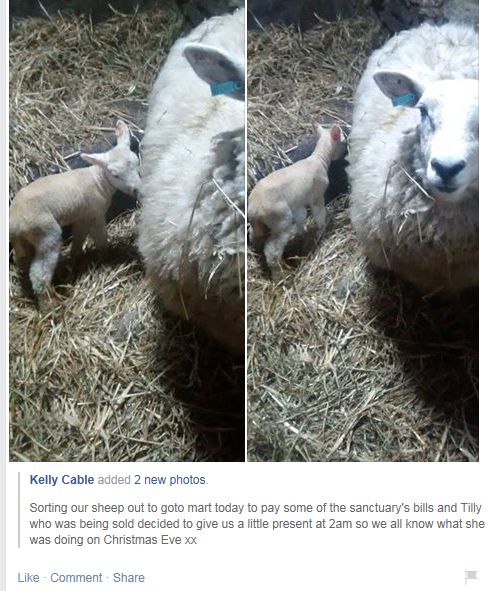
NAH also seeks donations from the public because there is not enough money to support the rescues; sometimes it says animals may have to be put to sleep if funds aren’t donated. (NB the commercial arm of the farm sells animals at market all the while).
In this resect Northfield and Cable are again in an unprecedented situation in the animal welfare sector. A report has been made to the police and other relevant authorities, and other witnesses agree with Manclark’s assertion.
A fibromyalgia sufferer would in all likelihood find properly caring for 170 animals at a sanctuary/commercial farm even a more formidable task than a healthy adult would, yet it is claimed Kelly Cable runs the farm with little or even no help at times.
One occasion when her father helped resulted – by Kelly Cable’s own admission – in 17 horses being cut while they were to be transported from one field to another. Eric Cable was also injured in this incident. Inexplicably, Kelly Cable chose to link Aberdeen Voice to this worrying event– clearly with no foundation in reason or fact. In a rambling rant concerning a variety of allegations, Kelly Cable wrote:
“… I arranged alternative grazing for the animals here some of which should not even been attempted to load and moved and what happens my Dad who is 73 gets knocked over and trampled by horses that are so scared, so now I have 17 terrified horses all with cuts etc from trying to be loaded and they are now stressed and very anxious.
“I would suggest that anyone who has shared the articles from the Aberdeen voice or anyone who has jumped on the bandwagon and spouted this crap had better remove all information as Monday morning even if I have to sell my car to do it I will be going after everyone who has done damage to this sanctuary.
“I am also going to the national press and quite a few revelations will be disclosed to the press which can be backed up by various websites….”
Precisely how the horses were scared, who else was helping, whether the horses’ legs bandaged for shipping (as would be good practice) is unknown; NAH has been asked to explain.
Kelly Cable rsponded:
” I have already explained what happened there, if one horse gets spooked it will set off others in the fields, beside them, and in stables but if we had managed to raise funds for hay we wouldnt have had to move them but as our reputation was in tatters this did not happen so we had no choice but to move them a couple of miles away to grazing.”
The NFU Scotland was asked to comment on potential issues of cannabis use on a farm; the request was something of a first for them. They commented:
“Farmers, crofters and their staff are no different from other sectors of society and existing laws around the misuse of drugs would apply. That said, farming is a hazardous occupation and as an industry our record on health and safety is poor.
“If we are to cut the number of deaths and serious injuries in farming, then anything that impairs someone’s judgement when working with equipment or dealing with animals or potentially places themselves and others at risk must be avoided at all costs.”
Let’s say for argument’s sake there is nothing at all wrong in terms of safety and risk with having THC in the bloodstream and being seriously ill while looking after 170 animals.
Let’s assume that a person with a number of debilitating medical conditions, who allegedly smokes cannabis, and her father were perfectly capable of transporting 17 horses. How then did Eric Cable get trampled, and how did 17 animals suffer cuts in the incident?
Is it somehow Aberdeen Voice’s or my fault considering Kelly Cable leads directly from describing the injuries to AV? One last bit of food for thought:
Northfield is also offering animal assisted therapy: would you be comfortable utilising their service?
Fiona Manclark’s letter continues to say that after the revelations regarding drug use, she decided to cut ties with Northfield, not wanting her children around drugs, and saying:
“…if there is money for drugs, she should not be asking the public for handouts…”
Manclark appears not to have shared her concerns with police or animal welfare organisations that Aberdeen Voice is aware of; we will publish her response to the question when it is received. It is as if her concern was limited to her own children and not other visitors or donors.
Dismissing Manclark’s claims, Kelly Cable said:
“Claims regarding cannabis first came about in ms [Suzanne] kellys nativity story last year and now ms manclark has used them as defence in a defamation case, as ms kelly had won I think that question has already been answered but it has been discussed with the police on the 3 seperate occasions I have had these claims made against me.”
Illness:
What was the relevance of Manclark’s illness to the court? Did it prevent her making an apology, prevent her submitting evidence to back up the hacking claim?
Evidence of the illness was asked for as part of the legal process. No evidence was supplied because in Manclark’s words:
“The reason I have no legal representation any more is that I was requested to get a report from the doctor regarding my health, …..I really didn’t want this dragging on any longer than necessary as this has been a contributing factor to my state of mind.”
For someone who did not want the action dragging on, she did her best to prolong it.
The power to end the legal action always rested with Fiona Manclark. She chose to seek legal aid when a simple apology and deletion of offending posts – without having to pay any damages – was still possible.
“So sue me” were her words on the matter early on, and later repeated to my lawyer. Apparently she only phoned his office to issue that challenge because she was having medical issues. However, only towards the conclusion of the defamation action is there a reference to illness. More can be found in a previous Aberdeen Voice article.
Manclark’s slurs against me were seen by thousands. She remained defiant that she was telling the truth about me and had evidence – it never materialised. Her slurs have quite possibly stopped people coming to me with stories that I might have otherwise been able to research this past year. The longer her remarks remained visible on the internet, the more time they had to seep in and damage my reputation.
If I am somewhat unsympathetic to the idea that her undocumented illness claim should have been considered by the court, I hope that is understandable. The court’s position is ultimately the last word on the question of illness. It sided with me.
That Mystery Hacker:
Fiona Manclark says in her letter that she agreed to be a Facebook administrator for NAH on the back of the first visit to buy the rabbit.
She wrote:
“I agreed, and she gave me all her passwords and I gave her mine. (I do understand it was a stupid thing to do)”
Kelly Cable has since posted on Facebook that she had never had Manclark’s passwords. Aberdeen Voice has asked each of them to clarify this anomaly.
Kelly Cable told Aberdeen Voice:
“Ms manclark and her family helped out with the haven and Ms Manclark was made admin on my page, I gave my passwords so that she may access anything she needed, why would I need hers. I have emails confirming that I myself was removed as admin and the page was hacked and resulted in my original page being deleted.”
Around the time the legal action against Manclark started, a dialogue appeared on the Northfield site concerning an alleged hacking attack. The conversation involves Cable and Manclark – and at one point they named me as the possible hacker.
Manclark: “My own fb was hacked too tho, so maybe it’s someone with a grudge against me. Which again makes me think of Suzanne. She was spitting feathers over me calling her an alkie”
Cable: “Yeah very true. I have told the police about the hacking as well maybe they can find out who hacked it and have them done xx”
Hacking is considered a serious crime. If there had been a police report or investigation, it certainly did not result in any contact with me or Aberdeen Voice.
On the other hand, as reported in the first article in this series, Manclark refused to help me get the police to investigate the hacking crime.
If the police had investigated the hack, then I would have accepted there was a bona fide attack and stopped my lawsuit. I would also have expected the victim of a hack to remove material posted by a hacker; this took ages – during which time the hacker (so we are led to believe) posted refusals to retract, claimed they had evidence to back up the slurs, and told me to sue.
We are looking for a pro-NAH hacker with the ability to hack Fiona Manclark’s twitter, facebook and email over a period of six months, who had a particular desire to attack me. Anyone with any suspicions as to the identity of such a skilled hacker should please contact the police and/or Aberdeen Voice.
Amnesia?
Manclark initially told my solicitor she had no idea who I was; and yet she had an exchange with Cable concerning hacking, which mentions me.
On 13 October 2015 as part of an exchange about ‘hacking’ with Kelly Cable Manclark posted:
“Yes because I don’t want that bitch getting off with anything. And I was getting private mails from her until I blocked her. Still waiting to hear from her solicitor too J J J “
The two women had mentioned me by name by now, but perhaps it is some other person who they accuse of hacking them who had threatened legal action Manclark is referring to? Ms Manclark is at liberty to explain who else could be under discussion if not me. Perhaps amnesia is another illness Ms Manclark has, for on 20 November, she wrote to my lawyer to say she’d never heard of me:
“Message Received: Nov 20 2015, 02:04 PM
“Subject: Suzanne Kelly
“To whom.ot may concern,
“I have just received a letter saying that I have been slanderous towards your client. I do not know your client and I have never heard of the voice.
“My social media was hacked, and due to a disagreement with Kelly Cable, I had only been admin of the page for 2 weeks. I had never posted as admin on the page. My hacking was reported, and I closed down both Facebook and Twitter as people were getting spam mail. I have since reopened other accounts.
“I have been in touch with Kelly Cable to ask if she knows of your client, and apparently the police have been contacted due to a dispute between your client and her. I have again reiterated to Kelly Cable that I do not want her to contact me again.
“Again, I do not know your client, and I certainly would not get into a slanging match online for everyone to see.
“I have absolutely nothing to do with Northfield Animal Haven, and haven’t for a long time, and I do not wish to be associated with them in anyway.”
Perhaps having to clarify how she knew me in October but didn’t know me in November was one of those things that made her uncomfortable with appearing in front of the court.
Truth and Consequences
I started this investigation after Aberdeen Voice published an innocuous press release with my byline calling for standards for animal rescues. I had heard of Northfield Animal Haven and its split personality when it comes to rescuing Animal A while selling Animal B at market, and its sans souci attitude about the future of the sold animal.
Kelly Cable responded:
“I have explained quite a few times now as to how we work here. Yes we have a flock of 26 ewes in size by no means a commercial flock we also occasionally buy a couple of bull calves and raise them. This is our income and also goes towards feed for the rescue animals. No rescue animals are ever bred from or sent to slaughter.
“Yes my sign says all farm animals so therefore if we take in a farm animal then it is a rescue, not an animal that has been purchased then claimed to be rescued. The animals that are here all live together interact with each other but you also get the welfare benefits of grazing these animals together, ie worms, ticks, flys etc these counteract with the other animals.
“With having farm animals we are regulated by animal health and seerad because we have rescue animals here they also have to be included in the forms for vet medicines, feed, nitrogen deposits on the ground.”
After a bit of research I published an article, and was soon inundated with emails suggesting further areas for investigation about the farm and the Cables.
I discovered Kelly has a conviction for benefit fraud. I discovered how she eventually got out of repaying a £5,000 loan, at one point claiming her signature was a forgery (a forensic handwriting expert soon put paid to the claim).
I soon found myself the target of abuse in varying forms from the Cables and their administrator Fiona Manclark across social media. A year long battle to get Manclark to apologise and remove her damaging remarks also resulted in my being awarded £10,000 plus costs – an expense wholly within Manclark’s power to have avoided.
Manclark and Cable claim they were hacked. Their discussions also mention me as being the potential hacker – all very odd, as Manclark informed my lawyer she had only heard of me when he wrote to her, which was after I sent her one personal message asking her to remove the remarks. If you believe her, then it must have been the hacker who responded to my request across twitter, facebook and email and who said ‘so sue me’.
I take Fibromyalgia very seriously, and I am involved in a recognised SCIO which buys cannabis oil for peole with documented medical evidence of serious illness such as Fibro – as long as they are an adult in financial hardship who has done their own research and has made the decision to use legal CBD oil in conjunction with their medical practitioner.
No one of the three people in this SCIO take any money; in fact it is costing me money to run, but it is an important service and I am happy to offer it.
In the next article I will explain why it is important for everyone to be free from abusive lies, and how defending my reputation is particularly important concerning investigative journalism – Would people be coming to me with leads? Would publishers buy my work? Would readers believe me?
Fiona Manclark tried to stop me. Using legal means, I have now stopped her.
But the real concern here is for the welfare of animals – 170 animals seems a huge amount for a woman who, according to a number of posts including at least one by Manclark, is doing it on her own. Kelly Cable often says she is in dire need of funds, sometimes hinting that animals may be put to sleep if she doesn’t’ get money.
By several accounts, there are funds enough for cannabis. Assuming she has Fibro and is able to manage her large menagerie, she must be nearly super human.
I’ve worked on farms. I know how long it takes to look after – properly feeding, exercising, grooming, cleaning stalls for even a dozen horses can be. I do not see how anyone with a serious illness can safely, effectively look after such a huge number of animals. By her own words, there has been an accident with 17 horses and her father.
The welfare of the animals is paramount – but protecting the consumer from fraudulent appeals for money is important too. This is why I am researching and writing about Northfield Animal Haven, and now that my law suit – the only legal action taking place between NAH, Cable, Manclark and I is concluded, I am delighted to pick up where my legal action against Manclark made me stop.
In her defence, Kelly Cable states:
“Many children and adults have visited our place before the flooding and they could interact with all animals, learn about their welfare, learn about how to raise them free ranged instead of caged or locked in sheds. At the end of the day everything here is about the animals and educating people along the way, with animals like sheep or cows that isnt a normal everday animal to meet and interact with
“We stick to numbers on both the farm and the rescue and that way if fundraising doesnt raise the funds or preferably the goods like hay, straw, feed etc, we know with our numbers every animal will be fed and cared for. No donations will ever be used for running costs like electric, phone, wages, etc.
“Between the animals care and care of the ground, and their housing is all that donations are used for and always will be.
“there is no fraud or illegal conduct taken place at Northfield Animal Haven.”
If doubts remain about the truth of my claims, I hope my next two and final articles (unless further information comes to light) on NAH will convince readers beyond any doubt.
Footnote: Aberdeen Voice is grateful to Kelly Cable for her timely response to issues raised in this article. Fiona Manclark was also contacted and invited to comment. We still await her response.
- Comments enabled – see comments box below. Note, all comments will be moderated.
[Aberdeen Voice accepts and welcomes contributions from all sides/angles pertaining to any issue. Views and opinions expressed in any article are entirely those of the writer/contributor, and inclusion in our publication does not constitute support or endorsement of these by Aberdeen Voice as an organisation or any of its team members.]
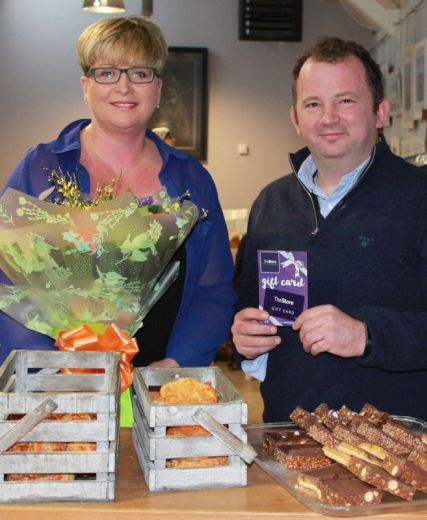 An Aberdeenshire business has announced the winner of its campaign to find the North-east’s most hardworking community hero.
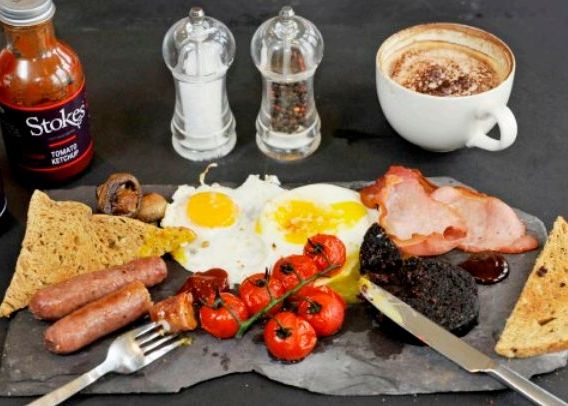 An Aberdeenshire business is looking to reward one inspiring NE individual who has gone above and beyond for their local community in 2016. The Store, a farm shop, deli and coffee shop based in Foveran, near Ellon, has launched a campaign to find the North-east’s most hardworking good samaritan, so that they can receive an extra special start to the New Year.