Feb 112013
 

Having previously looked at the people who can be considered heroes for their attempts to protect the environment or people, the focus shifts to the ‘villains’ in this fifth article in the Menie Estate Series.

trumpbrollypic By Suzanne Kelly.

Identifying the players in the course of events at Menie is key to understand what happened, and hopefully to preventing a repeat performance elsewhere.
The cumulative effect of the various pro-Trump factions, large and small, all helped make the development’s approval all but inevitable.

This article will take stock of the people, organisations and incidents that won the day for golf over natural heritage, existing planning policy and area residents.

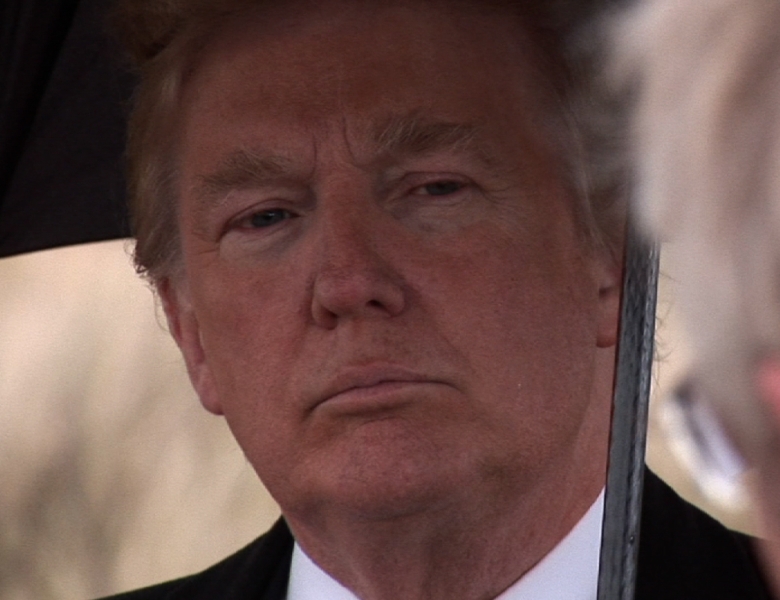
Donald Trump

Ultimate responsibility for the loss of the SSSI and for the use of security firms in the area surely belongs to the man called ‘The Donald.’  While involved in litigation in his home country, the USA, with private individuals and local governments, our powers-that-be still accepted his fiscal health, his stated commitment to the environment, and his economic proposals at face value.

To illustrate, here are excerpts from one of the Scottish Government’s statements supporting the development:-

“The council understand the suggestion made by the various parties that a personal condition may be appropriate… that is not proposed…    Based on the evidence the council believes that the commitment shown by Mr Trump is genuine.” - http://www.scotland.gov.uk/Resource/Doc/212607/0067709.pdf

Aberdeenshire Council decided that their ‘belief’ in Trump’s commitment was genuine and of more importance than existing planning guidance and the SSSI.  This faith seems to have been built on the economic case presented by Trump (later criticised sharply by a London School of Economics expert, who featured in the documentary ‘You’ve Been Trumped’).

This faith also seems to have excluded any research into the Trump Organisation’s past form and apparent predilection for suing municipalities (for a summary of some rather worrying past Trump actions.
See donald-trumps-lawsuits-could-turn-conservatives-who-embrace-tort-reform

Scottish Natural Heritage suggested it would be possible to build great golf courses and housing without using the sensitive SSSI sites; however, Trump refused to compromise his plans.  Trump is the driving force in this situation, but whom and which organisations paved the way for him?  Are these people the real villains of the piece?

The mysterious Peter White – aka Neil Hobday

One thing the pre-Trump Menie residents I spoke to have in common is their shared love of the natural beauty in the area.  None planned to move home; none planned to sell up to Trump.   Every resident I spoke with his commitment to the integrity of the unique environment and its flora and fauna.

Another thing they have in common is that many of them reported being contacted by phone by one Mr Peter White.

The story ‘Peter’ told residents was basically this:  ‘Peter’ and/or his wife  just happened to be out driving/walking while visiting Balmedie, and fell in love with the area and wanted to buy a home to live in.  Resident Martin Bennett decided to check out the phone number Mr White left, and found it was connected to the name ‘Hobday.’  ‘Peter’ it transpires was Neil Peter White Hobday – the man who at the time was Trump’s golf course consultant.

When confronted, Hobday told Bennett that Peter and White were his middle names, adding:-

“If I had turned up and said ‘hello I’m from the Trump Organisation’”

Neil Peter White Hobday said to Bennett, while making a gesture Bennett believed was indicating flashing pound signs.

Had any of the residents chosen to pass their homes to this man on the false promise their home would be used and loved instead of potentially bulldozed (Trump has called the properties ‘slums’ and ‘pigsties’), they would have been very much mistaken.  But no one fell for this cruel ruse to gain property under a false pretext – which no doubt would have been sold at lower value than had any resident been aware of Trump’s plans.  Monetary gain or not, the residents wanted to stay put.

The mysterious anti wind farm protest that never was

Last month, some person or agency tried to hire protestors (at $20 per person) to stand in front of the British Consulate in Manhattan, and standing behind a few speakers, as if to act like they were genuine protestors opposed to wind farms in the UK.  When discovered by several pro wind farm groups, the ads were pulled, the media and consulate staff notified, and the protest was called off just as quickly and mysteriously as it had been organised (the excuse was the weather would be harsh).

Who would be interested in making the British fear a negative US reaction to wind farms in Britain?  Could it have been Donald Trump or his organisation?  Their objection to a wind farm off the Aberdeenshire coast has Trump threatening to pull his development.

More on this protest can be found here: cool-job-posting-earn-20-pretending-to-hate-wind-energy.

Some actually believe that Trump might just be, and might always have been, more interested in obtaining the permission for hundreds of homes, then selling the land (and the attached permission) on.

By this time politicians, consultants and anyone else who wanted a piece of the action were climbing on board the Trump bandwagon. Not least one Evening Express beauty contest winner

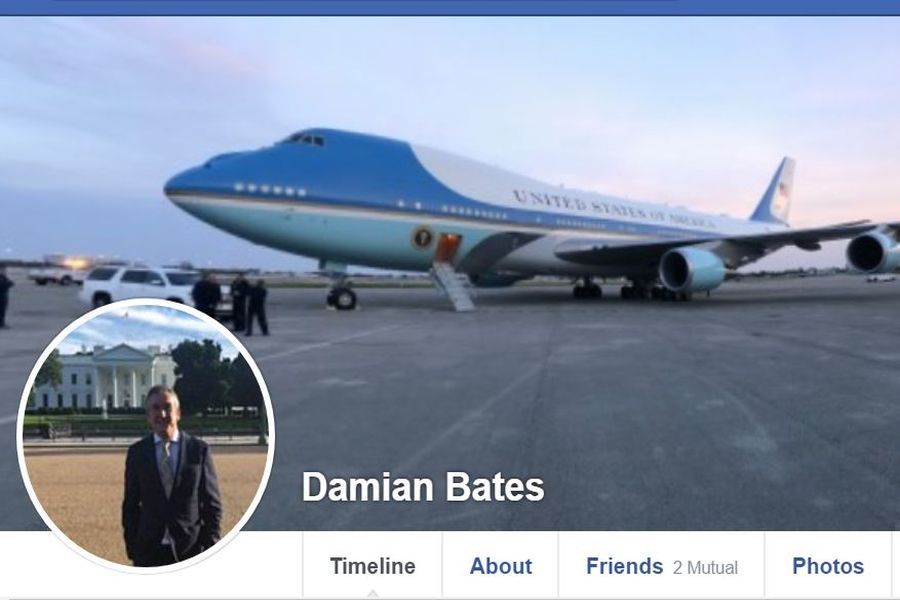
Sarah ‘The Face of Aberdeen’ Malone, now Mrs Damian Bates

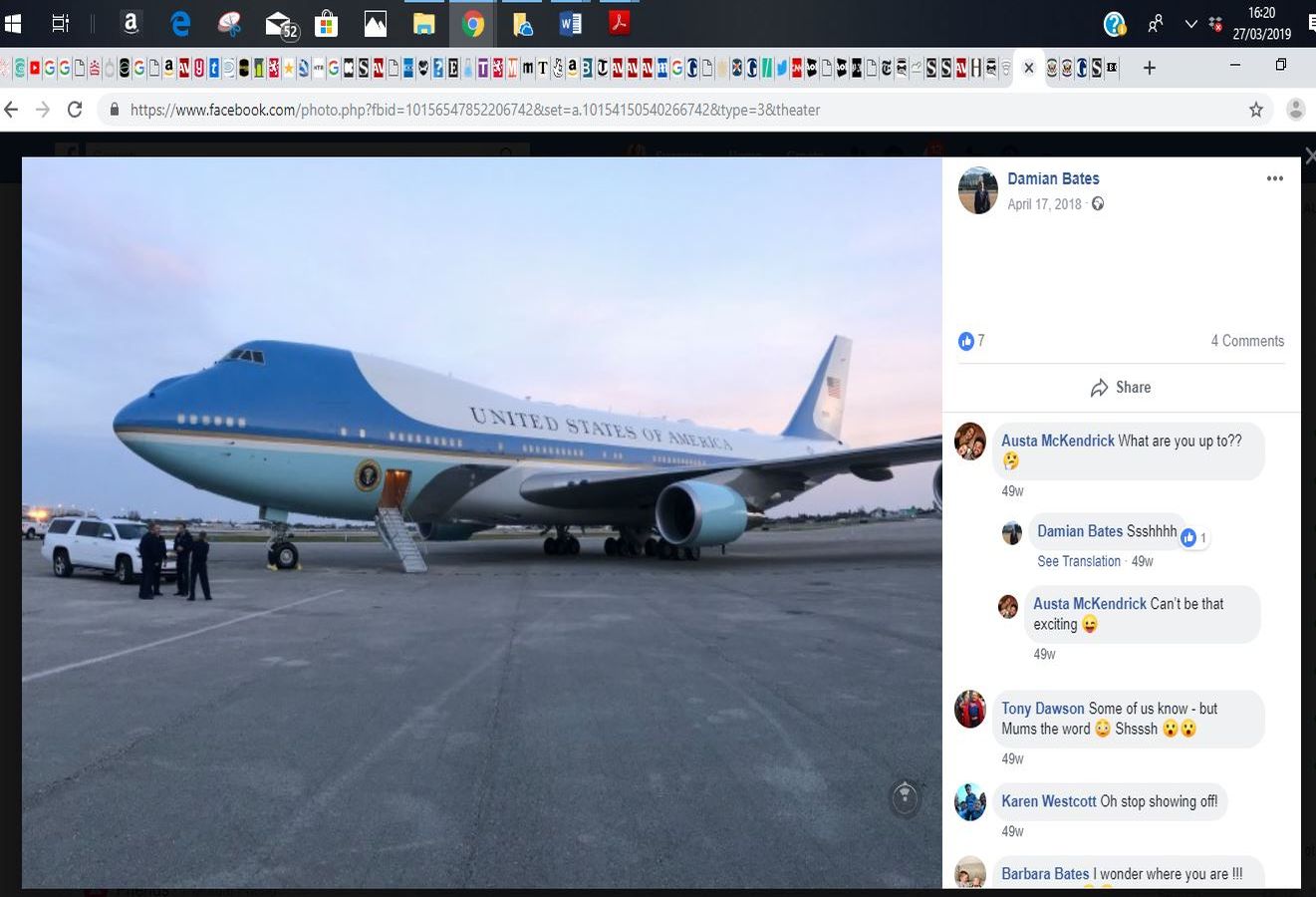
Sarah entered and won a ‘Face of Aberdeen’ beauty contest in the Evening Express, sister paper to the Press & Journal, an equally pro-Trump periodical.  It would seem that she had a friendship with the P&J’s editor, Damian Bates, which turned to marriage in early  February 2013.

Sarah worked at the regional Gordon Highlanders museum in Aberdeen; a great museum but hardly a training ground for the project Trump proposed. She had no experience of Golf, no experience of multinational real estate developers.

She was hired by Trump who didn’t mind the lack of specific skills for his multi-million pound project.  Was it her local connections?  Her physical attractiveness?  She has since acted as the spokesperson for Trump International in Scotland, maintaining that all is well, and that tens of thousands of people have played/will play the course.

Evidence the course has been played that frequently is not shared by the residents, who insist the course would have to have very frequent tee times and many more visible golfers than they have ever seen.

She claims to have been spat at by a woman; treatment no one deserves.  The police investigated, but it seems no action was taken.  Protest groups disowned any such action, which is contrary to the ethos of the protest group Tripping Up Trump.

Malone accused Anthony Baxter of sneaking into an on-site press event (he had been issued a press pass), and that he deliberately blocked heavy machinery, a claim he denied.

Both of Sarah’s parents had worked at Aberdeenshire council; her father, Tom, is now a councillor.  Coincidentally he has had the opportunity to vote on six wind farm developments, and has turned them all down.  It seems he shares his daughter’s employer’s dislike of wind power.

In Malone-Bates’ words:

“We have a world-class developer whose brand is associated with luxury and excellence.”

Some might differ.

Dr Christine Gore

Dr Gore is Director of Planning and Environmental Services at Aberdeenshire Council.  Her impartiality was called into question when the Glasgow-based ‘ Spinwatch’ group did some research:-

“The documents, obtained by Spinwatch,  include e-mails and letters between Gore and Ann Faulds, an Edinburgh-based solicitor with Dundas and Wilson, a law firm hired by Trump. They show that in February, Faulds drew up a report justifying why compulsory purchase orders might be needed to acquire extra land on and around Trump’s estate. It was drafted in Gore’s name for distribution to council members, however the local authority says it was never used.

“David Miller, professor of sociology at Strathclyde University and head of Spinwatch, a Glasgow-based body which monitors public relations, said the documents raised serious questions about the council’s relationship with Trump.”
http://www.trippinguptrump.com/news/aberdeenshire-council-%E2%80%98too-close%E2%80%99-to-trump

Dr Gore’s impartiality also took a further beating (source Tripping Up Trump):-

In Gore’s letter, dated April 7, she writes:

“In terms of public relations and management of the inevitable media interest, I would request that we be given at least a week’s notice of your intended submission date. Thereafter, close liaison will be required . . . in order that we can have a managed approach to what is inevitably going to be a difficult and emotive reaction.”

The letter has prompted accusations of a “conflict of interest” from Spinwatch.  It has threatened to lodge a complaint with the Scottish Public Services Ombudsman if the council fails to carry out its own inquiry.

Even her words ‘difficult and emotive’ seem to display alliance with the developers over the existing homeowners.  In propaganda terms, implying that the other side is in some way illogical – like stating they are likely to be ‘difficult and emotive’ is a well-known tactic to discredit opposition.

We have seen this kind of name-calling often enough from Trump and his operatives in describing the pre-existing residents; but for the implication of an difficult/emotional, hence irrational, response from those opposed to Trump pretty much removes any doubt as to Gore being partial to Trump.

Ms Gore’s professional body, the Royal Town Planning Institute refuse to disclose whether or not the proposed complaint against Gore was ever even brought.  In that case, perhaps it is time a formal complaint is submitted.

Alex Salmond

Aside from transatlantic wining and dining with Trump while Trump’s application was still pending (which was deemed unethical – and which sent a tacit message that Salmond approved of Trump and his plans), it’s hard to know where to start on the role Salmond played.

Of course the step of calling in the rejected application was without precedent and is what gave Trump his victory.  Salmond used his powers to over-ride the decision of a local government by calling the application in, something that might not bode well for his model of Scottish independence.

The local authorities still had scope to negotiate with Trump over the nature of the development; this scope was whisked away by Salmond.

Salmond seems to have wanted a quid pro quo, and what a favour it was.  Trump was asked to back the Scottish Government’s repatriation of convicted Lockerbie Bomber Al-Megrahi on compassionate grounds.  Trump probably realised this would be social suicide for him in New York (if not the rest of the world) and he refused.

Soon the relationship between the two men had soured over wind farms, and Trump went public with this sensational request over Al-Megrahi.  Trump also insisted Salmond promised no wind farms would ruin the view of the wealthy golf tourist.  Salmond denied making any such promise.

This dispute between the two figures is creating some amazing publicity, not least the advertisement Trump put in the Press & Journal (and other papers), showing decommissioned wind turbines (from Hawaii it seems) and linking in Salmond and Lockerbie. (more on the ad and the P&J to follow).

In a worrying development Salmond’s government is changing many pieces of legislation, not least the rules around Compulsory Purchase Orders. In another time, a Compulsory Purchase Order (CPO) was basically meant as a last resort if land was needed for municipal projects. This is changing.

The Scottish Government co-hosted a full day CPO conference in October 25, 2011 in Edinburgh.  There were presentations which certainly seem to make it easier to obtain CPOs in Scotland for developments which promise economic growth.  Presentations included:-

Joe Noble, Macdonald Estates ” CPO in partnership with the private sector – a developer’s view” (3.2mb)

Patrick Layden QC, Scottish Law Commission ” Law reform – a look to the future” (0.05mb)

We will see what else Mr Salmond has in store for Menie and for Scotland in the future.

Aberdeenshire Council Clerk of Works and Communications Officer

In August of 2011 I wrote to the Aberdeenshire Council’s Clerk of Works asking about several of the issues highlighted in the national press and in the film ‘You’ve Been Trumped.’  I described the bunding by the Munro home.

I received a reply from (now retired) Communications Officer Gordon Lyon.  He advised that the

“…earth bunding we believe you are referring to was fully removed by April 5, 2011”.

The Munros, other residents and I all can state that the bunding is very much still in place.  In fact, where bunding exists there are fairly clumsy attempts to make trees grow on top of them.  If successful, this would leave both homes with little sun and no views of the shore at all.

It is not that likely the trees will grow (the sand, salt air and wind will play their parts, much as they are doing further down the coast at St Fitticks’s  and Tullos Hill, an ill-advised, largely unwanted forestry creation scheme which has already failed before).  The interesting choice of Sycamore trees for this man-made screen should interest natural heritage and ecological agencies; this tree is considered undesirable for being invasive and foreign.

Scottish Enterprise and Visit Scotland

On 27 September 2007 I attended a public meeting at which the Trump organisation played a video in support of their application.  This video featured the Scottish Enterprise logo, and featured footage of Jennifer Craw talking about tourism, development and so on.  She had been head of Scottish Enterprise at one point.

On seeing this video, the use of the logo convinced me that Scottish Enterprise approved of the project, a project which was still as I understood it, meant to be impartially evaluated by government.  The use of the logos and Craw’s presence made it appear as if SE approved of the plans.

If government quango SE approved, then so must government was the conclusion I reached.  The SE connection could have put pressure on  councillors, government employees and others who saw it, and could have easily led to the conclusion that SE approved.  But was this conclusion accurate?

I wrote to SE, and they stated that the Trump video had NOT sought their consent to use the clips of Craw or the logo.  Here are answers I received from Scottish Enterprise:-

“Neither SE, nor Ms Craw, has endorsed the Trump planning application. SE Grampian is supportive of the proposals but they have no role or remit in terms of the planning decision.

“Ms Craw gave an interview to STV in relation to a documentary on the Trump International plans for a golf leisure development on 26 June 2006.   Ms Craw was not made aware that the clip would be used as part of the Trump presentation at the public meeting.

“SE has not endorsed the planning application.  Any endorsement by Scottish Enterprise would not bind the Scottish Government.

“Donald Trump’s organisation has not received any funding from SE Grampian. A Preliminary Feasibility study along with a promotional DVD in relation to the Menie Estate Golf Resort was commissioned by SE Grampian in line with support for inward investment activity.  The cost of this was £30,285.

“SE Grampian PR support around the project announcement was given to the Trump Organisation in keeping with support offered to potential inward investors.  Please note there is no monetary value placed on staff time spent on projects.

It would appear that SE want us to believe that even though it spent £30k on a video to promote turning Menie into a golf resort, Scottish Enterprise was somehow totally uninterested in influencing the government on the point.

At the next opportunity I tried to speak out at a public meeting to say this video was giving a large and serious false impression by using SE material. I was, disappointingly, not allowed to speak.  I did explain that new, relevant information had come to my attention, and that as I had been a long-term objector to the scheme I wanted to exercise the right to address the meeting.  This was deemed to be out of order.

SE’s logo seems to be protected by copyright, and from what I can gather, it can be used in academic papers without any objection but other use needs permission.  Why no objection was raised to the Trump people, or more importantly why SE did not make clear to Aberdeenshire that it did not endorse the project and that its logo had been appropriated without consent remains a mystery.

We have a situation where one side was allowed to go against established procedures and hijack the implied approval of Scottish Enterprise, while the other side of the argument was not allowed any leeway at all.

The local Press

The Scottish Enterprise episode was just one of many pieces of publicity and propaganda designed to put the Trump golf project on course.  The local newspapers were filled with pro Trump stories.  No mention was ever made of his stateside business dealings, some of which seem to have ended in bankruptcies for stakeholders.

No mention was ever made of lawsuits brought by the Trump organisation against local authorities.  The councillors who stood up to Trump were vilified in the local papers, culminating in a photo of Martin Ford with the word ‘TRAITOR’ as the headline.

Other evidence of the local media’s bias is not too hard to find.  There have been many articles saying what a success the club is, and a total of two (as far as I can find) articles about Anthony Baxter’s documentary on the Menie Estate situation.

In terms of advertising, it may interest readers to know that the Friends of Union Terrace Gardens were refused permission to place an ad in the Press & Journal – well before any referendum on UTG was announced – on the grounds their support for the gardens being improved was ‘political’.

Fast forward to September 2012, and the same paper printed the full page anti-wind farm advertisement from Trump.  This  ad used photos of American decommissioned wind farms, and a photo of Salmond; it also chose to bring the Lockerbie Bomber into the picture.  Some would say that on balance this might have been slightly more political than saving a garden.

For more on the tie between Malone and her new husband, P&J editor Damian Bates, (and other individuals) see http://aberdeenvoice.com/2013/02/trump-exec-vp-weds-journals-ed-joining-the-dots/

There are other players who strove for the outcome we have today.

This series will have two more parts; a look at some of the government documents supporting the case, and a conclusion with a report and recommended actions.  One thing is clear.  All in all, it was clear the residents and the environment never stood any chance at all.

  • Comments enabled – see comments box below. Note, all comments will be moderated.
Mar 152012
 

Dave Macdermid updates Aberdeen Voice on the Glacier Energy Masters U -12  Winter Grand Prix.

Back row – Brian Morgan, Cameron Edwards, Patrick Young, Ross Martin, Fin Pears, Scott Martin (Glacier Energy).  Front row – Anthony Low, Conor, McMahon, Syzmon Kierkiewa

Patrick Young consolidated his position as undisputed leader in the inaugural Glacier Energy Masters Under 12 Winter Grand Prix series with victory in the sixth and final event at Westburn Tennis Centre.
In the final, the Stonehaven youngster recovered from the loss of the opening set to edge it 0-4, 4-2, 1-0 (2) over Ross Martin (David Lloyd Aberdeen) in an entertaining match.

In the 3rd/4th place play-off, Rubislaw’s Cameron Edwards defeated his clubmate Conor McMahon 4-2, 4-2.

North East district coach Vikki Paterson was delighted with what will hopefully become an annual series.

“The grand prix has enabled the boys to enjoy regular high-level competition over the winter period and this is something we would wish to build on.”

District President Brian Morgan added.

“The standard of tennis was exceptional and I’m sure those involved will see the benefits of the grand prix going forward. We are indebted to Glacier Energy for their support as without their assistance, quite simply there would have been no event.”

Nov 172011
 

Bucksburn in Bloom was born because we wanted to brighten up our neighbourhood with floral displays and to try and make it a brighter place to live. Drew Levy,  President of Bucksburn in Bloom writes.

bucksburnpic3 For a good many years I as an individual had entered into Aberdeen in Bloom and after 6 years of effort in 2011 our garden was awarded 1st prize.
However back in 2007 we were asked what we could do with our street.

To start with I suggested we could get some brackets on the lamp-posts and have two hanging baskets on each lamp-post, then as well as making our own planters we also looked into asking the council if we could have 4 planters as well.

Since 2007 we have added different things to our area and it was one of these improvements, at the entrance to our  our street,  after seeing an article for “Britain’s Best Flowerbed Photo Competition” in a Beautiful Scotland & the RHS News Letter, that we decided to enter into the competition.

At around this same time we were making improvements with floral displays to Bucksburn and also choosing a name and so: Bucksburn in Bloom was born.

Back to the photo competition, we decided to send in the photos of our flowerbed and the entry letter to go with it. We did not expect to win anything, and when you consider that the competition was across the whole of the UK and we are just a new group, you can imagine our surprise when a couple of months later we had been awarded 2nd Prize in our class.

There was more to come, as a result of the prize we were given a 7mtr x 4mtr flowerbed at the North of England’s largest show – The RHS Tatton Park Flower Show in 2009, similar to the Chelsea Flower Show in London .

Once the shock and surprise had eased off we set about designing the flowerbed with all the plants and landscaping. We submitted our design which was a floral oilrig, themed “Scotland’s Homecoming”. In July we packed up all the plants and accessories and we were off to Manchester to take part in our first RHS show.

We had three days to build the flowerbed and on the Wednesday it was judged. We were awarded an RHS Merit, the first they have ever given and we were very proud of it especially as we were up against 26 local council’s in the same category. On the Wednesday after judging the show was opened to 90,000 visitors until the Sunday. We were not just representing Bucksburn but Aberdeen and the North of Scotland and as such we were proud to be dressed in our national costume- the full kilt outfit.

bucksburnpic1 Another great surprise was when we were asked to come back next year in 2010. When asked what our theme would be, we decided that we were going to look into doing a flowerbed around the Highland Coo (cow) complete with its long horns.

Well, in 2010 our entry was accepted and in July  we collected “Gracie” – the coo from the Loch Katrine Centre & headed off to Tatton Park flower show.
We drove all through the night to get there for the Friday morning.

We had incorporated not just the coo, but a block of local Kemnay granite into our bed , which our Lord Provost Mr Peter Stephen had chosen the design of a thistle to be carved into its 4 sides.

Much to our delight and all our hard work this flowerbed was awarded an RHS Bronze Medal!

Sadly, we could not go this year (2011) due to my very bad health, but we have used this time to our advantage. The Tatton Park Show Manager phoned me to say that I had to get well for next year as Bucksburn in Bloom is part of the Tatton Park Family now and we have our place for 2012. We have designed our next flowerbed in the form of a flower canoe and paddles entitled “2012 Paddling to Success “.

If anyone would like to visit our web site you will see not only the first and second flower beds, but also our work around Bucksburn and  you will also see our design for the 2012 show when it goes onto the site in a few weeks time.

We bring all our plants back to Bucksburn & plant them around the area. The granite pillar used in the “coo” flowerbed was presented to the Lord Provost who accepted it on behalf of the people of Aberdeen. It has been placed in the floral courtyard at the Winter Gardens in Duthie Park for all to see.

Our flowerbed and Bucksburn in Bloom were featured live on TV at the time on Gardeners World Live

We feel the floral work that we are doing is going some way in not only  helping the area look nicer but in hopefully bringing people together and I can think of no better way than community gardening. You are out in the fresh air, you are improving your environment and everyone young and old can always learn about gardening.

At 59 and with my years of gardening experience I am still learning all the time and it is good that as you grow older you can pass on your skills to the younger up and coming gardeners.

Our entries to the show are all paid for by sponsors and donations, which allows us to represent Bucksburn and Aberdeen at the RHS Tatton Park show. Our flowerbed and Bucksburn in Bloom were featured live on TV at the time on Gardeners World Live.

We always need sponsorship & donations to help us represent the area. Anyone wishing to make a donation or sponsor our flowerbed entries or even wishing to become a volunteer or just wanting to look us up on our web site,  the details are as follows:
http://www.bucksburninbloom.btck.co.uk

On a final note; one of next biggest projects and working alongside Bucksburn and Newhills Community Council is to try and turn an old school playing field into Scotland’s and Aberdeen’s first solar powered, totally green Community Park for the people & visitors to Bucksburn.  We will be needing volunteers to help with the project for the 5 years it will take to build it.

Whether you are young or old always enjoy your gardening.

Sep 162011
 

Voice’s David Innes’ benchmark indicator of biographical literature quality is more or less, “Would I have a pint with this guy?” It was with some interest and not a little thirst that he approached the latest revelations from inside government, written by the man who achieved heady high office as President of the University of Aberdeen’s Student Representative Council in the mid-1970s and then went on to reputedly greater things.

darling

Tabloid is a newspaper shape, although the term is now universally used to describe populist low-rent journalism. Not here at Voice where your screen size delineates layout and low-rent isn’t our way.
Tabloids’ views on Back From The Brink have been almost prurient in their seizing on the Darling-Brown relationship as their focus for summarising the book’s content and offering review.
Whilst this is interesting, and is probably welcome relief from the views of Debbie from Doncaster, 22, 38-22-36, on monetary policy within the Eurozone and its effect on Greek public expenditure, far more interesting is Darling’s take on the events and decisions forced upon him during his tenure in No 11, as the economic crisis of 2007 threatened to destroy global financial systems.

The former Chancellor’s view is that the Financial Services Authority (FSA) failed due to its never having had to deal with a financial crisis, as the regulatory system had only ever had to operate in good times.

When the chill economic breeze blew over the North Atlantic and the unregulated mortgage free-for-all was found not only to have been the preserve of US financial institutions, the UK banking system clammed up, investors panicked and the reliance on UK financial service companies for 25% of UK tax revenue was shown up for the short-term folly that it was. Not before those responsible had lined their own pockets, of course.

As banks pleaded poverty and our mortgages and pensions were put at risk, these self-same bankers, previously vocal in their demands to be left alone, free from governmental intervention, queued up at the Treasury door, looking for a bail-out, courtesy of Mr and Mrs Joseph Soap of Gullible-At-Sea, also demanding that the “toxic assets” (those’ll be debts which will never be paid, then) be taken on by taxpayers whilst the banks continued to rake off the top line from profit-making accounts.

It is to his credit that the Chancellor extracted significant pounds of flesh from these banks in charges for the liquidity handout they received.

Here’s a very interesting fact to ponder next time you’re trying to have a cheque cleared through our banking system, where processes move at the pace of traffic in King Street on a rainy Thursday night, the week before Christmas – $6bn was reputedly taken from the UK Lehman Brothers’ UK operation on a Friday evening so that it could be in the US operation’s empty coffers on the Monday morning. As the author observes, this

“demonstrates…how quickly money can be moved from one jurisdiction to another”.

Of course, when it suits the usurers.

It is to Darling’s credit that much of the technical content is made easy to understand, even to economic illiterates like your reviewer. He is also very clear on timescales, forensically-sharp on the decision-making processes and pays suitable tribute to a Treasury team worked to exhaustion putting measures in place to prevent meltdown.

He stints neither from taking credit for saving the banking sector – and by definition everything else in the economy – from collapse, nor shies away from admitting where errors were made.

Among those errors was the Prime Minister’s approach to the 2010 General Election. His “Tory cuts v Labour investment” was a line easily seen through, a false promise which the electorate didn’t buy. Darling’s view, over-ruled, was that voters could be persuaded that whilst cuts were to be made, they would accept that they did not need to be made to the degree and on the timescale gleefully endorsed and seized upon zealously by public sector-despising Tories and their Lib Dem patsies.

As sometimes sweet relief from the incessant round of IMF, G7 and G20 meetings, Spending Review speeches, Budget statements and Treasury late-night sessions, Darling writes affectionately about his family, the social and charitable aspect of life in No 11 and of his bolt hole in the Hebrides. He comes across as mild-mannered, thoughtful, loyal and reliable. He describes himself as “managerial”. That’s a fair self-assessment.

Of course, this insider account is one-sided, although credible. It will be interesting as others’ takes on the financial crisis are published and comparisons can be made.

So, would I have a pint with the former Chancellor? Yes, without a doubt, if only to point out that “the late Tommy Docherty” referred to on page 119, is very much alive.

Your round Alistair, just don’t put it on expenses.

Back From The brink. 1000 Days at No. 11
Alistair Darling
Atlantic Books.
ISBN 9 780 85789 279 9
337pp

£19.99

Apr 292011
 

By Bob Smith.

obamatallpic2 Trumpie’s spies hiv bin lit loose
Nae doot aa lookin shifty
Diggin fer proof Obama wis born
In the USA state number fifty

Donald’s nae sure far Obama is fae
Disna think it’s in Hawaii
Noo his goons are doon checkin
Presidential birth rules div comply

Some allege  Obama’s a Kenyan
An his nae richt ti be in the post
Bit the President’s mither’s American
So Donald jist awa an git lost

Noo dis Donald nae claim his mither
Born in Tong syne USA she did gyang
Maybe iss shud as weel be contested
Jist in case the mannie is wrang

Donald  please gie us the proof
Yer mither cam fae the isles in the west
Let aabody see yer certificate o birth
An pit yer claims noo ti the test

Fox News are “trumpetin” Donald
Ti run for presidency of the US of A
Wi backin fae iss richt wing lot
Americans shud start ti pray

Wis Mary Anne born in Tong?
Wis Donald in Queens, New York?
Micht there be a bit o confusion
If it wis a bliddy useless stork

©Bob Smith “The Poetry Mannie” 2011


Feb 252011
 
Hollywood And The Bomb – or Trivialising a Nuclear Holocaust 1945-1990 - Part 3.

Voice’s Dave Watt lifts the lid on the somewhat shady influences at work at the highest levels of post-war US government when McCarthyism and ‘Commie plot’ paranoia was rife. Not even Hollywood’s cinematic art was safe, it seems.

This final section of the series concentrates mainly on Hollywood and the Bomb in the 1970s and 80s with occasional trips across the Atlantic to compare their treatment of the subject with British filmmakers.

slim1-pickens-bomb The 1970s : An decade of détente, Strategic Arms Limitation Talks, humiliating end of Vietnam War for the US and the controversial deployment of short and medium range nukes amongst a largely unwilling European population but with the usual connivance of their governments.

The last instance of using nuclear war as a theme in the 1960s was curiously in the film Planet of The Apes (1968) where the human civilization is revealed to have been destroyed by a nuclear war thereby leaving the planet to the apes.

After this there was a largish gap in the 1970s until: Twilight’s Last Gleaming in 1977 starring Burt Lancaster and Richard Widmark. It tells the story of Lawrence Dell, a renegade USAAF general, who escapes from a military prison and takes over an ICBM silo near Montana, threatening to launch the missiles at the USSR and start World War III unless the President reveals the real reasons why America fought for so long in Vietnam. Control of The ICBM silo is duly recovered by the hero and some special forces sub-heroes although the audience are left in no doubt about the big business interests profiting from the US’s extended involvement in Vietnam.

The 1980s

With the appearance of Ronald Reagan and Margaret Thatcher on the scene in 1979/81 international relations took a turn for the worse with much sabre rattling, tub thumping and bear baiting of the mid-1950s variety (and the generation of an unpleasant ‘if you’re not 100% for us you’re against us’ mentality). Thatcher began this with Exercise Square Leg in 1980 despite huge protests by CND and other progressive organisations against it.

However, the campaigners against these chest beating exercises in fatuous optimism refined their strategies and Exercise Hard Rock in 1981 was cancelled by a massive CND campaign with 20 out of 54 county councils refusing to take part and many major cities declaring themselves Nuclear Free Zones.

It plays the devastation with a rather light hand – a bit like most US disaster movies with some photogenic survivors slightly mud and bloodstained

The next film with a nuclear theme was:  The Day After (1983) which portrayed a fictional nuclear war between NATO forces and the Warsaw Pact that rapidly escalates into a full scale exchange between the United States and the Soviet Union, focusing on the residents of Kansas and Missouri, as well as several family farms situated next to nearby nuclear missile silos.

It plays the devastation with a rather light hand – a bit like most US disaster movies with some photogenic survivors slightly mud and bloodstained in general although Jason Robards does develop an unpleasantly realistic radiation sickness near the end.

It was very lightweight (like most Hollywood offerings) – in fact, probably the  most horrendous shots of a nuclear attack in a Hollywood offering is in Terminator 2(1991) where a children’s play area is shown during a nuclear blast. However in ‘The Day After’ this is pretty sanitised and one gets the impression that help will soon arrive and everything will be back to normal.

Slightly more thought provoking was the film Special Bulletin.which was an American made-for-TV movie first broadcast in 1983 The film has no opening credits Instead, the program begins with a promo for a typical daytime morning lineup: previews of various shows, and a catchy network jingle, “RBS: We’re Moving Up!” Suddenly, an ominous “Special Bulletin” slide appears on the screen, with an announcer saying “We interrupt this program to bring you a Special Bulletin from RBS News.” It shows how a local TV crew, covering a dockworkers’ strike, become caught in the middle of a firefight between the Coast Guard and some people on board a tugboat sitting at a dock in Charleston, South Carolina.

This extraordinary TV movie — shot on video, to make it resemble a news broadcast — shows us how network news might cover a group of terrorists holding a city hostage with a nuclear bomb and in doing so creates extraordinary tension while also getting in subtle and pointed digs at the media.

The government tries to fool the insurgent group and storm the tugboat. The attempt fails disastrously and there is a nuclear detonation.

Interestingly, when this was shown, despite a disclaimer on air there was a certain amount of panic in the  Charleston area

The final shots are of a female reporter and her cameraman trapped on a nearby old aircraft carrier with huge fires blazing in the background and, clearly stunned and dazed, she is terrified of imminent radiation sickness. The cameraman then replays the detonation in harbour which contains nothing but a raging firestorm. At this, the TV anchor breaks down on air crying out and weeping.

There is a break and the next shots are from three days later where the news, with the typical banality of TV news, has gone on to cover all the other events around the world (strikes in Poland, a World Bank announcement) which have continued to occur despite the destruction of Charleston.

Interestingly, when this was shown, despite a disclaimer on air there was a certain amount of panic in the  Charleston area when the film was originally shown on TV.

Back in the UK, the next film up was Threads (1984) – a BBC television play set in the city of Sheffield depicting the effects of a nuclear war and its aftermath on the United Kingdom. The premise of Threads was to hypothesise the effects of a nuclear war on the United Kingdom after an exchange between the Soviet Union and the United States escalates to include the UK.

The primary plot centres on two families: the Kemps and the Becketts — as an international crisis erupts and escalates. As NATO and the UK prepare for war, the members of each family deal with their own personal crises. Meanwhile, a secondary plot centered upon Clive Sutton, the Chief Executive of the City of Sheffield serves to illustrate for the viewer the UK Government’s then-current continuity of government arrangements. The balance of the film details the fate of each family as the characters face the medical, economic, social, and environmental consequences of a nuclear war.

Both the plot and the atmosphere of the play are extremely bleak with the UK ending up as a declining medieval society in the throes of a nuclear winter.

Despite the apparent extreme bleakness Threads was actually based on the results for the previously mentioned (and almost unbelievably optimistic) Exercise Square Leg instigated by the Tories in the 1980 in which the Soviets obligingly decide to nuke bizarre out-of-the-way places like Eastbourne but not Central London. In addition, whereas a Soviet attack on the UK could engender up to 1000 megatons, Square Leg was based on an attack involving 239 megatons.

There’s an equally childish disposition towards happy endings despite the mega-deaths on display

Despite this the mortality figures were estimated at 29 million (53% of the population); serious injuries at 7 million (12%); short-term survivors at 19 million (35%) so even at Thatcher’s mindlessly optimistic best we’d all have had it.

The last film on the list is also a British film and is that unusual combination a rather harrowing cartoon.

When the Wind Blows 1986 depicts a nuclear attack on the UK by the Soviet Union from the viewpoint of a retired couple, Jim and Hilda Bloggs. [Voices by John Mills & Peggy Ashcroft]  The Bloggs live in rural Sussex and are confused regarding the nature and seriousness of their situation which is sometimes used to generate gentle comedy as well as darker elements. As the film progresses their situation becomes steadily more hopeless as they suffer from the effects of radiation sickness. The film ends on an extremely moving note, with both Jim and Hilda dying as they pray.

CONCLUSION – Hollywood : There was a period of more thoughtful filmmaking in the 60s and 70s but as usual it’s been lots of glitz, glorious technicolour, wonderful special effects, very little in the way of plot lines with rather childish bipolar worldviews of the US as basically good and Johnny Foreigner regarded as rather murderous and irrational demons. There’s an equally childish disposition towards happy endings despite the mega-deaths on display.

British films of the period tended to be rather more thoughtful, socially realistic and less given to mindless flag wagging – in general, somewhere in between the more cerebral European mainland films produced on the same subject and the rather shallow US films made during this period.

Feb 182011
 
Hollywood And The Bomb – or Trivialising a Nuclear Holocaust 1945-1990 - Part 2.

Voice’s Dave Watt lifts the lid on the somewhat shady influences at work at the highest levels of post-war US government when McCarthyism and ‘Commie plot’ paranoia was rife. Not even Hollywood’s cinematic art was safe, it seems.

This section concentrates mainly on Hollywood and the Bomb in the 1950s and 60s with occasional trips across the Atlantic to compare their treatment of the subject with British filmmakers.

slim1-pickens-bomb

Equally upbeat as per the Cheerful Charlie Reader’s Digest was the film Duck and Cover – a civil defence film/public guidance film which first shown publicly in January 1952.
Made with the help of schoolchildren from New York City who were, needless to say, shown ducking under desks and covering their eyes, it was shown in schools as the cornerstone of the government’s “duck and cover” public awareness campaign.

The movie stated that nuclear war could happen at any time without warning and U.S. citizens should keep this constantly in mind and be ever ready (presumably by carrying a school desk around with them).
This was followed up by another public guidance film called  The House in the Middle [1954] which was a short documentary film produced by the Federal Civil Defence Administration, which attempted to show that a clean, freshly painted house is more likely to survive a nuclear attack than its poorly maintained counterpart. As it turned out, however, this film was actually sponsored by the US National Paint, Varnish and Lacquer Association so I’d take its nuclear protection advice with a large pinch of salt.

Meanwhile, across the Atlantic in 1950, the first British Nuclear protestor appeared in the film Seven Days to Noon (beating the first Aldermaston March by a clear eight years).  Starring Barry Jones and Andrew Morell it showed a British scientist, John Willingdon, running away from a research centre with an atomic bomb which he has in a suitcase. He threatens to blow up the centre of London if the Government don’t agree to stop any further nuclear testing. Special agents from Scotland Yard try to stop him with help from his assistant and her fiancé. In a dramatic finish the scientist is accidentally shot a few minutes before the bomb goes off, the hero marries the heroine and everyone lives happily ever after. Nowadays it seems quite a thought provoking item for the time although in the original film blurb Willingdon the scientist was obligingly referred to as a madman.

Back to the US in 1951 there was a sci- fi film called Five which was a  post-apocalyptic US film. The title refers to the number of survivors of an atomic war that wiped out the rest of the human race. Fortunately for the survivors they all lived in the US, spoke English and were within walking distance of each other – just how lucky is that? This was, however, something of a benchmark as it was the first ever film to depict the aftermath of such a catastrophe.

Next film produced by Hollywood with a nuclear war theme was Invasion USA (1952) – basically a pro-military pro-government propaganda film which starts off with a group of anti-government, anti-war people in a bar in Washington decrying  the early military-industrial complex of those days.

However, the film goes on to show that while these misguided peaceniks are chewing the fat the evil robotic Soviets are plotting to attack the US with A-Bombs. The A-bombs duly arrive on American air force bases causing mayhem and after a series of horrifying disasters and the usual heroic resistance the few surviving peaceniks are predictably shown to conclude that their government and military were right after all.

their response to any military face confrontation with the Soviets would be a first strike nuclear attack

And I hope they were all thoroughly ashamed of themselves, too. The Soviets in this film were rather confusingly dressed similarly to Nazi SS men – Mind you it probably wouldn’t be too confusing to modern American audiences over 30% of who think the Soviet Union & Germany were on the same side in World War Two anyway.

There was a gap in Hollywood films involving actual nuclear war over the next few years but quite a few pro-military but specifically pro USAAF films. (Just keep remembering here those horrible, pro-commie, fellow traveller, pinkos in the US Navy have been defeated and the United States Army Air Force is the way to go.)

First of these was: James Stewart in Strategic Air Command [1955] , Stewart plays a USAAF Reserve officer recalled reluctantly to active duty to fly bombers for the Strategic Air Command. The film details the duties and responsibilities of being an Air Force strategic bomber pilot, and the strains such service places on family life. Happily, Stewart overcomes all these and goes on to enjoy his new military career defending the USA from the godless Commie threat.

Similarly in Bombers B52 [1957] Karl Malden plays a US air force sergeant who is tempted by a better-paying civilian job. After much moral deliberation Malden decides that he’s of more value in the service and goes on to enjoy his continuing military career defending the USA from the godless Commie threat.

The lack of films depicting a nuclear exchange is particularly significant during this time as the US military was irrevocably committed to the first use of nuclear weapons under the 1951 New Look Strategy -the concept being that the considerably more powerful Soviet forces represented such a world wide threat to US hegemony that their response to any military face confrontation with the Soviets would be a first strike nuclear attack.

In fact, the next film on the subject was produced well after McCarthy’s decline and is the bleakly realistic 1959 film On The Beach which is set in 1964 in the months following World War III. The conflict has devastated the northern hemisphere, polluting the atmosphere with nuclear fallout and killing all human life there while global air currents are slowly carrying the fallout to the southern hemisphere. The only part of the planet still habitable is the far south of the globe, specifically Australia but as the film ends it becomes apparent than everyone is either dying about to die.

Predictably the U.S. Department of Defence refused to cooperate in the production of this little item, refusing access to their nuclear-powered submarines and the film production crew was forced to use a non-nuclear Royal Navy submarine, the HMS Andrew.

The US contrived to lose seven nukes in the years after the WW2 which means that they’re lying around somewhere rusting quietly away.

Despite the loan of the HMS Andrew this did not indicate an anti nuclear stance by the British Government and, in fact, the then Foreign Secretary and future Tory Prime Minister Sir Alec Douglas Hume stated in June 1961 that in their commitment to NATO and the US that “The British people are prepared to be blown to atomic dust if necessary” which must have been news to most of the population.

Following the the international concern over the Cuban Missile Crisis in 1962 and the groundbreaking film of’ On The Beach’ and there appeared a reaction to this within the US establishment which contradicted the previously held view characterised by the Rand Corporation’s Herman Kahn ‘On Thermonuclear War’ (1960) which postulated the idea yet again of a ‘winnable nuclear war’.

This public outcry engendered by the Cuban Missile Crisis caused Kahn’s to amend his following books ‘Thinking About The Unthinkable (1962) and On Escalation (1965) backpedalled a bit and produced such delights as his Escalation Ladder (seehttp://www.texaschapbookpress.com/magellanslog41/escalation.htm) which ranges from Ostensible Crisis and Political, Economic & Diplomatic Gestures for 44 stages up to Unmodified Counterforce Attack or Spasm and Insensate War – which apparently means firing off everything nuclear you’ve got in the general direction of the enemy. According to Mr Kahn, 24 of these 44 stages involve a ‘nuclear exchange’.

Next film up was A Gathering of Eagles [1963] a movie about the Cold War and the pressures of Air Force command. Rock Hudson plays a USAAF Colonel, Jim Caldwell, who despite his misgivings is promoted to be a Strategic Air Command B-52 wing commander –. Needless to say Hudson predictably overcomes all the tribulations and pressures of command and like Karl Malden and Jimmy Stewart goes on to enjoy his new military career defending the USA from the godless Commie threat.

This film was heavily supported by the USAAF and SAC commander Curtis Lemay in particular as it showed SAC in the most promising light imaginable as intelligently led, competent and relentlessly efficient whereas they had been receiving a fair bit of flak for several major nuclear accidents. The US contrived to lose seven nukes in the years after the WW2 which means that they’re lying around somewhere rusting quietly away.

the last poignant scene is of nuclear blasts all over the globe as Vera Lynn sings ‘We’ll Meet Again’.

Curtis LeMay may be a name familiar to some of you as a rather deranged US superhawk very keen on using B52s in Vietnam and was extremely miffed when LBJ stopped him dropping a nuke in front of the threatened US marine base at Khe Sanh in 1967. His alter ego, General Turgidson, was played by George C Scott in the next film which is:

Dr. Strangelove or: How I Learned to Stop Worrying and Love the Bomb which is a 1964 American/British black comedy film directed by Stanley Kubrick, starring Peter Sellers and George C. Scott, and featuring Sterling Hayden, Keenan Wynn and Slim Pickens..

The story concerns an unhinged US Air Force general Jack D Ripper who orders a first strike nuclear attack on the Soviet Union, and follows the President of the United States, his advisors, the Joint Chiefs of Staff and an RAF officer as they try to recall the bombers to prevent a nuclear apocalypse, as well as the crew of one B-52 as they attempt to deliver their payload. The situation is made more critical by the Soviet Union having created a Doomsday Machine which will fire off a huge cloud of radioactive dust which will envelop the earth if a nuke hits the Soviet Union. The bomber eventually hits a tertiary target within the Soviet Union and the last poignant scene is of nuclear blasts all over the globe as Vera Lynn sings ‘We’ll Meet Again’.

A similar theme appears in Fail-Safe (1964) Sidney Lumet’s original 1964 film  employs a stylized and heightened dramatic structure in its nerve-crushing moral tale. When an off-course commercial airplane triggers the Pentagon’s complex “fail-safe” maneuver, leaving an arsenal of nuclear-bomb-carrying jet fighters at the ready, a mechanical error puts the entire world in danger of destruction.

Walter Matthau gives an uncharacteristic turn as an unpleasantly cold and contemptuous political scientist Prof. Groteschele, apparently based on  Herman Kahn. Henry Fonda plays the American president who manages with the Soviet Premiere to navigate the complex and urgent political trauma and prevent total destruction. As one of the American bombers makes it through to drop an A-bomb on Moscow the only concession the US President can offer to prevent all out war is to drop a similar bomb on New York.

This duly happens (thus incidentally invoking Mr Kahn’s Stage 29 of his Escalation Ladder ‘Exemplary Attack on Population’) and the countdown to the bomb hitting New York involves a series of movie stills taken in the streets of the city.

Back across the Atlantic, The War Game was a 1965 television film on nuclear war. Written, directed, and produced by Peter Watkins for the BBC’s The Wednesday Play strand, its graphic depiction of the impact of a Soviet nuclear attack on Britain caused dismay within the BBC and in government.

It was scheduled for transmission on 6th of August 1966 but the effect of the film was judged by the BBC to be “too horrifying for the medium of broadcasting” and it was not actually transmitted for 19 years and eventually appeared on the BBC in 1985, Presumably, following this timescale they’ll get around to broadcasting the appeal for Gaza in 2038.

Back in Hollywood the forces of good were still battling for God & Profit but a lot of public questioning was going on about US involvement in Laos and Vietnam and the next film revealed a certain ambivalence in US society.

In The Bedford Incident (1965) Richard Widmark plays the stern and unforgiving skipper of an American destroyer on peacetime patrol in North Atlantic waters as an element of the NATO fleet. He develops an obsessive determination to hunt down a Soviet submarine and as the danger in his compulsive chase develops a fatal incident occurs with the US destroyer firing off its missile and the Soviet submarine retaliating with its nuclear weaponry and both are utterly destroyed.

Part 3  (The 1970s onwards) -next week.

Feb 112011
 
Hollywood And The Bomb – or Trivialising a Nuclear Holocaust 1945-1990

Voice’s Dave Watt lifts the lid on the somewhat shady influences at work at the highest levels of post-war US government when McCarthyism and ‘Commie plot’ paranoia was rife. Not even Hollywood’s cinematic art was safe, it seems.

slim1-pickens-bomb Part 1.  Setting the scene – Government and film

First, let me say that films aren’t made in a vacuum. In a way they reflect the needs and desires of the society in which they’re made.

Sometimes they are made to reflect the interests of the ruling elite in that society and sometimes, rather more rarely, they’re made to challenge that elite and its world view.

Hollywood, and to an extent the British film industry produce, in general, films without an overt political message but this does not mean there is no political influence.

In the US, the military’s influence on Hollywood has been increasingly pervasive since the establishment of the Committee of Public Information in early 1917 to present the US’s entry to the First World War as a noble crusade and not as a desperate prop for that country’s massive investment in the failing Allied cause.

Following the Second World War, the Pentagon formally established its ‘film approval’ process and in 1948, set up a special Movie Liaison Office. With the onset of the Cold War, the US military demanded even greater control over the movies it ‘assisted’.

Producers and directors seeking access to military equipment, locations or personnel, or even Department of Defense archival footage, are required to have their work vetted by the Pentagon. Those prepared to reshape their movies in line with Pentagon directives are given substantial financial and technical help; those unwilling to accept its dictates are denied any assistance.

Since then, plot and character changes and outright historical falsification have been the most common demands made by the military, its stated aim being to encourage movies which boost ‘recruitment and retention programs’. Filmmakers are told that excessive foul language, alcohol and drug use, sexism, racism and other bigotry in the armed forces must be toned down and replaced with ‘positive’ portrayals. In fact it is not unusual for the Pentagon to demand entire scenes, even central characters, be deleted.

There’s a very good David L Robb book on the subject, Operation Hollywood: How the Pentagon Shapes and Censors the Movies.

So, bear this in mind as you read on.

Hollywood and the Bomb

My delving around revealed that the first nuclear war film made in Hollywood was a gem called The First Yank Into Tokyo, rushed out in September 1945, which featured a rather large American boxing star Tom Neal being parachuted into the land of the Rising Sun disguised as a Japanese soldier – honestly – to rescue a captured nuclear scientist.

two nuclear bombs have gone off in Japan and very few people in the West know that much about them

Predictably, he rescues the scientist and wins the heroine before the film ends with stirring music and an approving gravelly voice narrating over film of the mushroom cloud at Hiroshima – presumably engendered by work of the rescued scientist.

Washington Post film critic Jeff Hill described it as:

Not only the most racist movie I have ever seen, it is probably quite simply the worst film I have ever seen in any category of any motion picture ever

Needless to say, the real films taken by the US military showing what had actually happened in Hiroshima and Nagasaki were confiscated by the US government and locked away for 25 years, whilst any reports of the attacks were systematically discredited.

For example, within three days of Wilfred Burchett’s shocking dispatch on radiation sickness, The Atomic Plague appearing in the Daily Express on September 5 1945, the US military had a front page story in the New York Times disputing the notion that radiation sickness was actually killing people. Their news story included this remarkable commentary, “The Japanese are still continuing their propaganda aimed at creating the impression that we won the war unfairly, and thus attempting to create sympathy for themselves and thereby obtain milder surrender terms”.

John Hersey’s 1946 film Hiroshima, which moved beyond generalised images of a destroyed city to offer sharply-etched narratives of six survivors’ experiences, was also predictably rubbished and concealed by the US government as best it could.

So here we are; it’s the late 1940s – two nuclear bombs have gone off in Japan and very few people in the West know that much about them or their effects, and those who do go to great lengths to conceal the facts.

On the other hand, some who did know about the effects of the bombs did act and here we find the first and most unusual band of nuclear protestors.

The Admirals’ Revolt 1948-49

Ofstie’s evidence to the hearings was particularly crucial as his post war assignment was to the US Strategic Bombing Survey of Japan

Admirals are in an unusual position as far as military command goes. Whereas an army commander can be thirty to fifty miles behind the lines and his air force counterpart can be three thousand miles away from the action, an admiral is generally there with the fleet, taking the same risks and seeing the same carnage as the crews of the ships, possibly engendering a greater sense of social realism to war’s horrors.

Whatever the reason, in 1948 and 1949, during stormy congressional hearings on the US Air Force’s ill-fated and unbelievably expensive nuclear white elephant, the B-37 bomber, there appeared what was to be called the Admirals’ Revolt – a group of US senior naval officers consisting of Secretary of the Navy Sullivan, Admiral Denfield, Rear Admirals Ofstie and Radford, and about a dozen others supported by James Forrestal, the then US Secretary of Defence.

Rear Admiral Ofstie’s evidence to the hearings was particularly crucial as his post war assignment was to the US Strategic Bombing Survey of Japan, where he interviewed many surviving Japanese officials and civilians. In 1946 he was detached and was reassigned to the Joint Chiefs of Staff Evaluation Group and served at the Bikini nuclear tests.

So, here we have a fighting admiral who has seen death and destruction at close hand and knows about indiscriminate bombing and the effects of nuclear bombs. On October 11, 1949 he and Rear Admiral Radford testified before the Combined Services Defence Committee on the effects of nuclear warfare and concluded, ‘Strategic air warfare, as practised in the past and as proposed for the future, is militarily unsound and of limited effect, is morally wrong, and is decidedly harmful to the stability of a post-war world.’

Cue major uproar in the US armed forces and government.

President Harry H Truman, faced with this revolt, had a great deal of soul-searching to do. However, at some point, it was presumably pointed out to him that among the companies who were profiting massively from the B-37 fiasco and would benefit from future huge USAAF contracts, were those who paid his election expenses. The President and his cabinet predictably came down on the side of the USAAF and set the scene for half a century of nuclear brinkmanship.

the deranged and murderous Commies could start a nuclear war any minute

Defence Secretary Forrestal was hounded out of office, suffered a nervous breakdown and later committed suicide in rather suspicious Kelly-esque circumstances. The admirals involved in the revolt were either eased out of service or remained unpromoted until their retirement.

Truman’s eventual decision may also have been influenced by the events of August 1949 when the first Soviet nuclear bomb, codenamed Joe One, was tested in Kazakhstan.

In addition, the setting off of Joe One generated huge levels of paranoia and hysteria in the US which the government and the embedded media tried to use by generating two rather contradictory notions:

- the deranged and murderous Commies could start a nuclear war any minute.

- don’t worry, your government will show you how to survive it.

This dichotomy was to result in a recurring theme in the 1950s and such august publications as Reader’s Digest produced upbeat articles such as You Can Live Despite The A-Bomb and How US Cities Can Prepare For Atomic War, whilst nuclear bunkers were routinely referred to more prosaically as ‘air raid shelters’.

Next week: Part 2 – Films of 1950s and 60s

Feb 112011
 

By Patrick V Neville.

egyptpic In Aberdeen on February 5th 2011, around 100 people participated in a peaceful demonstration against the over-stayed presidency of Egyptian President, Hosni Mubarak.

Amongst the flags and banners were images of the violence, which has left numerous people dead, and phrases such as -

“30 years of oppression is enough”

“We are all Egyptians today”

“We all need freedom and justice”

“British media: Stop calling a revolution a crisis” and

“No Mubarak any more”

Mubarak has stayed in power for 30 years against the wishes of the majority of the Egyptian population.

His regime has been described by many as corrupt and in the interest of maintaining power and money. This has been at the expense of the Egyptian people, who are extremely tired of the regime’s favouritism towards corporate entities, whether they are local or foreign.

This discontent arose from Egypt’s natural resources such as gas being sold abroad for less than the true value, jobs in Egypt moving to factories abroad and as a Mubarak cabinet member bought hazardous agricultural fertilizers from Israel without later charge, this names a few of the crimes committed by the Mubarak regime. Poverty in Egypt has also risen dramatically due to rising prices.

This type of leadership in combination with an ever-growing divide between the rich and poor was a time bomb waiting to go off.

I would like to say thank you to all the people in Aberdeen who attended the demonstration, which was held on St Nicholas Street, Aberdeen, for showing that we do not stand for exploitation of a nation’s people.

Oct 222010
 

By Bob Smith.

Donald Trump has not ruled out running for the US Presidency. The Donald’s thinkin’ o applyin’
Fir tenancy o the Fite Hoose
Total chaos in the Oval Room
If this mannie is lit loose

Trump ridin’ ti America’s rescue
Wi aa his bluff an bluster
Fowk wid see a resemblance
Ti yon General Geordie Custer

Noo Custer he wis beaten
Sittin’ Bull brocht him doon
Trump he’ll be defeated
Cos he’s a big buffoon

The voters in America micht ask
Fit credentials can ye accrue?
Oor Donald wid o coorse retort
A doctorate fae the RGU

Sittin’ in the Fite Hoose
Democrats gettin’ up his nose
I’ve got the verra idea
Jist issue some CPO’s

He’ll nae like the Iranians
The North Koreans he’ll dismiss
Some leaders like Evo Morales
Will be the first ti tak the piss

Trump wi finger on nuclear button
Shoutin’ warld here’s fit’s fit
Aah dammit ma digit’s slippit
Oh bugger it! Oh shit!!

©Bob Smith “The Poetry Mannie” 2010