Feb 022013
 

Voice’s Old Susannah takes a look over the past week’s events in the ‘Deen and beyond. By Suzanne Kelly.

dictionary Bells rang out; glasses clinked as toasts were made; there was dancing and connectivity in the streets (although stolen cars whizzed by). Champagne corks popped dynamically. After many long years, the granite web has been sent to the land of ‘the tooth fairy and unicorns.’  This web has ceased to be. It is an ex-web.

Coincidentally, and I am sure completely without malice, the SNP immediately warned Aberdeen not to count on extra cash from central government. This cash should be coming from increased business rate tax collection (or the tooth fairy – details are hazy).

Nicola Sturgeon apparently still insists that the only way Aberdeen will get any money is to raise our garden to street level, according to a leaked letter. 

Whether this garden-raising demand is enshrined in law somehow seems just a touch dubious. But, Sturgeon or no, we are not having a granite web.  And that is a result.

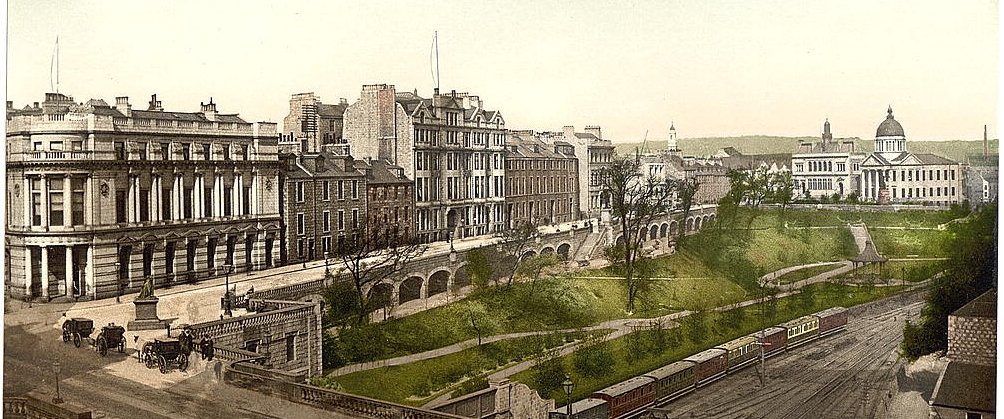
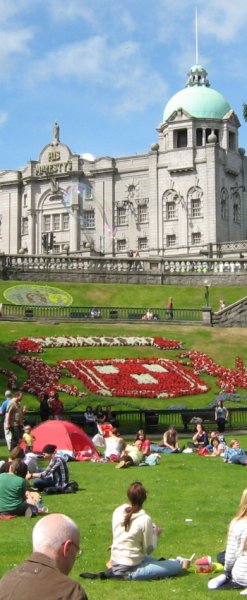
No more pictures in newspapers of perfectly groomed flower beds and outdoor stages in front of theatres. No more drawings of steep ramps ascending to great heights, only to descend again for no real reason, free from any safety features, structural supports or architectural rationale. We’ll not see the woman sitting in the green grass growing over the potato-shaped wedge of concrete or the giant floating boy any more.

Skateboarders, graffiti artists, ACSEF members and Sir Ian are thought to be inconsolable. However, with his £50 million soon to arrive to help African charities, the end of the web project isn’t all bad.  Every granite web has a silver lining.

Other than that, Old Susannah had a delicious, fun, engaging time at Norwood Hall’s Burns Night Supper. The company was great; the food was special (best haggis, neeps & tatties dish ever), the conversation was genuinely vibrant and dynamic.  The man who addressed the haggis did so in great style.

On Friday it will be time to see local improv troupe Wildly Unprepared, which just celebrated its one-year anniversary last week.  This week’s show starts at 8pm in The Belmont Cinema.

On Saturday, I’ll probably take my usual jog around the lighthouse in Torry (have to keep fit somehow). Running by the Nigg Golf Club, I get to see golfers out in all sorts of weather – extreme winds, torrential rains, snow, you name it.

I conclude these golfers are very fit people, especially if you compare them to protestors in New York City, which must be a very fragile breed indeed. A one-hour long Manhattan protest was called off this week, as the winds might have reached 20 miles per hour.  Safety first I guess. But perhaps there was something more to this protest being halted.

And with that, time for this week’s definitions.

Rent-a-mob (mod. Eng. compound noun) – a group of people who seem to be endlessly attending protest after protest, especially if organised by grass roots leaders.

The above definition from the excellent Urban Dictionary needs to have a second meaning added. This may possibly due to the intervention of Trump organisation supporters. Old Susannah is happy to explain.

Adverts appeared on the intranet; an organisation called Ovation was willing to pay stand-ins, extras, and just random people $20.  All you had to do was be in New York City on Wednesday 30 January and stand behind ‘speakers’ at a protest in front of the British Embassy in Manhattan. Of course most people in New York would gladly have spent an hour fighting UK renewable energy for nothing.

Still, this very generous offer from Ovation was I’m sure just a nice way to say ‘thank you’ to New Yorkers for doing their civic duty by telling the UK not to put up wind farms. It must have been a generous act, otherwise to the cynical it might have looked as if someone was trying to manufacture a stage-managed, fake protest for their own personal ends

I wonder who might have wanted to pay people to back up protest speakers in this situation. I suppose we could try and make a wild guess.  For openers, whoever put out this open call  for a rent-a-mob would have to have some kind of connection both to Manhattan and the UK. Second, they would have to have something against wind turbine energy.

Third, it would have had to be someone with lots of money to rent, – sorry – to reward the would-be protestors. Fourth, it would have had to be someone with something to gain by acting against wind farms being built in the UK.   Yes, it will be hard to find anyone fitting this description. I’m totally stumped.

Even sadder still is that this noble paid protest somehow got rumbled. The person who first found the advertisements alerted the ‘Tripping up Trump’ Facebook page (although I can’t imagine why they decided to tell this particular group about it).

The British Consulate and New York media were alerted.  The ads which had been in publications such as Craig’s List, suddenly disappeared.  But before we could find out who the mystery anti wind farm warrior was, they showed an even more generous side to their nature.  The reason given for the protest being called off was that it was going to rain. And, the winds might even have gone up to 20 miles per hour.

It does occur to me that Trump International on the MenieCoast said it would have jet-setting pro golfers and celebrities  year round, and a round of golf on this course could take about 2 hours. All I can say is I’m glad Trump golfers will not have to face anything as harsh as rain or 20 mph winds. I wonder if you get your money back if the weather gets that severe and you can’t play golf?

Frost Jacking  (mod. Eng. compound noun) the theft of a motor vehicle which the owner is trying to clear of snow and ice before it can be driven.

Never mind any Stig-themed car stealing Facebook Pages; things have moved on and taken a seasonal turn. Frost-jacking seems to be the new fashionable grand theft auto crime. This past week in Belfast, on one morning 9 cars were stolen in 90 minutes.

When the weather is very harsh and cold (even worse than rain and 20 mph wind), people will start their icy cars in the morning to melt the frost and heat the interior. Unfortunately, some of these people haven’t got the memo that there is actually a small bit of car crime going on, so they leave their cars running, getting nice and warm, and they go back into their houses.

Amazingly, some thieves are finding it convenient to steal an unwatched, running, warmed up car. Who would have thought?

Still, I’m sure that crime around the UK is set to take a sharp nosedive, as a new, brilliantly clever police initiative is announced by the ConDems.

Police ‘Direct Entry’ Scheme (UK Government initiative) – a scheme in which highly-ranked foreign police personnel will be allowed to join the UK’s police in senior positions over the promotion of existing UK police personnel.

What could be a better idea than sprucing up UK’s policing than by putting in foreign government police officials in charge? I can’t think of anything that could go wrong there.

Existing police who are hopeful of working their way up the ranks will be delighted to be passed over in favour of police from other countries. Obviously legal, cultural, social, and political bumps may need to be smoothed out.  It might take a few days or even a week or two for someone with no experience of policing in the UK to get to grips with our laws, arrest procedures and so on, but let’s give it a go, shall we?

Apparently, this great scheme is going to be the end to all problems, such as that lovely Leveson enquiry had a wee look at, by wiping out corruption. It is going to accomplish this by promoting people much quicker, and getting foreign police supremos to take the top policing jobs here.

According to the BBC, the brains behind this new plan (Police Minister Damian Green) said there was direct entry in other services, including the Army and the prison service. Fair enough – those sectors are in great shape.  Green apparently commented:-

“… there is no organisation in the world that cannot get better and it must be the case that if you widen the pool of talent, then you will get even better policing in this country.”

Fantastic.  Perhaps they can incorporate some of the USA’s armed response philosophies, or other countries search and seizure policies (search warrants optional), or even some of those extremely effective interrogation techniques found in other countries still.

I believe the law is still on the books in Singapore that vandalism is dealt with by fines, custodial terms and caning (which will split the skin and leave permanent scars). I’m sure high-ranking police there will fit right into how we do things here.  Turkey may be in the EU, but there are still a few wee issues such as alleged torture, and arrest of journalists. Oh wait, we’re already doing that here.

Anyway, let’s get some of those police officials here; I’m sure it won’t take them any time to whip our laws into shape and lead our police to better practices.  Result!

For some reason or other, Steve White, vice-chairman of the Police Federation, seems to think police need to learn police work through first-hand experience and through progressing through the ranks over time. I hope he overcomes this old-fashioned idea before it gets him in trouble.

So, just when you think the ConDems can’t do any more for us, they surprise you again. Thanks guys.

Next week:  more definitions, more news, and the latest crime fads revealed.

  • Comments enabled – see comments box below. Note, all comments will be moderated.

Jan 142013
 

housecloudtaller By Bob Smith.

Lit me say richt awa,there wull be blue sna
Afore ma fantasy predicshuns cum richt
Bit lit us aa pray, there wull cum a day
Fin warld poverty’s nae langer in sicht

The Donald wull state,”Michael Forbes a’ll nae hate”
“An at winfairms a’ll nae hae a glower”
Afore is cums true, naebody’ll be on the broo
An hell itsel wull freeze ower

The Dons’ll aye win, their fan’s wull aye grin
In Europe Man Utd they’ll crush
Their play wull be racy, fin they sign Lionel Messi
An the green an white hordes they wull hush

Gaza Strip wull hae peace,an Israelies they’ll cease
Tae bigg on Palestinian grun
Fowk wull feel better, an guns winna maitter
An fae shell’s young bairns winna run

In oor Aiberdeen,the cooncil cums clean
An tells us aa fit’s gyaan on
Nae diggers wull dig tae bigg a new brig
Throwe the streets o puir Tillydrone

Sir Ian wull depart, in the puff o a fart
Wi his 50 odd million in a hurry
He’ll dee much mair gweed, if Africa’s hungry he’ll feed
An aboot webs an gairdens nae worry

Fit the future micht be, we’ll jist wait an see
Wull ony fantasy predicshuns cum true?
If only een wis fulfilled, a wid be richt thrilled
So a’m hopin the sna wull turn blue

©Bob Smith “The Poetry Mannie” 2013

Jan 112013
 

Aberdeen Voice is grateful to The Point for permission to publish the following essay by John Aberdein from the forthcoming volume UNSTATED: Writers on Scottish Independence.

john_aberdein_134 I have contracted an aversion to hype. It is a bog-standard Rannoch Moor aversion, neither world class nor premier league. And so, if the Electoral Commission sanctions the extra box, I might not vote in the referendum Yes – but merely Uhuh.
Imagine, if you will, a tottering pile of Uhuhs. Because we have had a measure of independence for quite some time – but what have we done with it?

We have had powers over primary and secondary education for donkeys’ years, yet our education system is confounded by hype. Quality Assurance, Higher Still, and now Curriculum for Excellence. Cream is not enough for the mandarins: they must churn the schools till they get butter.

The perfectability of children – or the system – lies within our grasp, it is implied, just a couple of documents off. I enjoyed teaching in Scotland for nearly thirty years, but to re-enter the classroom under such pressures would do my nut. We don’t need independence to sort this: we need to let a whole variety of teachers with high commitment – and proper pay and pensions – proceed with the professional confidence that accords and comes with democratic power. See the Kirkland Five. See Finland.

Similarly, we have had serious devolution for a while now, with control over our National Health Service, yet much of our individual health is raddled. We gollop fast food down, we drink like whales. Pigging and whaling it because we are not independent? Perhaps with independence – and Trident gone – we could create a new defence policy, winching our more gaseous bodies up as barrage balloons. Creative Scotland likes big projects. Otherwise, with respect to egalitarian models of individual health targeting and collective improvement, again see Finland.

And we have had a Scottish Parliament for thirteen years, re-engaged to a proud old legal system, with control over our country’s infinitely toured, dearly cherished land – yet we barely know who owns the bugger, except it isn’t us. There is a fault that lies across our land, but it is our fault, not Westminster’s. That gaping fault comprises: land theft from the commons; land left waste and underused; land exclusion still unrighted. Read the Landman: Andy Wightman.

So there is national and local hype, but a general miasma. Aberdeen, it says on an airport billboard as you enter the terminal: home of the self-sealing envelope. There’s no answer to that. A worser silence hangs about Dounreay, home of weapons-grade plutonium. And – as we seek to found a planet-saving, high-export, steel-hungry, renewables industry, we meet the sign – Ravenscraig, home of globalism (flitted). Scotia, home of hames, hame of homes, can aye domesticate apocalypse.

The leader of a party not unadjacent to the ruling party in Scotland has been backing this aberration

There was a day in my youth when you could walk dryshod across the Atlantic from Ullapool to Nantucket on the decks of the herring drifters – and that’s when they were in harbour. Tomorrow there will be just one giant trawler purser seasooker that does for the lot of us. I heard of a crew that made a squillion each one night. They landed at a shady pier and quickly banked offshore.

Real independence would include defence of biological resources held in common against our own and other pirates. Plus, to refound our country properly, nationalisation of major minerals and bringing to book all tax-evaders.

A billionaire I schooled with wants to raze the ancient elms in a sunken classical garden to raise a shrubbish granitette hoohaa instead. The leader of a party not unadjacent to the ruling party in Scotland has been backing this aberration and Scottish Enterprise has largely paid for the relentless PR.

The project to demolish Union Terrace Gardens is hailed by the exaggerators as vital and transformational when fatal and deformational would be nearer. A party that leads the call for independence would do well to wake up to its own whipped centralism.

Up the coast, a man with hair combed to the eyes, and shooting from the hip, rakes the marram out of the dunes to make a golf course. A party not unadjacent to the current ruling party in Scotland thinks this is grand and approvable and overrides the piffling independence of the local community to make it so.

Billionaire then gives Combman an honorary degree and lauds him for putting Scotland on the international golf map. Fictionalists from St Andrews to Troon are made redundant because they could not make that up. Combman, imported patriot, then has a bad attack of wind. And a party that purports to trailblaze to independence should now dump a tendency to tatty diktats?

Trees for Life are engaged in restoring the Caledonian pine forest. Some of my best friends are Scots pines, so I go to help Trees for Life root out slump-shouldered sitka spruce and replant with bonny, red-barked, strong-limbed Pinus sylvestris. It is a slow process, as many good processes are. TfL are also campaigning to reintroduce the wolf to Scotland. The last one was killed in 1746 by a Highland hunter called McQueen. Imagine the ceremony, if youse will. Scotland – I don’t know if you still remember – this is Wolf. Wolf, meet Scotland. What will the wolf think?

Culloden set a pellucid standard for antihype. But antihype is not really TV’s country

Meanwhile – another screengrab – as you stand in the centre of Inverness, an odd bus passes. Its destination board reads Culloden via Tesco. In the days before heritage got polish, if you went to Culloden, there was a wooden notice stuck in the heather which read: Dangerous Battlefield – Wear Sensible Shoes.

After independence, but not before, that same bus will be rerouted past Braw Brogues, that we may suffer no such deficiency again. More pointedly, the TV documentary Culloden by Peter Watkins was made for buttons in 1964, with shivering, bloodied local folk, some of them battlefield descendants, recruited to do the dying.

With a Brechtian yet empathic authenticity both moving and thought-demanding, Culloden set a pellucid standard for antihype. But antihype is not really TV’s country. And so after Watkins’ The War Game the following year, a scorching exposé of how kitchen door shelters don’t halt H-Bombs, TV dropped him.

Speaking of Armageddon, we are hanging on for the showdown…

As regards underworld, we once had three hundred years’ worth of recoverable coal. I went down the Seafield Colliery for a visit, a mile down at the speed of darkness, three miles out under the Forth in the dripping tunnel on the man-riding train. Many of the folk in the Fife coalfield were practically communists. So that had to be closed down, the pits flooded, mainly by Thatcher. To recruit for independence, if it is to be more than Uhuh and a yawn, we might need to reinvigorate that deep sense of the commons?

And, anent independence, most working people have none: the only power they have, if they are employed at all, is to withdraw their effort. This is not acknowledged by certain politicos, who can be spotted not on the picket line but hopping from studio to studio wringing their hands. Meanwhile capital can go on strike or abroad for as long as it likes whenever it pleases, and nobody holds it to account – there’s independence for you.

Indeed if capital catches cold from all its jaunting we purchase for it a medicine called Independence Plus. It is dispensed in a pail. As for one spoon of medicine for the rest of us, that would only encourage sloth and dependency. Before we write a prospectus for independence, I suggest we read and reread the recent works of David Harvey, Zizek and Badiou.

Yet I applaud instances where this Scottish Government has been humane

Because, with so-called independence, would the iron rule continue that capital needs its minimum 3% annual return, come what may?  Even if it means laying tram tracks annually and tearing them up, scrapping human scale crew-owned fishing boats to build supercapitalistic ones, and rooting out beloved gardens to ram some architectural crassness over them?

Or would we roll up our political sleeves in order to regain and develop our nationally-owned, locally-owned, and communally-owned sectors?

Huge questions, perhaps only fully answerable in action, once the present interim independence-seeking party helps us get there and then splits. Rather grimly, in terms of portent, at the moment of writing the Scottish government has just awarded the Orkney and Shetland ferry contract away from the nationally owned NorthLink to those ubiquitous public contract snafflers Serco. So that by the time this is published, cuts in employment and employment standards will almost certainly have followed, to ratchet up Serco’s margin.

Yet I applaud instances where this Scottish Government has been humane. The freeing of Abdelbaset al-Megrahi, tempering justice with mercy, and against the fierce denunciation emanating from the US State Department, was a noble moment in our history, nobler in the annals of virtue than even Bannockburn. Albeit his conviction in a Scottish court in the first place had hallmarks of superpower subornment. Just as, in our daily political life, a footloose international media mogul has been interfering too.

In a different sphere, I applaud the Scottish Government’s removal of prescription charges, and hope  it presages the maintenance of a full and proper National Health Service. But in March 2012 a die was cast on this matter in England.

The UK coalition government, comprising two parties that,  clapped-together, would barely form a rump in Scotland, forced through the Health and Social Care Bill against universal professional advice and a million petitioners, thus laying the whole health service in England open to usurpation. I travelled to Westminster to lobby against this, but the coalition had already sold its ears.

I flew to Obama’s inauguration, and hungrily allowed myself to come under the influence

So up to 49% of beds in NHS Foundation hospitals in England are now legally available to be allocated to private patients. This will impact indirectly on Scotland as a Barnett consequential. The grant we receive for our hospitals from the annual Barnett formula pro rata block grant is calculated on what is received by English hospitals from government funding, but not from private insurance fees.

Once the temporary arrangements made to cover this have faded, Scottish health services, unless we get a grip and do something, will haemorrhage grant and be driven in the same ghastly privatizing direction.

Let me close with a confession.

It is ever easy to be lulled by the spell of hype. In January 2009 I flew to Obama’s inauguration, and hungrily allowed myself to come under the influence. At the start of the week I sang We Shall Overcome in Washington’s National History Museum – linked in arms  with African Americans who dared to hope that serious social change had come to pass. By the end of the week, back in New York, the neon high round News Corp’s skyscraper was tickering: President Orders Missile Attack on Afghan Village – 18 Dead.

On the Amtrak train between these cities I talked with Americans. Was this a fresh chapter in their democracy? We talked of many things, principally socialized medicine. They wanted none of that nasty stuff. I said, Forget the two-word dismissal: you need six words to understand the founding principle of the NHS. What are your six words? rapped a sceptic. Free at the point of need, I said. I further claimed, indeed asserted, that the USA could never regard itself as a civilized country until it looked after the healthcare needs of all its citizens.

Dear reader, I got out alive. And that exemplifies the real basis on how I will vote – if spared – in the referendum in two years time. I will vote to be in a better position afterwards to fight to keep the single greatest bedrock achievement of socialism and human decency we have: the National Health Service. And since I do not think the Electoral Commission will trouble to find peely-wally Uhuh in its vocabulary – and since the process of essay-making has cardioverted the caveats in my ageing heartbeat – I will make my vote count on the side of our life, and not for capitalism.

  • More Info.

UNSTATED: Writers on Scottish Independence, edited by Scott Hames (Word Power, £12.99).

“We are deluged by facile arguments and factoids designed to ‘manage’ the Scottish question, or to rig the terrain on which it is contested. Before we get used to the parameters of a bogus debate, there must be room for more honest and nuanced thinking about what ‘independence’ means in and for Scottish culture. This book sets the question of independence within the more radical horizons which inform the work of 27 writers and activists based in Scotland. Standing adjacent to the official debate, it explores questions tactfully shirked or sub-ducted within the media narrative of the Yes/No campaigns, and opens a space in which the most difficult, most exciting prospects of statehood can be freely stated.” - Scott Hames

The contributors are John Aberdein, Allan Armstrong, Alan Bissett, Jenni Calder, Bob Cant, Jo Clifford, Meaghan Delahunt, Douglas Dunn, Margaret Elphinstone, Leigh French and Gordon Asher, Janice Galloway, Magi Gibson, Alasdair Gray, Kirsty Gunn, Kathleen Jamie, James Kelman, Tom Leonard, Ken MacLeod, Aonghas MacNeacail, Kevin MacNeil, Denise Mina, Don Paterson, James Robertson, Suhayl Saadi, Mike Small, Gerda Stevenson and Christopher Whyte.

The volume is due to be published in early mid-December and can be ordered from:

http://www.word-power.co.uk/books/unstated-I9780956628398/

  • Comments enabled – see comments box below. Note, all comments will be moderated.
Jan 032013
 

Voice’s Old Susannah takes a look over the past week’s events in the ‘Deen and beyond. By Suzanne Kelly.

dictionary Happy 2013 and Tally Ho! Revellers gathered in Stonehaven for the annual fire festival to ward off evil spirits; in related news, it is thought developer Stewart Milne was not in attendance.

Sadly, it seems his companies were unable to provide a Christmas tree for their Stonehaven development. No doubt schools and infrastructure will prove easier to deliver.

Crowds also gathered in Aberdeen for a fireworks display (which was not great for the wildlife by the way) around Union Terrace Gardens.

The masked ball, the Jubilee tea party, the previous year’s Christmas party and fireworks…  you could be forgiven for thinking UTG is able to be a focal point without even having a granite web.

Christmas is the season to be grateful for what you have and for performing acts of charity.  It might have been blowing a gale, but Feed the Deen managed to hand out warm clothes and serve a hot lunch at Café 52 before Christmas. 

Some generous people who didn’t know about the event in advance promptly went to the shops and returned with brand new goods for Aberdeen’s poor and homeless.

Still, a solution to local poverty seems to be at hand. No, not any local billionaire philanthropists helping out, but instead a sympathetic plan to make begging illegal.

As ever, in order to punish one or two ‘professional’ beggars, the idea seems to be to outlaw begging altogether. Aside from the professionals, other people go into the begging line of fundraising for the glamour and excitement. Alcoholics, runaway children, people with mental health issues, people who have been made poor should all be penalised.

Surely we have plenty of easy-to-access support programmes? Look at how well ATOS is treating people with special needs and abilities.

New estimates suggest that over 400 Scots could face bankruptcy each week in 2013 (but not bankers, obviously).  We’ve done a great job of hiding child poverty – no doubt we can make half the population invisible as well when homelessness increases. However, we can’t have poor people spoiling a day’s shopping for the rich, who might have to think about poverty when they see begging.

I like this idea of penalising beggars; we could get them to pay fines if caught – another revenue source for us. Result!

Speaking of charity, there is no word yet on when Africa will receive its £50,000,000 from the Wood Family Trust

Not only is this a great ploy which goes hand-in-hand with the season of giving, but this mentality of penalising all in order to stop a minority of wrongdoers has some other great applications elsewhere. For instance, intrepid police officer David Hamilton, (secretary of the Tayside branch of the Scottish Police Federation), has suggested callers pay 50p to report emergencies to stop misuse of the service.

I can’t think of any problem with that scheme, can you?  We could give it a trial for a bit, and then introduce a specific tariff for the kind of crime being reported – £0.50 for suspected burglaries, £1.00 for street robbery, £3.00 per assault and so on.

Old Susannah had to make a 999 call just before Christmas  concerning a car incident (details can’t be disclosed as yet). Clearly I should have been charged for helping the person(s) involved. Next time I’ll ask the victim I’m trying to help for some money first. I’m no businessperson – I should have asked them to refund the cost of the mobile phone calls I made, too.

Speaking of charity, there is no word yet on when Africa will receive its £50,000,000 from the Wood Family Trust.   However, the last WFT accounts show the Trust had an income of £29,000,000.  Their expenditure was some £2,355,000.

Old Susannah is still trying to get her head around how getting Rwanda’s plantation owners to grow more tea adds up to a charitable act. Is taking more land away from the very limited agricultural land available an act of charity? Are rainforests cleared to grow this charity tea? Are the people actually going to benefit and not the land owners once this scheme lifts off?

Perhaps some of the WFT staff, paid over £400,000 last year could enlighten me.  When they do, I’ll share the good news with you. However, it’s a little too complex for me to understand just now, just as I can’t understand why the Trustees (i.e. the Wood Family) seem to believe that it would

“…be operationally sensitive to disclose any further remuneration information in respect of these individuals [people getting pensions from the WFT, that is].”  

Well, charity does begin at home. I’m sure it’s all for the betterment of Africa’s poor, and if it involves the destruction of unique, crucial wildlife habitat, then we’re just exporting the Aberdeen philosophy of green space management to Rwanda.

Concerning our remaining green spaces and animals, anti-deer, pro-forest lobby (aka Scottish Natural Heritage) have put out a new report on the evils of deer.

They believe shooting and culling are the answers, or deer might eat trees

It has a great big list of reference documents, so it must be accurate (even if there are no footnotes so you can’t tell what sources support which claims). They give guesses for the number of deer/car incidents in Europe (very high indeed); and they believe that eco-tourism is overestimated especially when it comes to deer.

They believe shooting and culling are the answers, or deer might eat trees. How Scotland ever managed without SNH and these reports is anyone’s guess. Obviously every tree seedling should always reach maturity and not be part of the food chain whatsoever – like it’s always been.

I’ll read this great report and will let you know what I think of it later. It is clear SNH loves forests. It is not clear how it feels about less important issues such as meadows, SSSIs, SACs and so on.

Judging from comments on the last Old Susannah column and comments made about SSSIs, it seems that a little refresher course on Scotland’s natural heritage is in order. Some people think these are empty terms, and how right they are. We have things in Scotland which are not found anywhere else, and I don’t just mean Aileen Malone and shopping malls.

We have great landscapes, marine environments and forests – all ripe for making lots of dosh right now.

The SNH, guardians of our Natural Heritage and of our right to blast animals with guns, are responsible for our natural landscapes. Let’s see what protection is given to our environment, built and natural, and what it means in practice by way of a few definitions.

SSSI (Examples:  Menie, Nigg Bay): (Eng. Abbreviation) A Site of Special Scientific Interest, a recognised designation with legal implications.

In the words of England’s Friends of Richmond Park,

“Sites of Special Scientific Interest (SSSIs) are the country’s very best wildlife and geological sites. They support plants and animals that find it more difficult to survive in the wider countryside where they are often under pressure from development, pollution, climate change and unsustainable land management.

“SSSIs need active management to maintain their conservation interest, and it is illegal to carry out certain potentially damaging operations on a SSSI without consent from the Department for Environment, Food and Rural Affairs, or reasonable excuse” – Marilyn Mason.
SSSIs,_NNR,_SAC_-_what_do_they_mean

One of many deer allowed to thrive in major London parks as a highly popluar visitor attraction. Richmond Park is arguably London’s largest parkland. It is vastly underused, of course. People come from around the world to look at the famous Richmond deer herd which lives in it, and they don’t even want to shoot them.

There is no web. Ancient trees which could be used for outdoor theatre seating or just cut down to plant new trees are left to stand doing nothing more than cleaning the air. I will suggest the Friends of Richmond Park contact Aileen Malone and Ian Tallboys for suggestions on making Richmond Park more like Tullos Hill.

Balmedie was a SSSI. It had this island’s one and only moving sand dune system and associated flora and fauna. This was not to be changed or damaged per the law covering this highest of all environmental designations.

Therefore, Alex Salmond over-rode Aberdeenshire’s sovereignty, and told his (then) pal Donald Trump to do as he pleased. No doubt those promised 6,000 jobs for local area residents will be advertised in a day or two. Still, Trump is helping to feed the poor. A sandwich and a few drinks can be had at the course for less than £100! (£85).

Bad news: it seems Mother Nature is not as keen on the golf course as she is on the former ancient SSSI. The weather seems to be undoing some of Mr Trump’s great work, and that would be a shame.

Likewise there are two SSSIs at Nigg Bay. Naturally this means the Harbour Board should be allowed to extend into it for industrial marine purposes. Torry’s old fishermen’s cottages were sacrificed for the current harbour many years ago.

Kate Dean later gave us the lovely sewage plant. Torry was later coaxed into selling coastal lands it owned to help ACC out. Let’s just get rid of the only remaining unspoilt Torry coast and its SSI status (which in part was to do with some boring old geology unique to us with historical importance, not to mention the wildlife).

Once green space is given over to industry, it is virtually lost as green space forever

Benefits will include increased lorries through Torry, more pollution, and no doubt ‘jobs creation’ (even though we don’t have bad unemployment figures). I for one am getting bored of living in a suburban area with a nice coastline – I want more industry.

Air pollution levels near the existing harbour are, by the Council’s own reporting, below European standards for clean air and have been for some time. This is due in part to the road traffic (much of which is directly connected to the harbour).

There is also the lovely pollution from the ships themselves; if you don’t believe me, take a stroll near the Moorings next time a ship is belching black, oily smoke into the air. It will save you the expense of buying cigarettes.

Once green space is given over to industry, it is virtually lost as green space forever, so you don’t have to worry about environmentalists and evil tree-chomping deer any more. Green space might be good for our lungs, our health in general, our wildlife, absorption of excess rainwater, and so on. Still, economic prosperity trumps all. Let’s keep building.

SAC (Examples:  Loirston Loch, Dee River area): (Eng. Abbreviation) A Special Area of Conservation, legally protected status attached to an area.

Here is what Ms Mason has to say about SACs:

“SACs have been given special protection under the European Union’s Habitats Directive in order to provide increased protection to a variety of wild animals, plants and habitats, as part of global efforts to conserve the world’s biodiversity.  The effect of all these impressive designations on visitors is that they must not do anything that would damage the Park’s wildlife… Despite the restrictions, it should be a matter for local pride that we have such an important and beautiful natural habitat here on our doorstep.”

Proud to have important and beautiful natural habitats on our doorstep? Clearly Ms Mason’s not from around here.

The best use for SACs is development, which the previous Aberdeen City Council’s Kate Dean was pleased to approve left, right and centre. She saw no reason to prevent Stewart Milne from building a 21,000 seat stadium for his club (where the average attendance is ever so slightly lower than 21,000 – about 50% lower) over an under-used bit of land.

We might have lost a few endangered species and some more fresh air in the process of increasing our urban sprawl, but we would have had another football pitch. The new stadium supporters said that they were creating wildlife corridors. If you count taking a vast wildlife area and turning it into a small corridor surrounded by industrial area, then indeed they were.

As you might  recall, 100% of the fans were in favour of going out-of-town to watch AFC play, even if there was not going to be enough parking for them.  My favourite part was the fleet of 80 buses which were going to take fans from the town centre to Loirston in fifteen minutes’ time. Sure, that was always going to work. Hopefully we can put up a factory or something there soon.

Clean air, clean water, enough green space for people and wildlife to enjoy – best leave that sort of thing for the next generation to work out. We have concrete to pour, identikit houses to stick up, and money to make.

Common Good Land: (compound Eng. noun) an area of ground owned jointly by the population of an area, often left in trust or deeded to the public.

No less a person than Robert the Bruce left common good land to us in the form of  Union Terrace Gardens. This was an amazing example of foresight. He must have known that ACSEF could have made some money out of it, and that Ian Wood’s statue could have stood proudly and deservedly alongside statues of The Bruce. Why build on boring brown field sites and bring them back into use, when VAT-free land is ripe for the taking?

SSSIs, SACs – clearly all these designations are protected by our national bastion of environmental soundness, the SNH, operating free from any politics or special interest group pressures. SNH said yes to Loirston, they said yes to Trump at Balmedie and they said yes to changing Tullos from a meadow into the luxurious forest we now have. Let’s see how else they plan to protect us in the future.

Next week – more definitions, and a 2012 review

  •  Comments enabled – see comments box below. Note, all comments will be moderated.
Dec 212012
 

How Sir Ian Grinch Stole Christmas by Dr. Suz (with apologies)

iangrinch2 T’was the night before Christmas in old Aberdeen
Or should I say Whoodville, yes, that’s what I mean
Every Whoodie in Whood-ville
Liked Christmas a lot…
But Sir Ian Grinch
Did not like it one jot!

The town settled down for a long winter’s nap
Except for this one crinkly, creaky old chap
Sir Grinch hated Christmas! It might be because
He didn’t believe in a Sanity Clause

The children were nestled all snug in their beds
But Sir Ian Grinch was pacing instead.
Perhaps Ian’s head wasn’t screwed on quite right.
It could also be he was simply just tight.
But I think that the most likely reason of all
Was the Whoodies in Whoodville said no to his mall.

Out on the lawn there arose such a clatter
When Grinch said the ancient great trees didn’t matter
“Let’s cut them down and let’s build some parking!”
But the Whoodies thought Grinch was really quite barking.
Now this Grinch wanted granite – a web of it really
With shopping and theatres and parking, ideally.
But the Whoodies said ‘No’ to his project ‘It’s crass!’
We want our trees and our wildlife and grass.

It was his way or no way, he’d not give an inch
So the web was abandoned; this angered the Grinch

The moon on the breast of the new-fallen snow
Gave Whoodville a vibrant and dynamic glow.
“If there’s no web for me then I’ll make very sure
“My money will go and help Africa’s poor”
“That will fill all the Whoodies with remorse
(“And I’ll avoid being taxed at the source”).

Ian was grouchy and grinchy, indeed
The size of his heart was no match for his greed
He stood there on Christmas Eve, hating the Whoodies,
And envied their happiness and all their goodies

On Christmas day all of the Whoodies would gather
Down in their Gardens for coffee and blather

Whoodies, young and old, would sit down to a feast.
And they’d feast! And they’d feast!
And they’d FEAST! FEAST! FEAST! FEAST!
They would start on Whood-pudding, and rare Whood-roast-beast
Which was something Sir Grinch couldn’t stand in the least!
And THEN
They’d do something he liked least of all!

Every Whoodie in Whoodville, the tall and the small,
Would stand close together, with Christmas bells ringing.
They’d stand hand-in-hand. And the Whoods would start singing!
They’d sing! And they’d sing!
AND they’d SING! SING! SING! SING!

The more that Sir Grinch thought of the Whood-Christmas-Sing
The more Ian thought, “I must stop this whole thing!
“Why, for seventy years I’ve put up with it now!
I MUST stop Christmas from coming!
…But HOW?”

Then he got an idea!
An awful idea!
THE GRINCH
GOT A WONDERFUL, ACSEF IDEA!

“I know just what to do!” Sir Grinch said with a sneer
“I’ll steal every trace of their Christmas this year.
“I’ll threaten to take my web money once more
“And threaten to give it to Africa’s poor.”

“And while I’m at it I’ll steal all their stuff”
(It seems being a billionaire wasn’t enough)
Sir Grinch owned most Whoodville it’s certainly true
His wealth would have satisfied both me and you
But when the old Grinch couldn’t get his own way
And get his Web built, then he vowed they would pay

He made a quick Santy Claus hat and a coat.
And he chuckled, and clucked, “Why you handsome old goat!”
“With this coat and this hat, I’ll look just like Saint Nick!”
“All I need are some reindeer…”
The Grinch looked around.
But since reindeer were scarce, there was none to be found.

(The reason that no deer were found in the town
Is Grinch’s friend Aileen had had them shot down
Her cruelty and greed caused a Whoodville petition
The people agreed there will be no repetition)

Did that stop the old Grinch…?
No! Not one little bit
“I’ll just need to call on a couple old gits
“If I can’t find some reindeer, I’ll make some instead!”
(I think the poor man must be oot of his head)
So he called lackeys Tommy and Colin to come
Which they quickly did, those poor dears were quite dumb.
And he tied great big horns on top of their heads.
(It seems that these lapdogs were easily led).

He was dressed all in fur, from his head to his foot,
The old Grinch couldn’t wait ta get oot and aboot.
THEN
He loaded some bags
And some old empty sacks
On a ramshackle sleigh
And he hitched up dogs Tommy and Colin, whey hey!

Then the Grinch said, “Giddyap!”
And the sleigh started down
Toward the homes where the Whoodies
Lay asleep in their town.

All their windows were dark. Quiet snow filled the air.
All the Whoodies were dreaming sweet dreams without care
When he came to the first house near to Union Square.
“This is stop number one,” The old Grinchy was there.

His eyes-how they twinkled! his dimples how merry!
His cheeks were like roses, probably had too much sherry.
And he climbed to the roof, empty bags in his fist.
Then he slid down the chimney. A rather tight pinch.
But if Santa could do it, then so could the Grinch.
He got stuck only once, for a moment or two.
Then he stuck his head out of the fireplace flue
Where wee Whoodie stockings all hung in a row.

He stole left, right and centre; he got on his knees
He swiped BrewDogs, Glenfiddich and Zeppelin CDs
And just to increase the Whoodies distress
He left unsold copies of Evening Express.
And he stuffed all their gifts in his sacks and then nimbly,
Stuffed all the bags, one by one, up the chimney!

The stump of a pipe he held tight in his teeth,
And the smoke it encircled his head like a wreath.
Then he slunk to the icebox. He took the Whoods’ feast!
He took the Whood-pudding! He took the roast beast!
He cleaned out that icebox as quick as a flash.
Why, that Grinch even took their last can of Whood-hash!

He spoke not a word, but went straight to his work,
And stole all the stockings, he was such a jerk!
Then he stuffed all the food up the chimney with glee.
“And NOW!” grinned Sir Ian, “I will stuff up the tree!”
“I’ll have theatre seats carved from it, just wait and see
“Down with the trees, turn their wood into chip
“For my web and its theatre” (he was quite a dip)
Then he heard a small sound “This can’t be good!”
He turned around fast, and he saw a small Whood!

Twas Marie-Lou Whood, who was not more than two.
The Grinch had been caught by this little Whood daughter
Who’d got out of bed for a cup of cold water.
She stared at Sir Ian and said, “Santy, why,
“Why are you taking our Christmas tree? WHY?”

But, you know, that old Grinch was so smart and so slick
He thought up a Whood lie, and he thought it up quick!
In that he had practice, his cunning renown
A cunning which had torn Whood businesses down

“Why, my sweet little tot,” the fake Santy Claus lied,
“There’s a light on this tree that won’t light on one side.
“So I’m taking it home to my workshop, my dear.
“I’ll fix it up there. Then I’ll bring it back here.”

So he fobbed off the child with yet more of his lies
The master of false promises, spin, alibis
And he got her a drink and he sent her to bed.
And when Marie-Lou Whood went to bed with her cup,
He went to the chimney and stuffed the tree up!
Then the last thing he took was the fireplace wood.
His hatred of trees and his greed were no good.

He did the same thing
To the other Whoods’ houses
Leaving crumbs
Much too small
For the other Whoods’ mouses!

His droll little mouth was drawn up like a bow,
And the hair of his head was as white as the snow.
When he packed up his sled he was most ecstatic,
(By this time the Grinch was extremely erratic)
He had all of their presents! The ribbons! The wrappings!
The tags! And the tinsel! The trimmings! The trappings!

“I’ll just head to the Gramps and on old Tullos Hill
“I’ll fly-tip these presents” (so much for good will)

“Pooh-pooh to the Whoodies!” the old Grinch was singing
“This year they’ll be no Christmas bells ringing.
“They’re finding out now that Christmas was snatched
“Oh what a brilliant idea I have hatched.
“They’re just waking up! I know just what they’ll do!
“Their mouths will hang open a minute or two
“The all the Whoods down in Whood-ville will all cry BOO-HOO!”
“They’ll say ‘Give us a web for we now need it more
“Then food, clothes and shelter would help Africa’s poor’.
“Give us more malls, and give us more shopping!
“They’ll beg for my web – oh those Whoods will be hopping!”

“That’s a noise,” grinned the Grinch,
“That I simply must hear!”
So Sir Ian Grinch put his hand to his ear.
And he did hear a sound rising over the snow.
It started in low. Then it started to grow…
But the sound wasn’t sad!
Why, this sound sounded merry!
It couldn’t be so!
But it WAS merry! VERY!

He stared down at Whood-ville!
Ian could not believe
Despite all of his efforts to plunder and thieve
What met his eyes was a shocking surprise
Each Whoodie in Whood-ville, the rich and the poor
Was singing! He shook to the core.
He HADN’T stopped Christmas from coming!
IT CAME!

Somehow or other, Christmas survived!
In fact you could even say Christmas had thrived.
He stood puzzling and puzzling: “How could it be so?”

“It came without ribbons! It came without tags!
“It came without packages, boxes or bags!”
It was as if shopping was not the reason
For people to celebrate during this season.
Even without lots of designer gear
Somehow Christmas had still made it here.

And he puzzled three hours, `till his puzzler was sore.
Then the Grinch thought of something he hadn’t before!
“Maybe Christmas,” he thought, “doesn’t come from a store.
“Maybe Christmas…perhaps…means a little bit more!”
And what happened then…?
Well…in Whood-ville some of them say
That the Grinch’s small heart
Grew three sizes that day!

And the minute his heart didn’t feel quite so tight,
He whizzed with his load through the bright morning light
He said “Look what I just found when passing through Torry
“Nicked presents, which fell off the back of a lorry”
And he brought back the toys! And the food for the feast!
And he…
…HE HIMSELF…!
Ian Grinch carved the roast beast!
Merry Christmas to All, and to All a good night!

Well if you are reading this dear Mr Wood
You still have a chance to make everything good
Why not help the poor both here and abroad?
Doing so would be the greatest reward.

We need our green space, clean water and air
Even the finest web could not compare.
We’ve things in this town nowhere else to be found
So lay off our gardens, our common good ground.

If you want gratitude you’d get it indeed
By helping the helpless, the people in need.
So many things you could do with your money
The difference you’d make – it’s not even funny.

Next time please ask us, don’t dictate your plan
People are asking what kind of a man
Would cause such division, pitting friend against friend
Ian your web plans have come to an end.

Give up the ghost, take up some other cause
That’s all I’m saying – goodnight –

- Santa Claus

 Comments enabled – see comments box below. Note, all comments will be moderated.

Dec 032012
 

Local authorities in Scotland must allow the public to look at their unaudited accounts, and Aberdeen City Council is no exception to this rule. In August 2012 this annual statutory period of time was granted for interested people to examine the city council’s financial year documents from 2011.
Paying Through The Nose: Part 1 looked at invoices Aberdeen City Council paid to Stewart Milne-related companies, the Wood Family Trust and the BiG Partnership. In the second and final part, Suzanne Kelly examines finances for the 2011 financial year relating to ACSEF, the Tree for Every Citizen scheme, foreign trips by city officials and more.

invoices Tree for Every Citizen: A scheme and a half

In this allegedly environmentally-sound tree-planting scheme, the slogan A Tree for Every Citizen came first, and the science, economics and location for said saplings was a secondary concern. Tullos Hill was once a meadow filled with birds, plants, small mammals and deer.

Thanks to the interventions of a minority, the hill is now largely a scarred, haphazard wasteland.

Pete Leonard (Housing) and Aileen Malone (Lib Dem former convener, Housing & Environment Committee) promised councillor and citizen alike that their pet scheme was totally cost neutral. Who could object to a beautification project designed to combat Aberdeen’s large carbon footprint? Who could object to a scheme that wasn’t going to cost anyone anything?

More to the point – who actually believed a polluted, windswept hill which had thus far failed to sustain many trees was going to become a lumber-producing, cost-neutral success story?

The figures below were prepared by the city in answer to my query on the scheme’s 2011 finances: 

Expenditure £
Deer Management 6,748.54
Tree Planting including clearing 33,128.00
Fencing 13,812.97
 Total Expenditure 53,689.51
Income
Grant Income (13,891.10)
Net Expenditure 2011/12 39,798.41


This net expenditure was then broken down as follows:

Date Amount (note – these seem to be the net figures without VAT) Description (note – text was not complete on spread sheet I was given)   Supplier
15/6/11 (13,891.10) Grant – tree for every citizen
9/11/11 7,125.00 Unknown – tree for every citizen   Bryan Massie
19/3/12 3,840.00 Unknown – tree for every citizen   Highland estate services
20/3/12 7,500.00 Unknown – deer fencing for tre [sic]   Bryan Massie
23/3/12 16,150.00 Unknown – project management C   C J Piper & Co
23/3/12 6,221.31 Aberdeen City Council
28/3/12 6,273.00 unknown – application of kerb   Bryan Massie
31/3/12 (260.00) Date of supply 28th march 2012   Forestry Commission
31/3/12 6,312.97 Unknown – Tullos hill – tree for   Bryan Massie
05/4/12 527.23 Aberdeen city council
TOTAL 39,798.41


It seems just a little amiss that the word ‘unknown’ should appear so many times on a summary of expenditure. It also seems amiss that the breakdown includes only one of the two C J Piper invoices I was supplied. The Hazlehead costs seem to be left out of this equation – and yet cutting these trees at Hazlehead down was, according to sources, one of the ways in which the Tree for Every Citizen scheme was paid for.

Is the meagre £527.23 from Aberdeen City Council to the TFEC scheme related to the Hazlehead tree felling which earned Piper £1,422? If it is unrelated, then which city budget did this sum come from and what does it represent?

Like so many things under our previous council and under Leonard and Chief Executive Watts, these ‘cost-neutral’ claims were a far cry from reality. The total costs to December 2011 had already been released by the FOI office, and they were damning.

After a great deal of coaxing, Watts conceded that £43,800 had been repaid to the Forestry Commission for the dismal failure of Phase I of the scheme. All who wanted Phase 2 to go ahead blamed the deer for the failure, even though the FC said the soil and weeds were largely to blame. Still, no one would have kept making money had the scheme been scrapped. Least of all Chris Piper.

We Who Pay The Piper

Apparently a sole trader under the name C J Piper & Company, Chris Piper was the principal architect of this sorry scheme. I had asked for sight of Piper invoices ACC paid in the 2011 financial year; this is what was made available:

Invoice No Date Description   Gross Amount
ACC/0312/300 6 March 2012 PO A139378 – Implementation of the Tree For Every Citizen scheme, design and plant Ph II, prepare and submit relevant applications, liaison with Forestry Commission and other agencies and ACC officers; preparation of bills of quantity, commissioning of contract works on behalf of ACC, on site supervision, submission to woodland carbon code certification, PR/media strategy (mileage 2,778 miles £1,250), VAT £3,230   19,380,00
ACC/1111/298 30 November 2011 Woodland consultancy (No PO number quoted) as per finances & Resources  Committee Report December 2010 – thinning at Hazlehead Golf Course, preparation and submission of Forestry commission felling license, drawing up of standing sale particulars and circulation to the timber market, taking and assessing bids   £1,422.00


Getting sight of the Piper invoices was a long process; the FOI officers protected Piper’s identity at all costs for over a year, despite this being a person writing city reports which justified his further fees on this scheme, and receiving taxpayer money.

Piper, a Forres-based tree expert, is invited to come forward and explain his determination the scheme would work, and how he produced a report jointly with the city which recommended the TFEC scheme (calling the many opponents ‘a vociferous minority’).

How someone with a vested interest in a scheme proceeding can be allowed to author or co-author a report (no one at ACC put their name on the joint submission made to the FC) should be a matter for further investigation.

The soil (or lack thereof), the wind, the weeds and use of herbicides alone should have stopped the scheme. (Note: at present nothing like 89,000 trees have been planted on Tullos despite this being the plan. Originally, some 20 deer were going to be culled in the first year – we now know it was closer to 36: which we paid some £6,000 to eliminate).

No wonder the city and Piper were so keen to keep things quiet.

As a footnote to those who believe the tree scheme will eventually be a successful carbon capture system of some sort, there are a few points to consider. Firstly, tearing out the existing vegetation ruined what carbon capture had been in place, and the earth moving vehicles used assuredly had a carbon footprint.

Surprisingly formidable in terms of carbon footprint is the astonishing figure of 2,778 miles travelled by C J Piper, billed to the taxpayer at £0.45 per mile for a staggering £1,250. This appears on an invoice from May 2011 to 6 March 2012, totalling £19,380 inclusive of VAT. As green carbon capture schemes go, this scheme has a great deal to make up for (providing any of the trees, currently surrounded by weeds) manage to grow.

Odds and Ends

Bryan Massie Woodland Management Ltd did quite nicely out of the scheme as well, spraying herbicides. Anyone can see the chemicals did not exactly save the Phase 1 trees, and Phase 2 growth is already surrounded by high weeds.

Astute council observers will recall the blackmail deal offered by Malone: give us £225,000 for fencing, or we kill the deer. She insisted we had no money for fencing. The public were urged by all interested animal charities not to give into this blackmail and the precedent it would set. Somehow, money for fencing was found anyway – yet the deer were still exterminated.

Invoice No Date Description Gross Amount
483 27/10/2011 Spraying, planting and  tubing various sites 8550
520 09/03/2012 Herbicide application (various locations 7527
(unk) 09/03/2012 Deer Fencing at Tullos (first part) 9000
(unk) 38/03/2012 Deer Fencing (second part) 7575


Highland Estate Services were paid £480 per day to clear our gorse; their Invoice No. 547 shows them receiving £4,608 from the city.

Payback’s a B*tch

The city had to return £43,800 to the Forestry Commission for the dismal failure of Phase 1, but this seems to have no place in the 2010 or 2011 accounts. This figure was paid rather late; it was demanded of us in November 2010.

The Commission had to chase the city, which eventually paid in March 2011. Yet the sum was not reflected in accounts to December 2011 (received under FOI legislation), nor is this figure reflected in the 2011 scheme.

The council should explain where this figure appears in the books – it is clearly part of the tree scheme. If it were to be combined with the net expenditure recorded in 2011 of £39,798.41, then we have spent £83,598 (minimum) on a scheme opposed by 2,400 people, several community councils, and animal charities including the Scottish SPCA.

This should be a matter for serious investigation by Audit Scotland and Standards in Public Office. It has enriched a few businesses, served as a Liberal Democrat mantra and compromised what was once a rich meadow teeming with wildlife.

What the Forestry Commission wrote:

031/000390 – Tullos Community Woodland

“This is a failed WGS planting scheme. The scheme failed due to inadequate protection from deer and weeds. On the 4th November 2010 we issued Aberdeen City Council with an invoice for £43,831.90 – the reclaim of monies paid out under the above contract.

“This invoice was to be paid within 30 days. The monies have not been received. This invoice is now accruing interest and has led to a payment ban being put in place over your Business Reference Number”.

What Ms Watts eventually admitted: this money was paid in March 2011. She continues to deny the Tree for Every Citizen Phase 1 planting at Tullos and St Fitticks has any connection whatsoever to the Tree for Every Citizen Phase 2 planting at Tullos and St Fitticks. This is a nice bit of semantics, but would it stand up to an auditor’s scrutiny?

I can find no record of Pete Leonard going back to the Housing and Audit Committee and advising them the scheme which he promised was cost neutral would be nothing of the kind.

You might be forgiven for thinking an officer of the city should account to the relevant committee (if not the public) when his figures were found to be faulty. Whether the expenditure was £39,798, £83,598 – or considerably higher when taking into account the 2010 costs – this scheme was never going to be cost neutral.

Come Fly Away, Come Fly Away With Me

When a city is cutting services to the elderly and infirm, when a city wants to drop arts and music lessons, and refuses to maintain its pavements and roads, should it really be deploying its higher-ups to foreign countries for seminars? Aberdeen thought so last year:

Traveller Date Destination Flight cost subsistence Hotel cost Reason for trip
Gerry Brough 29/4 – 5/5/11 Houston Flights and accommodation arranged through group package 662.22 – returned 381 US Dollars OTC (Annual oil event)
Gerry Brough 5/11-9/11 Lyon/Grenoble 277 449.23 – returned 110 Euros 388.79 Invited to speak at conf/networking
Gordon McIntosh 3/12 – 7/12/11 Doha 671 529.72 Paid of City of Doha World Energy Cities AGM
Gordon McIntosh 6/11-15/11/11 Australia 1,518 1379.62 1,148.99 Economic Development Activity
Gordon McIntosh 17/1-25(?)/1/12 Ghana Paid UK trade & Inv 794 US Dollars 242.01 UK Trade & Investment Project
Gordon McIntosh 21/3-23/3/12 Nice 495 233.52 Launch of Hydrogen Bus Project
Gordon McIntosh 25/3-25(?)/3/12 Brussels 205 120.53 492.25 North Sea Commission 2020
Valerie Watts 27/9-30/9/11 Aarhus, Denmark 525 (?) 310.60 550.23 CPMR General Assembly
Lord Provost Peter Stephen 30/4-7/5/11 Houston Flights and accommodation arranged through group package 311.07 returned 40 US Dollars OTC
Lord Provost Peter Stephen 34/6-27/6/12 Nuremberg 314 242.45 Regensburg Burgerfest Festival
Lord Provost Peter Stephen 3/12-8/12/11 Doha 537 529.72 Paid of City of Doha World Energy Cities AGM


One hopes that the flight costs were reasonable; they were in many cases not disclosed. In terms of carbon capture, so important to Leonard and Malone when it came to Tullos Hill, perhaps we could have preserved the hill and lowered our carbon footprint simply by not flying these mandarins around the globe.

Perhaps attending our Oil and Gas event at the AECC would not have been sufficient to advise people Aberdeen has something to do with the oil sector. Perhaps nothing was more essential than the Regensburg Burgerfest Festival, or knocking around Australia for economic development purposes.

However, would it be more prudent and somewhat more in keeping with current austerity measures to do more teleconferences and cut out the air miles? Who knows? One or two events less and our former Lord Provost and his wife might have made some saving on their dress allowance, which of course comes from the public purse.

ACSEF: One Hand Washing the Other

ACSEF is an economic forum where our richest and most influential business people are supposed to give us an advisory forum. The quango, however, transformed itself from ‘forum’ to ‘future’, and this unelected body, existing to further business interests uber alles in our city, regularly gives advice to City and Shire governments, which are expected to rubber-stamp ACSEF recommendations.

Under the stewardship of chair Stewart Milne, ACSEF decided the city’s special area of conservation at Loirston should have been transformed into a ‘community’ stadium (and then somehow a private stadium which Milne would decant AFC into, turning AFC’s historic grounds into housing for his own profit).

How Mr Milne was able to wear his ACSEF, property developer and AFC Chairman hats without having any conflict of interest is unclear. It is perfectly clear ACSEF wanted a ‘spade in ground’ project at Loirston, coincidentally favouring its chairman’s business interests in the process.

If the taxpayer wasn’t paying for this blatantly self-interested lobbying, it might be funny. ACSEF cost the city £126,541 in 2011/12, broken down as follows:

Item Actual
Staff Costs 89,321
Premises Costs 5,484
Administration Costs 2,924
Transport Costs 927
Supplies & Services 119
Commissioning Services 7,927
Transfer Payments 19,839
TOTAL 126,541


Chamber of Secrets

The Aberdeen and Grampian Chamber of Commerce submitted their Invoice No. 42810 dated 18 April 2011 to Aberdeen City Council – for ‘public relations services (ACSEF)’ – this bill has some of the familiar features of the invoices prepared by The BiG Partnership (its members no stranger to various quangos, boards, city groups) to the city for ‘AWPR’.

BiG was at the time also getting the city to pay for ‘AWPR’ public relations services. This Chamber of Commerce invoice is for £1416 to cover ‘public relations services (ACSEF)’, ‘newspaper licenses and cutting service’, and (partially redacted) ‘photography, energy industry conference, town house’.

In summary, ACSEF’s PR services seem to be invoiced via the Chamber without the actual supplier being specified, much like the City Gardens Project invoices were.  BiG also bills the city via central government for ‘AWPR work’ as shown in Part 1.

The Chamber refused to say which organisations’ services it was billing the City for at ACSEF’s directions when it came to the City Garden Project. So much for straightforward, transparent procurement and invoicing. (See The Great City Gardens Project Gravy Train article for more on those City Gardens Project invoices from the Chamber to the taxpayer).

As well as serving as clearing house for City Garden Project and ACSEF-related costs, the Chamber charges £300 per year for membership – which the Kirkhill school paid via Aberdeen City Council, with a few hundred more for the city’s annual membership.

People might be forgiven for thinking decisions are made in Aberdeen by a network of powerful, self-serving individuals; there certainly is a smidgeon of evidence to support this view.

Observations

It is too late to get any of this 2011 money back. It is not too late to call to account those who may possibly have overstepped their remits, wasted public money, caused environmental damage, and who enjoyed clothing allowances, portraits, parties and foreign junkets while the rest of us were coping with bills and noting a downturn in city services.

It is down to the new administration to look at the past, stop that which should be stopped, and investigate what should be investigated. It is hoped the new council will give us a more robust financial accounting system going forward, one that spends wisely and respects the public, the environment and the public purse.

Comments enabled - see comments box below. Note: all comments will be moderated.
Nov 232012
 

In a move meant to demonstrate transparency in government, August 2012 saw the opening of a statutory period in which members of the public were able to view Aberdeen City Council’s financial year documents for 2011. In the first of a two-part investigation, Suzanne Kelly seeks answers but winds up with more questions.

invoices In 2011 Aberdeen moved from being an SNP/Lib-Dem controlled city to an administration with a slim Labour majority.

Although drains on the public purse like the Tullos deer debacle and the development of the Granite Web’s TIF funding application were left behind, the public still had to bear the cost of the previous administration’s policies.

Staff at the ACC finance department were most helpful but the year-end document on display was not the detailed set of accounts I had hoped for.

The year-end statement made many claims about the city doing the best it could but most of the costs had already been lumped together and processed.  I wanted to see actual invoices and spread sheets from some of the year’s more contentious projects (or at least those I knew of).

I provided the list of invoices and accounts I wished to examine and eventually received the information collated and ready to inspect. I have to say seeing the various costs involved is a far cry from reading the wonderfully prosaic year-end statement, and though I am still sifting through documents looking for answers, here are some issues that emerged.

Stewart Milne

ACC and Stewart Milne are in legal dispute over land transaction issues at Westhill. The city sold land to one arm of the Milne empire at far less than its market value on the understanding it would eventually see a share of any future profit.

At the same time Milne companies were buying and selling land at knockdown prices, they were submitting bids for council projects (at very narrow margins compared to the competition), winning work worth approximately £10m. The courts – including the highest in the UK – sided with ACC and Milne should by rights be settling his debt to the city.

Despite Milne entities refusing to pay ACC its rightful share of profit on the land transactions, instead dragging ACC (and therefore the taxpayer) through the courts, Milne had (and may still have) preferred bidder status for council contracts. Milne is assuredly carrying out work for the city, which in 2011 was rewarded as follows:

In fact, the 2011 ‘self-raised invoices’ reflect the following monies paid to Milne:

Reference Amount
SB/P/10431 270,630.00
SB/P/10432 299,536.00
SB/P/10433 244,149.00
SB/P/10474 226,268.00
SB/P/10475 137,379.00
SB/P/10476 127,637.50
SB/P/10528 75,030.00
SB/P/10529 19,210.00
SB/P/10530 8,850.00
Job CH 12306 36,286.00
Job CH 12308 44,046.00
Job CH 2307 39,326.00
SB/P/10645 20,001.00
TOTAL £1,548,348.50


The paperwork I was given is intriguing, referencing neither particular jobs nor targets reached. Indeed, three of the documents entirely lack a second sheet containing supplementary information.

The cover sheets I did receive refer, for example, to Bryan Park and Hayton Road, but fail to indicate exactly what work is being paid for, or if any target has been reached. For the sums involved, one might hope sufficient documentary back-up evidence does exist.

Wood Family Trust

The Wood Family Trust (WFT) is listed as having paid £160,000 towards the CGP referendum. The taxpayer chipped in £40,000.

The city also paid the WFT £22,000 for an educational pilot scheme involving Kincorth Academy ‘per contract’. What contract ACC and the WFT have entered into will make interesting reading. Perhaps other charitable trusts have contracted with ACC – but why a charity should be engaged by contract on an educational scheme is at present unclear.

http://aberdeenvoice.com/wp-content/gallery/images2/wood-family-trust-get-22-k-from-acc-nov-11.jpg

BiG Invoices

It was a good year to be in PR. Well, it was if you were a certain BiG name agency. There was the unofficial campaign for the Granite Web – when print media was sent to every household in the city on at least two occasions (and lest we forget, in error to the shire on one).

BiG was involved in other areas, though at present we don’t know which PR agency the city paid when the Chamber of Commerce (Chaired by Bob Collier) billed ACC for work ordered by ACSEF (Tom Smith) in support of the Granite Web scheme.

Smith is, of course, better known as a director of the Aberdeen City Gardens Trust, a private company to which the management of the web and UTG was to be handed without recourse to a tendering process or checking either man’s expertise in the rather narrow field of constructing concrete webs.

But, getting back to BiG: readers may be interested to know ACC has paid monthly invoices to BiG for various PR services, storage, servers, altering maps, expenses, photos and a trip to Glasgow. Below is a short summary of selected BiG invoices, interestingly enough all addressed To AWPR – Scottish Executive, which reference A-AWPR, and seem to have been paid by ACC:

Invoice No Date Description Amount
17801 30/3/11 Info packs and inserts (what project? – SK) 10,802
42810 18/4/11 Expenses, press cutting services, photos, PR 3,416
17848 31/3/11 March PR, storage (nb seems to be £120/month) 1,022
18072 30/4/11 April PR, storage 2,076
18080 30/4/11 Website servers for PLI and AWPR 700
18320 31/5/11 May  PR, storage 2,045
18567 30/6/11 June PR, storage 2,968
(not clear) 31/7/11 July PR, storage 1,762
19062 31/8/11 August PR, storage, travel to Glasgow 6,307
19308 30/9/11 September PR, storage 5,013
19533 31/10/11 October PR, storage, amendments to AWPR map 2,434
19770 30/11/11 November PR, storage 1,858
20033 31/12/11 December PR, storage 1,493
20254 31/01/12 January PR, storage 3,492
20509 29/02/12 February PR, storage and handover re. K McKee 8,788

TOTAL

54,176


The BiG Partnership billed ACC for £54,176 in the last fiscal year: was the AWPR acronym used in the invoices referring to the Western Peripheral Route? Other possibilities seem slim, but why ACC should have engaged a PR firm (let alone paid it storage fees or for website servers) in relation to this project is not clear.

Issues so far

a) ACC regularly deals with a company holding preferred bidder status, a company that has not only reneged on a profit-sharing scheme but dragged the city through every court in the land. How much was lost on the initial transaction? How much is the city incurring in legal fees, and which side picks these up?

Why is the Milne group apparently saying it wants to negotiate when the courts have already found against them? Have Milne companies retained their preferred bidder status? If his companies were enjoying profits from a favourable land deal, while at the same time entering low bids for contracting work, is this ethical, fair, and completely within tendering guidelines?

b) Should the referendum have been financed to such an extent by one of the interested parties? Was there even a slight possibility of psychological influence over those involved in administration of the referendum by the fact the costs were picked up by the web’s main proponent? At one stage we were told the entire costs were being met by Wood – why did the taxpayer pick up a £40,000 tab?

c) ACC seems to be paying a billionaire’s trust for an educational pilot – and has entered into a contract. What is the nature of the contract, and in what way can the services performed be described as charitable?  An overview of the charity seems to indicate no money is received by the Trust from government. I wrote to WFT and received this reply:

“The funds received from Aberdeen City Council were a relatively small contribution to an Enterprise in Education programme, which was delivered as a partnership project with the local authority and carried out at two schools in the region, with the balance of the funds coming from Wood Family Trust. I can only assume that the reason the Scottish Charities Register indicates WFT received no money from Government is that this doesn’t cover funds received from Local Authorities.”

d) Has the city paid for public relations for the AWPR?  If so, how was the contract for the work tendered? Was BiG given favoured status in obtaining this work via its involvement with ACSEF and the CGP?


Coming soon in Part 2

The Tree for Every Citizen Project – more revelations, CJ Piper, Bryan Massie

A Scottish Enterprise invoice or two

Further observations

  • Comments enabled – see comments box below. Note, all comments will be moderated.
Mar 152012
 

With thanks to Suzanne Kelly.

A new cloud covers the controversial Union Terrace Gardens Referendum today, as a care home worker came forward with concerns about postal votes sent to a residential home.

utg-tree The worker, who wishes to remain anonymous, approached Aberdeen Voice to say that over a dozen postal vote envelopes arrived at one residential home – but when the worker went to retrieve them a short time later – they were not where they had been left. No one at the residence seemed to know precisely what became of them.   The concern is whether or not the residents’ votes were properly distributed and managed.  The matter is still being looked into, and no allegation of wrong-doing has been made at this stage.

Aberdeen Voice’s Suzanne Kelly is researching further, and contacted the elections officer, and the other recognised campaigning organisations on the issue.

Kelly asked the elections officer for the marked Register to be checked with a view to how many care home residents returned votes, and whether there are any unusual voting patterns.  However, the elections officer’s position is that “it would be illegal for me to provide this in terms of the Representation of the People(Scotland) Regulations 2001.”  In an election relevant parties would normally  be able to view the marked Register.

Crawford Langley, the Elections Officer for the Union Terrace Gardens referendum vote, previously contacted the police over potential postal vote fraud in May 2005 when he was elections officer and a small number (between 6 and 12) of anomalies arose, where people appeared not to have received their postal vote forms.

Langley was quoted at the time as saying:

“We are talking about a very small number but, given the publicity elsewhere and the tight ship we run in elections in Aberdeen, it was sufficiently unusual that I needed to do something about it.”

The controversial referendum, which was over the future of Aberdeen’s Victorian Union Terrace Gardens, gave residents a choice to either ‘retain’ the gardens, or to endorse a £140 million pound scheme called the Granite Web. This entails the city obtaining a £70 million pound TIF loan, which will be matched by Sir Ian Wood / The Wood Family Trust (£50 million), £5 million from an anonymous donor, and another £15 from as-yet unnamed private sources. The TIF scheme is still in trial stages in Scotland.

many feel the media bombardment influenced the vote

The referendum was dogged by controversy. Official campaigning groups were entitled to place a 300 word essay into the voting pack, and had to adhere to strict expenditure limits.

The Green Party’s statement was not printed in full. Also controversial were the actions of a ‘secretive’ group (as described by a BiG Partnership employee) known as ‘Vote for the City Gardens Project.’ This federation of businessmen and women, who prefer to remain anonymous, are thought to have spent tens of thousand of pounds to promote the City Garden Project Granite Web.

Their glossy, A3 full colour brochure went to households in Aberdeenshire which were not eligible to vote as well as to City residents. The group also issued a four-page newspaper format item, and had several full-page spreads in the local press. Local radio stations broadcast pro City Garden Project commercials. None of the officially recognised campaigning groups would have been able to afford such a campaign, and many feel the media bombardment influenced the vote.

The materials produced by the group used projections by PriceWaterhouse Coopers to claim the scheme would create over 6,500 permanent jobs and mean £122 million to the local economy every year until 2023. Those who tried to contest these projections being used as fact found that the Vote for the City Gardens Project group was not accountable either to the elections officer or the Advertising Standards Agency. Other points of contention have been brought to the election officer’s notice as well.

Willie Young of the Labour Party, who were an official campaigning organisation, had this to say:

“We really do need to see the mark register so we can prove to ourselves that the referendum was run correctly. In a democracy we need checks and balances and the Electoral Commission is clear that those involved in an election should be given access to the mark register. I am not suggesting anything is untoward, but it is our right to make sure that it isn’t. We are baffled by the stance taken by the counting officer”.

Suzanne Kelly commented:

“It is abundantly clear to me why my source wishes to stay anonymous. They are keen to continue in the job they love, and are all too aware of what can happen to a whistle-blower. This issue is still being investigated, but I thought bringing it to the election officer’s attention immediately was the right thing to do.  This is why we need to check the votes sent to all of our residential care homes – we must ensure no one has been exploited and no votes have gone astray. Were all the votes sent to the homes used, and if not, what percentage went unused? Did the vote split at the residential homes echo the nearly 50–50 split the total vote saw? If not, then further research will be needed.

There is at present no allegation of any wrong doing by any individual – but it is clear that we need to have the transparency we were always promised concerning Union Terrace Gardens, but which we so sadly lacked. We’ve seen redacted minutes – minutes where lines of text have been ‘blacked out’ to keep the public in the dark. Why should there be any secrecy over what is common good land?”

Kelly was chair of one of the recognised campaigning organisations (‘Democracy Watch’) and has been liaising with other campaigners; a number of issues remain over the referendum, and these will be reviewed soon.

Feb 292012
 

Shakhaf Barak wrote to a friend highlighting the history behind the current referendum that is dividing the city. He has kindly allowed Voice to use it, almost verbatim as the deadline approaches for voting.

SJDUTG5 Dear Friend,
Here in Aberdeen there is a bitter referendum taking place, and it could go either way. Over 70,000 people have voted thus far, in a city of barely 212,000 souls, and both sides have reported each other to the police. Central to this story is a 250-year old city centre park, Union Terrace Gardens, and the billionaire oil tycoon seeking to redevelop it.

Union Terrace Gardens are similar to Edinburgh’s Princes Street Gardens, lying in the natural amphitheatre of the Denburn valley, the Denburn being a stream which flows right through the city, underground where it borders the Gardens. Much of Aberdeen’s best architecture was clearly envisaged to overlook this area.

The Gardens are home to a cluster of 260-year old elms trees that once formed part of the Corbie Haugh, a historic wood which ran through the valley. This is among the largest concentration of healthy mature elm trees in Europe, and they are reputed to have escaped Dutch Elm Disease, not only due to their isolation, but also because the pollution of the city has afforded some sort of protection from it.

Both the park and its beautiful Victorian toilets are Grade A-listed, and all of the trees are under preservation orders. Up until as late as 2003, the Gardens formed the centrepiece of Aberdeen’s Britain In Bloom entry, and they were truly stunning, but since then expenditure has all but ceased, and the toilets have been closed for several years.

In 2008 a local arts organisation, Peacock Visual Arts (PVA) was granted planning permission for an award-winning and sympathetically-designed arts centre to be built into the hillside of the Gardens. This would have meant felling a small number of trees but none of the elms. The design was universally acclaimed and it was hoped that this scheme would help regenerate interest in the Gardens.

Enter Sir Ian Wood, one of Scotland’s richest men, and chief of Wood Group PSN. Sir Ian decided that he’d like to redevelop the Gardens by building a five-storey bunker in their place, whilst covering over the adjoining railway line and urban dual carriageway, with the entire roof of this construction forming a flat civic square at street level. It was not entirely clear what would be installed in the bunker, although speculation was rife to say the least.

SJDUTG3 He offered the council £50m towards the cost of this project, which was mooted to cost £140m. This was possibly an optimistic figure since Union Square, a similarly sized shopping mall with none of the technical difficulties or prior excavation work, cost £250m to build. The council felt this offer was too good to refuse, but the some members of the public were up in arms.

Sir Ian decided to put the proposal out to public consultation and promised to walk away should the public reject it.

The ‘consultation’ was commissioned by Aberdeen City and Shire Economic Future (ACSEF), a publicly-funded unelected QUANGO, and conducted by The BiG Partnership, Scotland’s largest PR company.

It many ways it resembled a marketing exercise. The bulk of participation was via a website, which asked several questions with a somewhat loaded feel to them. For technical reasons, the question on whether or not to proceed with the plan defaulted to a YES vote.

If, during completion of the questionnaire, any previously-given responses were subsequently amended, this again defaulted back to a YES vote. When the results were released, it became apparent from the comments sections that may people who had intended voting NO had instead been recorded as YES voters.

Over 10,000 people participated in the consultation, and In spite of it’s technical oversights, the public voted against the Civic Square proposal by 54%-46%, a healthy and significant majority. However the PR machine kicked in and somehow spun that the 202,000 people who had not participated possibly represented a silent majority in favour of this scheme.

  Critics described it as a cross between Tellytubby Land and a skate park

Sir Ian decided not to walk away, and the project went to a council vote. The council voted in favour of taking the plan forward at the expense of PVA who by that time had 80% of their £20m funding in place. It has subsequently been alleged that some of the PVA funding was diverted into the new project.

The BiG Partnership now re-launched the plans under a new name, The City Garden Project (CGP). It was claimed that the outcome of the public consultation was that the public were broadly in favour of a garden as opposed to a civic square. Any implication that they were actually in favour of preserving the existing gardens was ignored.

The interested parties now felt that the best option was to redevelop the Gardens by building a five-storey bunker in their place whilst covering over the adjoining railway line and urban dual carriageway, with the entire roof of this construction forming a new garden at street level.

The whole thing had an air of déjà vu.

This time it was decided to hold an international design contest, paid for with public money. Six designs were shortlisted from hundreds of entrants. One, The Granite Web, bore a striking resemblance to Civic Square concept, albeit with less concrete and more greenery. Critics described it as a cross between Tellytubby Land and a skate park.

The local press heavily promoted the Granite Web design from the outset of the contest, leading with it on their front page and providing it with more photo coverage than the other designs. It was almost as though it had been ordained.

SJDUTG3 The public voted, and spoiled ballots aside, all indications were that The Winter Garden design proved the most popular. An independent poll confirmed this and put The Monolith in second place.

Tellingly both of these designs retained much of the topology of the existing Gardens. Word on the street was that The Granite Web was not a popular choice, but we’ll never know for sure, because a decision was taken not to release the results of the so-called public vote to the public.

It was then announced that the winner of the private-public vote would be put forward to the selection panel, along with another design. The self-appointed selection panel consisted of Sir Ian, some other influential people from the oil industry, an architectural consultant on the project payroll, and a councillor who backed the project.

The two designs discussed were the acknowledged public favourite, The Winter Garden, and you’ve guessed it, the joker in the pack, The Granite Web. When the panel announced the result, it should have come as no surprise to anyone that they had chosen The Granite Web, yet there was a shocked silence, and even those had come out in favour of the redevelopment initially appeared bemused if not downright confused.

The original Civic Square was mooted to cost £140m, with £50m coming from Sir Ian, £20m from the private sector, and the rest to be borrowed through a Tax Incremental Funding (TIF) scheme. Any over-run would be covered by the council (read local taxpayer) .

Only £5m of the private sector contribution has materialised thus far, but there has been an announcement that The Granite Web would be significantly less expensive to build than the previously-envisaged, but somewhat less complex, civic square. Sir Ian has offered to personally fund up to £35M of any cost over runs, should they occur.

SJDUTG7 The TIF proposal cheerfully bends all the guidelines of TIF funding. TIF is intended to be used to redevelop brownfield sites, with the loan being repaid over a 25 year period through increased rates recouped from any businesses setting up in the redeveloped area. The city council had already approved planning permission for two new industrial estates on the outskirts of town, under the business case for the TIF funding, these new estates become part of the TIF zone, so in The Granite Web’s case, sections of the TIF zone are located several miles away from the actual redeveloped area.

The predictions are for 6,500 jobs and £122m annual revenue to the local economy, all based on the new industrial estates, which have no obvious linkage to The Granite Web, operating at full capacity. Even if one were to accept that any new jobs could be somehow attributed to The Granite Web, the figure of 6,500 seems unlikely given that the London Olympics is only projected to create 3,500 jobs.

Either way, the setup feels a bit shaky; the truth is that these jobs and their associated revenue will accrue with or without The Granite Web.

By this time, councillors seemed to be getting edgy and unwilling to green-light the project, so they decided to hold a public referendum. Any group wishing to campaign was required to adhere to an £8,000 spending limit, and for this they were provided with 300 words of text in the voting pack.

The packs went out, but unfortunately some of the Retain lobby’s statements were mangled due to a ‘computer error’. The voting packs were closely followed by a big money public relations mail bombing campaign by The BiG Partnership promoting The Granite Web. Publicity materials went through every letter box, pro Granite Web articles dominated the press, and adverts were played around the clock on the local radio stations.

Apparently this expenditure was permitted by virtue of being funded by an ‘unregistered’, and as yet anonymous, campaign group – whatever that means! I guess it’s a bit like not having to pay tax because your parents never applied for a birth certificate, who knows? By this point, things were becoming surreal to say the least.

The referendum closes on 1 March and it’s a bitter fight that has divided the city. For example, an oil company boss has made a complaint to the police alleging mail hacking and cyber bullying. The police claim they are taking this allegation seriously. There have also been two arrests possibly related to claims of vote-rigging, but ultimately no one was charged.

The town has gone berserk and it’s civil war all over Facebook. It’s as if we’re all experiencing a really, really bad shared dream. I just dread to think what we’ll all be waking up to on Saturday morning.

Feb 282012
 

A person might think that a chamber of commerce exists to promote local businesses.  Here in Aberdeen this is true as well.  But as Aberdeen Voice’s Suzanne Kelly learns – the taxpayer is funding at least some of the PR work  for the City Gardens  Project – and the Chamber of Commerce and ACSEF seem to be leading the City Council by the nose.

SJDUTG2 The proposed City Gardens Project/Granite Web is a contentious idea which would see a mix of public and private interests building huge, granite ramps over Union Terrace Gardens.
While this idea may not even get off the ground, it has been a gold mine for some fortunate businesses via the Aberdeen & Grampian Chamber of Commerce – at the taxpayer’s expense.

This article will primarily deal with money that the City Council was invoiced by the Chamber of Commerce for PR-related work.  Before doing so, a little recap of other financial facts will add perspective.

PriceWaterhouse Coopers have come up with some grandiose projections including the creation of some 6,500 permanent jobs and £122 million flowing into Aberdeen every year until c. 2023:  all because of the granite web.  PriceWaterhouse Coopers were first paid £41,000 and change for TIF-related work in March 2010.  Other invoices followed, and so far I have been shown by Scottish Enterprise £71,000 worth of PwC invoices.

These invoices are made out to Scottish Enterprise, and Scottish Enterprise is funded by the taxpayer.  Unfortunately, these projections have been seized upon  by the press and turned into ‘facts’  (The Press & Journal published these and other items in a box entitled ‘facts and figures’ on 19 January next to an article about the PwC projections and the garden’s many projected benefits).

The unelected and free-spending and secretive ‘Vote for the City Gardens Project Group’ have likewise promoted these figures in their literature as being reliable facts as well.  They are projections, and arguably very optimistic ones at that.  Whether or not these glowing projections (that we will have more permanent jobs from our web than London expects from its 2012 Olympics) are based on the fact that PwC is being paid by the side that wants to build the web is something the referendum voters may wish to ponder.

A Freedom of Information request I lodged with Scottish Enterprise some time ago revealed (details of which I have previously published) included:-

Item Description Date Amount
1 Technical Feasibility Study to undertake an engineering, cost and design appraisal of the development options for UTG, each incorporating an arts centre. Jun 2009 £162k
2 Architect, Design & Project management fees for a Contemporary Arts Centre project Feb 09/May 10 £226k
3 Consultation Report – City Square Project.. Mar 2010 £113,915
4 Union Terrace Gardens (TIF)-Tax Increment Financing Mar 10
Oct 10
Nov 10
£71,959.65
5 Scottish Enterprise holds 22 copies of invoices relating to ACSEF approved spend for activities relating to stakeholder engagement, events management, and communcations. [sic] 2009-10
2010-11
£51,766.60
£22,712.72

(source – Scottish Enterprise email exchange with Suzanne Kelly May 2011)

While this £648,000 was being spent, Aberdeen City Council was battling with potential job and service cuts in order to balance its books.  It seems that these costs have largely been paid by the taxpayer via Scottish Enterprise and other vehicles, and I can find nothing to show that the Wood Family Trust, which has offered £50,000,000 to further the project, has paid towards any of these costs.  The PR and promotional invoices referred to at Item 5 have been paid by the Aberdeen City taxpayer.

Before moving on to Item 5, which is the subject of this article, some of these other items are worth a further glance.

At Item 2 you will notice we are now talking about some kind of ‘Contemporary Arts Centre project’ – is Peacock already being edged out of the picture at this point?

Item 4 would seem to correspond to PriceWaterhouse Coopers invoices which I referred to.  How much more money has been spent on PWC since this May 2011 exchange is unknown.

From what I have been subsequently sent by Scottish Enterprise, the bulk of the invoices at Item 5 were from the Aberdeen & Grampian Chamber of Commerce to the City Council.  In the words of Scottish Enterprise:-

  • 9 invoices relate to financial year 2009/10 – these total £51,766.60
  • 16 invoices relate to financial year 2010/11 – these total £36,692.95. This total is higher than the original figure stated due to the invoices received after the date of that response
  • There has been no spend on the City Garden Project from the ACSEF budget during the current financial year  (SK notes – it is only February – there is time)

(source – Scottish Enterprise email to Suzanne Kelly February 2012)

Arguably a mere £88,459 is small change as Aberdeen City contemplates borrowing £92,000,000 (minimum) if the project goes ahead. However, this is money which the City paid from its own budgets – it is taxpayer money.  Should a financially-pressured city use pubic money for propaganda purposes – PR, events and photos designed to promote the City Garden Project?  Is the Wood Family Trust contributing any money towards these expenses yet?  I simply do not know.

A spreadsheet of the expenses comprising Item 5 can be found online at http://oldsusannahsjournal.yolasite.com/  I would recommend looking at these 50 or so items.

If you look at the wording in the table above, ACSEF is apparently approving this expenditure.  ACSEF is a public-private quango, and at the time of writing, Stewart Milne is on its board.  He owns the Triple Kirks land adjacent to Union Terrace Gardens, and he wants to turn this landmark into an office complex which will likely enrich him if it goes ahead in my opinion.

Despite several emails, no one in a position of power has the slightest qualm with Mr Milne potentially having a conflict of interest.    Why precisely ACSEF is allowed to commission and recommend for payment invoices to the City Council is a matter I personally find worrying.

Virtually none of the invoices from the Chamber to the City specify who / what company actually performed the services in question.  What company got all the PR work?  Who took the photos?  I do note that Zoe Corsi of the BIG Partnership is on the Chamber’s Board of Directors – as are other key players such as Tom Smith, one of the two directors of the private entity, Aberdeen City Gardens Trust.  This company seems to be in the thick of the decision-making processes; it is apparently the company which is holding onto the results of the design finalist public vote – which it refuses to release at present.

The taxpayer apparently paid for that exhibition and the public vote – and yet a private company seems to be withholding the results.  The argument has been put forth that it is no longer relevant.  Many people took the opportunity to write on the voting papers that they were against all the schemes and wanted the gardens retained and improved.

The public should have had this ‘no’ option at the final selection vote, but it seems councillors who asked for a ‘no’ option were outmoded by the Project Management Board (note – see the website listed previously for details of how all these companies and entities have interesting personnel overlaps).

It may be of interest to accountants that the party which actually performed the work not specified on these invoices, and with only a rare exception is VAT ever charged.  It would be interesting to know whether or not the Chamber of Commerce adds any fees or commission charges to the work it is invoicing the City for.

Highlights of the list of invoices include:-

  • £180 paid for a photograph showing ‘inaccessibility of Union Terrace Gardens’
  • over  £25,000 paid for ‘Stakeholder engagement’ events and so on since October 2009 to August 2010
  • £3500 paid to ‘Comedia’ for Charles Landry to attend event / speak
  • Redacted line items and handwritten notes adorn several of the invoices
  • One invoice – No. 42407 shows only one line relating to ‘coach hire’ – this is £246.  However, the total shown on this one page invoice is for £7444 – what has happened?
  • A January 2010 Advertising bill from Aberdeen Press & Journals for £ 2,820 ( See: http://fraserdenholm.blogspot)
  • £11,000 in February 2010 charged from the Chamber to the City for “Development of images, movie, powerpoint and exhibition material for City Square Project as per attached sheets”

As to the redacted text on the invoices, redacted text has started showing up in Project Monitoring  Board minutes and reports again, despite Councillor McCaig’s previous intervention to cease this practice.  One company which has had its name redacted from recent documentation is Brodies.

The value of three Brodies invoices which I received copies of is around £12,000.  One of these invoices from April 2011 is for:

“City Gardens Project – Development Constraints Report (Legal  [sic] To fee for professional services in connection with the preparation of a development constraints report relating to the title of Union Terrace Gardens, Aberdeen, and surrounding land.”

I suppose our City’s in-house legal department cannot be expected to know whether or not it has free title to Union Terrace Gardens.   Happily, experts have demonstrated the land is Common Good Land.  As such, whether any of these garden projects can or should be legitimately carried out will be a big question in the future.

Earlier we saw how ACSEF was allowed to recommend these expenditures; we have seen how the Chamber of Commerce invoices the City for ACSEF-approved costs.  If we were to put in some of the over-lapping names from ACSEF and the Chamber of Commerce into the equation, we would be able to see that:

ACSEF [including Stewart Milne, Jennifer Craw (of Wood Family Trust), Tom Smith (Director, Aberdeen City Gardens Trust), Colin Crosby (Director, Aberdeen City Gardens Trust), Callum McCaig (ACC) ]

approved invoices generated by the Aberdeen & Grampian Chamber of Commerce [Colin Crosby; Zoe Corsi (BIG Partnership) , former director Tom Smith]

for the City Council [Callum McCaig]

to approve to further the aims of the Garden Project (CGP entity members include John Michie, Colin Crosby, Jennifer Craw).

Given the above, I suggest that the time is right for an entire re-think of how this project has been allowed to develop, and a full investigation into the demise of the Peacock plan and an investigation into the genesis of the current state of affairs might not be a bad idea as well.

While this is going on, a local care home has announced it will no longer provide 24/7 on-site staff as there is not enough money.  Residents were told to drink less fluids at night time.