Aug 312012
 

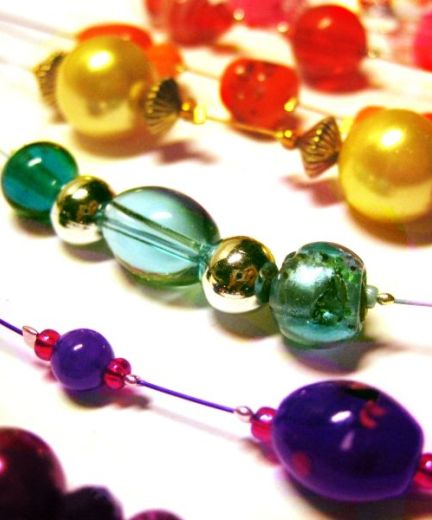
Long established bead and craft store Bead Crazy is re-launching as Bead POP where new owner Alex Penter is offering a weekend of fun activities to celebrate the opening.

beadsfeat A new craft experience is opening in Aberdeen this weekend as the bead and jewellery making supplies shop formerly known as Bead Crazy is re-launched as the all new Bead POP with a weekend of fun events that will include special offers, new products and complimentary drinks.

The fun starts at the St Andrew’s Street shop on Friday with a special late-night opening, from 7pm until 10pm, when customers can view and purchase from a range of new products and ask any craft-related questions they have, while enjoying a complimentary cocktail.

On Saturday there will be a classic tea party, complete with tasty treats and goody bags for the lucky first 10 people through the door.  So get along early!

The fun continues on Sunday with the first of Bead Pop’s new regular Sunday openings, from 12 noon – 4pm, when there will be a last chance to get a 10% off flyer, valid for two weeks, with a £10 purchase.

New owner Alex Penter, who studied design at the Robert Gordon University and was the previous shop supervisor of Bead Crazy before she recently bought the business, said:

“Even if you’ve never tried any sort of jewellery making before, I’d encourage you to come along and try something out.  We run activities for people of all abilities and you might surprise yourself by how creative you can be!

“This opening weekend is a great opportunity for people to come down, have some fun and check out the new look shop.  And, for our long established customers, I think they’ll be pleasantly surprised at the amount of new and unusual beads we’re now stocking.”

About Bead Pop

Bead Pop, Aberdeen’s premier bead shop, sells all materials for jewellery making and general crafts and also offers group workshops, children’s parties, one-to-one tuition, hen nights, team building activities and a repair service.

In addition, Bead Pop runs classes on designing and making all kinds of unique handmade jewellery, with staff being available to attend events at schools and charity fundraisers.

The shop is based at 19 – 21 St Andrews Street, Aberdeen and is open from 10pm until 5pm, Monday to Saturday and 12 noon until 4pm on Sundays.

For workshop bookings or any further information on what the shop can offer call 01224 630011.


Aug 232012
 

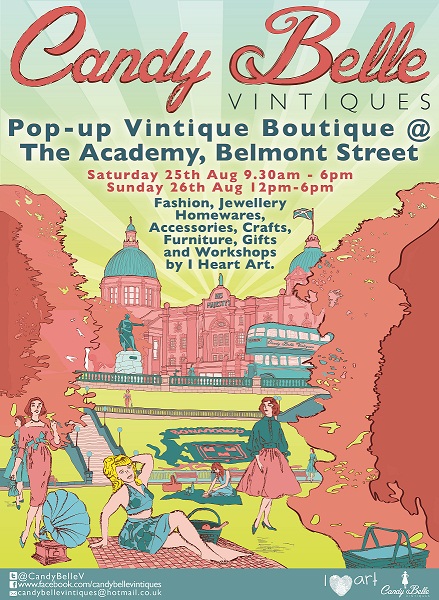
Candy Belle Vintiques will be showcasing vintage fashions and home-wares in a unique weekend pop up boutique in Aberdeen’s Academy Shopping Centre in Belmont Street, this weekend. With thanks to Camilla-Erika Campbell.

candybelleposter-1 Following the success of the first vintage event in April, Candy Belle girls Janet, Angie, Emma and Jill decided to host a new, more intimate, shopping experience in the form of a pop up boutique.

During the two day event visitors will be able to buy from the carefully sourced collections of vintage fashion, accessories, home-wares, furniture and crafts.

Visitors can also take part in craft workshops provided by I Heart Art on Sunday.

Local business owner and co-founder of Candy Belle Vintques Janet Shek says:

“We are really excited to be bringing Candy Belle to Aberdeen in the form of a pop up boutique.  Our first fayre was such a success it is exciting to bring the experience to the next level with the boutique and provide our customers with all the nostalgia in a much more intimate and homely set up”.

The Candy Belle Vintiques pop up boutique will be in the Academy Shopping Centre from 9.30am until 6.00pm on Saturday 25th August and from 12 noon until 6.00pm on Sunday 26th August.

For more information please call Janet on 01224 905909 or find Candy Belle Vintiques on Facebook at http://www.facebook.com/candybellevintiques

You can also email Candy Belle Vintiques at candybellevintiques@hotmail.co.uk

Jul 122012
 

Sparked by new nature trails and undiscovered woods, a local charity’s creative outdoor opportunities have been extended. With thanks to Claire McBain.

woolsheep

Although the official deadline for entries for the North East Open Studios 2012 gallery at VSA’s Easter Anguston Farm passed,  the farm has announced a new deadline of Friday July 27.  They also announced a boost to the space available in order to encourage local creatives to showcase their work and support the UK’s largest city social care charity.

Jane Bell, farm support worker and NEOS exhibitor, said:

“We’re thrilled to already have such an excellent response.  We’re lucky to have loyal Easter Anguston artists register for another year and we’ve attracted some very promising new faces too.  Although our gallery already boasts more entries than last year, we know there’s more local talent out there. 

“So we’ve opened up new parts of the farm, like Linn Moor wood, to create more exhibition space than we’ve had any other year.  Our new nature trail, created by Aberdeen Greenspace volunteers and Easter Anguston trainees, will be a brilliant exhibition space too. 

“We’ve also stretched the deadline by a few weeks, hoping to give those who have been weighed down with other responsibilities a chance to explore this opportunity.  For those who have been busy with end-of-term exhibitions, our gallery is a perfect outlet to extend their audience.”

“Most of the indoor space has been filled so our target artists are sculptors, ceramicists, 3D designers, land artists and others with durable outdoor exhibits.  We do have sheltered areas too, so delicate creations are very welcome.  We’re keen to work with artists to find something that suits their style and the environment they’ll be exhibiting in.  I can’t wait to explore more ideas.”

Local artist Alex Kay, who has been heavily involved with NEOS at Easter Anguston Farm over the past four years, said:

“Easter Anguston sets itself apart from other galleries by creating a unique link with art and the community.  Local creatives can showcase their work while raising awareness of the UK’s largest social care charity.  That’s what drives me to be there every year.” 

To find out more or get an application form for exhibiting at NEOS at Easter Anguston Farm, contact Claire McBain on 01224 358611 or email Claire.mcbain@vsa.org.uk

May 242012
 

By Suzanne Kelly.

nicknairnreview-1 Some months back I had a chance to take a full day course at the Nick Nairn Cookery School, but I never got my schedule straightened out in time to sign up.

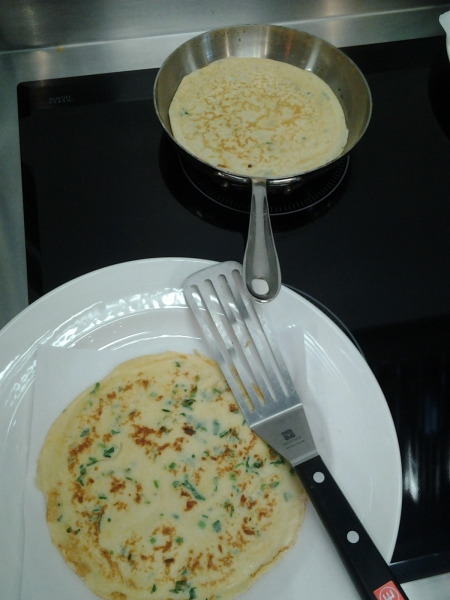
Instead, I found time for ‘Quick Cook: Classic Crepes’ – a two hour lunchtime course.

I am not the most easily pleased person, but I can truly say this course was everything it should have been – instructive, enjoyable, hands-on, perfectly structured, and the results were delicious.

I already knew how to make crepes decently – so I thought.  Louise’s techniques (different and clearly superior to my usual style) were demonstrated with enthusiasm and clarity.

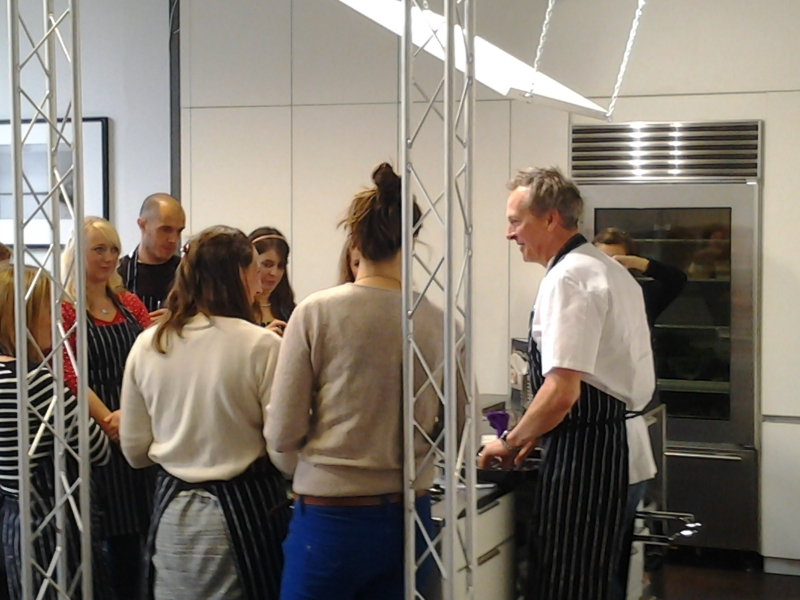
We were all flipping crepes and turning out beautiful, perfect golden specimens by the time Louise was done with us.  The other students were clearly having fun, and one woman was profusely thanking her friend for taking her there as a gift.  And that was even before we tasted our handiwork.  The immaculate, state-of-the-art cooking area and dining bar were a joy to work and eat in.

The savoury crepe we were making was to be filled with a smoked haddock and cheddar sauce with herbs.  I decided to taste some of the herbs before adding – and I’ve never had better except perhaps from my garden.  Louise explained what to avoid when buying smoked haddock (ie artificially coloured fish which often has other additives) – what we had ingredient-wise was the best you’d be able to get – I wish I could remember where in Scotland the cheddar was from.

As we sat down to eat the crepes we’d created (garnished with rocket), Louise demonstrated how to do Crepe Suzette.  This dish may be retro to some, but I personally love it, and it is apparently gaining in popularity.

nicknairnreview-3 There was no time for us to make the dish ourselves – but with the skills we had learned and what was demonstrated, we will all be able to replicate it at home. Suffice it to say that the Crepe Suzette she served the students was better than any I’d ever made, or that I’d ever been served.  (I make my own variation which I call ‘Crepe Suzanne’ with Jack Daniel’s – and I’ll be trying that very soon with my new skills).
I’d learnt a better way to cut and dice, a faster and more successful way to make white sauce, and I’ve taken away a dozen other hints and tips.

Don’t bother trying to get on the next crepe course – it’s already sold out.  But whatever your level of cooking or your specific culinary interest, there is a course for you.  I’ll be on the next full day Nick Nairn course I can get on.

Eleven out of ten.  This is a win for Aberdeen, and I wish the school every success.

May 172012
 

SCT By Suzanne Kelly.

Nick Nairn’s long-awaited Aberdeen Cook School, which opened its doors on 9th May, caters to a demand from would-be cooks from across the country.  The £500,000 project is providing further jobs and a tourism boost to the north-east of Scotland.
The new Aberdeen Cook School has been a passionate desire of Nick’s for several years and is located in a stunning listed building – formerly St Nicholas Kirk’s old church hall in the city centre – which has been transformed into two separate state-of-the-art foodie havens.

Work on the building has been carefully designed to enhance original features such as the carved mouldings and stained glass windows, alongside striking stainless steel and white kitchen areas, designed by Kitchens International.

The new cook school follows on from the success of the Nick Nairn Cook School in Port of Menteith, near Stirling, and Nick explains:

“We have a disproportionate number of people coming to our existing school from the north-east, so an Aberdeen school seemed a natural progression.  Also, the north-east is a farming community and some of the finest produce comes from here.

We have found that cooking enthusiasts from this area are passionate about developing their skills and particularly enjoy entertaining at home.  They can commit time to learning due to their working patterns and disposable incomes.”

Nick will also be trialling a brand new venture in the new cook school, with after-work and lunchtime classes at its Quick Cook Bar.  This is a new urban concept where participants can cook, learn and eat in two hours, picking up invaluable tuition from basic knife skills to creating culinary masterpieces.

Nick said:

“ It will be perfect for people who work during the day.  You can pop in after work or do it over a long lunch-break.  It’s also an affordable place for students to come along and learn to cook for themselves.”

The Aberdeen Cook School is employing 10 people, as well as two well-known chefs heading up Nick’s team.

SCT Head chef Kenny Smart, who joins from the prestigious 1906 restaurant at His Majesty’s Theatre in Aberdeen, will run the large teaching kitchen upstairs.  The Quick Cook Bar area downstairs will be overseen by Louise Chapman, previously restaurant co-ordinator for the hugely successful Taste Festivals.

Nick will also teach classes on dedicated days, as well as the cook school’s established chef John Webber.  John brings more than three decades of knowledge and experience, having trained with Anton Eddelman and Anton Mossiman before being awarded his own Michelin accolades in the country house hotels he previously worked in prior to joining forces with Nick twelve years ago.

While full-day classes for 24 people will be held upstairs at the Aberdeen Cook School, the ground floor level will also feature a cook shop, selling essential kitchen kit from a £5 heatproof spatula to a £3,000 Falcon range cooker – and gadgets that gather absolutely no dust.

The new Nick Nairn Aberdeen Cook School also makes an exceptional private hire venue with bespoke options – including Nick himself – being available.  Various gift cards are available for classes as unique, thoughtful presents.

Aberdeen classes start from Sunday 20th May and can be booked now via www.nicknairncookschool.com or by calling 01877 389 900.

May 032012
 

With thanks to Claire McBain. 

woolsheep Entries for North East Open Studios (NEOS) 2012 may have been declared closed but VSA, the UK’s largest city social care charity supporting people in Aberdeen and Aberdeenshire, has announced it still has space to accommodate further artists and creators at its annual NEOS event at Easter Anguston Farm, Peterculter.

NEOS is an award-winning, not-for-profit collective of artists, makers and galleries in the North East who open their doors to the public each September. VSA’s Easter Anguston Farm has been a venue for the last four years.

Belinda Rowlands, farm manager at VSA’s Easter Anguston Farm, said:

“We are so excited to be a NEOS venue again. It gets better and better every year. We’ve already attracted some great local talent for 2012 and, as usual, we’ll be celebrating the creativity of VSA service users, displaying artwork from Easter Anguston Farm trainees and Friends for Life clubs’ children with additional support needs.”

“However, there’s still space for many more to join us, whether old, young, a dab-hand or a newbie. It’s an ideal occasion for artists in Aberdeen and Aberdeenshire to present work to a captive audience and support the local community at the same time. Our space is most suited to sculptors, ceramicists, land artists and other outdoor exhibitors but there is very limited indoor space remaining too.”

“We’re also keen for students and other groups to consider working collectively on a NEOS project. For the last few years, we’ve been lucky enough to be home to the Knit Wits, a group of knitters led by VSA Trustee Rosy Wood, who come together for NEOS each September. The knitters covered the farm in multi-coloured woollen sheep last year and have already organised their 2012 designs. They’ve gone for a topical animal theme but to find out more, you’ll have to visit in September!”

Well-known local artist Alex Kay has been heavily involved with NEOS at Easter Anguston Farm over the past four years. She said:

“Easter Anguston sets itself apart from other galleries by creating a unique link with art and the community. Local creatives can showcase their work while raising awareness of the UK’s largest social care charity. That’s what drives me to be there every year.”

woodowlspic The Peterculter-based attraction, comprised of a 70-acre working farm and 20-acres of woodland, nurtures adults with learning difficulties. It provides meaningful work and training, in social skills as well as horticulture, aiming to eventually ensure trainees are confident about entering the potentially intimidating mainstream job market.
The farm is open to the public and has a coffee shop, education centre, farm shop and garden centre where the trainees sell their homegrown fruit, vegetables and plants.

To find out more or get an application form for exhibiting at NEOS at Easter Anguston Farm, contact Claire McBain, fundraising officer, on 01224 358611 or e-mail Claire.mcbain@vsa.org.uk 

More information about VSA:

  • VSA is the UK’s largest city social care charity, providing the best of care to the most vulnerable people in the community. VSA, established more than 140 years ago, looks after around 5,000 people in Aberdeen City and Shire each year.
  • Its work falls into three main categories: education and lifelong learning, older people services and social care and wellbeing, incorporating carers’ services. These services help children and families to build better futures, older people to lead more independent, dignified and fulfilling lives, adults with disabilities and mental health problems to get the most from life, and both adult and child carers to juggle everyday life with caring responsibilities.
  • The fact that 96p in every £1 donated goes on direct charitable expenditure really sets VSA apart from other not-for-profit organisations. Money raised in the north-east stays in the north-east. VSA encourages supporters visiting its services to see exactly how their money might be, or hopefully has been, spent.
  • For further information about VSA and its work in the local community, visit www.vsa.org.uk
Mar 092012
 

With thanks to Mark Beresford.

colorfulthreadspic

Canny fashionistas will be in their element on 15 March at Aberdeen Forward with a chance to trade unwanted and unworn garments for something fresh and new.
This free event is open to anyone with clothes to swap and fashion professionals will offer advice on nails, jewellery and makeup to help complete your new outfit.

The Swishing event will run from 6-8pm on Thursday 15 March at 2 Poynernook Road. All guests will receive a free glass of bubbly on arrival.

Aberdeen Forward is an environmental charity and social enterprise supporting local waste minimization and sustainability projects.

Its Volunteer Manager, Gillian Marr, said,

“This is a great fun way to refresh your wardrobe and get some top tips on how to accessorise your new look. We’re running the event as part of our Zero Waste Club and it’s a really great example of how we can encourage people to reduce waste whilst having fun and saving money.”

The event is supported by The Body Shop and Saffron Settings who will have a presence at the event. Zero Waste Scotland, which works with businesses, communities, individuals and local authorities to reduce waste and use resources sustainably, is funding the evening. www.zerowastescotland.org.uk

Anyone interested in coming along can call Aberdeen Forward on 01224 560360 or e-mail admin@abzforward.plus.com and should bring along at least one item of clothing no longer wanted but in good condition.

Swishing events are gaining popularity across the country and are best described as clothes-swapping parties for women. More information about swishing and other events around the country can be found at http://www.swishingparties.com/

Image credit:  © Jordan Tan | Dreamstime.com

Feb 292012
 

unionsttallpic By Bob Smith. 

Union Street-eence an elegant lady
Full o verve an flair
Nooadays she’s an aul hag
Faa’s sprootin facial hair

Biggins they war clean an bricht
Maist wi a fine granite wa
Some noo in need o a dicht
Ti wash dirt an stoor awa

Ye hid shoppies o aa descriptions
Sellin different kines o goods
Noo ye’ve git phone shops
Sellin mobiles ti flashy dudes

Fer smairt sartorial elegance
Yon Fred Watt fittit the bill
We’re left wi multi nationals
Faa’s prices wid mak ye ill

We hid bakers an grocers shops
Car showrooms showin their wares
Local baccy shops an fruit merchants
As weel as butchers sellin hares

Shopkeepers eesed aye ti keep
Pavements free o sna an ice
Ask them ti dee aat nooadays
Maist widna tak yer advice

On pavements eence bonnie an clean
There’s tabbies an chuddy aa stuck
Faith ye nivver are affa sure
Fit’s drappit amang iss muck

Biggins up abeen the shops
War clean an used as flats
Nooadays they’re dreich an worn
An mair suited for some bats

The restaurant at the Capitol
Wis famous fer its high tea
Syne ye gid throwe ti the picters
An drooled ower Sandra Dee

Setterday nichts on Union Street
Eesed ti be aa gweed fun
Noo ye’ll git a richt kickin
As yer lyin on the grun

Worst o aa noo is the traffic
The cause o noise an soss
Maist drivin doon Union Street
They jist cudna gie a toss

©Bob Smith “The Poetry Mannie” 2011

Jan 272012
 

In these bleak and pessimistic economic times, it’s always heartening to hear of a thriving business looking to expand. All the better when its success is built on an alternative business model which genuinely appreciates its staff, rewards and motivates them appropriately,and involves them at the core of decision-making. Surely this can’t work in the cut-throat commercial world? Jeremy Miles, MD of the Edinburgh Bicycle Co-operative has proved it can. David Innes cruised alongside him in high gear (definitely NO Lycra though) to ask him how it works.

Expanding? In the current economic climate? 

What looks like a sudden announcement of expansion is really a plan we have been quietly executing for just over ten years. For 25 years we only operated in Edinburgh where we built up a £3m store. We decided to expand in 2001 and acquired Cycling World in Aberdeen’s George Street.

bikesecuredpic By 2011, turnover increased to £12m, with stores operating in Newcastle, Leeds, Manchester and Sheffield. We were developing our online presence at the same time. Our aim was to double in size in each of the two five-year periods – every self-respecting socialist-minded business has to have a five-year plan!  These are among the most challenging times traders have ever faced. Our business is no different. Customer spending on discretionary items is down, on bicycles as much as sofas and flat screen TVs. We’re seeing growth, but its hard work to keep that going, although it’s very positive in current conditions.

Our optimism and our ambitions are based of a number of factors. Cycling is enjoying a very positive momentum at present with concerns over health, transport costs, congestion and the environment all helping the industry to grow. We also feel that our co-operative structure presents an alternative to discerning customers who want to spend with a company with real values as well as a genuine focus on high levels of service delivered by owners of the business.

  we work within our general vision of doubling turnover every five years.

Look how the Co-op has positioned itself against the corporate strength of the major supermarkets. The Co-op has heavily engaged with its local communities to help fund projects. It projects an image of being off the beaten track in terms of their offer.

Since we face similar challenges as our competitors become more organised and supported financially by private equity, we must also target a particular market where the growth in cycling is focused – in family leisure cycling and commuting.

Our previous expansion plans were about big stores in big cities with the right demographic spread; a fairly rigid plan which worked well for us in good times. The bike market is changing, however, with the development of some huge internet players in Wiggle and Chain Reaction Cycles. Significant retail chains like Evans and Cyclesurgery are expanding rapidly and bicycle retail is very different from even five years ago. We’re also seeing more established brands such as Specialized and Giant opening branded stores, whilst the government-driven Cycle to Work initiative has also helped change the landscape.

Expansion opportunities are broader and more flexible as the customer base widens. Business-to-business relationships develop through government-funded initiatives and the internet offers new ways to market and support the bricks and mortar business. We look to capitalise on these opportunities when they emerge. We don’t have plans for x stores in y years, but we work within our general vision of doubling turnover every five years.

This co-operative structure – how does that work?

Within the spectrum of employee-owned businesses we are a traditional workers’ co-operative, so as hardline as it gets!

We have around 180 employees, full-time and part-time, of whom 135 are co-operative members. Members are invited to join after 12 months service by purchasing a single £2.75 business share. Around 75% of our workforce are owners of the business.

Having secured membership, they’re entitled to receive a share of profits, free shares awarded annually, a single vote on issues put to the membership and the opportunity to be elected to the Board. They have access to communication mechanisms allowing information to move freely from top to bottom and vice versa, ensuring that opinions and ideas are fully utilised. It’s an open and consultative approach to management and operations.

Aside from the ownership model, our business structure is fairly traditional with a board of directors, including an executive management team where I am MD, a group of elected employee directors to represent the membership, and an external non-executive director to provide guidance and expertise. I manage the staff in a conventional manner via Divisional and Department Managers.

This obviously works – tell me why

We’ve always been structured this way. We started out in 1977; seven hippies fixing bikes in a small repair centre in Edinburgh. Two of these hippies are still with us today!

The central philosophy was always to have an alternative view of how a business was structured, but I don’t suppose your readership is all that interested in very deep philosophical musings about the prevailing mood of the 1970s and detailed Marxist rhetoric!

We are very much a business which values its people. We see them as the key asset of the business, so it makes sense that they control the business.

We spend 10% of our targeted profit every year on supporting grass-roots cycling projects

A prime retail challenge is delivering an all-round quality customer experience. To be effective at this, you must ensure that customer-facing staff are heavily engaged with your business. Many retailers struggle, paying minimum wage rates and providing a fairly uninteresting working environment.  They turn staff over very regularly.

As a co-operative, we put owners in front of customers in most instances. This makes it much more likely that customers are speaking to someone with a deeply-vested interest in making sure the experience is positive. The fact they are almost always very passionate about the product they are selling helps too!

We see ourselves as much more than just a shop selling bikes and bits. We’re all about added value and the wider customer experience. Promoting cycling as a leisure activity and a genuine alternative mode of transport is at the heart of our vision and mission. We spend 10% of our targeted profit every year on supporting grass-roots cycling projects, from school fairs to individual charity rides through Vietnam. We support key charity-focused cycling events which also promote cycling, for example the Edinburgh to St Andrews Ride and the Great North Ride in Newcastle.

We don’t just write a cheque. We’re hands-on involved, with starting line presence, repair services en route, food stops, and finish line presentation. We’ve run a range of hugely-successful maintenance and training skills classes for customers for years, and have a real commitment to providing repairs services to a high level. Our workshops are prominent in our stores rather than tucked away in a back room.

We see our engagement with customers as a vital part of the character of our business and put huge effort into getting feedback from them. Customers contribute to the content of our catalogues with family photos, and will soon be helping with blogs and social media content.

We have a very loyal base who are genuinely interested in our values and want to be part of our success as a genuine community co-operative.

Oct 212011
 

Voice’s Suzanne Kelly was present to witness Wayne Hemingway give a talk to a full house at Robert Gordon’s Business School on the evening of 5th October. The audience was a wide mix of students, lecturers, design practitioners, businesspeople and others (Hemingway kept asking the audience questions to determine who was there, and he tailored his presentation accordingly).

waynepic

Mr Hemingway gave an illuminating, bespoke talk.  My only criticisms were that the lighting engineer had no clue what type of lighting was appropriate for a slide/video presentation talk where people wanted to take notes (the lights went on and off, up and down for most of the second half), and that those who plan to forever change Union Terrace Gardens weren’t in evidence.
They might have learnt something.

If you think the Hemingway family (Wayne and Gerardine) are associated solely with fashion and the iconic ‘Red or Dead’ brand, you are missing some very important developments – housing developments to be precise.

Wayne saw a very clear need (which alas many planners and construction firms miss) to create places where people would actually want to live, socialise, landscape, play and be proud of. But more on that later.

Hemingway began the talk with his own life and design history.

In his early family years in Blackburn, his family was not wealthy; they valued creativity and imagination. He was on the music and clubbing scene from age 13 or so, and was enthralled by all he saw and heard in these early heady days of punk. He met his future wife and business partner Gerardine in a club, and was impressed with her clear passion and talent for clothes and customising vintage wear.

They got engaged, headed to London, and did typical day jobs (she as a secretary; he in a pub). One month things looked tight for paying the rent, so they decided on the entrepreneurial path and took a stall in Camden Market to sell their own second-hand, vintage clothing. This first outing proved so successful (and I assume enjoyable) that they put their efforts towards buying second hand clothing to sell. They delved into the world of  ‘the rag trade’ literally – buying goods otherwise destined for recycling from the ‘shoddy’ yards.

Few were touching vintage or second hand at the time, and the popularity of their stall grew and grew.

They soon learnt marketing tips such as the importance of where the stall was located in Camden. The now iconic Doc Marten boot was adored by the punk world, but elsewhere just seen as workers’ footwear. A clever deal with Doc Marten saw the duo buying old, damaged DMs in quantity (where the soles were worn through), repairing them (with a family member’s repair solution and friends to help), and selling them on for a considerable profit. The business grew and grew.

Gerardine created a small line of clothing – there were only eight pieces in the whole line – and headed to the very cool Kensington Market to join other designers and artists selling work.  Of all things Macy’s of New York found her there, and placed an order for 200 of each item. With some help from  several friends and relatives who could sew  they were able to fill the order. Out of this growth and interest, ‘Red or Dead’ came to life.

treehousepic  Wayne had bought a large number of non-working sample watches; these were used to decorate shoes.

An older man in the trade asked Wayne ‘What does Red or Dead stand for?’ In the ensuing conversation this man explained how different brands were clearly aligned to aspirations and values: Weetabix, Nike, etc. – all major brands had a ‘raison d’etre’. Wayne and Gerardine made a list of things they stood for themselves – they were politically active, they came from areas without expensive, fashionable designer wear, they valued creativity and bought affordable items themselves.

It was clear they wanted Red or Dead to be affordable designer clothes. In deciding this they reached out to a sector of the public which had long been ignored. (They also realised that Macy’s did not fit with this direction).

The Red or Dead lines were to be sold through Top Shop (1983) and Miss Selfridge. Topshop at that point used to have no designers – only buyers and “copiers”.  These days it uses established and graduate designers, and the flagship London store also has a vintage section, perhaps a nod to ‘Red or Dead’.

At this time the pair had started paying attention to London Fashion Week, which was still at the time primarily an affair for the affluent. But the ‘powers that be’ at London Fashion Week had noted Red or Dead’s ascent with disdain.

The Hemingway’s dealings with Topshop and Miss Selfridge actually prevented them  from showing at London Fashion week for there years. The Hemingways had ‘demeaned’ fashion, and fashion ‘is about Harrods and Harvey Nicols.’  Or at least this was true to a Fashion Week mandarin.

This rebuff did not hurt Red or Dead sales in the least.

One year when the French were conducting nuclear tests and protestors were demonstrating against the tests around the world, London Fashion Week saw some drama courtesy of Red or Dead. “Non a Nuclear” banners provided the backdrop to the Read or Dead collection and French buyers were banned from the RoD show (which accounted for about a quarter of the buying audience normally – this exclusion was a considerable financial gamble).

Wayne explained he and Gerardine were willing to lose this custom in favour of making a political statement and appealing to and showing solidarity with the environmentalists – a growing movement in terms of visibility and economic power. What was going to be the public, media and market reaction to this show? The Hemingways went home.

pingpongpic Watching the national news some hours later, an item opened with a protest outside the French Embassy at Trafalgar Square.

Then the news item cut directly to the Red or Dead Fashion show.

All the media had picked up the story – and the phone started ringing. Wayne and Gerardine were being summoned that same night to talk to the press – the story of their show had veritably gone global.

Sales increased some 400% around the Red or Dead shops (which by now were in many countries). Corporate takeover advances soon came, and the Hemingways decided to sell. It was time for another adventure.

Wayne had interspersed this biographical talk with some sage business advice – the willingness to take risks, the way in which he delved deeply into the workings of the fashion industry from the lowly shoddy yards to the high end and London Fashion Week; all of which contributed learning experiences leading to success. (And by the way, apparently he is a very early riser, proving there must be some truth in the old ‘early to bed, early to rise…’ adage).

Wayne tells the audience:

“You learn absolutely every day; you need an ability to graft; there is never a day I get up after 5am.

“Creative minds don’t switch off… it’s how you get those ideas realised – graft and recognising which ideas can work… you need friends and good minds behind you.”

He also said without any false, unnecessary modesty how good he and Gerardine were at putting excellent teams together.

Turning from fashion to architecture and housing was the new direction. Boris Johnson had asked Wayne to be a ‘London Leader’, which involved working with the Mayor on a voluntary basis on projects and ideas to make London better.   At this point the talk turns from fashion history to the future of our cities.

“We’ve allowed our High Streets to become ‘clone’ High Streets.”  Hemingway says, and no one can argue with that.

He discusses his contribution to Boris Johnson’s project, which was ‘KiosKiosk’ – moveable, affordable (need I say it – well-designed) designer boutiques on wheels, seen at various London icons such as the Wheel.  These offer young designers a chance to meet the world head on – and since a stall at Camden Market is now extremely expensive, this offers others the kind of break the Hemingways had at the start.

Hemingway also applauds the model of ‘pop-up’ shops and restaurants, which have taken London by storm, and which have reached Aberdeen (for instance Emma Noble’s and Toni Roddie’s S.T.A.G Studio events at Korova – 19 November).

Hemingway references an article he wrote, “Why I Hate The Creeping Suburbs” in which he describes the Wimpeyfication and ‘Barratification’ of Britain.

The issues surrounding ‘urban sprawl’ are now recognised by the United Nations (as well as by most serious, thoughtful local planners); our ecology and biodiversity are not all that is at stake – our very health is jeopardised by the cities and suburbs over spilling into the countryside (increasing asthma and heart problems come with increased pollution; obesity from lack of exercise as we all commute to and from the cities to work, alcoholism increases, and so do social problems).

As a designer who has identified a problem does, Wayne decided to ‘look inside’ the issue, ‘see what he already knew’ about housing, and propose solutions.

He showed poignant photos at this point – a fairly new housing development which clearly looked more like a prison or factory; a beautiful Victorian pub turned into a block of (very unattractive, compact) flats, and a Liverpool street which once offered small, good first homes, now earmarked for high-rise flats.

loungepic He cautioned that mortgage companies (which could have provided mortgages for people to fix and modernise the existing homes on that Liverpool street) are dictating the state of our housing by what they will lend money for.  They seem to favour mortgages for new properties and turn down those who want to refurbish and improve properties.

The old Victorian homes may leak carbon, but they have been around for one hundred years, and thus have less of a carbon footprint than the alternative of tearing them down to make flats.

Wayne has designed housing estates which have very few, if any, equals in the UK.

There are leisure spaces for families (sand, trees, tables, different levels, etc. – some of the best design work he ever did, he tells us), and community gardens.  No one vandalises these (or the outdoor communal Ping-Pong table) because everyone’s families had a hand in creating and designing them in the first place.  The design for these estates started with people first and what they wanted and liked – the actual housing came second to the people.

Wayne ends with some great footage of his and Gerardine’s ‘Museum of Lost Content’ (a home for vintage design which might otherwise be forgotten) and the Vintage event – a massive ‘happening’ (for lack of a better word) held last year at London’s Southbank.

This festival combines decades of design and fashion, iconic music, bands, events and everything that celebrates Britain you can imagine in one place.   It was attended by thousands.  As words fail me, I suggest you visit http://www.vintagebyhemingway.co.uk/ and let the design do the talking.

Wayne also discussed photos he has of an Aberdeen estate; there are signs prohibiting virtually every kind of activity a child (or adult) might want to indulge in, including the dreaded ‘ball-playing.’

Question time arrives, and I am dying to ask for a comment on the future of our Union Terrace Gardens then and there.  However I decide that once the designs are unveiled, I will contact Hemingway.  I have no doubt he will have something useful to say after tonight’s talk.  It was a valuable and thought-provoking evening, and I was glad for this glimpse into ‘Wayne’s World.’