Feb 212012
 

With an armful of flyers promoting various pro ‘Retain Union Terrace Gardens’ groups, Aberdeen Voice’s Suzanne Kelly headed to the first of two ‘pizza parties’ thrown by the secretive ‘Vote For The City Gardens Project’ group.   Suzanne was  unable to give away more than four flyers – because less than a half dozen students turned  up to hear the pro CGP message.

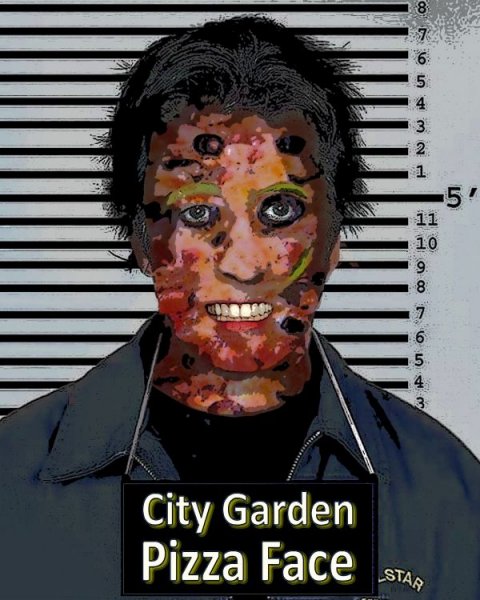
Pizza Face pic

If the promise of free food to students isn’t enough to lure more than 5 or 6 people, things are looking bleak for the VFTCGP, and bleaker still for PR agency, BIG Partnership.
VftCGP, on their official Facebook page, announced last week there would be two ‘free pizza!’ events thrown for students; a free pizza dinner was theirs and all they had to do was show up to hear a pro-City Garden Project lecturer – Paul Robertson.
At first most FB readers assumed this was a spoof thrown by the ‘Retain UTG’ groups – but no, this was actually someone’s idea of a vote-winner.

We all know the proverb about the incompetent who can’t even arrange a drinking session in a brewery; but I was unprepared for what must be the biggest non-event in history.

The Facebook invitations simply read:

“Free Pizza And Information Night! Come join us for free pizza and a chat with Paul Robertson about the City Garden Project on Monday 20th February, between 6pm and 7pm at the RGU: Union”.

Thinking back to my RGU course days, I thought a.  how insulted I would be at someone blatantly trying to buy my opinion – with pizza no less, and b.  how often I could have found a free meal very handy indeed.  This event would be packed.  The invites were also sent to staff and students.  I thought of a massive collective of outsiders and RGU students and staff competing for quickly-disappearing ‘American Hots’ and ‘Hawaiians’ before a slick presentation from BIG.

BIG must be making a huge amount of money from the referendum – it is doing some if not all of the official City Gardens Project group’s PR, as well as work for the ‘Vote for the City Gardens Project’ group.  This last group, VftCGP is allowed to spend and write whatever it wants without any external controls.

They were behind the A3 glossy colour brochure filled with ‘concept’ drawings in lurid pastel colours (or ‘vibrant and dynamic’ colours – depending on your outlook); these brochures were delivered not only to city voters, but also to shire non-voters.   Perhaps this was the first sign of many mistakes and gaffes to come?

I arrived late; it was 5:50pm.  Had I missed the free pizza? 

Would I get through the crowds?  Would I be admitted?  I went to the RGU Union reception desk, and was told the event was really only for RGU students.

“How many are already signed in?”  I asked.

“You’re the first one.”  came the reply.

It was explained that I needed to be signed in by a RGU Union member.  A tumbleweed rolled by.

Eventually a man arrived who explained he’d received the invitation which said nothing about it being only for students.  Is it possible that BIG didn’t get all the little details right – like who should be allowed in?  It seemed so.  The reception desk got in touch with someone – presumably the organisers and we were allowed to attend the event.  It was almost 6pm.

  A sea of empty chairs and a few sofas greeted our eyes.  We were the first two arrivals.

My friend and I went to the designated area.  The song by The Specials, ‘Ghost Town’ went through my mind.  Two students played pool further off.  A man tended the food/drink area. Three BIG PR  professionals (who looked like students to me) were fumbling with a screen, a laptop and a projector.

There was me and my new friend, who if possible was even more against the concept of building ramps over UTG than I was.

A sea of empty chairs and a few sofas greeted our eyes.  We were the first two arrivals. We sat in the back of 8 or 9 rows; the chairs of which had all been covered with a copy of The Granite Web newspaper, and a fetching postcard of the concept drawing captioned “Wish You Were Here?”.  It crossed my mind the organisers must have wished people were here, too.   But no one was.

My new friend explained to me his position against the CGP.  He had attended a meeting in the days of the consultation; Sir Ian Wood had addressed a group of Health & Social Sciences faculty and staff at the Garthdee campus.  My friend said:-

“I was there all that time ago, and Sir Ian Wood told a group of about 24 of us that if the consultation showed that people didn’t want the gardens developed, then he would walk away.  He walked away all right – and came back.” 

My new friend was not happy.

“I know people have their own opinions about what should happen to Union Terrace Gardens,” he said; “but I object to PR people muddying the waters.  Instead of corporate BS we need facts and honest debate.”

It was approximately 10 minutes after 6.  It was three people fumbling with technology, and my friend and I at the back.  Had any PR professionals come over to introduce themselves?  Welcome us?  Offer out any pizza?  No.

But what was this?  Two male students showed up.  They looked at eachother, then at the empty seats.  They sat in the front row.  As they didn’t seem to have been made welcome by the professional BIG team, I wandered over.

“I can’t buy you any pizza,” I explained; “and I can’t afford any print or radio commercials.  However, I’d like to offer you some literature just so you can see the other side to the coin.”

“I’m a social work student, and I’m not in favour of this plan.” one of them said.  He spoke about money, and seemed to know quite a bit about this nebulous scheme.

They took my literature.  One of the PR bods – a woman with dark hair, watched this little exchange between the student and I, and looked for all the world as if cold water had been poured on her.  It  kind of had.

It was 6.15 now.  There had been no welcome to the visitors.  There was no presentation ready to roll. 

There was a Lady Gaga video playing over the pool table which made as much architectural sense as the Granite Web newspapers thay lay unread and unwanted on the empty chairs.  And – there was no pizza.

What was that?  Three more people had arrived.  I repeated the procedure and gave them flyers too.  It seemed that was all they were going to get.

“Does anyone know how to work presentations?” one of the BIG  crew asked.  Answer came there none.

My friend admitted to me he knew all the ins and outs, as did I.  But by now things were getting poignant, and moved by pity for the fumbling threesome, I simply had to leave.

I made my farewells to my new friend, who promised to call me if anything exciting happened, if the numbers swelled, or if the pizza showed up.  I do not expect to hear from him.

“I went to that fly-through thing at the art gallery.  I really don’t know what decade they were trying to capture.”

I thanked him and headed off.  Just as I turned to leave, it seemed the three-man crew managed to power up the projector.  A yawn of excitement emanated from the four or five remaining hungry students.  Perhaps I’ve missed the public relations event of the year.  Well, there is always tomorrow at Aberdeen University at 6.30 pm.  Then again, I think I’l lbe washing my hair.

As I turned to leave, more than 15 minutes after the advertised start time, I think one of the three began to speak.  The film ‘Withnail and I’ came to mind.  At  the end of this film the unequalled Richard E Grant gives a rendition of Hamlet’s famed soliliquoy to a collection of animals at the Regents’ Park zoo.  He is brilliant, but there was no one there to appreciate his message.

Poor BIG.  Poor paying clients of BIG.  Richard E might have had no audience, but at least he had something important, heartfelt and honest to say.

Picture Credit: Renee Slater


Feb 172012
 

A lecture by Charles Renfro, held at the Robert Gordon University, Tuesday the 14th of January. By Jeremy Millar.

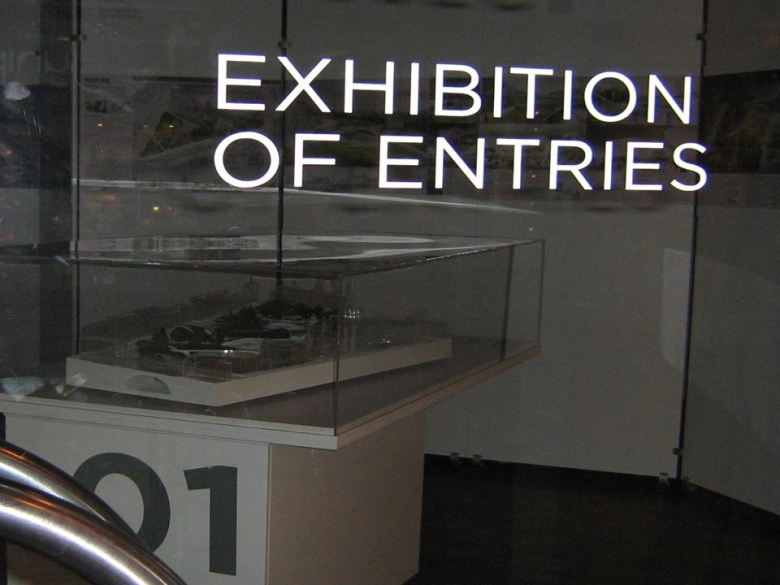
utgehibitionpic I pulled on my black turtleneck and picked up my Mac book pro and set off for the lecture. Would I be mistaken for an architect; yes I was – it’s all in the attention to detail. The theatre was pretty full, with architecture students to the back, and bolder interested parties to the front. Charles Renfro is an engaging character – think Niles Crane amalgamated with Andy Warhol.

He had flown in especially for this event, and encountered the usual techie difficulties in getting his gleaming Mac book pro to talk with a PC campus. The lecture was a run through of a number of the DS+R projects, and very impressive it was too.

At their heart DS+R are artists, often very clever and imaginative conceptual artists. This approach is exemplified by the ‘blur’ installation on lake Neuchatel in Switzerland. This brought to mind ‘Smoke on the Water’ for some reason. This building was a folly in the architectural sense and Charles spoke of playing with the senses as the visitor entered the water cloud and saw nothing. Like many of the DS+R projects there is an element of passing through, rather than destination.

The revolving trees in Liverpool are another witty play on perception.

Understandably the main focus of the lecture was on the High Line project in New York. I have to say that I was a fan before, and now I am even more so. This project demonstrates all that is great about urban design. It involves people with their environment on so many levels. There are many small spaces along the route that offer opportunity for performance. There is a sense of people owning and playing up to the intimacy of these spaces. If it is not to your taste – well you can just move on. It was, however, sooo New York – and I was reminded of “just a New York conversation rattling in my head”: thanks Lou.

 a walk-through video that involved much playing of the bagpipes

I was impressed by the way in which the High Line acknowledges routes and roots, and builds in memory of decay and goes wild. Charles is keen on letting the DNA show through and inform the evolution of the space. He ably demonstrated this with the Lincoln Centre and the new Rio gallery designs.

Loving what I’ve seen so far, in that it is visionary, interactive and accessible.  These projects are also all in large metropolises with sophisticated urban elites, and large numbers of tourists pretty much the year round. There is no question that I would visit if in New York, Rio or Boston.

And so onto the ‘City Garden Project’ for which Charles launched a walk-through video that involved much playing of the bagpipes. The key words and phrases included diversity of ecology, ideas pulled from existing context (that DNA concept) sustainability, green lung, reconnecting the city, reinforcing heritage moments, keeping topographic interest; and I have to say he lost me.

I could see some of the connections to the successful DS+R projects, but this vision betrayed a fundamental absence of an understanding of what makes Aberdeen unique both architecturally and culturally. The DNA of Aberdeen city centre is in the crisp Victorian lines of squares, crescents and terraces. The grand public buildings echo a past of commerce and culture as one strolls down Union Street.

The visual dominance of ‘education, salvation and damnation’ overlooking the gardens and leading the eye round to the gallery are rightly flagged up in guides to the city.

The gardens as they stand reveal this DNA and tell Aberdeen’s story. Charles in his presentation showed photographs of this evolution, the exposed Denburn, the trains pulling into the station, the bandstand and the vistas beyond. This legacy would be obliterated, and as for the DNA, we would have some balustrade and two statutes. I would defy any visitor to read the city from the perspective of the Web, unlike the active interpretation gained from a stroll along the High Line.

A question about the merits of consultation with the public gained an acknowledging that this had not happened

Granite is what makes Aberdeen noteworthy. The city centre is a symphony of granite. Apart from the granite in the name of the Granite Web it barely features in the design. The talk of the eye being drawn to new perspectives is compromised by the edifice of the Web blocking views towards the Theatre and the Terrace. The parade of arches under Union Terrace barely feature in the walk through.

The biodiversity of the various garden spaces are for me messy and confused. The High Line took it’s planting from the wild flowers that colonized the derelict line and the wildness was utilized to great effect. The current gardens are formal with wild edges and they reflect a city rightly famed for this form of planting. If people want to experience the Scot’s pine they can catch a bus to the Duthie Park. We have parks for all tastes and occasions in Aberdeen. There is no need to create a microcosm of the northeast in the city centre.

There was time for a few questions. A question about the merits of consultation with the public gained an acknowledging that this had not happened, although there was an awareness of the controversy. DS+R worked to the brief and they may consult more widely if the referendum is successful. There was no acknowledgment of contact with heritage groups at any stage of the process. Charles has made four visits to the city and feels he is getting to know it.

A question about the profile and presence of the arena space referred to as the ‘butterfly’ draws on the restaurant at the Lincoln centre, and both attempts to sit in the landscape and be iconic. There was an acknowledgement from Charles that this is a work in progress and they will get it perfect.

There was a question about sustainable build and climate change. Charles said that the build will reach the highest standard and will probably be the first in Scotland to do so. He talked to the advantages of green roofs for maintaining ambient temperatures. He did not address the concrete involved in the build, but did say that he was given materials to work with.

A further query focused on the tunnel through to the station. Charles was clear that this is not part of the project, but the Web would provide the opportunities for others to take these developments forwards. The man from Keppie spoke of connecting with the harbour and opening access to Aberdeen’s other areas in 10, 20, 30 years. He added that the project is about creating an identity for Aberdeen going forward.

 Make Union Street a cultural space and preserve the gardens

A question followed which addressed scale of the design and queried the numbers of people required to make the space work. The observation that Aberdeen was not New York was made.

Charles interestingly responded by reference to walking on Union Street and having to ‘fight’ people off. He went on to claim that the Web would provide the space for people to escape Union Street, which he acknowledged was dying, with the malls draining the energy away.

He then went on to claim that a range of cultural programming would attract people to the Web. It would be a melting pot for all the different populations that are around. In a further observation about walking down Union Street in the rain, he wondered why the ‘sidewalks’ couldn’t be bigger.

The final question was the magical one, and asked Charles that knowing what he knows now and if given a free rein to develop a project – would he go for the current one? The answer was of course, absolutely. He then returned to his battling down Union Street theme and made the obligatory one man and his dog in the gardens observation of the usage of the gardens by the public.

So there you have it. For me the most revealing evidence from Charles came with his ‘Why can’t the sidewalks be bigger’. In looking into the tranquil sanctuary of the gardens from the bustle of Union Street he was blind to the answer beneath his feet. Pedestrianise Union Street: create a space, a green corridor that revitalizes the Street; brings together all the successful elements of his other projects, preserves and lets the DNA speak. Make the Street a cultural space and preserve the gardens – subject to access improvements and recreational attractions – as the sanctuary within the hustle and bustle of ‘downtown’ Aberdeen.

The final train journey along the High Line delivered turkeys to New York for Thanksgiving.

Don’t let the City Garden Project deliver another architectural turkey to Aberdeen. Vote ‘Retain Union Terrace Gardens’  in the referendum.  

Cue ‘Won’t Get Fooled Again’…

Jan 132012
 

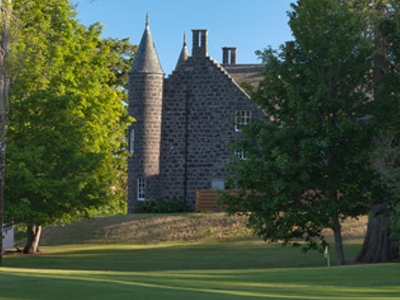
meldrumpic With thanks to Norman  Fiddes.

Meldrum House Hotel  is hosting a Burns Night on  Saturday 28th January 2012 – with a Twist.

Entertainment  on offer will include a piper, traditional addressing of the haggis, a live band, dancers, speeches, and a surprise singing sensation – with a twist.

Guests should arrive for 7.30pm and a buffet dinner will be served at 8.00pm. Carriages at 12.30am

Dress:
Traditional/Modern Casual
Tickets – £40 ( inclusive arrival drink)

To book, email Lucy on events@meldrumhouse.com
Reduced accommodation rate of £99 per couple, B&B

Further info:
Set amidst beautiful countryside, The 4 Star Meldrum House Country Hotel & Golf Course offers unrivalled quality. Only a few miles from Aberdeen, this is one of the finest luxury hotels Scotland has to offer.
http://www.meldrumhouse.com/awards/index.xhtml

Jan 122012
 

Controversy has raged over the fate of Union Terrace Gardens for the last three years. A major subtext to this has been the role of culture in Aberdeen life, particularly in view of the way the proposed Peacock Visual Arts centre for contemporary arts was gazumped by Sir Ian Wood’s Civic Square proposal in 2008, writes Mike Shepherd.

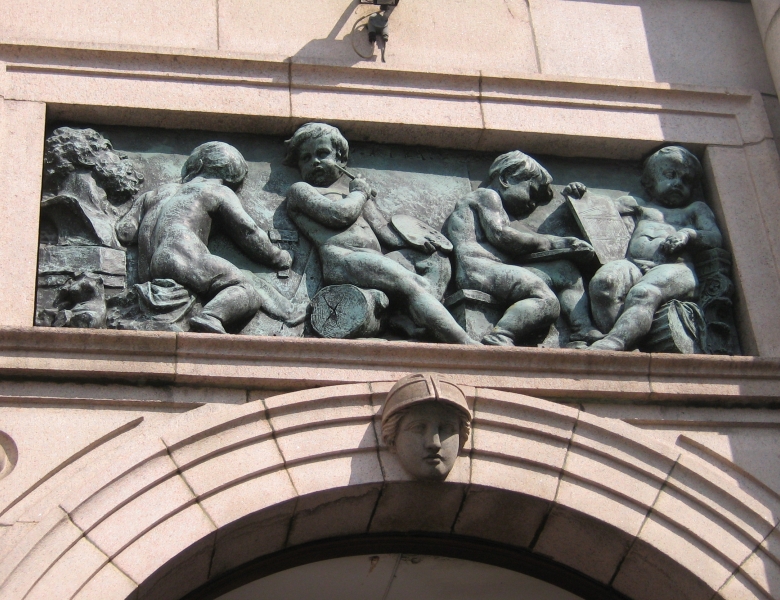
artgallerypic The £13.5m building was to contain a gallery, TV studio, print studio, restaurant and offices for Peacock Staff and provide a base for Aberdeen City Council’s Arts Development and Arts Education teams as well as extra space for the City Moves dance agency.

It was to be called the Northern Lights Contemporary Arts Centre.

When the Civic Square was first mooted, the emphasis was on the Square itself. Sir Ian Wood had described it as:

 “a cross between the Grand Italian Piazza and a mini Central Park”.
http://www.eveningexpress.co.uk/Article.aspx/935798?UserKey

An underground concourse was also proposed and at this stage, the main uses were identified in a Press & Journal report:

“The new square could have three underground levels, the first of them offering the potential for Peacock Visual Arts’ planned new centre, as well as restaurants, a heritage museum and visitor attractions linked to north-east attributes such as granite, paper, fishing, whisky and golf.”
http://www.pressandjournal.co.uk/Article.aspx/1259519

However, Peacock Visual Arts were understandably reluctant to be included within the Civic Square plans. In any case, an underground concourse would not be a suitable venue for an arts centre. A building receiving natural light would have been much more appropriate.

Sir Ian, perhaps frustrated at the reluctance of Peacock to get involved, told the Herald Scotland

“There is quite rightly a strong feeling about the arts in Aberdeen,” he says. “It is not for everyone but some people do feel intensely about it. I understand the emotional concern.

“What I find hard is that, frankly, this is about jobs and economic prosperity, for the wider interests of people in Aberdeen who don’t care about the arts. Eighty per cent of the people who spend time in the square will have no interest in the arts. You have to develop things for the good of everyone.”
http://www.heraldscotland.com/news/home-news/art-student-versus-millionaire-in-a-battle-for-a-city-s-heart-1.929558

Peacock’s arts centre was effectively killed off by the Aberdeen Council vote in May 2010 to progress instead Sir Ian Wood’s Civic Square proposal. This was later rebranded the City Garden Project.

Following the demise of Peacock, ACSEF started to develop an increasing interest in local culture. ACSEF are the non-elected body charged by both Aberdeen and Aberdeenshire Councils with promoting the economic development of the region. They have been involved in promoting the City Square, describing it as one of their flagship projects.

The ACSEF minutes for the 4th October 2011 noted comments by Professor Paul Harris, the recently appointed head of Robert Gordon University‘s Gray’s School of Art in Aberdeen :

“Paul Harris advised that he is a member of the Scottish Enterprise Tayside Regional Advisory Board.   At a national level he had been closely involved in taking forward the V&A project which illustrates how a collective vision could be translated into strategy and raise a city’s profile in an international context.

“Creative industries have an important role not only in their own right but also in terms of being key drivers of an area’s wider economic success in part through creating vibrant and attractive communities in which to live, work and visit and in fostering innovation, a key driver of economic success.

“Professor Harris concluded that the vibrant and valuable creative industries sector in Aberdeen City and Shire requires greater cohesion and visibility and suggested that a creative industries strategy be devised to address this and realise the sector’s potential for future growth.  In addition projects such as the City Garden offer opportunities for the city to achieve an international cultural venue. He suggested that a collective approach amongst partners could be achieved at no cost while a strategic voice supports funding bids.”

Some in the city might feel alarmed about the business–dominated board of ACSEF defining a top-down strategy for the “creative industries” in the Aberdeen area.

The link to the City Garden Project is of note. Paul Harris is mentioned in the news section for the City Garden Website – “City Garden Project Can Make Aberdeen Cool, Contemporary and Cultural”.

“Professor Harris is leading a City Garden Project sub-group representing culture, the arts and the creative sector to consider the potential content for the scheme which has a new centre for culture and the arts at its heart.

He added: “The V&A in Dundee is a perfect example of culture being a catalyst for wider regeneration. There we had an idea and had to develop the infrastructure. In Aberdeen we have the potential infrastructure and a unique opportunity to fill it creatively.

The sub-group is proposing a new model to enhance the performance and reputation of the region’s arts and culture locally, nationally and internationally based around the new infrastructure the City Garden Project can deliver above and below ground.

The vision is to create an internationally known facility that is a focal point for exchanging and showcasing excellence in cultural activities between countries, regions and cities located around the North Sea.

The so-called “Northern Arc” would form partnerships with key cultural organisations to present displays and exhibitions, diverse performances and events covering, history, science & technology, visual arts, design, film, music, dance and literature.

“The Northern Arc” will include a number of flexible spaces, centred in the City Garden, with on-going programmes of events and activities with a variety of local, regional and international organisations”
http://thecitygardenproject.com/news_full.asp?id=95&curpage&search=clear&section=news

The use of the name “Northern Arc” is unfortunate given that the City Garden Project had killed off the Peacock Visual Arts plan to build the “Northern Light” contemporary arts centre. The sub-group mentioned is believed to include most of the city’s existing arts organisations, which are largely publicly funded.  If the underground concourse is built, could it be that existing facilities such as the Belmont Cinema and the Lemon Tree will be relocated to the building?

The Press and Journal reported last October that Aberdeen Council is interested in making a bid for Aberdeen to become the UK City of Culture in 2017.

Council bosses are applying for a £92 million loan from the Scottish Government to fund five regeneration schemes, including the controversial City Garden Project. Approval of the ambitious plans could trigger a campaign for the prestigious title, officials confirmed yesterday.
http://www.pressandjournal.co.uk/Article.aspx/2488524

The bid to become city of culture could prove a hard sell to the people of Aberdeen. It was actively discussed with much scepticism on the Aberdeen Facebook page. Here are some of the comments:

-          Aberdeen has plenty of culture. What it doesn’t have is a council that knows what culture looks like. Culture is one of the indicators of true prosperity but you can’t make money off it directly. The council’s thinking process seems to be: Step 1 – culture, Step 2 – ???, Step 3 – Money!

-          I will say that there are signs of some joined up thinking re culture. A sign though… It’s not for the council to lead and make it happen though. It should come from the ground up to the point where the council starts listening to those that are doing and asking what is needed rather shoving another box ticking lecturing strategy in our faces. Far more people working across the arts know what is needed than there are people sitting at desks re writing old words. The city would need to give a decent amount of funding to Arts organisation and to arts within education instead of cutting funding almost to the point of extinction.

-          So much negativity in this thread, Aberdeen should be ambitious & go for this city of culture in 2017, Aberdeen despite is geography has lots of people doing innovative things in the arts. It did Liverpool no harm & only positives came out of it…

A group called AB+ is organising a cultural conference in the Arts Centre on 26 January.  Two of the speakers are Professor Paul Harris and Valerie Watts, Chief Executive of Aberdeen City Council.

Valerie will be describing her experiences in Northern Ireland with Londonderry’s bid to become European Capital of Culture and the impact this had on the arts there, whilst Paul will talk about bringing the V&A to Dundee.”
http://positiveaberdeen.wordpress.com/2011/12/21/conference-speakers-announced/

The conference is an opportunity to discuss cultural activities in Aberdeen and as such is to be welcomed. It is likely that some of the issues raised here will be touched upon by the speakers in the Arts Centre.

The City Garden Project will be launching its referendum campaign and will also soon be announcing the final chosen design. It is almost certain that the campaign for the City Garden Project will tie together local cultural activity, economics and Aberdeen City Council’s bid to become UK City of Culture for 2017.

It’s an explosive mix.

Dec 152011
 

Aberdeen Voice presents An Aberdeen Christmas Carol – A work of fiction, with apologies to Charles Dickens, by Suzanne Kelly and Fred Wilkinson.

The Characters

(any resemblance to anyone living, dead, or somewhere between the two is purely coincidental and not at all a deliberate attempt at parody.  This is a work of fiction and of Saltire satire )

Ianeezer Scrooge                          Old, wealthy miser, lacking in compassion but loaded with greed
Gruff and MeKeachruns                Servants to Scrooge, supplying his needs
Jenny Crawl                                   Companion to Scrooge, with whom he feeds
Jacob Milney                                  A Spirit – Once partner of Scrooge, now doomed for his deeds
Bruce the Robert                           A Spirit of Christmas Past, with Scrooge he pleads
ASIF                                               A Spirit of Christmas present, transparent indeed
Hoodie                                           A Spirit of Christmas future – but will Scrooge heed?
Spencer for Hire                             A waiter
Steve Peters Lord Provost             A dignitary
Kevin                                              An errand boy
Mr Mickie                                        Scrooge’s employee, head of a large family
Tiny Tim Mickie                              Youngest of the Mickie household
Katie Dee & Kevin Dum                 Washerwomen

  *                                              *                                              *

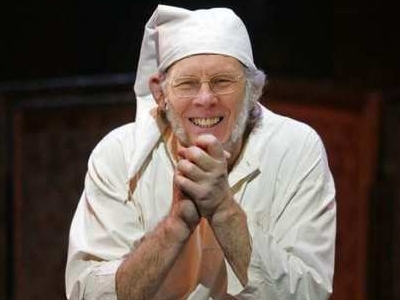
ianeezer

The careful shopper kept one eye on his purse and the other looking upwards, for the gigantic Christmas lights hung over all, like the giant orbs from ‘The Prisoner’, and were prone to falling, crushing the occasional small child or pensioner.

The pubs were filled with young ladies and gentlemen drinking eggnogs and Babycham.

The first snow would soon fall, and Christmas cheer was everywhere.  Well, almost everywhere.

A car drove towards an office block; not just any car, but the town’s very own Civic Car.  This chauffeur-driven car was the envy of all, and in it sat the Lord Provost Steve Peters himself, and the town’s wealthiest man, Ianeezer Scrooge.

“Listen Peters, I’m a patient man, but if construction doesn’t start soon on my Scrooge family car park and shopping mall, someone’s going to find less cash in their Christmas stocking this year – get the picture?”

The speaker was Scrooge, and although his voice was calm, he was turning a reddish colour.  Peters shook his head and rubbed his hands.

“Everything possible is being done – we have our best people ah, ‘volunteering’ to work on the project night and day.  Soon the Denburn Park will be officially yours.”  Peters answered Scrooge with a slightly nervous voice, for there had been far more opposition to this plan than was expected.  The public it seems did not want a little patch of ground turned into a car park.

This piece of ground had been given centuries ago to the people by the famed  hero king of old, Bruce the Robert.  A statue of him astride a trusty steed stood outside the newly-cleaned (and gutted) Marshall Academy building which now housed the city’s staff.  The Denburn Parkland was the property of the people, gifted to they by King Robert, but if Scrooge wanted the park, well, then he must have it.

Teams of lawyers toiled day and night to find some clever way to make it all work. The brilliant, peerless lawyer MeKeechruns could not have been more helpful.  Loopholes were exploited, companies set up, and there very best man, Berry Gruff was one of the lead figures making it all fall into place. ‘ If only the people would stop protesting!’ the Lord Provost thought.  ‘The wife’s on at me for some more designer jeans, and her clothes are costing a fortune.  Guess it’s all on expenses anyway, but still.’

“I want progress soon, understand!  You do want to stay Lord Provost, I’m sure, and all those other councillors know what side their bread is buttered on.  Get me a progress report tonight.”  Scrooge said matter-of-factly, as the chauffeur opened the door and Ianeezer Scrooge alit at the Scrooge Building.  He entered the doors, thrust his hat and coat at his assistant Mr Mickie, and strode off to his office, Mickie trotting at his heels.

“Have you written those letters yet?” Scrooge asked “They need to be out to James Brown at the funding office forthwith – but do send them second class – first class stamps are going up again.  And who turned the heat up in here?  I’m paying for this you know.”

Scrooge’s pet project depended to some extent on a funding application.  A Mr James Brown was in charge of the funds.  Most of Scrooge’s employees and lackeys had been set the task of writing to Brown, saying what a great project it would be and that funding must be granted.

“Oh, I’m sorry” said Mickie, “I’ll turn the heat off straight away.  Yes, I’ve written to ask for the funding for the Denburn project in my own name, in the names of all my wee children, including Tiny Tim, and as myself for all the companies you’ve put me in charge of – in name only of course” he added, seeing  Ianeezer had raised an eyebrow.

“Well, I’m out to lunch” said Ianeezer – and Mickie thought that was true enough.  “Have you made reservations for me ?  I’m taking Jenny Crawl out to the Clifmar for a nice long lunch.”

“Oh yes sir, everything is in place; do have a nice –“ but before Mickie could finish Scrooge was off again.

Mickie knew he had to work hard and do as Scrooge told him.  He had all his children to think of, including poor little Tiny Tim who needed a crutch.  Not only did Mickie work for Scrooge, he had to hold down several other jobs and even work at the local pharmacy to make ends meet.  If only things went Scrooge’s way, then no doubt Scrooge would pass some money onto Mickie as well – at least Mickie hoped so.  For Scrooge had pledged to leave the project millions of pounds, and hinted that those nearest to him would likewise be remembered in his will.

Across town Scrooge was peering at the lovely Jenny Crawl over the wine list.

“Is there anything else I can do for you sir, anything at all?  Just let me know, I’m your man.”  The little waiter, Spencer for Hire addressed Scrooge with great respect.  He too hoped to be a beneficiary of the as-yet unseen largess of Mr Scrooge.

“That will be all thank you Spence.” Jenny replied.  She was a tall stately woman with long blond hair.  She had worked her way up through the ranks and was now in the inner circle of Scrooge’s trusted business associates.  She worked long and hard helping Scrooge fulfil his dreams of seizing Denburn Park; it was after all the most desirable piece of real estate in town.  Of course they told the public that everything that Scrooge did was for their own good.  The truth was something else altogether.   If they could only turn this unprofitable bit of land with its trees, grassy banks, birds and flowers into a parking lot, they would become even richer.

They passed a pleasant few hours over caviar, champagne and fine foods.  Suddenly Scrooge felt unwell.  His head began to swim and his stomach ached.

“Jenny my dear” he sighed.  “Not feeling all that well, perhaps I had too much stilton and port.  Going home for a lie-down.  See you later I trust?  Just sign the bill for the project, it was a working lunch after all.”

“Dear Dear Ian” she said; she called him by his shortened name “you must go home and lie down at once!  We mustn’t let anything happen to you!”  She genuinely looked alarmed.  How she must care for him, Scrooge thought.

Before he knew it, Jenny and Spencer for Hire had bundled him back into his limo -  he thought they mumbled something about a will –  and he was being driven home through town.  It was twilight.  The moon shown over the Denburn Park as the limo drove past.  A shadow crossed the moon and for a moment, Scrooge thought he heard a moan.  The car then stopped at traffic lights at the Academy building, just by the Statue of Bruce the Robert.

The moonlight danced on the statue and as Scrooge froze – the horse lifted his hoof and the great Robert leaned forward and pointed at Ianeezer.  Scrooge closed his eyes and rubbed them – and when he opened them, there was the statue as motionless as it always had been.  ‘I must not eat any more of those funny chocolate brownies Katie my cleaning woman makes.  Trick of the eyes.’ He thought to himself.

As he arrived at the Scrooge mansion, his servants Katie D and Kevin Dum were at hand to help him into the house.  He ordered his faithful lackeys to bring him his dinner in his room; he would watch television in his bed and get an early night’s sleep.

Some funny programme was on, some old film called ‘It’s a Wonderful Life’.  Scrooge stopped to watch for a few moments.  In the scene that was playing, a young man called George Bailey was talking to a wealthy man called Mr Potter.

“Just remember this, Mr. Potter, that this rabble you’re talking about… they do most of the working and paying and living and dying in this community. Well, is it too much to have them work and pay and live and die in a couple of decent rooms and a bath? Anyway, my father didn’t think so. People were human beings to him. But to you, a warped, frustrated old man, they’re cattle. Well in my book, my father died a much richer man than you’ll ever be!”

Ianeezer Scooge couldn’t quite fathom what was wrong with the young man, and thought that the Mr Potter character seemed like an admirable fellow.

Just then a gust of wind caused a tree branch to tap on the window at the opposite wall.  The noise caught Scrooge’s attention and he turned.  For a split second he thought he saw the statue of Bruce the Robert again.  A feeling of dread crept over him, but then the moment was gone.  Scrooge gradually drifted off to sleep.  He though of Christmas and how much it would cost him in holiday wages.  ‘Christmas!  Bah Humbug!’

Scrooge had a troubled, strange sleep.  Waking with a start he noticed the room glowed red in the dark.  ‘what the hell is that irritating red light and how is anyone supposed to get any sleep with it on’ he thought when suddenly he realised he was not alone.  He clutched the bedclothes and sat upright, heart pounding.

There to his horror was a hideous figure – bald and short in stature with an undefined, characterless face.  It wore a red football jersey marked ‘AFC’.

“Ianeezer Scrooge!  It is I, your former business partner  Jacob Milney come to warn you!  Mend your ways, or you too will be damned for all eternity as I am!”

“Milney – is that you?”  Scrooge could not believe it – there stood the ghastly apparition which looked exactly like his former business partner Jacob Milney.  Poor Milney had blotted his copy book.  First there were some funny dealings with the city and a queer land deal. Then Milney alienated the people by buying their city champion curling team, and running it into the ground.  People whispered that Milney did not really care for curling at all, and simply wanted to grab as much land as possible.  True enough – and Scrooge in the old days felt a paternal fondness for Jacob Milney.  But as the tables turned on Milney and he lost credibility and got into trouble, Scrooge quite rightly cut him off.

“Er, look here Milney, I’m hallucinating right?  You are just an undigested bit of cheese aren’t you?” Scrooge demanded.

“I’ve been called far worse,” said Milney looking at the floor and shaking his head sadly “Ian, I have been sent here tonight to warn you – you must give up your greedy ways.  Three spirits will visit you this night to show you your past present and your terrible future if you don’t get off the path you are on.”

“What’s that thing you’re wearing?” demanded Ianeezer “and what makes you think I’m doing anything wrong?

At this Milney let out a ghostly long wail.  “For my greed, dishonesty, destruction of green spaces and miserly treatment of the curling club, I am forced to glow red in the dark like the stadium I built in the nature reserve.  I must wear this long chain.  It is made from all the trophies and silver that the curling team could have won had I not treated it as a real estate vehicle.  And believe me, this is a pretty long chain.”

Jacob shook it for effect.

“Learn from my greed and turn back.  Pay your UK taxes.  Stop getting rid of green space – and above all:  YOU MUST NOT BUILD THE MONOLITH.  My time here is ending.  I return to my punishment – I am forced to read the fan website and all the newspaper articles denouncing my stewartship of the curling club.  Ianeezer….,,”

Milney seemed to shrink to an even smaller shape than he had been in life, and with a final moan (which Ianeezer was used to from their long years of association) he was gone.

“Phew!” Thought Scrooge “If that was poor old Milney, he’s really lost his business sense.  But it was only a dream.  No more Brewdog ‘Tactical Nuclear Penguin’ for me before bedtime.

He rolled over and soon was sleeping again, but not very soundly at all.

*                                              *                                              *

Somewhere far off a horse whinnied and steel crashed against steel.  Scrooge sat up, and there was the great heroic figure of Bruce the Robert.

“Get up ye wee futtret!”  Robert demanded.

“Now look here” Scrooge cried ” Don’t speak to me like that, dead hero or not!  I’m Ianeezer Scrooge – or Mr Scrooge to you.”

“AAARRGH!” Cried Bruce the Robert, swinging his huge sword close to Scrooge who seemed to regret his earlier rudeness.  “Ah’ve focht bloody battles tae win the lands Ah hae noo – but fit aoot yersel? A’ you’ve ivver daen is stan idle watchin rival firms struggle, an’ like a hoodie cra’ pick their banes fan they’re ower puggled tae fecht back.

“Ah dinna ken why Ah should gee ma bahookie ower sic a grippy flechbite as yersel, but somebody hid tae come ower an gie ye a bollockin, an’ as ayewis, it wis left tae Muggins.

“Hemen, ye’ve mair money than ye ken fit tae dae wi, an’ still aye yer needin mair. Ah’m tellin ye noo tae cut it oot!

“Ah ken fit it’s like tae a fair puckly siller. Ae time Ah could hae went onywye an daen onythin Ah likit. Twis naebody’s business fit Ah did wi siller Ah workit for. But Ah gaed awa! ‘At’s richt, glaikit as it micht soun’, Ah gaed awa ma siller tae ornry workin fowks…. an as lang as Ah’m still kent as the Big Bob, fit Ah gied tae the fowks will bide wi the fowks. D’ye underconstumble?

“So if you as much as pint yer finger at ae tree in the fowk’s perk at Denburn, Ah’ll come doon on ye like a ton o’ bricks.

“Noo Ah’ve heard ye bumpin yer gums aboot gaein yer siller awa tae fowk, but dinna kid yersel, the Aiberdeen fowk are nae blin’, an’ they’re nae as feel as ye think. So fit is’t yer buildin onywye? Ah’ve haen a lookie an’ Ah’ve nae seen siccan a sair sotter in a’ ma puff. Fit’s wi’ the muckle gless worm thingmy? Are ye wise??”

“Clearly”  Scrooge replied, “You just don’t understand this wonderful gift I’m giving the people.

“There will be underground parking, shopping, ramps to walk on, a monolith, and a great big covered space to sit in.    It is the way to ensure our economic future, and people will come from afar to see this wonderful site.  And spend money.  There will be jobs creation, vibrancy, dynamism.  It is a focal point for the civic heart of the city which – “

“Haud yer wheesht min!” interrupted the ancient hero’s ghost forcefully  “Div Ah look like a gluepot? Div ye think fowk are feel enough tae believe the tripe comin oot yer mou? Div ye believe it yersel min? If ye dae, then yer mair o’ a neep than Ah taen ye for. Ah’m tellin ye yince mair min jist in case the penny hisna drapped. That perk is tae bide the wye it is … so snoot oot -  or ye’ll ken a’ aboot it.

“Richt, Ah’m awa noo, but mind fit Ah telt ye.”

“Is your time on this earth up?” asked Scrooge “You see, if you could just understand why we need to build these ramps and monoliths, then –“

“Nah, ma time’s ma ain” the Robert growled, prodding his finger into his chest “But the verra sicht o’ yer soor coupon is daein ma napper in, so Ah’m aff. But Ah’ll be clockin ye. So get a grip ye grippy git. Yer needin tae heed the wise or wise the heid. Itherwise min, it’s tatties!”

And the ghostly horse reared; the Robert charged the window, and was gone into the night.

“Hm… I guess I believe in ghosts!” Thought  Ianeezer – “Hmph!  It’s easier to believe in spirits than in any of this public relations ‘vibrant and dynamic’ nonsense – whatever that means.   I just want that land, some parking, some shops and of course a statue to ME, which the grateful populace will insist is built.  But the spirit was right – perhaps I need to do some more thinking about this project.”

Scrooge shook his head up and down with satisfaction before plumping his pillow, and laying down again.

*                                              *                                              *

“You sit around here and you spin your little webs and you think the whole world revolves around you and your money. Well, it doesn’t, Mr. Potter. In the whole vast configuration of things, I’d say you were nothing but a scurvy little spider!”

The television was still on – these words woke Scrooge up, and he rubbed his eyes.  The room was filled with a fuzzy glow.  There was some kind of shape in the room, cloudlike with little form.  It however spoke in a girl’s voice.

“Hi there!  I’m ASIF, the ghost of Christmas present!  But you can call me Jan.” the thing said.

“What are you?  I can’t figure out what you’re supposed to be?” Scrooge asked, turning his head to one side.  The thing existed, yet he could see straight through it but could not tell what it was.  It kept changing.  Truly this ghost was vibrant and dynamic.  At one point he thought he saw a big translucent worm.  Another moment and it seemed to be either a big spiderweb or a great big square block.

“You should understand” the voice said “for you are creating me.  I am ASIF, your project.  I’m not exactly defined yet – no one – not even you  – knows what I will look like.  You only know that you want me built, and you hope to have a statue of yourself – like the statue of Bruce the Robert.  I am here to show you the truth of Christmas Present.  You will see what your actions have created in this city for people this very Christmas night.  Now come with me.  Take hold of my robe and you will be uplifted in more than this.  Whatever that means.”

“Now hold on Jan” said a sceptical Scrooge.  “I had Milney in her not long ago pretending to be some kind of spirit – just the kind of silly caper that gets him into trouble every time.  Why should I think you are ASIF, some kind of a ghost?”

“Well, I’m fully transparent aren’t I?” ASIF answered.

“Very well spirit, show me what Christmas looks like this year.”

They flew out the window.  And this is what they saw.

They saw a homeless man shiver in the cold, mourning for his friend who had frozen to death earlier in the week.  They saw bulldozers tearing into the remaining countryside; they saw other green fields nearby.  They saw some people suffering, and others feasting.  They saw pensioners and people with special needs trying to make do.  They saw crumbling NHS hospitals and closed down schools.  They saw poor ailing Tiny Tim Mickie sitting in a corner of his room, writing letters at his dad’s bidding to James Brown, begging for the Scrooge project to go ahead.  They saw the happy, the sad, the rich and the poor.  Then they saw the richest man in town’s mansion, and it was Scrooge’s.

“All those people with all their hopes and dreams.  All of the land being built on, leaving animals without shelter, space or feeding ground. All the suffering.  And yet Mr Scooge, here we are back at your billionaire pad with its comforts and servants.  Does this teach you anything at all?”  The spirit asked.

“Yes, indeed it does.  Thank you ASIF.  I have learned much.”  Scrooge answered thoughfully.  “But what are those two child-like figures clinging to you, hidden under your robes?”

“Fear them Scrooge” answered ASIF “the little boy is Ignorance; he is what happens if schools are closed.  The little girl is called Want, and what you waste in a day could save her.”

“Would I get any tax break if I make a donation?” Scrooge asked.  The spirit pretended it hadn’t heard this question.

“I shall leave you now, and another spirit will soon appear to show you the future.”ASIF said.  With that, the ghostly shimmery giant worm thing was gone.

“I shall make use of what she showed me.  I shall change” Ianeezer thought. “And now I await my last spectral visitation.”  He sat on his bed, and noticed the movie was still playing.  It felt as if this night was never going to end, yet if the movie was still on, only moments had passed.

*                                              *                                              *

A wild wind was blowing; Scrooge’s windows were thrown wide open by an invisible force.    Before the spectre, who was wearing a hoodie that covered its face entirely could speak, Ianeezer began.

“Look, I know who you are and why you’re here – let’s see the future, for I’ve been given much food for thought tonight.  Time’s money, let’s get a move on.”  The spectre grabbed Scrooge’s arm and they flew forward in time.

They  were still in Scrooge’s house, but according to the calendar some 20 years had passed.  Two old haggard ladies were arguing, and the draperies were closed around Scrooge’s bed.  They were his faithful servants, Katie D and Kevin Dum.

“I’ll have that for all the years of suffering I’ve endured.” Said one of the washer women.  She was grabbing a casket of silverware.

“Fine – take that, I’ll get the old fool’s fillings from his teeth!” said the other scrubber.  More voices were heard, and the two washer women scarpered.  Soon a party of lawyers, councillors, and the lovely Jenny Crawl dressed head to toe in black entered.  They all sobbed.

“See spirit!  See how they miss me!” said Scrooge, who realised it was his deathbed they were seeing.  He felt most proud at this outpouring of grief.

“Bollocks!” said Jenny.  “After all those  years of crawling, the old bastard not only didn’t leave money to the Denburn project, he’s  not left me more than an old photo of himself!  The nerve!”

“Years I printed what I was told, and more to the point I didn’t print what he didn’t want out.  And it’s all been for nothing.”  A man with a folded up newspaper under his arm simmered angrily.

“My project, my beautiful project!” said Gruff “who’s going to pay for it now!?  Hundreds of millions of pounds are needed, or the city will go broke.”

“I thought I had all the angles covered,” wept MeKeechruns “I’m usually so very, very brilliant!”

The miserable party railed at the dead man.  “Show me no more of this!” cried Scrooge.  He blinked and found himself at the home of his servant, Mickie.  Tiny Tim’s crutch lay along against the fire place.

“Where’s Mickie’s son Tiny Tim?” asked Scrooge

Before the spectre of Chrismas Future could answer, the Mickies entered the room.

“My poor wee Tim!” cried Mrs Mickie “Who would have thought he could die from writer’s cramp?  It was bad enough he  had to bombard James Brown with letters demanding that the funding for Scrooge’s project be granted.” She sobbed, “But it was just too much for wee Tim to have to also forge all those referendum ballots too.  Ah, my poor boy!”.

Scrooge and the spirit were suddenly in the fresh air, in the middle of what seemed like a party.  It was the Denburn Park, but not as Scrooge remembered it.  A giant steel skeleton with smashed glass panes lay to his left.  A giant huge monolith with no windows stood nearby.  A schoolboy threw empty bottles of Buckfast off of a giant concrete ramp covered in graffiti.

On a stage under the ramp, Status Quo played to an audience of OAPs. Groans intermixed with the sound of car engines emanated from the oversized Monolith.  It bore a sign that read “The Ianeezer Scrooge memorial Monolith – parking, shopping and children’s Workhouse.” But all were rejoicing as overhead a grafittied monorail limped to a halt.

“He’s dead!  He’s DEAD!” they all cried, raising glasses of latte or vodka overhead.  Scrooge did not want to know who’s death the rabble were cheering – he had his suspicions.

“Spirit, show me no more.  I have learnt my lessons well.  Thank you.  I promise I will make changes!”  And with these words from Scrooge, a bolt of lightning blinded him for a moment.  Then, he was in his own room again.  The calendar showed he had returned to the present time.

Scrooge was much changed by what he had seen.

*                                              *                                              *

“Remember, George: no man is a failure who has friends”

Incredibly, the movie ‘It’s a Wonderful Life’ was only just now ending, although Scrooge felt his ordeal had lasted several nights not hours.  Scrooge sat straight up in bed, and the sunlight streamed through the window.  He laughed out loud.  Throwing on his robe he raced to the window, still laughing, and threw open the sash.  A boy was visible nearby.

“You there boy, what day is this?” Scrooge demanded.

“Why sir, it’s Christmas day!” the puzzled lad answered.

“Then a merry Christmas to you!  See this twenty-pound note?” Ianeezer asked, waiving a bill in the air

“Yes Sir!” answered the boy

“Go and fetch me the biggest turkey in the whole town!” Scrooge commanded

“Dean, Fletcher or Malone?” asked the lad

“Ho ho – smart lad!  Fetch me them all! – and Gruff and MeKeechruns as well!” Scrooge answered, and disappeared from the window.  “Much to do today!  Much to change!” he thought to himself.

In a little under an hour later, a somewhat disgruntled motley crew of councillors, officials and others connected to the Denburn Park project found themselves in Scrooge’s drawing room.

“I’ll bet you wondered why I called you hear today” he asked.  A chorus of “we are happy to be here, and ‘merry Christmas sir” greeted him.

“I’ve been thinking about the project, and have a new suggestion or two – believe me, these changes are very forward looking.” Ianeezer  announced.  The assembled great and good replied ‘fantastic!’ ‘can’t wait!’ and so on.

“We’re going to electrify the worm, and throw anyone in prison who touches it.  Now the monolith idea – what if as well as underground parking we put in a workhouse? We’ll save money putting the kids in workhouses and closing more schools.  Do you think that will be possible – I mean think of the labour saving and government grant possibilities!”

There was a moment’s silence “Well, are you with me – remember the money I’m leaving in my will!” Scrooge said with a hint of threat.

“Astounding!” “Visionary” “Vibrant!!” “Dynamic!”  “Inclusion!”   the buzzwords he so loved rang out across the room.

“Merry Christmas  – now back to your homes.  Jenny – stay for a drink won’t you?”  A shadow seemed to cross her face for an instant, but it was gone.

Ianeezer Scrooge was a happy man indeed, and remained grateful to the spirits to the end of his days.

“Please sir – the twenty pound note?” asked a wee boy in the back of the great drawing room.   “Yes, here it is” Scrooge said waving it, “And if you do me another favour sometime, I’ll show it to you again.”

Amid the approving nervous titters of the council bigwigs, the boy was shown the door.

Somewhere far away, an icicle formed under the eye of a bronze statue of a former king of Scotland.

THE END.
Oct 212011
 

Former RGU Principal Dr David Kennedy, whose background is in the sciences has believed for a long time that we are destroying the world around us. In another extract from his conversation with Voice’s Suzanne Kelly he talks of his horror at what we are destroying in the name of progress.

000_0036 Dr Kennedy and I discussed where the world may be heading, and I mentioned Albert Einstein, who said:

“I do not know with what weapons World War III will be fought with, but World War IV will be fought with sticks and stones.”

Dr Kennedy Continues:

“Emily Spence of Massachusetts  http://smirkingchimp.com/author/emily_spence and I corresponded on a number of issues: global warming, environment, overpopulation. The sad thing is the only sustainable communities we know of are the primitive ones we have destroyed. People on some of the remote Philippine islands lived entirely sustainably. They met their needs until the outside world impinged on and destroyed their way of life.

“However, we want more and it doesn’t matter how much we get, we still want more. It comes from the pleasure centres of the brain. Gambling and winning gives you a kick and so you go on. How can a man like Bill Gates, whose wealth could feed his family for generations, still want more? This causes me to despair. There is a weakness in the human brain or perhaps it is how nature defends itself and we may be on the way to destroying ourselves.

“How quickly is it all going to come? People talk about planning and planning horizons. The Romans had the idea of looking at things after every 5 years. As a manager in education I had to plan ahead as to what we needed, what courses we would offer, how many students would there be, and what resources would be needed. I took the areas I knew most about, and looked at 10-yearly intervals. At the time I did this, the changes in education were colossal and totally unpredictable. In the 70s there were ten colleges of higher education in Scotland, and they were like sacred cows. Scotland was proud of having had the highest literacy rate in the world.

“On coming to the 80s, dramatic changes were occurring in education. For a start, demographics – the birth rate. In the 1980s the number of colleges of education began to shrink. Some closed; some merged. In the 90s, most had disappeared, Northern College of Education here in Aberdeen being the last survivor. Now there are none.

“The same was true in nursing. I came to the conclusion that you might be able to guess what would happen in five years, but accurately forecasting for ten years ahead was absolutely impossible. The rate of change in technology is so incredible only a fool would predict what things will look like ten years from now.”

Dr Kennedy has a track record of concern for the environment and ecology. Apart from protesting over Trump’s honorary degree award, what are some of the issues that concern him most, locally and further afield?

“I’m very interested in what happens internationally. Governments swither over the issue of global warming. Scientists tell them that it is real; big business tells them it is a myth, and governments sit and fiddle while the earth warms and climates change dramatically.”

“As you might have guessed, I am a strong environmentalist with a long and deep concern about what we are doing to the biosphere on which all life depends. Biologists have known for decades about the acidification of the oceans and consequential damage to coral reefs and the communities that live on them.

“Likewise, we are poisoning the land by excessive use of chemicals, the production of which depends heavily on fossil fuel energy. With a rapidly rising population, human life will soon find it difficult to feed itself. Hence one of my concerns is about the short-sighted use of good farmland for house building.

“Just as disastrous is the pollution of the atmosphere with harmful radiation from nuclear power stations, by depleted uranium and gases emitted when burning fossil fuels, while at the same time tropical rainforests that absorb carbon dioxide and emit oxygen are being destroyed. Lack of rainfall in the Amazon basin, because of climate change, could result in its eventual desertification and the release of trillions of tons of carbon dioxide presently bound up as wood cellulose.”

In future extracts from this interview, we will carry Dr Kennedy’s views on how personal standards and values have had far-reaching consequences. No interview with this former university principal would be complete without establishing his views on education. That too will feature in Voice soon.

Oct 132011
 

As conversations go, our own Suzanne Kelly found her recent discussions with former Robert Gordon University Principal Dr David Kennedy fascinating. As always, conversations lead to discussion of inter-connected events. Here, in a further interview extract, Dr Kennedy talks frankly about how personal and societal standards, values and morality have changed and how individual actions have affected and influenced matters, perhaps unintentionally, on a much larger scale.

moneycalculator We had been discussing land use and EU farming bureaucracy, and how, for many farmers, European subsidies had made them rich.
See: Aberdeen Voice article  ’Dr David Kennedy On Land Use And Farming’ )

Dr Kennedy is in no doubt that elected politicians have much to answer for, on numerous issues in addition to agricultural policy.

“It‘s a bizarre state of affairs. These are supposed to be highly-intelligent people elected to represent us. The sad truth is, as one old friend used to say, ‘they are just filling their own pooches’. And that’s absolutely true. Some investigative journalist did the work on MPs’ expenses and when her work was made public, we saw the full extent of their greed. The MPs’ expenses scandal was an absolute disgrace, but that is nothing compared to what is happening in Brussels.

“Morality is fast disappearing for some reason or another. There is a lack of integrity and it now seems that it doesn’t matter what you do as long as you are making money. Trump boasted on his website of brutality, toughness and greed. Are these behaviours we all really value?

“Why do humans behave in this way? Well, it’s a long story involving conditioning the human brain. This began in a scientific way early in the last century, not by Joseph Goebbels as we are encouraged to believe, but by an American named Edward Bernays, nephew of Sigmund Freud, who could, fairly, be called the father of advertising, propaganda, and public relations. He knew how to play on the pleasure and pain centres of the brain. Goebbels was an avid pupil of Bernays.

“Brainwashing didn’t begin with the wicked Chinese, or the godless Communists, or even the evil Nazis. It began in America, where it has been perfected over the years, and we are all subjected to it. Trump is simply one example of The Big Lie. Anyone who analyses the mainstream media will readily see how words are used, not to inform, enlighten and clarify, but to mislead, confuse and confound. And it is all done to amass wealth”.

“There has been a massive cultural change. I’m 80 or so, and I look at changes such as wealth-creation, sustainability, satisfying our needs and the problem of waste. The thing is, in about the last 30 years the speed of technological change has been bewildering. Sixty years ago an Edinburgh academic, Professor CH Waddington, looking at the future, predicted that, given the rate of change in the accumulation of knowledge, it would eventually be impossible to keep up with all the changes. I think what he said has come to pass.”

Pressed for an example, Kennedy continued.

“Take micro-electronics. When I was a young man you learnt about thermionic valves and their use in radios. A few years earlier, radios were powered by accumulators that seemed to weigh a ton. Electrical engineers who were brought up on thermionic valves, then had to learn about transistors, and the technology of valves was forgotten. Transistor radios were very much smaller and easily carried around. Noise pollution increased. A new technology had to be learned, which lasted for about 10 years before being replaced by the silicon chip. Things are getting even smaller.”

There are serious issues with the UK’s higher education system – tuition fees, devalued degrees, an imbalance in the areas of tertiary learning where we can’t all be Media Studies graduates, poor employment prospects and very grim student loan burdens. What, I asked, are Dr Kennedy’s views on where these problems came from? Where does he think we are heading, and what can be done about it?

Again, the issues of personal morality and values were raised.

“I think it is fairly easy to see where the problems come from. They arise from economics. Mrs Thatcher radically changed the basis of economic life in Britain famously claiming, ‘There is no alternative’.

“This assertion has been accepted by all the major political parties and involved rolling back the state, decrying collective activities while promoting individualism, standing on one’s own two feet. Since then, we have seen the rich getting richer and the poor getting poorer. This is another example of Trump’s mantra, ’greed is good’.

“So, education is no longer thought of as being for the greater good of society. Health is no longer thought of as a basic necessity, best provided by an all-inclusive system. Caring for the elderly through a comprehensive system of pensions paid for whilst one is healthy and working is now too great a burden.

“Instead, leave it to the individual and let the market decide what should be provided, and for whom. This is completely against the 1940s wisdom of William Beveridge and the subsequent foundation of the welfare state. And, of course, the same attitude prevails when it comes to protecting the environment – nothing must be allowed to stop the onward march of progress”.

More from this fascinating conversation will appear in future issues of Voice.

Image Credits:
 Pound Man © Chrisharvey | Dreamstime.com
Calculator and Money © Timothy Nichols | Dreamstime.com 

Oct 092011
 

By Alex Mitchell.

u-st-capitol-1950s Art Deco: a style in the decorative arts as defined by a major international exhibition held in Paris in 1925.   It had been planned for 1915, but was postponed because of the First World War.   The exhibition was a celebration of modernity, of modern materials and techniques.   The expression ‘Art Deco’ describes the style which predominated there; a jazzy application of a visual vocabulary derived from Cubism, Futurism, Functionalism and other recent movements to a variety of decorative, fashionable and commercial purposes.

There was a shift in emphasis from the Fine Arts to the Arts Decoratifs.   Artists now applied their aesthetic skills to all areas of design, ranging from architecture and interior decoration to fashion and jewellery.   Oddly enough, the expression ‘Art Deco’ did not come into use until a much later exhibition in London in 1968.   In its own time, the style was generally referred to as moderne (not to be confused with’modernist’) and sometimes as ‘jazz’ or ‘jazz-style’.  

Although it applies to the decorative arts and interior design of the 1920s and 1930s, the description ‘Art Deco’ can be extended to analogous styles in architecture, where it is characterised by smooth, sleek, aerodynamic or ‘streamlined’ motifs, reflecting the contemporary preoccupation with speed and the setting of new land, sea and air speed records.

Sunbursts, sunbeams and sun-rays are another very characteristic Deco motif, reflecting the new fashion for sunbathing and the perceived benefits of natural light and fresh air.   The ‘Deco’ style created clean simple shapes suitable for mass production in factories using modern materials such as plastic, chrome and aluminium.   Even mundane objects like vacuum cleaners and radios were given the Deco treatment, adorned with smooth, streamlined surfaces and sleek lines resembling those of racing cars and aircraft.

cinema-regent-30s Following its revival in the 1960s, Art Deco has been seen as the natural sequel to the Art Nouveau of the 1890s, of which the early work of Charles Rennie Mackintosh (1868-1928) provides several examples, e.g., the Willow Tea Rooms in Glasgow.   Art Nouveau drew much of its inspiration from the natural world of plants and flowers and is characterised by a sinuous, curvilinear style.   A local example of Art Nouveau is the cast-iron Ventilator at the Holburn Street end of Justice Mill Lane.

But Art Deco is more a product of the machine age, and is characterised by flat, geometric shapes.  

Mackintosh at first incorporated a significant degree of Art Nouveau ornamentation in his work, but he later pared down these decorative elements in favour of a starkly elegant and geometrical aesthetic, e.g., the vertical emphasis of his notorious ladder-backed chairs.

Art Deco and other aspects of Modernism as applied to architecture were in conscious rebellion against pre-1914 styles such as Victorian Gothic, Scottish Baronial and Edwardian Baroque, which came to be seen as dark, stuffy, cluttered, over-decorated, pompous and impractical. It was now felt that design should reflect function, that function should dictate form, and that buildings serving modern purposes such as railway stations or schools should not be disguised so as to resemble medieval cathedrals or castles.

Modernism came to favour asymmetrical compositions, unrelievedly cubic shapes, metal and glass framework often resulting in large windows in horizontal bands, and a marked absence of decorative mouldings or ornamentation.  The pendulum of fashion had swung from the one extreme to the other, from Gothic extravagance and whimsy to a style, or absence of style, often described as ‘Brutalist’, if not as ‘Stalinist’.

Art Deco may be seen, at its best, as a via media, a happy medium between the over-ornamentation and clutter of the Victorian-Edwardian era and the stark, totalitarian style too often characteristic of the 20th century.

riverside-house-from-wellington-bridge Art Deco emphasised stylishness attuned to domestic use and popular consumption, and was characterised by geometric patterning, sharp edges and flat, bright colours, often involving the use of enamel, bronze and highly polished chrome.

The simplicity of the style can be seen as Classical in spirit, apparent in the extensive use of Egyptian, Aztec and Greek motifs.   This reflected the widespread interest in the discovery of the tomb of the Egyptian boy-king Tutankhamun in 1922.

The craze for all things Egyptian coincided with the spate of cinema construction in the 1920s and 1930s, and was often incorporated into both exterior and interior designs, being very apparent in Odeon, Gaumont and other chain-cinemas of the period.

Sumptuous picture-palaces were built in Aberdeen during the inter-war period, the ‘Age of Deco’, including:

The Palace Cinema; the old Palace Theatre was substantially extended in 1931 to create its impressive Rubislaw granite frontage on Bridge Place, which itself stands on a ridge extending from Holburn Street to Crown Terrace. The Palace became a dance-hall in 1960. The building was owned by Scottish & Newcastle Breweries from 1993 until recently, and its shabby and neglected condition did them no credit.   It is now a nightclub, operated by Luminar, who have tidied it up considerably.

The Regent Cinema in 1927, by Tommy Scott Sutherland (1899-1963), was built on the site of the Upper Justice Mill, at the Holburn St. end of the ridge described above.   The Lower Justice Mill was down the brae in Union Glen; its mill-pond lay between the two buildings.   The two mills had been in operation well before 1320, when they were granted to the Burgh of Aberdeen by King Robert I, Robert the Bruce, and were still in operation 600 years later in the 1920s.

The Capitol had the most remarkable interior of all the Aberdeen cinemas, which included a Compton theatre pipe organ

The Lower Mill pond was drained and filled, the three streams diverted and covered and the site was levelled by excavating it back towards Justice Mill Lane.   The Regent cinema occupied the eastern part of the site formerly occupied by the Upper Mill; the western part of the site is occupied by the McClymont Hall.

The frontage of the Regent Cinema (latterly the Odeon) was of Rubislaw granite, decorated with bands of red terracotta, with a polished black granite base.   The vertical central windows, giving the impression of height, became something of a Sutherland trade-mark, later deployed to useful effect in the Kittybrewster Astoria and the Majestic.

The Regent opened on Saturday 27 February 1932, a few months after the Palace.   The building is now occupied by the Cannon sports centre and health club.   The new owners have renovated the exterior to a high standard, extending to the rear of the car park, where it abuts Union Glen.

cinemas-capitol-01 The Capitol in Union Street in 1932, by A. G. R. Mackenzie, had a sparkling dressed granite frontage, slightly asymmetrical in layout.   Above the entrance were three tall windows with two shorter windows to the left and three such to the right.   The frontage was/is surmounted by a plain but elegant pediment which had the effect of concealing from street view the high, steeply pitched roof of the auditorium.

The Capitol had the most remarkable interior of all the Aberdeen cinemas, which included a Compton theatre pipe organ, and it was also the most influenced by Art Deco, both inside and out, e.g., the outer doors with their stainless-steel semi-circular hand plates, forming full circles when the doors were closed.

The Capitol opened on Saturday 4 February 1933.   Its more recent conversion for Luminar involved the horizontal division of the auditorium into two complementary night-clubs, one upstairs, one downstairs.   We are unable to say how this affects the Compton organ, or just what remains of the Art Deco interior.

Tommy Scott Sutherland went on to design the Astoria Cinema in Clifton Road, Kittybrewster, which opened on Saturday 8 December 1934.

majestic-00 This was followed by the Majestic in Union Street, (opposite the Langstane Kirk), which TSS regarded as his finest creation.   It had a fairly plain and austere frontage of Kemnay granite in the style by now known as Sutherland Perpendicular.
It opened on Thursday 10 December 1936.   By then, Aberdeen could boast one cinema seat per seven inhabitants, more than double the ratio in London.   (For more on this, see The Silver Screen In The Silver City by Michael Thomson, 1988.)

Other Deco-influenced buildings in Aberdeen are:

Jackson’s Garage in Bon-Accord Street/Justice Mill Laneof 1933, by A. G. R. Mackenzie.   This is a rare example of excellent commercial architecture of the inter-war period in Aberdeen, and has many Deco characteristics.   It incorporates the distinctive horizontal banding of windows and glazing, curving around the corner to Justice Mill Lane.   The Bon-Accord Street frontage has an impressive central section with three very tall vertical windows surmounted by a distinctive 1930s clock.   The building is now occupied by Slater’s Menswear.

The Bon-Accord Baths in Justice Mill Lane, of 1937, is one of the most characteristically 1930s buildings in Aberdeen, being a giant buttressed granite box.   Inside, there is an abundance of curved blond wood and shiny metal; the swimming pool roof is supported on concrete arches.   The window glazing is distinctively ‘Deco’.

Amicable House, Nos. 250-252 Union Street, of 1933, by Tommy Scott Sutherland, built just west of his Majestic Cinema, embodies some Art Deco motifs and characteristics.   The Majestic was demolished in the early 1970s and replaced by the present bland, characterless office block.

The 1930s Medical School at Foresterhill.

The King’s College Sports Pavilion of 1939-41, by A. G. R. Mackenzie; one of the few Modernist buildings in Aberdeen before World War Two.

Tullos Primary School, begun 1937, but not completed until 1950, by J. Ogg Allan; one of the best 1930s buildings in the city.

I should mention the Carron Tea-room in Stonehaven, built 1937 and recently fully refurbished; it may be the finest Art Deco building in the north of Scotland.

northern-hotel-1934 Finally, the Northern Hotel, Kittybrewster, of 1937, by A. G. R. Mackenzie.   Its curved frontage is dominated by broad horizontal banding of windows and glazing.   The Northern Hotel is the most distinctively ‘Deco’ building in Aberdeen, and has recently been fully restored.   The interiors are well worth seeing.

For all that, the Northern Hotel is arguably more a thing of interest than of great beauty.   The Deco style seems to work better in pastel colours and in sunny locales.

I used to walk past the Northern Hotel regularly, and it never occurred to me to think of it as a beautiful building; striking, yes, beautiful, no.   By the time it was built, in the late 1930s, the new architecture of Aberdeen had perhaps slipped too far down that long descent from Victorian Gothic to Stalinist Brutalism; all the way from the splendid Flemish-Medieval Town House of 1867 to the irredeemably awful St Nicholas House of 1967.

These bitter-sounding thoughts were occasioned, quite some years ago, whilst walking from the Castlegate back to the Brig o’ Dee.   It occurred to me that every building I liked along the way dated from long before I was born, and that almost nothing put up in my own lifetime was any good at all.   I like to think that things bottomed out, perhaps as far back as the 1970s or ‘80s, and are now on an improving trend, but the evidence is still uncertain.

Image Mobile SAGEM That said, ‘Deco’ influences are apparent in at least three recent buildings in Aberdeen, as follows:

The Lighthouse Cinema; I like those sleek glass curves along the line of the old Shiprow.

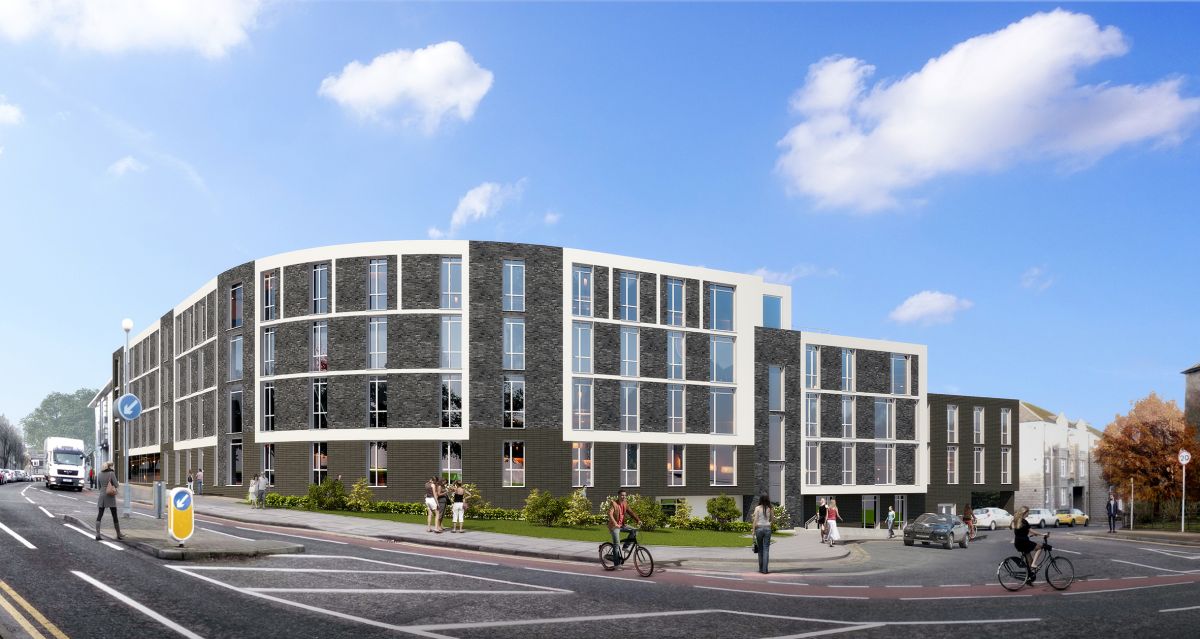
The huge block of student flats in Mealmarket Street/West North Street is distinctively ‘Deco’ in style, brightly coloured in pastel shades of blue, white and pink/orange.

Talisman House in Holburn Street is another symphony in tinted glass with its undulating green roofline, now complemented by Gillie’s new furniture store across the street.

Talisman House is certainly a big improvement on the old College of Commerce; but is the Boots/Currys building by the Brig o’ Dee an improvement on the former, much-unloved, Dee Motel?   At least the Dee Motel was a low-rise building, set well back and largely obscured by trees and shrubs.   The Boots/Currys building might be acceptable somewhere else but, on this prominent corner site, is too big, too far forward and too close to the historic Brig; and it completely dominates the view all the way down South Anderson Drive and out Holburn Street.

Contributed by Alex Mitchell.

Oct 072011
 

Dr David Kennedy, former Principal of The Robert Gordon University, is a man of many interests, experiences and opinions. Voice’s Suzanne Kelly was eager to get his views on contemporary local and global topics and they conversed, among other topics, about life, the planet, greed, oil, fish and Wood. This is the first extract from that conversation.

000_0036 David Kennedy was not short of words, opinions or facts.
He had recently been interviewed in-depth by the mainstream media in connection with the proposed New Town development at Elsick, but in the end all that was reported was the well-publicised return of his own honorary RGU degree in protest over RGU’s decision to award a similar honour to Donald Trump.

This simple act of defiance was eloquently accomplished and captured beautifully in Anthony Baxter’s and Richard Phinney’s film, You’ve Been Trumped.

For those who mainly get their news from Aberdeen Journals, the rest of the world has been writing about this award-winning documentary for months, and it is hitting cinemas in Scotland again now – see details elsewhere in Voice.

I asked first about his son Peter’s concern over the development of a massive housing estate at Elsick and  Peter’s subsequent article in Voice   and wondered if Dr Kennedy himself was keeping up with the issues around this or other planned housing developments?

“There‘s a lull at the moment other than the application that went for approval last week. The BBC spent just under an hour with me. Despite taping a long video interview when the report of the development was eventually aired, virtually nothing of what I said was used, just a reference to my handing back my degree some 12 months ago to RGU.

“The arguments that I put during the interview were about farmland. Human beings have a few basic requirements. One is food; another is warmth. As a prime requirement, humans must be able to feed themselves. We were cautioned by Winston Churchill during WWII that we should NEVER allow ourselves to be dependent on other countries for our food. If our country is unable to do this, then we must depend on trade with other countries.

“How is Scotland going to feed its people if it hasn’t any farmland? Therein lies the problem. We’ve seen here in the North East the decline of all the indigenous industries that have been with us for hundreds of years – textiles, paper, agriculture, fishing, that sort of thing. They’ve all been virtually destroyed by the growth of the oil industry, which sucked skilled people away from these industries.

“Oil is a finite resource, therefore we know from the start it’s not sustainable. It is a short-term gain for a long-term loss. I was on a few committees debating the future of Aberdeen when the oil was gone. Tourism was the only answer they came up with. However, tourism is like taking in one another’s washing – our tourists go out, theirs come in. Where is the gain? The future of Scotland certainly depends on its being able to either produce its own food in sufficient quantities to feed its people, or otherwise manufacture and export goods other countries want.”

This led us to discuss red tape and over-regulation in the farming sector.

“That of course largely comes from what is happening in Brussels. I know one or two larger farmers in the area, one of whom told me he’d never been as well off in his life. Thanks to me and other taxpayers, he was being paid so many subsidies from Brussels for set-aside, tree-planting and so on, as Europe wanted to control where food is and isn’t produced and thereby avoid overproduction.”

Suzanne’s fascinating conversation with Dr Kennedy will continue in future issues of Aberdeen Voice. We are grateful for his input.

Aug 042011
 

Old Susannah looks back at the week that was and wonders who’s up to what and why.  By Suzanne Kelly.

Tartan Day.    dictionary

 A few impressive pipe bands, some knights in armour, and the Lord and Lady Provost paying tribute to the legacy of William Wallace.   Wallace famously fought for independence for his people against the rich and powerful tyrants of the day, who thought they were above the law.

You might say Wallace took ‘direct action’ to extremes.  How pleased he would have been to think our Provost and Council uphold the principles for which he was hung, drawn and quartered.

His statue of course overlooks the remains of the historic Denburn Valley, known to you and me as Union Terrace Gardens: also known to Wood and Milne as a cashcow.  How exactly the Wallace monument will look adjacent to any of the mysterious, unexplained, undisclosed £140 million pound proposals will be anyone’s guess.  

No doubt we will wind up with something that sensitively ‘connects’ the Victorian park to the impressive granite architecture.  In short expect glass, concrete, parking spaces and a monorail platform.  I suppose we could always take Wallace down and sell him for scrap metal to help with the UTG fundraising.  He’d have wanted it that way I am certain.

A few interesting titbits have been coming in from here and there.  Ms Valerie Watts showed up to speak to a Community Council Forum earlier this week, but she was unamused to be asked about the Tullos Hill roe deer cull.

Ms Watts also owes me a reply to a formal complaint on the whole Tullos issue; I’ve chased it up (again) today.

In fact the City is launching a PR offensive, and has offered to have officers present the tree proposal to community councils.  You might want to contact your council for details – the question and answer sessions (if any) alone should be worth showing up for.  We are told the community councils ‘only know what’s been in the media’, and don’t know the whole facts.

Media’s fault of course.  Nothing to do with the council not giving the truth, the whole truth and nothing but the truth from the start of this great plan.  Of course if people wanted to write to Ms Watts to either support or reject the cull (or ask how the £43,800 ‘repayment’ was accidentally forgotten when I asked about it), all they have to do is drop an email to her at chiefexecutive@aberdeencity.gov.uk.

Feel free to ask any questions you want; but as a health and safety precaution, do not hold your breath until the answer arrives. At this rate we won’t get on with any definitions, so without any further ado, I will get stuck in.

Association of Community Councils

(noun) a collective body promoting the importance of community councils.  A not-for-profit body with the following aims  (well at least until it is culled next year):

  • “To encourage exchanges of information between Community Councils.
  • “To promote examples of best practice in the work of Community Councils
  • “To offer impartial and unbiased advice, training and information to Community Councils
  • “To facilitate communication between national bodies and Community Councils
  • “To preserve the independence of each Community Council
  • “To ascertain, collect, and express nationally, the views of Community Councils.
    From: http://www.ascc.org.uk/about

Unfortunately, it’s very, very expensive to run this Association.  It costs a massive £70,000 per year to run*, so obviously this forum for sharing ideas and experiences to strengthen community councils must be culled.

Aberdeen has its own unique way of dealing with community councils – it ignores them.  When it comes to consultations about deer, travellers, Union Terrace Gardens, closing schools or cutting services, our City Councillors generously take decisions without unduly burdening the elected community councillors.

Nigg Community Council was told, not asked, about the takeover of its park by Cove Bay Rangers football club (fan club president:  Ms Kate Dean).  They were told, not asked over the deer cull and the Loirston Loch stadium.  Just this week Nigg CC for some reason objected to a housing officer’s plans to throw Calder Park open to travellers for a few months.

What’s wrong with not being asked about this great plan in advance, I wonder?

This is all part of the City’s ‘consultation’ and ‘transparency’ drive.  Once the Association of Community Councils is gone, the Community Councils will be on their own.   In fact I’m surprised we haven’t had city councillors trying to kill off the community councils yet.  Some of these councils get nearly £3,000 a year or so to help people in their communities.

Perhaps it would be better to leave important matters to our tried and tested, honest, reliable, transparent, vibrant central government officials and councillors (well, the ones who keep out of jail and don’t get arrested for kerb crawling anyway.  Great minds like HoMalone, The Fletch and The Dean and so on).  I know I can barely get through a day on my own without their guidance.

The Association stood up for the community councils, shared best practice, shared experiences, and helped people (me directly for one) -  no wonder it had to go. 

*Note:   £70K doesn’t’ get you much these days.  Aberdeen’s ‘Change Manager’ earns £80,000 per  year. Scottish Enterprise costs some £750 million per year.  And ACSEF’s annual running costs?  No one knows for certain.

Streamline

(verb)  to abbreviate, shorten, abridge an object or procedure.

Central Government has recently announced it wants to ‘stop’ people creating future impediments to great projects like the AWPR.  The Loirston Loch stadium, being plunked in the heart of greenbelt land, never even got called in.

Time for more projects like the stadium to be ‘streamlined.’

You will have seen the dreadful news this week.  There was nothing sensationalist or alarmist in the Evening Express headline which told us in effect ‘Not building the AWPR costs £1 million per month’!  Absolutely shocking!  To think that people who don’t want this road built actually are standing up and using their legal rights to challenge it!  They even have the nerve to challenge the public/private funding mechanism the government wants to use to pay for the dream highway.

Obviously I believe it costs at least £1 million a month not to build the road – but you might want to have a look at what the Road Sense people think actually building the road will cost:-  http://www.road-sense.org/AWPR-MortgagingYourFuture.html .

I wouldn’t worry too much about their figures.  The road isn’t going to cost you a great deal of money.  However your children and their children’s cost for the road is another story, but like Scarlett O’Hara – with PPI financing, you can ‘worry about it tomorrow.’  Financially, it is as sensible as the funding plans for the ‘transformation’ of Union Terrace Gardens.

‘Streamlining’ planning applications can only be a good thing.

If anyone out there can figure out how much the AWPR has already cost in consultants and consultations, I’d really like to hear from you. Let’s be fair – there was a consultation.   A great big costly travelling consultation, with bells and whistles.

Of course the routes suggested in the very expensive consultation have nothing to do whatsoever with the road plans as they stand now, but let’s not split hairs. Money is very tight right now. We’ve got to cut corners (if we’re going to have the dosh to keep a couple of wars and our banks going).. The suggestion of ‘streamlining’ the justice system to get rid of pesky jury trials was a great idea – we may still get that one.

‘Streamlining’ planning applications can only be a good thing.

It is very reassuring to know that Alex Salmond is putting his mind to this worthy end.  We really should have made it easier for that nice Mr Trump from America to build the world’s greatest environmental disaster – sorry – golf course at Menie…  Look how much good it’s doing for everyone!  Jobs creations!  Tourists!  Holiday Homes!  Stabilised Sand dunes (my personal favourite).  So if we don’t immediately agree to start building the £191 million pound road (old estimate), then we are losing £1 million per month – if not per day!

This can’t go on.  I wouldn’t dare to question this statistic, as it was in print and must be accurate.  (By the way, assuming the costs haven’t risen from the £191 million, the new AWPR can be yours in only 16 years at £1 million per month – or twice that with PPI financing).

Let’s just start saying ‘yes’ to everything.  We have a government that wants to build as much stuff as it can, and it doesn’t want the likes of us to have to worry about the details.  I think they’re just trying to be helpful.  To someone.

Direct Action

(mod English noun)  form of protest where the protestors stage some kind of highly visible challenge to opponents, to call attention (especially media attention) to an issue or problem . 

This form of protest is increasingly popular with environmental and economic activists.  And it freaks the government out completely – which is totally wrong of course.

In a long-forgotten age, if your elected officials acted improperly or against the common good, you could write a letter and expect some form of answer.  If you didn’t get the answer you wanted, you could stage a protest march, get petitions signed, and so on.

It’s not as if our Government is scared of protestors.

If you still had no success with your cause in the good old days, you could take to the forests and rob the rich and give to the poor, or board a ship filled with tea from England and throw its contents into Boston Harbour.  Or have a revolution.

But no one ever remembers such events these days, and writing letters and starting petitions is much, well –safer.  Still, it’s a bit easier to ignore a petition than the Boston Tea Party.  Robin Hood is remembered as a hero, and King John the villain.  Who I wonder are our future heroes and villains?  Whose statues will be revered at the future Union Terrace car park and shopping mall?

It’s not as if our Government is scared of protestors.  If they were, they would have (for instance) put an undercover cop like Mr Mark Kennedy in place to spy on environmental protestors for seven years.  It does look like the poor policeman went ‘native’ in the end, and the courts did not think much of the police tactics used.

Such unwarranted police paranoia would never override principles of a democratic, free society.  But as the Met are not prepared to discuss this matter (even though it’s been all over the newspapers), we have to give them the benefit of the doubt.

Old Susannah will introduce ‘Just Do It’ next week at the Belmont; there will be discussion afterwards as well. 

‘Just Do It’ follows a group of environmental protestors as they meet their assorted targets and enemies head on. If you’re free on Friday 12 Aug at 6.30, please do come along.   I have had a preview of the film, and can promise it will raise a few interesting issues. (Rumours that the sale of deer antler headbands are about to go through the roof in Aberdeen are unconfirmed).