Mar 192012
 

A proposal to build a road through woodland in Ellon has come under fire from a group set up to support the management of the area. The intended purpose of  road is to provide access for the development of 250 new homes. Those opposed to the plan believe the road is unnecessary, destructive, and in contravention of a Blench Charter. Friends of McDonald Park founder member Lynn Gilbert brings Voice readers the story.

cwwpic1 The plan is being opposed by Friends of McDonald Park, a group set up by Aberdeenshire Council in 1990 when the Council bought the superiority of the Park from the charity Barnardos.
The aim of the group is to support the management of McDonald Park for the benefit of the community. We have done this by planting bulbs, trees and a hedge as well as regularly clearing litter from the ground and from the Modley Burn.

The Park was given to the Burgh of Ellon in 1928 by Sir James McDonald and is governed by a Blench Charter.

The terms of the Charter state that the Park should be used for recreational purposes only, that nothing should be done which is detrimental to the Park and that its area is not to be reduced in any way.

In 1996, we successfully opposed a plan by Aberdeenshire Council to use part of Caroline’s Well Wood, the east section of McDonald Park, as a bus park for Ellon Academy. On that occasion we raised the terms of the Blench Charter and an alternative solution was found without destroying any of the Park.

In 2010, builders Barratt East Scotland and Scotia Homes were given Council permission to construct 250 houses in Ellon’s Castle Meadows but it was only when marks appeared on trees in the east section of the Park, that it became apparent that the plan was to construct a road through it, from the development site to Golf Road. I made enquiries on behalf of the Friends and was told that the road had been approved by councillors.

In August 2011, the Friends were informed in a Council Estates Department letter that an S75 Legal Agreement for the application had still to be signed, and were asked for their views on the proposed access. The same letter stated that legal advice given to the Council was that:

“vehicular access must facilitate/improve public access to the park and cannot be granted purely to allow development”.

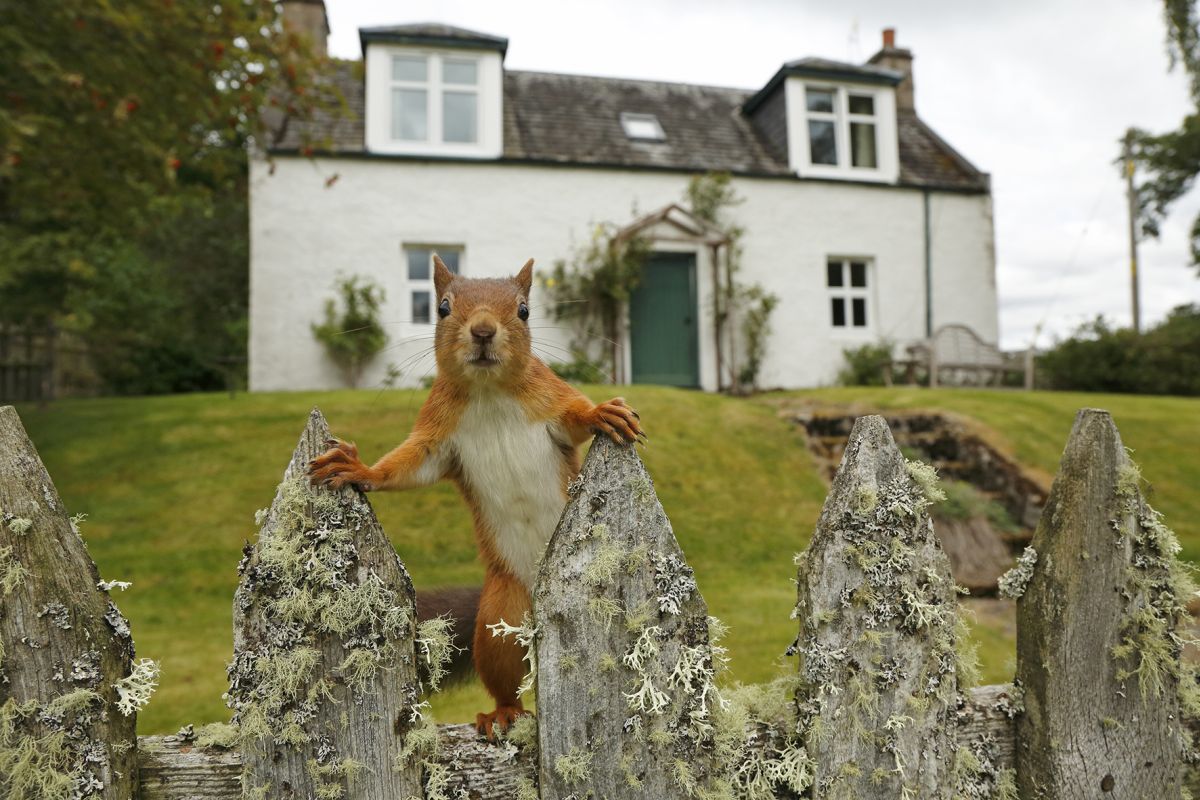
The Friends voiced total opposition to a road through the Park, stating that it would be in contravention of the Blench Charter since it would not improve public access to the Park, but was solely for the development. It would also involve the felling of a large number of mature trees in an area inhabited by red squirrels, bats and spring/early summer migrating birds.

It would seem that councillors were not satisfied with the legal opinion offered and they sought further advice several times from Sir Steven Stuart QC. This was given in a privately-heard report presented at a Formartine Area Committee (FAC) meeting on 6 December last year. It suggested that temporary construction access could possibly be granted, subject to a number of safeguards and agreements being in place.

  The Friends and many others have lodged objections to the planning application

On 17 January, a report to the FAC, again heard in private, proposed a temporary five year construction access which would become a pedestrian and cycle path once the five years had elapsed. This temporary access would be a tarred road with lighting and other services and which would involve the felling of at least 99 mature trees.

It would take a fifteen metre slice of the woodland at the Golf Road end, this increasing to nearer thirty metres at the top, a significant area of the Park.

It seems that when councillors first approved this access, they were not aware that they themselves were in fact Trustees of McDonald Park. It was in this capacity that councillors had to consider the application at their 28 February meeting, and as Trustees they rejected it.

This application is to be considered at a Planning meeting on Tues 20 March.

The Friends and many others have lodged objections to the planning application, and I have asked to speak at the meeting should it be heard there. Quite apart from the effect of this road on the woodland, a precious asset to Ellon, there is another matter to be considered.

Construction traffic using Golf Road would access the Park at the rear of Ellon Academy, an area used by a large number of Academy pupils and mothers with buggies walking into Ellon. There are two other access roads to the development, but some residents along these routes would rather see part of McDonald Park destroyed than have traffic pass their homes.

Interestingly, the site of this proposed access is given as ‘Castle Meadows’ on the planning application, when in fact it is McDonald Park. This makes it easy to overlook the reality of the situation.

Further info: Save McDonald’s Park Caroline’s Well Wood Ellon : Facebook Page
Image credit: Ian Jukes 

Jan 192012
 

We continue our serialisation of David Innes’ interview with author Maggie Craig. Her two books on the Jacobite Rebellion, the evocatively-titled ‘Damn’ Rebel Bitches: The Women of the ‘45’, and ‘Bare-Arsed Banditti: The Men of the ‘45’ are critically-lauded. She explains why she looks at that fractious period of our heritage from a different angle to that usually taken by historians.

maggie-craig-2011-2 You’ve written two books on the Jacobites – where did that inspiration come from?

That came from a novel called The Flight of the Heron by DK Broster which an uncle gave to me. I loved it, and it’s my Fahrenheit 451 book, the one I’d save from the flames.

But like an awful lot of Scots, what I knew about the Jacobites is from that novel, a high romance about friendship and so on.

And although the folk songs are great, they sometimes get things a bit mixed up. Then, when it was the 250th anniversary of Culloden in 1995, I’d started to write a novel set in that period and I needed a baddie, so I went looking for a Campbell. I found a Macdonald saying, “We’ll surrender, but only to a Campbell”.

That was a light bulb moment when you think, “History’s not as simple as you’re taught it is”. Why were they prepared to surrender to a Campbell? They must have respected that guy or thought that he’d give them a better deal, so I started researching it and I got interested in the women because, well, Flora bloody Macdonald is all you’re presented with. I didn’t try to debunk her but she’s such an unacceptable kind of female, standing there while the Prince kisses her hand and I think, “Nah, there must have been women doing different things from that” so I went looking for the women first of all.

They’re attached to their men, of course, so you get a lot of stories about the men too, including the Jacobites of Aberdeenshire and Banffshire. There was a huge amount of Jacobite support in this area. They called them the Lowland regiments, but there were a lot of Episcopalians in Aberdeenshire who would tend to fight for the Jacobites because they were persecuted for supporting the Stuart cause. They couldn’t meet for a proper service, only in twos or threes.

There was a lot going on around Banff and Duff House. The Duffs, of course, were on whichever side was winning as they’ve tended to be. You can’t blame those who hedged their bets. If you had a farm or an estate and you had tenants, and there would have been people who cared about their tenants, you had to be cagey because you didn’t know which way it was going to go – and the consequences of failure were horrendous.

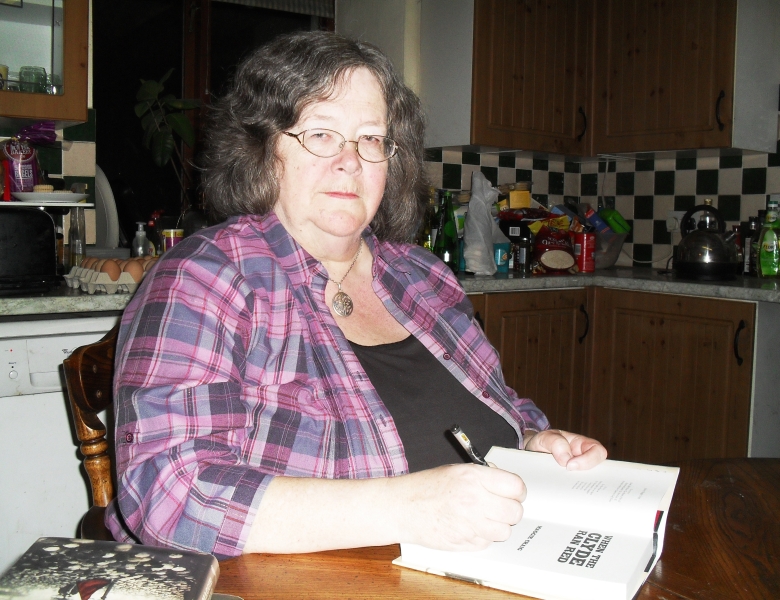
abdsigning About eighty people were hanged. A lot of Aberdeenshire was laid waste. I’ve quoted that, “the people of Strathbogie were back in their fields but they’re as inclined to rebellion as ever”. I thought “Wow”. You don’t get that impression nowadays, where people keep their heads down and don’t say much about getting involved in politics.

Although when I went to speak to kids in Ellon about ‘When The Clyde Ran Red’,  I said, “It’s harder to be a radical on a farm, isn’t it?”. When you’re working for a farmer and you don’t have your comrades about you then it’s harder to stand up and say, “I don’t think this is right”.

I think there’s a kind of hidden history of Aberdeenshire. The anniversary of the Battle of Harlaw was a huge missed opportunity to help tell it.

So you feel that Jacobitism and the Rebellion needs to be re-evaluated as a radical movement.

It’s said that history is written by the winners, but to a large extent that history has been written by the losers and the greatest losers, you could say, have been the West Highlands. That’s fair enough – the devastation, the burnings, the rapes, the murders, shooting the boys and shooting the old men and all that stuff, but I think that has skewed our vision of it. It’s dangerous, because you always see it through your own perspective.

I’m a Scottish nationalist (with a small n) and having read a lot about the Rebellion, I think a huge amount of it was about wanting to reverse the Act of Union. There was no democracy in those days and the only focus for discontent was Charlie, so he funnelled in a lot of different people.

There was a lot of criticism of him because he could be very high-handed, but he was the only way they were going to get regime change, so my take on it is that it was a kind of Rainbow Coalition. It brought in a lot of people and it was kind of before its time. We’ve got the Enlightenment in Glasgow and Edinburgh and probably Aberdeen – I don’t know and it’s something people need to research – but this was still pre-Industrial Revolution where the weavers and the like became radicalised. I think if it had happened fifty years later, things could have turned out differently.

When you read about the eighteenth century, you always hear about the power of the mob which would gather together in whatever town. I think that’s radicalism, but they’re always presented as a bunch of drunken yobs. If you look at the 1730s Porteous Riot about the Malt Tax, people are asking, “Why is London taxing us and why are they taxing us so severely?” After the ’45 they didn’t try any of the leaders in Scotland because they didn’t think a Scottish jury would convict. I think because the whole North British project took off after that.

 people say that it’s sentimentality. It’s not. It’s love. It’s death and feeling.

There couldn’t be a rocking of the boat in North Britain and some Scots became very successful. I see someone like Andrew Marr as being very like an eighteenth century Scot – he’s gone to London and sort of sold out, hasn’t he? I like his programmes, but he’s sold out his Scottishness.

We can get caught both ways. If you say that the Scots have always had a great sense of justice you’re told that you’re just being sentimental, or that you’re looking at the world through rose-coloured spectacles, but then there’s the ‘Jock Tamson’s bairns’ thing which does unite us. I think there’s almost a natural democracy, a collective “That’s no fair, you’ve got to do something about it” attitude that unites us, and it’s not a bad battle cry!

My daughter and I came back from Switzerland via Paris a couple of weeks ago and there were eight London lawyers, all about 40, on the Eurostar. Now there’s nothing wrong with having a wee refreshment but they got more and more offensive about the working classes who “couldn’t get up off their arses and do anything” and they said, “Let’s get some fizz” and bought three bottles of champagne and they got worse and worse. Of course the rest of us just sat and did nothing, but they were such a stereotype of that ‘I’m alright Jack’ attitude. One said, “Why should we care about healthcare for poor people?”

We Scots can be our own worst enemies, though. We’ve got someone like Robert Burns, who’s world class and who unites the North East and Ayrshire, but people say that it’s sentimentality. It’s not. It’s love. It’s death and feeling.

A local Rotary Club thought it was being radical when I was the first woman to propose the Immortal Memory at their Burns Supper. I said that Burns slept around and that if I’d been married to him I’d have slapped him into the middle of next week. Even saying that raised a few eyebrows. I wasn’t saying anything that isn’t known and I still admire him for his humanity. We need to reclaim him for the radical he was.

I looked briefly at Thomas Muir of Huntershill, a radical. We don’t look back to the friends of the people. In the 1790s these men and girls were totally admirable and put their lives on the line to say that workers ought to have rights. There’s so much of our history that we aren’t taught.

I was delighted to see that Red Clydeside is now in the Higher curriculum but in history classes the ’45 is viewed as a crowd of misguided romantic people. That’s a very narrow point of view and it’s time we opened it up. Sometimes the way they treat Red Clydeside is as dry as dust. The history’s got to be about the people and those people were fallible, they made mistakes – and sometimes you point out that someone regarded as a hero was rotten to his wife.

That’s where we leave this part of the interview, but of course this led to discussion of the current political situation, which we’ll carry in the next issue.

Those of you who want to meet Maggie and hear a bit more about her influences have the opportunity on Saturday 21 January when she and fellow writer Kenneth Steven will be at The Central Library, Aberdeen at 11.00 to talk about their love of books.


Jan 192012
 

Foiled by Jock Frost, David Innes got his weekly fitba fix last weekend at Pittodrie. Paying more than three times the cost for about a tenth of the entertainment he relishes in the proper mannies’ fitba Highland League environment is an indicator of why attendances might be falling. He’s thawed out, and here are his thoughts.

merkalnd1pic We Dons fans have learned to be canny, although air-headed, cliché-addicted professional sports commentators still accuse us of living in the 1980s. Only my fashion sense, Chick.

So, when the pre-match talk centred on the potential for the Reds to achieve top 6 SPL status, we backed off. We’ve been down in the gutter this season already, and believe me, we were looking at few stars.

We know better than to hope.

And it’s a good job that we’ve gone from Real Madrid to realism. We created fewer chances in 90 minutes of honest, earnest endeavour than in almost any match I’ve seen at Pittodrie in my 46 years of attendance.

Our squad is solid. Even the loss of Richard Foster has had little obvious effect as Clark Robertson, surely a future star, calmly did the left back stuff and on-loan Mark Reynolds looks skilful on the ball, able in the centre of defence and comfortable wearing The Sacred Red. Apart from a late slip which Jason Brown rescued, Andy Considine is an effective centre half. He must surely get his ability from his ma.

Upfront, Mohamed Chalali opened brightly but faded after sustaining an injury. Scott Vernon, though, is suffering from not getting the service he needs from midfield and often finds himself dropping back to pick up balls which he would prefer to see served to him in the box. That’s where he’s at his best. He’s the most effective and consistent penalty area centre forward we’ve had since Arild Stavrum’s departure for Istanbul left linesmen with curiously well-developed flag arms.

Our problem is between defence and attack, in the bit where we should be making chances for the strikers. So Milsom who gives us some width on the left was missing but there seem to be few alternatives when he’s missing. Neither Ryan Jack, who proved his youthful fallibility by having a poor game by his own standards, nor Chris Clark who was, well, he was Chris Clark, were able to make much of things on the wings. I’ve seen more width on a Mod’s lapels.

As it turned out, Rory McArdle, a solid centre half was played at right back. He didn’t do much wrong, but hearty and committed though he is, a right winger he isn’t. For his endeavour and his determination to keep overlapping when it patently isn’t his strength yet always being back in position to repel the few Kilmarnock attacks of any note, he was my man of the match.

We have twelve days to try to add a creative edge to our satisfying solidity before the transfer window closes – or “slams shut” as cliché demands. We seem to have sorted out the issues which saw us go on that scary losing streak in October and November, but it’s still not pretty to watch and victories will be scrambled and nervous single goal affairs rather than comfortable, carefree, toorie-at-a-jaunty-angle net-bulging festivals.

Without the creativity of wide players or a wily tricky schemer to take on a couple of defenders and deliver a decent standard of final ball to the strikers, we’ll struggle to make the split in the top 6 and falter in the Cup after we complete unfinished business against Queen of the South.

Over to you Broon and Knoxy mins.

Jan 122012
 

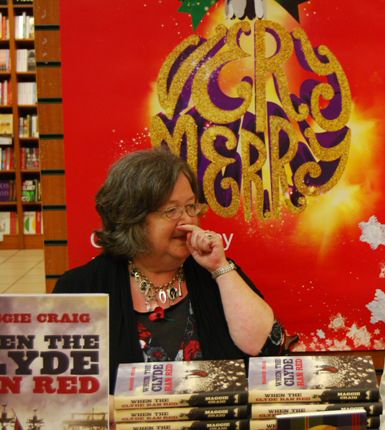
Voice reviewed ‘When The Clyde Ran Red’ a few weeks ago. So impressed was David Innes with Maggie Craig’s excellent take on a vital part of Scottish history, that he spent an afternoon in her cosy kitchen on the wrong side of the Balloch, discussing the book’s background, her passion for the subject, and much more besides. Here is Part One of that interview.

maggiecraig2pic How much of your background is in ‘When The Clyde Ran Red’?

A lot of my background. My dad was very involved with Labour politics and was an Inverness town councillor in the 1940s. He moved to Glasgow and became election agent for Cyril Bence, the Labour MP for Dunbartonshire East after Davie Kirkwood, in the early 1950s.

My dad was born in Coatbridge in 1913, so grew up during the Depression. We were told stories about them going over the farmer’s dyke to nick a few neeps and the farmer turning a blind eye because he knew everyone was really hungry.

In fact my dad’s in the book. I discovered a big pile of my dad’s papers which showed he’d written to the Commissioner of Distressed Areas about the Scottish Allotments Scheme for the Unemployed. He was a great gardener and a railwayman and you know how these two things go together.

People say, “Let’s not talk about politics”, and you think, “If you ignore politics it won’t ignore you”. It was my dad’s lifeblood. I remember him crying about a neighbour’s baby who’d died and they’d no money even for a coffin. This would have been, I suppose, in the early 1930s. They wrapped the baby up in brown paper, and he said, “Tied up like a bloody parcel”, because nobody had any money.

There was always the big hoose and the mine owners. He went apoplectic about Sir Alec Douglas Home, who they were working for at one point, because they were living in the lap of luxury when their workers were living in poverty.

My dad was one of about ten and they were really a bright, clever family, and there was this idea that girls who were clever were going to work in factories at 14 and the boys didn’t get a chance either. It was such a waste of potential.

I remember my aunt telling me about how the doctor would come out. It cost five shillings, but they’d a good doctor who’d say, “I’ll get it next time, Liz”. My aunt says they were on first name terms with the doctor, who must have been an idealistic man who saw himself on the same level as the miners he was treating. When you think of some doctors now who insist on their status, it’s an interesting turnaround.

You grew up in the Glasgow area?

I grew up in Clydebank. My dad then got a job as station master which moved us from Clydebank to Bearsden, quite an interesting culture shock! My mother had come from a farm, and the station house we lived in came with a third of an acre of ground which my dad was proud of. It was semi-rural. He came from Carnwath and loved being in the country.

If you go there now the industry’s gone and it’s back to being a rural area. A lot of these Clydeside places were. There were shipyards and tenements, but you went up to the farm to buy eggs. I think there was a love of the land even in industrial areas.

My mother’s from Barthol Chapel on the Haddo House Estate and she used to talk about Lord and Lady Aberdeen. I don’t think her family was as poor as my dad’s, but she told me that her mother sometimes had to sell their butter and buy margarine. That really hit me – the one benefit of being on the land is that your children are going to have healthy food, but that wasn’t always the case.

I think their rural background helped them speak fantastic Scots. There are words my mother used that we still use, like “fair forfochen”. Because my dad came from what he called the Upper Ward of Lanarkshire he had that rich Scots and that’s all running through the book too.

I think there’s an obvious really good prose rhythm in the book, and that possibly explains it, but it’s your passion for the subject that really shines through.

I grew up with it and thought a couple of years ago that it was time I wrote another non-fiction book. I thought, “What do I feel passionately about?” and the book’s the answer.

I went and looked at some of the other books and some of them are pretty dreadful. The Legend of Red Clydeside is hard going, and you come up against the party line quite often. The Marx Memorial Library gave me permission to quote from Helen Crawford which a lot of people said they wouldn’t allow.

You also have to make a judgement about what’s been written and have to say to yourself when reading some of the memoirs, “You’re presenting yourself in a bit of a heroic light here”. I love the wee vignettes, and I don’t think they’re frivolous. Like when James Maxton gives Davie Kirkwood a clean hanky when he gets arrested because he always liked to have one. Somehow you think, “Well, that’s true!”

I think I had a passion to write about it because it seems to have been forgotten. People are talking about austerity nowadays, and I think, “Not yet”. We’re not at the level of poverty where people couldn’t go to work because they didn’t have a pair of shoes, or they had to share a pair of shoes with their sister.

We’re now seeing the prospect of our children doing less well than we did, which is very hard because you want your children to do better than you’ve done. Both my husband and myself are working class kids who’ve made good but you feel as though you’re almost being hit for that – the idea that if you can afford to send your kids to university, you have to bear this cost. This is fine, but you don’t have the cushion that someone like David Cameron has. I had to have a full grant to go to university otherwise I couldn’t have gone.

Next week: The author speaks about her books on the Jacobites, ‘Bare-Arsed Banditti: The Men of the ‘45’ and ‘Damn Rebel Bitches; The Women of the ‘45’, and how this period of Scottish history is misunderstood and worthy of re-evaluation.

Those of you who want to meet Maggie and hear a bit more about her influences have the opportunity on Saturday 21 January when she and fellow writer Kenneth Steven will be at The Central Library, Aberdeen at 11.00 to talk about their love of books.

Dec 152011
 

Patrick_Young With thanks to Dave Macdermid. 

This weekend will see Westburn Tennis centre host the annual North County Inter District Red, Orange and Green (ROGY) competition, between the 4 districts in the North County.

This event, now in its 2nd year, was set up by North East District Coach Vikki Paterson

Vikki commented:

 ”I am heavily involved in the running of the North County Cup teams from Under 10’s  through to Under 18′s and this is a great way to see the younger players coming through for the years ahead. It is a great opportunity for the players to play in a team and represent their district.”

On Sunday 18th of December the finals of the North East Red and Orange tour will take place, involving the top 8 boys and top 4 girls at Under 8 and Under 9.

This year the ROGY Tour events have recorded over 800 matches, a substantial increase on the previous year, much to Vikki’s delight.

“This year NESTLA was granted funding from Awards For All, and this has allowed me to put on more events, including indoors ones too. We have had really good support from the local players and Sunday should provide some great tennis.”


Cameron Jappy Taking part are:

Under 8 Boys
Cameron Jappy (Westhill)
Ewan Smith  (Alford/ Westhill)
Finlay Smith (Westhill)
Alex Grant (Westburn)
Harrsha Pradeep Kumar (Dls)
Ross Grant (Westhill)
Benjamin Hine (Westhill)
Todd Blacklaw (Rubislaw)

Under 8 Girls
Varada Kamte (Cults)
Abigail Doran (Stonehaven)
Rosie Sterk (Stonehaven)
Caitlin Fraser (Tarland)

Under 9 Boys
Greg Smith (Alford/Westhill)
Ewan Smith (Alford/Westhill)
Cameron Jappy (Westhill)
Angus Edward (Cults)
Jamie Connel (Rubislaw/DL’s)
Hauoorn Arsher (David L’s)
Angus Harold (Grant on Spey moray)
Harrsha Pradeep Kumar (David L’s)

U9 Girls
Jodie Harris (Stonehaven)
Rosie Sterk (Stonehaven)
Varda Kamate (Cults)
Caitlin Fraser (Tarland)

For further information contact  – Dave Macdermid – dave.macdermid@bigpartnership.co.uk


Nov 282011
 

This match really underlined how the sport of football can toy with the emotions of its followers. At half time Dunfermline would have bitten off hands for a point, but in the end it was Aberdeen who felt relieved to snatch a share – and yet, both teams will feel as if they could or should have won the game. Philip Sim reports.
merkalnd1pic

The Dons undoubtedly controlled more of the match and created a greater quantity and quality of chances, but it was the home side who somehow found themselves 3-1 ahead – and indeed, it could have been 4-1 if not for a terrific save from visiting keeper David Gonzalez.

Ten minutes of madness at the back soured what had been developing into a decent Aberdeen performance.
It’s little consolation that the Dons have now quadrupled their away goals tally for the season, as they remain rooted second-bottom of the SPL.

Aberdeen’s back line will come in for some deserved criticism after an all-too familiar second-half collapse, but special mention once again has to go to Andrew Considine, arguably his team’s most effective performer this season. The centre half has looked solid in defence and has popped up with vital goals several times already this term, and it was hardly a surprise that he broke the deadlock.

The fact a defender can be so lauded in a team which is shipping so many goals speaks to the nature of this match – while undoubtedly an entertaining affair, it was as laden with negatives as positives. While Aberdeen found themselves trailing 3-1 to a team who haven’t won a home match all season, they then showed great character and resolve to come back and tie the match, and came within inches of a winner in the final seconds.

Craig Brown will again point to his side’s statistical superiority, and while it’s true that the Dons largely bossed the first half, made plenty of chances and won endless corners, all too often they showed profligacy in front of goal. Josh Magennis was the main offender, missing four good chances including an open goal before he finally netted the late equaliser.

A cutting edge up front has been Aberdeen’s key failing this season, and a quick glance at the SPL’s top scorers confirms this – Scott Vernon just makes it the top 15, while Inverness, the only team separating the Dons from bottom of the league, have both Andrew Shinnie and Gregory Tade.

Beyond the striking issues and occasional defensive standstill, the result points out how fragile Aberdeen are, looking distinctly makeshift after losing just a few players to injury. Kari Arnason would be badly missed from any midfield in the country, but really it was Scott Vernon’s absence that hurt the Dons here.

With Rory Fallon withdrawn presumably due to injury after an anonymous first half and Mo Chalali off on international duty – still the only situation where he has actually scored a goal – the absence of Vernon leaves Aberdeen with a front duo of Magennis and Darren Mackie. This is not a pairing which will strike fear into the hearts of many SPL defenders, especially given the scant service they tend to receive – Richard Foster remains the team’s only source of width, given the uninspiring form of eternal substitute Peter Pawlett.

Brown and indeed many of the supporters might be looking forward to the January transfer window and a strengthening of the squad, but there are six more games to be negotiated before then.

Depending on whether your glass is half full or half empty (discounting the rather vocal minority of fans who broke their glass and went home in a huff at 3-1) these six are all winnable games in a league as evenly balanced as the SPL outside of the Old Firm. On the empty-glass relegation-dogfight hand, maybe a point away from home against a fellow struggler is a decent result – but this was the type of game that Aberdeen really need to look to win if they are going to build a move up the table.

Nov 242011
 

Deliberately resisting the attraction of the undoubtedly arcane and twisted plots of this year’s Broons annual, David Innes evaluates Maggie Craig’s take on exciting revolutionary times on Clydeside a century ago.

clydepic When Lenin appointed John MacLean, perhaps Red Clydeside’s most-revered socialist son, Soviet Consul for Scotland in 1918, the reputation of Glasgow and its industrial satellite towns as the most likely crucible of any UK workers’ revolution was sealed.

In the aftermath of Bloody Friday in January 1919, the militia, backed up by tanks was in George Square, the Riot Act had been read to an assembly of tens of thousands of working people and Scotland’s own socialist revolution seemed inevitable.

When The Clyde Ran Red faithfully documents these tumultuous events which took place in what must have been life-enhancing times, but Maggie Craig achieves much more than re-documenting tales and phenomena well-known to historians and socialists.

In what might be regarded as a primer for the more in-depth and heavy duty histories and biographies listed in her book’s bibliography, she chronicles forty years of the people’s history through the experiences of those closely involved and those affected by events which showed that change was possible if the determination of the people was present and stout, resolute leadership given.

Not only are the iconic heroes of the struggle – Maxton, Muirhead, Kirkwood, Shinwell, Johnston and others – celebrated for their unstinting efforts as leaders in the battle for liberty, equality and fraternity, the lesser-known local heroes of rent strikes and trade disputes are also lauded. The little victories against oppression and exploitation, the author illustrates, are just as vital in changing lives as headline-grabbing larger scale changes.

There is obvious pride in her own Clydeside roots as Craig relates the day-to-day realities of struggles, defeats and wins for working people, describing the Singer dispute, the building, moth-balling and eventual launch of Cunard’s Queen Mary and the Nazis’ terrifying and murderous Clydebank Blitz in 1941.

Whilst these histories are well-known, the author brings new life to their re-telling from the perspective of residents, citizens and workers directly involved and affected.

Craig’s previous form as a novelist, with seven previous publications in this genre, is obvious and welcome as When The Clyde Ran Red is an immensely-readable social history of headily-exciting times and fiery, determined human spirit.

When The Clyde Ran Red
Maggie Craig
Mainstream Publishing
http://www.rbooks.co.uk/product.aspx?id=1845967356

Nov 212011
 

The usual Keith battle cry of “Come on Maroons” was always going to carry ambiguity when Banffshire’s finest were drawn against similarly-attired Arbroath in the Scottish Cup 3rd round. David Innes took up his regular spot beside the Kynoch Park dugouts to report for Voice.

ball1 After last week’s farcical Kynoch Park abandonment due to floodlight failure, Keith’s Scottish Cup tie against Arbroath was never likely to fall victim the same way. Not when the 200 additional Lichties come to town in noisy and good-humoured spirit. With Arbroath among the SFL Division 2 pace-setters and Keith’s unpredictable form, the clever money was on a comfortable victory for Paul Sheerin’s more experienced squad.

Possibly taking inspiration from Culter’s plucky draw in the early kick off, Keith matched Arbroath’s aggression and pace with no-nonsense safety first defending and might even have had a penalty when the visiting ‘keeper seemed to foul Graham Lonie who himself had just been booked for a challenge where he clearly won the ball.

Arbroath made chances but Keith no 1 Andy Shearer kept them out and a stunning double save from two point blank shots was a first half highlight.

Arbroath spent the early part of the second half putting pressure on Keith, but resolute defending, with Shearer continuing his earlier defiance, kept Keith in it. They almost took the lead, in fact, when Cammy Keith hit the post and when Jonny Smith came on to help the lone striker upfront, they began to trouble Arbroath’s defence.

It was well into injury time when an error by Garry McNamee saw Arbroath’s Steven Doris set free in the Keith box. Inevitably, he went down under a tackle, heroic Keith stopper Kris Niddrie was red-carded, and player manager Paul Sheerin coolly did the needful with the penalty. 94 minutes gone and a cruel exit for the brave Maroons.

All the more galling for a Highland League club was the loss of tournament sponsorship money for innocuous looking yellow cards for Lonie and McAskill and Niddrie’s injury time red.

The draw for Round 4 of the Scottish Cup will be made on Tuesday 22 November. Arbroath will feel fortunate to be in it and will rarely face a fiercer challenge than they did at Kynoch Park.

It’s back to auld claes and porridge for Keith. Due to progress in the Cup, participation in the Aberdeenshire Cup final and enforced idleness as Buckie and Forres replayed cup ties when due to visit, Keith have already lost ground by five games. Add the need to rearrange last week’s abandoned Deveronvale game and the inevitable postponements due to the upcoming Banffshire winter and it’s going to be a long season.

They can take heart, however from this brave performance. Repeat it on a weekly basis in the league and the Maroons will have a huge influence on the destination of the 2011-12 championship flag.

Oct 312011
 

Another narrow 2-1 defeat against the Old Firm for Aberdeen in a physical battle of a game which lacked entertaining football but was never short on controversy and incident. The Dons conceded a penalty, had an appeal of their own turned down and had a man dismissed in a tough-tackling match which also saw potentially serious injuries for both teams. Philip Sim reports from Pittodrie.

merkalnd1pic Injury to striker Scott Vernon prior to the match left Rory Fallon deployed up front alone, Chris Clark taking his place in a five-man midfield. The suspended Ryan Jack was replaced at right-back by Rory McArdle looking suitably out of his depth in an unfamiliar position.

Overloading the midfield meant much of the action took place there, which played into Aberdeen’s hands in the first half – while free-flowing football and chances were at a premium in the opening period, David Gonzalez in the home goal barely touched the ball, while his side carved out several good opportunities.

Clark in particular had his best game since returning to Pittodrie, buzzing about and chasing every ball kicked in the middle of the park. There was some pressure on Clark to step up after Rob Milsom, who had started brightly, had to be withdrawn with a badly gashed ankle courtesy of a horrific tackle by Steven Naismith.

The Scotland striker managed to badly injure himself in the act, but somehow escaped even a yellow card for the worst tackle of a game which was far from pretty at its best.

The second half was a mirror of the first. While the midfield war of attrition raged on as previous, this time it was Rangers who were making opportunities and it was hardly a surprise when they broke the deadlock. After that, Aberdeen always seemed to be swimming upstream, and despite some excellent play from Andy Considine in particular, the game seemed lost.

Blame is going to be difficult to dole out from this defeat, but beyond the odd simple incidence of poor play several arbitrary factors came into play.

Heavy rain through the first half saw many of the players slipping and sliding around on the slick Pittodrie turf, epitomised by Ricky Foster on his backside as Rangers burst through the score the opening goal.

At the other end of the park the sun rather than the rain was the enemy for visiting keeper Allan McGregor, who allowed Ricky Foster’s shot to apparently pass straight through him. The Scotland keeper had the sun in his eyes, but still should have comfortably dealt with Foster’s effort, which while well struck was heading right down his throat.

Another factor neither team could plan for was the referee – although Aberdeen might have had an idea what they were in for the minute Willie Collum’s name was called out over the tannoy.

Collum has always been greeted with derision by the Aberdeen support, often for good reason – and he will have earned no new fans in this match.

His first action was to book Kari Arnason for his very first tackle of the match, effectively putting the shackles on the combative midfielder for the rest of the match. The challenge might have been worthy of a booking, but Collum didn’t seem to maintain this opinion when it came to several identical tackles from visiting players.

Arnason has quickly become a fan’s favourite at Pittodrie with his no-nonsense attitude and occasional thunderbolt from distance – one of which sent McGregor scrambling in the first half – but he was visibly constrained by the early caution, pulling out of challenges he would usually relish.

The Main Stand linesman also had an absolute shocker, but provided one of the comedy highlights of the match – after the hapless official finally awarded a decision in Aberdeen’s favour in the final minutes, the fans behind him celebrated like a goal had been scored.

After two narrow defeats to the Old Firm, Aberdeen can approach their next run of games with some confidence, starting with the visit to managerless St Johnstone next week. One worry will be the loss of several key players – Rob Milsom and Scott Vernon are now questionable through injury, and Rory Fallon will miss two matches after receiving a rather soft red card in the final minutes. This gives Craig Brown something of a selection headache in a key area of the pitch – and one that has been far from the Dons’ strongest this term.

Oct 252011
 

An Aberdeen defeat at Parkhead is hardly unpredictable – it’s seemed like the Dons couldn’t buy a win against Celtic in recent years, not that they’d have to finance to do so – but at least the team are down to battling, one-goal margins now rather than the capitulations of last season. Philip Sim reports.

merkalnd1pic The Dons scored their first away goal of the season in this match, another little milestone in the crawl towards progress for Craig Brown’s side, who look to have a bit of confidence and fight about them after back to back home wins against Dunfermline and Dundee United.
Two things always seem certain when the men in red play against the hoops though – one of them will be sent off, usually controversially, and Charlie Mulgrew will score or create a goal to haunt his old club. The former Dons full-back often looks shaky during open play, but his set-pieces and surprising ability in the air have been invaluable to Celtic this term, which is perhaps why he was handed the captain’s armband for this match.

Wonderkid Ryan Jack went from hero to villain for the Dons, scoring an excellent solo goal to level the match before being sent off for a second yellow card.

Jack has really come into his own this season and for the most part his performance at Parkhead reflected this, but his dismissal ended the game as a contest.

Prior to that chances had really been at a premium, with both sides working hard to restrict opportunities for their opponents. Celtic had the lion’s share of the play, but Aberdeen were always in the game, fighting hard for every 50-50 ball and showing total commitment across the defence and midfield.

Jack’s first booking was a farce – a goal celebration of any kind is now apparently a foul, or was it merely for having the temerity to score against Celtic? However, he showed his inexperience when lunging into the tackle which earned him his second. He will now be suspended for the next match, the visit of the other Old Firm cheek, which presents Craig Brown with a defensive dilemma.

One option is to make a straight swap and drop Chris Clark in at full-back. This would be the continuity option and possibly the best one, given how well the rest of the team are playing in their respective positions, but Clark’s form has been very poor since his return to the Dons, especially defensively.

Another straight-swap option would be Rory McArdle, but full-back is far from his preferred position.

Brown has shown an admirable resolve to stick with the starting 11 and formation which has been performing well of late, but he is a tinkerer at heart and he may be tempted to move things around a bit.

Kari Arnason has been deployed at centre-half in several big games this season. Might Brown be tempted to move him into defence, shifting Andy Considine to left-back and Foster to right-back?

Arnason has formed a formidable partnership with Isaac Osbourne in the middle of the park and many Dons fans will be eager to see the havoc they could wreack on a Rangers midfield this weekend. Arnason’s composure and reliability are a bonus wherever he is deployed, but these charactistics work best alongside the wrecking-ball style of Osbourne in the middle of the park. One thing is for sure, and that’s that the Aberdeen board need to find some cash to sign these two up to longer-term deals as soon as possible.

Similar to the midfield duo, the defensive partnership of Considine and Youl Mawene is also probably working too well to be broken up. The experience and toughness of Mawene seems to give Considine real confidence, with the big defender already having his best season in the team, and the two complement each other nicely.

Players like Mawene, Arnason and Osbourne – and indeed Rory Fallon and David Gonzalez – weren’t in the side for any of last season’s humblings against the Old Firm, which can only be a good thing. They approach these games full of confidence rather than trepadition, expecting to win, and with these five really representing the spine of the team this really boosts the morale and belief of their team-mates.

During the latter years of the Jimmy Calderwood era Aberdeeen had an excellent home record against Rangers, winning almost every game, and the way the Dons are playing right now, there’s every chance that can be re-established again this weekend.