Suzanne Kelly continues her series on Northfield Animal Haven in New Pitsligo, this time concentrating on contradictory statements made by owner Kelly Cable on NAH’s funding, her benefit fraud conviction, and ultimately and most importantly this article looks at animal welfare concerns.
A mission statement, some sample threats, and advice.
 The purpose of this series of Aberdeen Voice articles was to examine the nature of the Northfield Animal Sanctuary operation, based on people approaching AV with concerns.
Looking at the NAH pages this past year and a half, the operation is unlike any animal welfare organisation I have encountered anywhere else in the UK or the USA.
I have volunteered and donated money, worked on farms, attended lectures on animal welfare, and at present make regular donations to 10 animal charities in the UK.
I mention this as Cable and some of her friends have attempted to link my investigations with my support for other bona fide animal welfare organisations. I am not salaried by any of the human, environmental or animal charities I support, and my investigations are based on the evidence brought to me from a wide range of people.
Collating the host of contradictory statements Kelly Cable made in funding appeals and on social media has been arduous. No doubt this piece will result in Cable and her supporters launching further social media attacks on me. There is no doubt though that the evidence presented in this piece is fact, carefully checked, fully documented. Some of the most damning material about the goings-on at NAH comes from Kelly Cable’s own posts and funding appeals and those made by her friends.
The word ‘attack’ was not used lightly. Many sources have insisted on remaining anonymous fearing reprisals, saying they received threats of physical harm. Threats involving guns and shooting were ‘jokingly’ made against me by Cable’s father Eric [1]. This month a woman named Carrie Anne Greig, posted:
“Carrie Anne Greig Honest to fucking god. doesn’t she have a mute button or something?! She’s an absolute idiot, going on about morals and shit, how is it morally right to time after time slander and Harass someone when she has absolutely no idea? She’s never been to your place, never seen the animals, piss all. Someone needs to put her down with that AK47 she was on about.” [2]
– https://www.facebook.com/profile.php?id=100009008791129&fref=ts
Aside from the deceptions and animal welfare problems, I have never heard of an animal sanctuary making posts about shooting journalists. Joking or not, the threat of violence against anyone always carries the trace of intimidation. Do honest organisations need to stoop to such tactics when they are investigated?
As to the many contradictory statements Kelly Cable makes – please do contact her to see which statement she made is true and which is false. And please – if you have any doubt as to the credibility, honesty and standards of any charity: do not give it money.
Fact Recap:
- That Kelly Cable is a convicted benefit fraudster [3] – this calls her honesty into question;
- That Kelly Cable denied signing for a substantial loan [4] – again her honesty was thrown in doubt;
- That signs and funding appeals stating ‘all farm animals are rescued are misleading [5]. There seem to be two Northfields – one that keeps some animals as rescues – while breeding for sale from these [6.1-3], and one that sells animals at Thainstone Market and privately where slaughter is the almost inevitable outcome [7]. This schism is condemned by many animal welfare professionals including John Robins of Animal Concern Advice Line [8].
- When cornered on this issue, Kelly has made posts along the lines of ‘everyone’ knows that she operates a working farm and that the reason she uses pictures of animals in her appeal such as sheep and cattle that are not to be rescued is ‘people have asked to see all the animals’ [9]. Donors Aberdeen Voice had contact with were completely in the dark on the point, and would never have donated to money to an institution that breeds from its rescue for sales, and raises farm animals for commercial purposes.
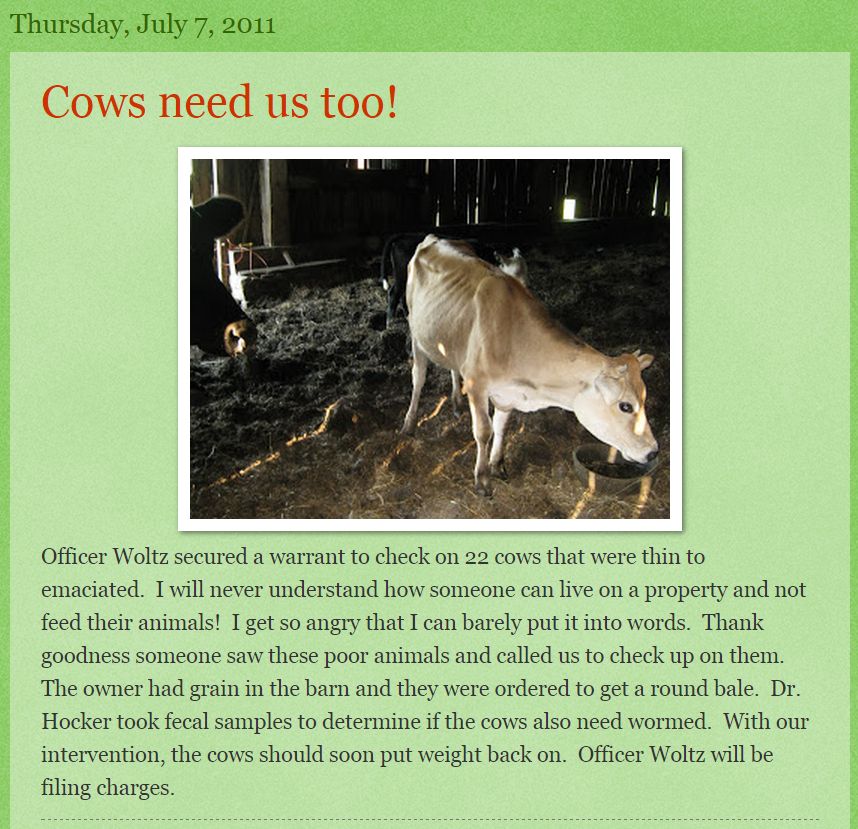
- That Cable used, without any contact or permission, images of animals she had nothing to do with for fundraising purposes – this calls transparency and honesty into question [10].
- That Cable has claimed to different witnesses to have disabilities and illnesses [11.1-11.4]; she has told several people these illnesses lead her to use cannabis on the farm and that alcohol and drug use by others is tolerated by her at Northfield around the 170 animals she says she cares for single-handedly. This clearly poses threats to animal welfare – and that has led to serious consequences as this article will demonstrate. This drug use should also be of serious concern to anyone using her animal assisted therapy programme.
- There are allegations of cannabis sales which the authorities are aware of [12]. (As an aside, cannabis can be a very therapeutic medical boon to some. The appropriateness of seeking public donations while using/selling cannabis on a farm by a disabled woman who purports to single-handedly care for over 170 animals where neglect and deaths have occurred should raise red flags to animal welfare authorities and those concerned with public safety).
This all adds up to irresponsibility fiscally, operationally, and safety wise on a worrying scale.
This piece will use material collected as part of this investigation to show conclusively:
- That animal welfare is often compromised leading to animal deaths, injury, suffering and exploitation
- That the fundraising appeals launched by Cable and her supporters contains misleading stories – the implication is that there may well be an attempt to gain donations by using less than honest prose
- That fundraising appeals and social media posts by Cable and her friends contain many contradictions as to the nature of the operations, what NAH’s funding mechanisms are, what type of animals are actually rescued or sold, and whether or not animals will be put to sleep – this obfuscation makes it difficult to get to the truth: is that the intention, or is Kelly Cable perhaps so confused and unwell she cannot recall what she is telling people from one day to the next – if there is confusion, then are the 170 animals best looked after by her
- That Kelly has made and continues to make false assertions as to Police Scotland or legal entities having contacted and warned Aberdeen Voice about these articles; no such contact has ever happened – the implication is that lies are being used to attempt to discredit the facts as presented in Aberdeen Voice.
The most important things though are the welfare of people using her animal assisted therapy, the fact that people have been defrauded out of thousands of pounds (both in loans made and not repaid and those who believe their donations save farm animals ensuring animal welfare) and top of these concerns is the welfare of these 170 animals.
Cable and Finances:
While constantly pleading poverty, Kelly keeps buying and adopting more animals – clearly by her own admission, more animals than she can safely manage (she, her father and 17 horses were injured while she and her father tried to transport them [13], and it is claimed she lives in substandard housing as she has so little money).
With one breath she will write that no animal will be put to sleep [14.1]; then she launches fundraising appeals threatening to have animals killed (not adopted by other area shelters) if she doesn’t get money [14.2-4]. In one social media post she will talk about her ‘babies’ and in other posts we find instances that these ‘babies’ have been improperly fed, transported, sold, injured – and died in questionable circumstances.
She and her supporters would have us believe she is a veritable Mother Teresa of animal welfare, denying herself basic comforts and although disabled, she cares for over 170 animals. In the course of the investigation a different picture emerges.
We have a woman who has two convictions for benefit fraud, who has borrowed money from people without ever repaying it, including £5,000 from her then partner’s parents and grandparents – claiming that her signature on the loan agreement was a forgery.
This claim was debunked by a handwriting analyst as part of court proceedings.
We have a woman who went on the internet, copied photos of animals that had absolutely nothing to do with her or NAH, and used the images saying that she needed funds to save the animals pictured. Cable sells animals while asking for money for saving other animals; it is often unclear from her advertising (signs, online fundraising appeals) what animals are actually to be saved or sold for slaughter; she recently posted a picture of a sheep and said it was the first sheep ever to be adopted in the sanctuary.
She’s used photos of sheep and depicts them on older material asking for funds to save them – she sells them for meat, and disowns any responsibility for what happens to animals she sold. Members of the Cable family have made threats against me and others.
Kelly has told people, including her former social media administrator Fiona Manclark that she uses cannabis for her disability, telling some people she has fibromyalgia. Other witnesses, understandably keen to remain anonymous, have told Aberdeen Voice that cannabis is used by Kelly and others while at the farm – and is sold from the farm as well.
In summary, this is not your typical animal rescue, and anyone wishing to donate money to help animals should be aware of these documented facts. Please read the reference document accompanying this article for proof of assertions made.
In a perfect world, Cable would ensure that all animals are properly cared for – in her own words as will be shown this is not the case.
Kelly once posted on social media that ‘everyone’ knows how she operates. Hopefully after this series of articles that will be true.
99 Problems:
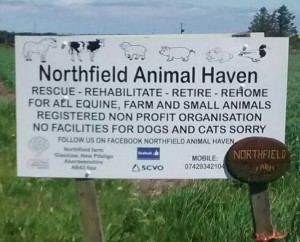
As described in previous articles, visitors to her farm are greeted with a sign depicting animals of all sorts, with the words ‘rescue rehabilitate retire rehome for all equine, farm and small animals. This sign is illustrated with images of a pig, fowl, poultry, sheep and cattle. In effect, visitors have been misled before they even get out of their car:
Kelly Cable does not rescue all the animals she has at the farm. The cuddly sheep she has used in fundraising appeals are sold, slaughter being the likely outcome of their visit to Thainstone Market. There is not a single reputable, above-board animal rescue organisation in Scotland Aberdeen Voice can find that claims to save ‘all farm animals’ while raising some commercially.
It is not only the fate of the animals that Kelly sends to slaughter that is at stake. Chicks less than two weeks old have been sold and then re-sold to uncertain fates.
All animals eventually die, but at Northfield horses can die from cold weather [15], and ‘of a broken heart [16]’. A lamb was overfed – and died [17]. A sheep destined for sale was given a reprieve after it lambed – the hapless Kelly had no idea the lamb was expected [18]. Perhaps being disabled and running (according to some posts singlehandedly) a ‘working’ farm and a ‘haven’ is too much.
Aberdeen Voice is in receipt of some harrowing witness statements such as that of a dog killing poultry. A dog was hit after killing poultry; a bird with a broken leg went untreated. Unsurprisingly, the people who witnessed such acts are keen not to be identified. Kelly recently posted that she knows everyone who has contributed to these stories.
This in itself is a message of intimidation to those who have been threatened by members of her family, but it is an indictment of a ‘haven’ where numerous people have come forward with serious concerns. However, the most damning words about what happens to these ‘babies’ as Cable and her acolytes call the animals comes from Kelly herself.
Dead horses:
Horses die. They tend to do less of it however when given sufficient diet, care, shoeing and shelter from weather.
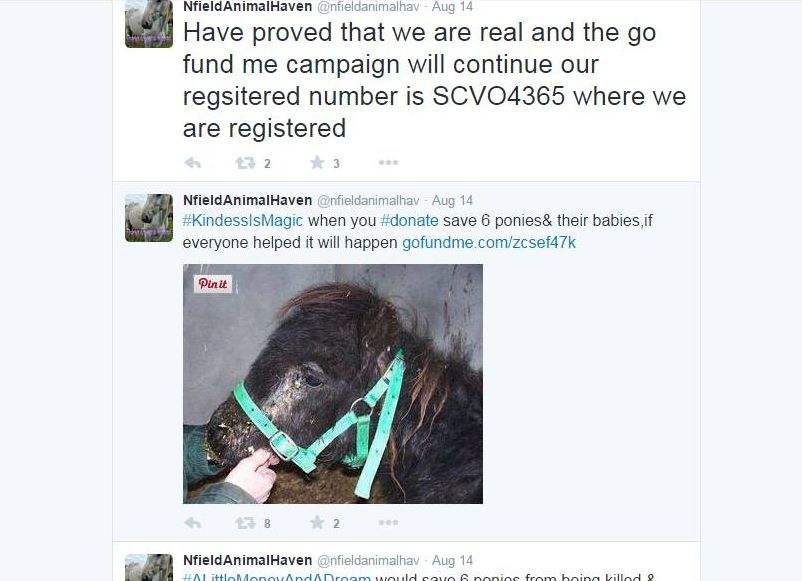
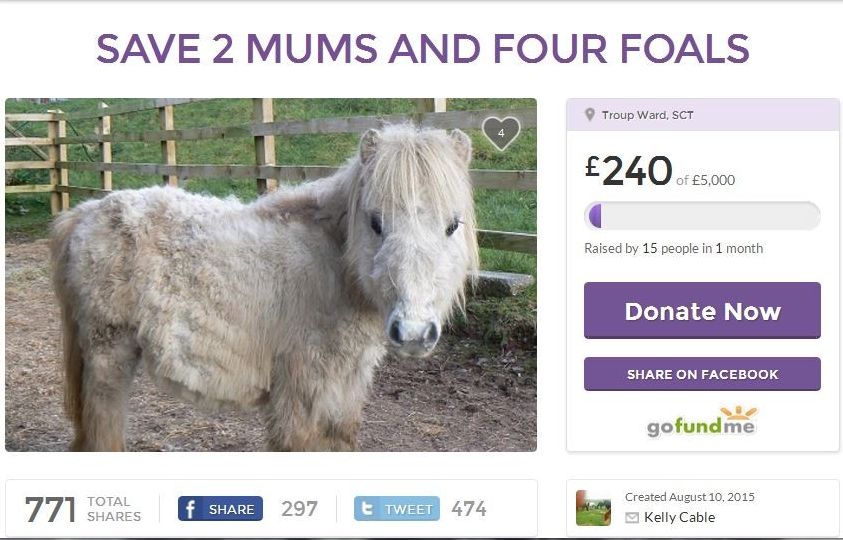
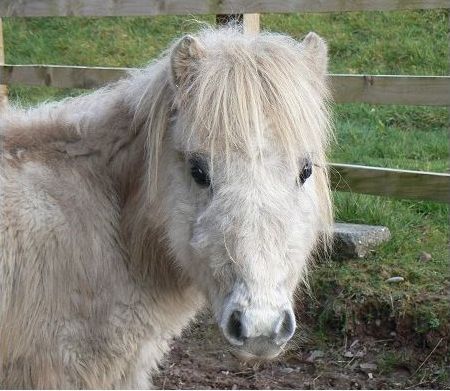
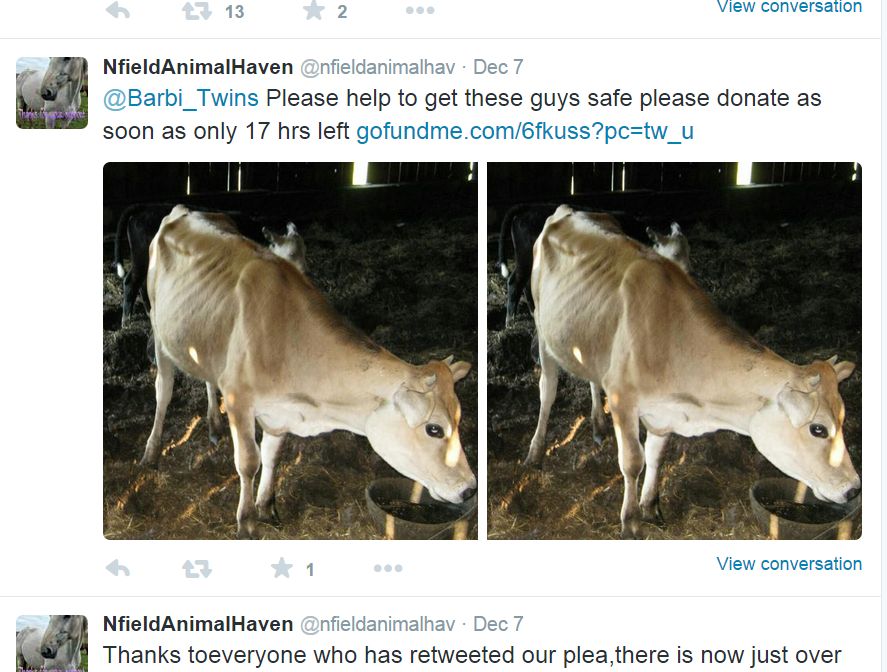
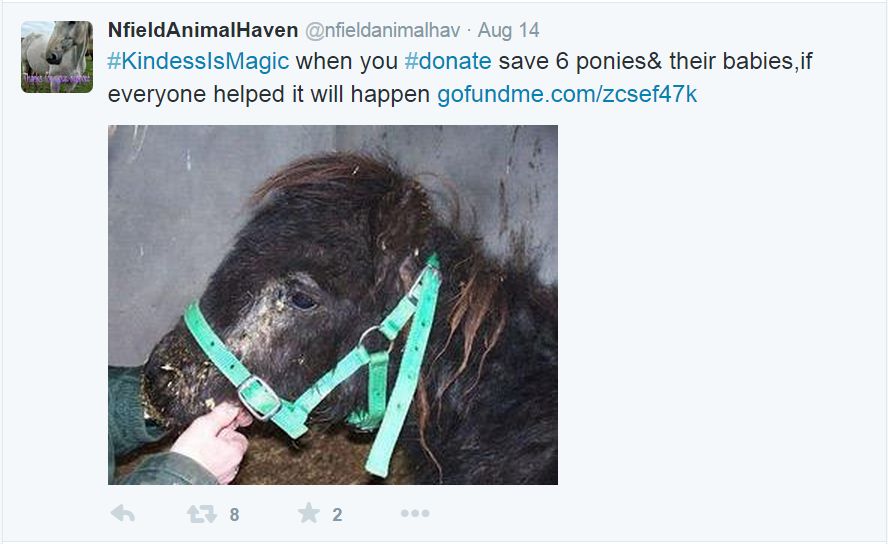
Many of the NAH rescue appeals follow a pattern. There is an urgent need for rescue funds or the animals will be turned into meat. This was true of the ‘Shetland 6’ ponies and for ‘Lucy’ and her foal ‘Sally’.
Now using such a manipulative tactic on a kind-hearted public is still manipulation, but it is understandable if coming from an organisation that only rescues animals. How is it possible for Northfield to sell animals for meat – pigs, lambs, poultry – but then pretend to be upset that these ponies that it (and often only it) can rescue if the public stump up funds urgently? If following how one farm can want to save its animals while sending its animals to slaughter is hard to fathom, the pretence that NAH is upset at the idea of an animal becoming food defies any kind of logic.
Here is the first part of the Go Fund Me appeal for ‘saving’ Lucy and ‘Sally’ https://www.gofundme.com/6u3mgs
The appeal for these two horses was 32 months ago; it raised £727. Perhaps a swift end at the abbatoir might have been kinder. After being rescued – Lucy died at Northfield – because it was cold and there was no room in the stable for the ancient horse. Kelly Cable wrote:
“Due to the stables situation I couldn’t take her in and it was very cold -6 that night. Please donate and help me rebuild our stables before we lose any more otherwise I will have no option but to close ….” [15]
What was done to get this horse somewhere where it would have been warm to keep it alive?
‘Babies?’ – Neglect, Sales and Abuse.
This is a post Kelly made of a lamb called Roddy which had collapsed from over eating and a joking comment ‘ha ha’ from Kelly – who’d allowed orphaned lambs to overeat – hardly good practice.
Figure [17] shows her post about an orphaned lamb which died from ‘bloat’ due to her lack of care; what did happen to the ewe I wonder? It seems as if for Cable and her devoted supporters it is sufficient to cuddle and groom cute animals; the serious business of animal welfare is glossed over or joked about, like the over-fed lamb Roddy. This does not happen at other rescues.
If money is always in such scare supply, a lamb dying of overfeeding, this overfed animal, and a diet for some pot-bellied pigs they took in (after NAH got them, one was put to sleep due to arthritis – diet to reduce the weight of these animals might have helped extend the animal’s life).
One sheep was given a reprieve from market as she lambed the night before being sent away. Not knowing your animals are pregnant is not brilliant animal husbandry. Kelly’s words explain this lamb was going to be sold to keep the sanctuary going. If killing one animal for money is how NAH avoids killing another animal then NAH is not a rescue.
There are many other instances of reasons to be concerned about what happens when the cameras aren’t taking pictures of cute animals being hugged. These instances, backed as they are by Kelly Cable’s own words in most instances, should be all the evidence any right-thinking person needs to know there are serious problems.
On Animals Being Putting Animals To Sleep if NAH doesn’t get money:
Perhaps she would never needlessly put animals to sleep. Perhaps the overweight potbellied pig she had put to sleep could not possibly have benefitted from a diet and painkillers. Obviously no one is calling the attendant veterinarians’ judgements into question; what is undeniable is that when Kelly is after money – she will use the threat of putting animals to sleep in her advertisements. [14.2-4]
In the Go Fund Me campaign at [14.2] Kelly ‘prays for a saviour’ so that she won’t have to close, implying it would be kinder to put the animals to sleep. Other animal shelters could easily help with taking animals she can’t manage to care for properly. The language lapses in and out of grammatical ambiguities such as:
“…I will have no choice [no choice to do what?] as it wouldn’t be right to allow them to suffer to the end [is she suggesting that neglect to the end was ever an option?] it would be much kinder to pts which is so unfair of them [who is them?] we have already lost one because of the weather [is she taking more animals than she can successfully care for and shelter? – it seems the case] and a few others are already losing weight [this is neglect – I do not know how else it can be seen]”
Is she just so emotionally over-wrought she can’t write straight; is she not well educated – or is the ambiguity deliberate so as she cannot be pinned down? Again she implies there is a time threat to her getting funds – a device she has used before – the message is clear despite the language – animals will be put to sleep by January unless she gets money.
So much for the claim she made on Facebook that:
“One thing I am sick of seeing is this thing about my animals getting pts, sorry wrong there, that will never happen xxxx”
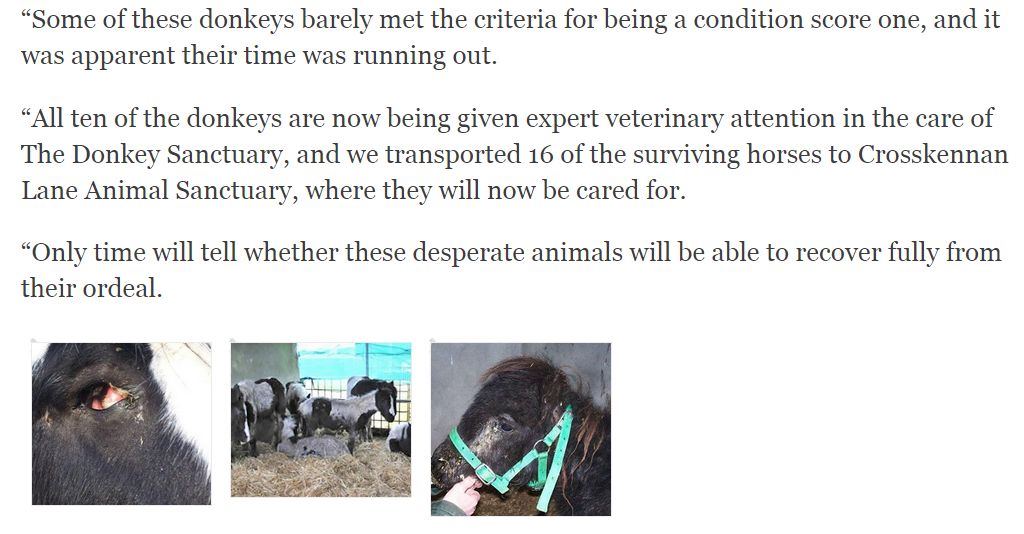
If there is any doubt about this mechanic of saying there is a time deadline and animals are in danger of being put to sleep, there are other appeals she’s launched along those lines. One such was the ‘Shetland Six’ appeal. This is the time she used photos of a pony in Wales and another in the Shetlands which were in no danger. The Welsh Lluest Trust wrote to Aberdeen Voice:
“We can confirm that we have never had any contact with Northfield Animal Haven and have not given any permission for a photograph of one of our rescue ponies to be used. This pony was rescued by us in early 2014 and successfully moved into a loving loan home later on that year after several months of intensive treatment and rehabilitation at Lluest. We can confirm that the pony continues to live a happy and contented life in his new home and has never had any contact with Northfield Animal Haven.”
Potential donors were led to believe the animals were owned by a person who would not let any other animal sanctuary have them except NAH – and was going to kill them for meat if Kelly couldn’t get funds for them. The six eventually became four animals, their names and appearances changed from the photos initially used.
Again, please do refer to the reference document accompanying this article for screenshots, quotes and evidence. It is hoped that at the end of this article and its references, a clear portrait has emerged as to why it is important to animals and potential donors to scrutinize the goings on at Northfield Animal ‘Haven’.
The next article – probably the last in this series – will look at social media posts made by Kelly and her supporters on a wide range of issues, contradictory claims made, and attempts to discredit Aberdeen Voice and witnesses, and to make recommendations.
Note: Kelly Cable was invited by Aberdeen Voice to respond to the numerous issues raised above, and in the supporting document, and have her views included and accurately represented. Kelly did not respond directly, but posted on her facebook page:
“To Fred Wilkinson, Suzanne Kelly and The Aberdeen Voice.
“Up to this point all that has been printed by yourselves has been hearsay from others. Would you also like permission to speak with my doctor ?. If our vets choose to speak with you, that is up to them but I think you will be met with the same response as you got from the local shopkeeper when you called him last year.
“I stand by everything I have said with regards to what you have printed, I will not retract nor apologise for anything that has been said, just like everyone is meant to believe what has already been published by yourselves and your followers. Your followers and staff find it perfectly acceptable to contact people about me, slander the rescue and my name over various blogs and sites and to ridicule others because they disagree with you so I will not answer any questions for your forthcoming article as I refuse to continue to play your games.”
– https://www.facebook.com/permalink.php?story_fbid=1655556561421288&id=100009008791129&pnref=story
- Comments enabled – see comments box below. Note, all comments will be moderated.
[Aberdeen Voice accepts and welcomes contributions from all sides/angles pertaining to any issue. Views and opinions expressed in any article are entirely those of the writer/contributor, and inclusion in our publication does not constitute support or endorsement of these by Aberdeen Voice as an organisation or any of its team members.]

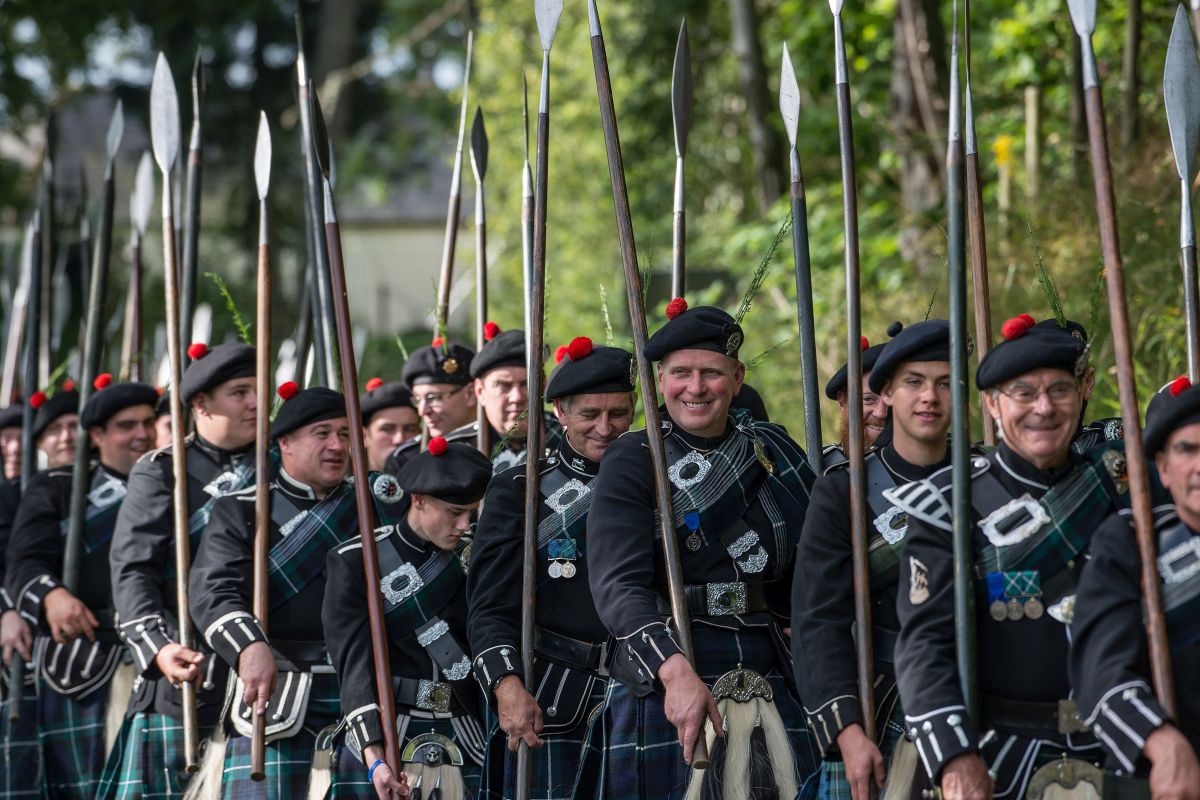 This Saturday will see a different spectacle take-off along the A944 in Strathdon when around 170 Lonach Highlanders undertake their annual six-mile march to the Lonach Highland Gathering and Games.