May 022013
 

Peacock Visual Arts presents Colour Abstracts, a new solo exhibition of large-scale oil paintings and prints by Scottish artist J. Gordon Brown, inspired by the Granite City.

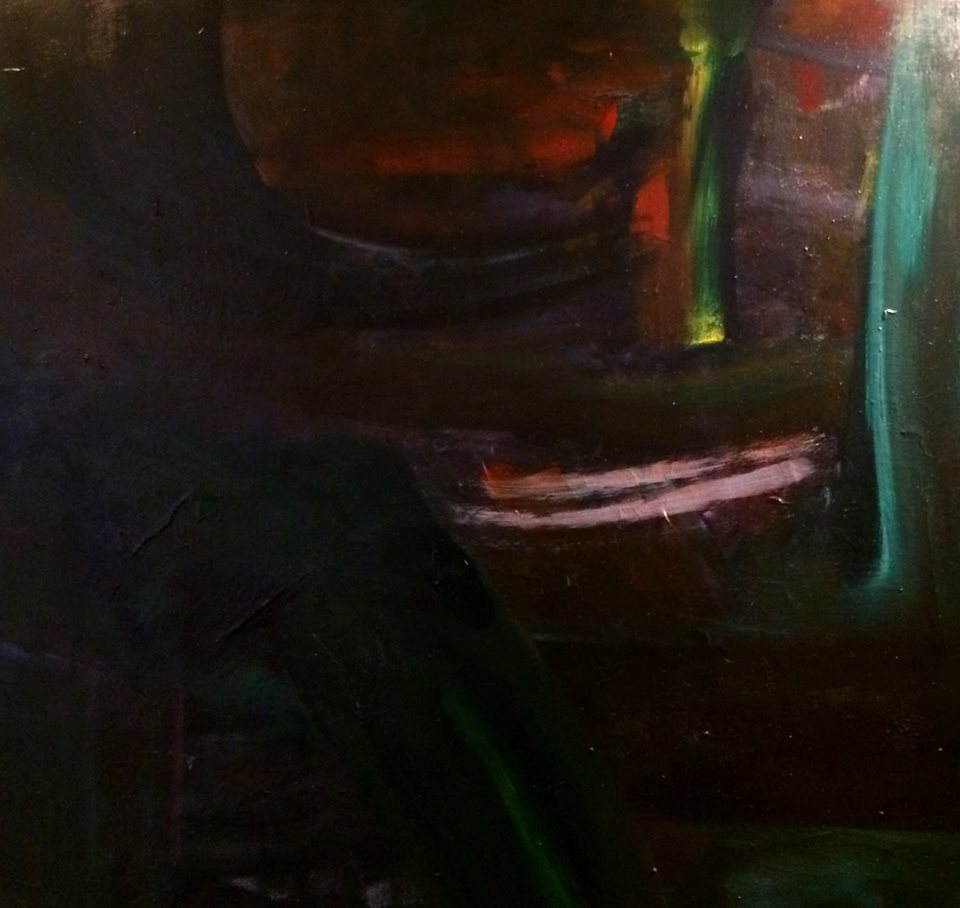
flower-2012-oil-on-canvas-72-x-102cm On 10 May 2013 Peacock Visual Arts will open its doors to reveal a new solo exhibition of dramatic large-scale oil paintings by J. Gordon Brown.

It will also include a new photo etching, created specially for this exhibition, in collaboration with Michael Waight in Peacock Visual Arts’ print workshop.

Winner of the first prize at the Aberdeen Artists Annual Exhibition 2012 for his painting, Night City Jazz, J. Gordon Brown offers an alternative, abstracted view of the city lights.

His paintings are grand and beautiful, portraying scenes of Aberdeen that may not be recognised at first. Using ambiguous photographs of the city at night as the starting point for the paintings he plays with the idea of abstraction, selecting and editing the images until an acceptable meaning or association attaches itself to the work.

As a special addition to Colour Abstracts, and in collaboration with Iain Gildea, Digital Manager at Peacock Visual Arts, Brown has entered into the world of the moving image. The film, along with the full collection of paintings and new prints, will be revealed at the opening, 6pm on Friday 10 May 2013.

Kirsty Young, Communications Manager at Peacock Visual Arts says:-

“J. Gordon Brown’s paintings are breathtaking – we are all desperate to see them in situ. We hope they will capture visitors’ imaginations as they have ours”.

Exhibition Runs: 11 May – 15 June 2013
Opening: Friday 10 May 2013, 6 – 8pm

Mar 282013
 

shmu2 With thanks to Kirsty Young.

Creative Scotland, in partnership with Young Scot, Creative & Cultural Skills Scotland and Creative Skillset, is offering an exciting new package of Modern Apprenticeships within the arts and culture sector.

Aimed at 16-20 year olds, the young people taking part in the Modern Apprenticeships will study for vocational qualifications while gaining professional experience working for an arts organisation. (Apprenticeship Qualification offered: Diploma in Creative and Digital Media Competence.)

This position is shared between Peacock Visual Arts and Station House Media Unit.

At Peacock he or she would be encouraged to progress their learning by using the available equipment to gain hands-on experience by shooting, editing and producing films for both web and DVD. The experience would cover all aspects of digital media and, working with PVA’s Communications Manager, of web-based promotion.

At shmu there will be a programme of involvement in shmuTV (live youth TV project producing a weekly live show) shmuSOUND – recording studio, shmuFM and shmuDESIGN with the opportunity to get involved in the design of the community magazines (Creative Suite) and the development of new websites using Drupal.

The closing date for the receipt of applications is Friday 12 April 2013

Full information and application details are available on this link :
http://www.peacockvisualarts.com/archive/389/modern-apprentice-vacancy

Sep 272012
 

Anyone who follows local news will know that Peacock Visual Arts has endured setbacks in recent years. This has not, however, blunted Peacock’s enthusiasm in promoting and encouraging participation in the visual arts. Here’s how…

pva It’s that time of year already – and here’s the invitation to submit your work for the Peacock Visual Arts Christmas Show.

After experimenting with other formats for a few years, and in response to public demand, we’re reverting to A4 in 2012.

This year we want to give more conceptual coherence to the exhibition than in the past, so we’ve also chosen a theme – Grotto.

Leaving aside its connotation as the seasonal home of dodgy old white-bearded men, the Grotto is probably the oldest form of human shelter. We hope you find something in your own exploration of Grotto that will trigger your imagination.

Deadline for entry: 31 October 2012
Exhibition: 17 November-22 December 2012
Opening: Friday 16 November from 1800-2000. Everyone is welcome.

Do put these dates in your diary. Our homemade mince pies are, rightly, legendary and as for the punch, what can we shay…?

GOOD LUCK.

Aug 172012
 

Old Susannah takes a look recent events in the ‘Deen, and tackles tricky terms with a locally topical taste. By Suzanne Kelly.

dictionary Tally Ho!  Once again future of our Union Terrace Gardens with its green field, 250-year-old elms, other trees, and wildlife is in the spotlight. The vote of the full council next week on 22 August will be significant to our getting our £140,000,000 granite web, which will fit in situ so naturally that we’ll think the Victorians built it in time.

Sadly, some anti-progress, anti-referendum, nimby tree-huggers are suggesting that the more suitable place for a public square is the St Nicholas site, and our only city centre park should be left as, well, a park. Three independent councillors will suggest an alternative to the web at the 22/8 meeting.

However, Sir Ian has much more money than they do, and will take his ball home if anyone suggests not doing the plan he wants.

We know he’ll give up as he’s said as much four or five times already (but failed to do so).  Sir Ian and Valerie Watts say without a web, we cannot be the City of Culture in 2017!  Well, that’s the argument for the web settled then.  What good are clean air, a healthy environment, heritage, common good land and existing culture when we can try to win an award?

Not surprisingly this issue of Aberdeen Voice will be filled with articles concerning our city’s future, and reasons to keep our common good land out of the hands of the usual suspects (Smith, Crosby, Milne, Wood of course, and the rest of the ACSEF acolytes).  Old Susannah is keen to redress the balance, and ensure that the selfless, apolitical philanthropists behind the £140,000,000 project get the consideration they deserve.

To that end, here are some relevant definitions.

Intellectual property: (modern English phrase) principle that the ownership of an original idea rests with the idea’s creators, and should be protected by law.

Peacock Visual Arts had come up with the original idea of building a new arts centre inside UTG; they were helped by Scottish Enterprise and ACSEF with their original scheme.  This help was kind of like the help that the Fox gave to Jemima Puddleduck.

Magically, the Peacock idea was hijacked (with Scottish Enterprise help) and transformed into the transformational 8th wonder of the world, The Granite Web.  After all their expense and groundwork, Peacock was left out in the cold, irrespective of their moral right to their intellectual property of putting a cultural venue in UTG.

Just as well this wasn’t going on in America; it would still be being fought in the courts now.

Thankfully, such hijackings of intellectual property concerning UTG are very rare, except for the most recent one.  Common Good Aberdeen, a group of people who simply want the gardens enhanced and protected from developers, recently came up with an original idea which they pitched to the City.

They proposed serving drinks and snacks from a temporary structure inside one of the disused central arches in UTG for a year. ALL profits, if the scheme survives a vote to be held today (17/08), are to be diverted to improving UTG.

Thus volunteers will take an unused space, encourage people to use the gardens, and generate money for the gardens’ improvement.  Obviously, we can’t have this kind of thing going on.

While some of the City’s administration and councillors are supporting this fresh, original scheme, other powers that be (one Mr Gordon McIntosh) has written a report saying that the Council must ensure that it gets ‘Value for Money’ for the disused arch if it is put to use.  Good man!  Mind the pennies, and the hundreds of millions of pounds will take care of themselves.

It is almost as if MacIntosh didn’t want the gardens used for social purposes

Gordon wants to take Common Good’s idea, clearly their intellectual property, and turn it into a commercial bidding exercise (which of course will cost the City money to put out to tender and evaluate incoming bids), and presumably charge whomever would want to rent the empty arch out.

If an organisation has to pay rent on the empty space, it is not that likely that they will plough 100% of their profits into fixing the gardens, which is what Common Good Aberdeen proposed.

It is almost as if MacIntosh didn’t want the gardens used for social purposes or for means to be found to generate UTG improvement funds at no cost to the City.  We have an empty space that is making no money, which volunteers want to use as a means of raising money to fix the gardens, while adding a social amenity to the area at no cost to the city.  If I were as clever as he, it would make sense I’m sure.

Much better that the City spend time and money on a bidding exercise to see if anyone wants to steal CGA’s idea for profit rather than any genuine philanthropy happening.  So, if after we spend taxpayer money on a bid to run a small café, some private company comes along to do so, then it’s profit to them and not the gardens.  Result!

That’s the kind of thinking that got us the city administration we’ve been enjoying these past several years.  If any of the councillors who have a chance to vote on the CGA proposal today are reading this column, I am sure they will do the right thing.

Let’s look at this principle Gordon wants to nobly uphold of ensuring Aberdeen City gets ‘Value for Money’.  Since we’ve seen that we can’t let people use a tiny arch for one year to sell snacks for generating improvement funds for the gardens without proper scrutiny, no doubt this important principle would have to apply to any and all schemes, great and small….

Value for Money:  (mod. English phrase) phrase used in public administration to describe the principle of ensuring that any services or products being sourced by government are obtained by the best qualified suppliers at the lowest possible prices.  European Law also dictates that any public services or goods contracts of substantial value be awarded by fair, open tender processes. 

They might even be expected to give the city a performance bond or guarantee

Let’s imagine just for one moment that a big city, somewhere has a park filled with trees, wildlife, and open spaces for people to enjoy.

Such a space might even be owned by the people outright.

Let’s imagine one step further that after years of mismanagement this hypothetical city wants to make a quick buck or two, and decides to develop this park, despite environmental concerns and public outcry.

The city in question would be expected tofirst write up a tender document, describing what it would want a management company to deliver in the gardens in question.  The tender document would describe in detail exactly what structures were to be created, what activities would take place, what everything would cost, and exactly what the management company’s role would be.

Advertisements asking for bidders with sufficient experience would be placed around the world, and the companies with sufficient experience of project management and venue operations would compete in a tender exercise.  If any would-be management companies had existing personal and business ties with any of the city’s officials or entities (maybe like ACSEF), these would have to be declared and scrutinised:  no one with power over the decision-making process would be permitted to be involved in evaluating tenders or giving work out.

Each bid would be evaluated by the city – without the name of the individual bidders being known – based on the company’s experience, financial health, submitted detailed operation and building budgets and so on.  A shortlist of the best companies would then be evaluated, and the best ‘Value for Money’ bidder would be awarded a contract.

They successful bidder might even be expected to give the city a performance bond or guarantee, and a parent company guarantee to ensure they would not simply disappear or sell the contract on to a third party.

Strict performance benchmarks would be drawn up, and the winning bidder would only be paid for each phase of the detailed project as they successfully delivered it.

Crucially, the entire process would be available for public scrutiny after the sensitive pricing and tendering exercise was completed – before any final contracts were signed.

OR, if the city was Aberdeen….

Members of various interlinked public and/or private entities such as ACSEF would talk to their pals, find out how to make money out of the public’s common good land, ‘transform’ an idea from an arts group into a money-spinner for friends in the construction and development sectors, and use their public and private muscle to get the city leaders to bend to their will.

Some of their number would set up a small private, limited ‘charity’ company, perhaps calling it Aberdeen City Gardens Trust.  This company would automatically be appointed by the city to run the multimillion pound construction scheme without any ‘value for money’ tendering exercise, scrutiny or competition.

Audit Scotland might wonder which companies were paid to carry out the expensive PR / advertising jobs

The newly formed Trust would actively influence decisions such as whether to build theatres next to theatres (Brilliant!),  chop down ancient trees and remove habit for protected EU species which live in said park and promise to plant fir trees (which can’t thrive in a city centre – even more brilliant!).

In the process taxpayer money would be spent to convince the city that building an unspecific project based on a few illogical, unworkable architectural flights of fancy was worth the taxpayer borrowing £90,000,000.

The project would be pushed ahead with this Trust at the head of delivering services, without a project scope defined, without a time frame for construction, and crucially without a budget open to public scrutiny.

It is a very good thing that the EU will never want to look into the manner in which the Granite Web is being foisted on the population or what procurement rules may be being ever so slightly bent.

Similarly, Audit Scotland would never decide to look at precisely how ACSEF and Scottish Enterprise ordered tens of thousands of pounds worth of PR, advertising, and ’stakeholder’ events’, then had the Chamber of Commerce submit invoices to the City Council to pay with public funds.

Audit Scotland will not wonder which companies were paid to carry out the expensive PR / advertising jobs – and why these companies did not get named on the Chamber of Commerce invoices, which cover several years. If that happened, then the elected councillors might start to question whether the entire proceedings were valid, examine the role of ACSEF and its members, and whether the EU, UK or Scottish regulatory agencies would come around asking questions.

Other firms with relevant project delivery experience might get slightly cross at the absence of a tender exercise for such a aluable public project; some of these companies might even know as much about multimillion pound schemes and public amenities as Tom Smith does.   It could all get just a little awkward, sticky, embarrassing and litigious.

I’d best keep these potential problems to myself.  I would hate it if any councillor having doubts about the project were to worry unduly about supporting the web on my account.

Final: (Eng adjective) The last of something; the end of something.

Old Susannah is so old that she went to The Who’s ‘farewell’ concert at Shea Stadium, NY, with the Clash as opening act (was it 1981?  Wish I could see The Clash again especially). The Who played, said it was their final tour, and that was that.  Since then, The Who have had about 57 other final tours.

ACGT were given custody of the ballot papers, even though the taxpayer had paid for the vote.

Sir Ian seems to be a fan of finality as well.  Those of us with memories longer than a goldfish’s will remember the first ‘consultation’ – you know, the one in which the voters rejected the garden scheme.  Sir Ian was going to go walk away then if the concept failed to win the public’s hearts and minds.

Well, we did say ‘no’ but as is often the case, ‘no’ must have really meant ‘yes’.  The official line was that those who were against the scheme simply didn’t understand it.  Fair enough.  So Ian didn’t say ‘farewell’ after all, and resurrected the scheme.

The public were going to be given a chance to vote against developing the gardens when the shortlisted 6 were on view.  This option was what councillors on some of the ‘City Garden Project’ committees had asked for.  However, in the end Gerry Brough is quoted in meeting minutes as saying this was not after all ‘appropriate’ during the design show after all.

People most definitely used the exhibition to write on the ballot papers they wanted no part of destroying UTG, which was very naughty of them indeed.

Thankfully, to avoid any embarrassment for Sir Ian, Tom Smith and Colin Crosby of ACGT were given custody of the ballot papers, even though the taxpayer had paid for the vote.

Campaign groups demanded sight of the papers; but brave ACGT held fast.  We will never know for certain what the real public vote was during the shortlist as to scrapping the scheme or not.  We do know however that the giant glass worm, the public’s choice, was turned down by Wood.

When things started looking bad for the scheme yet again, Wood churned out press releases saying he would draw a final line under the project, and walk away and give his £50,000,000 to the third world instead.

When the three independent councillors said they were working on an alternative idea, Wood said he would not compromise.  And that is his final word.  Well, for this week anyway.

Word arrives that early next week Sir Ian will AGAIN meet with individual councillors to make his ‘final’ plea.  Old Susannah is starting to get deja vu.  I do wonder though why Sir Ian gets to make continued visits to the councillors, sit in the ‘press’ box when he attends council meetings and so on.  Anyone would think he were rich or something.  Thankfully this is a democracy.  Word also reaches me that these continuous pleas from Sir Ian are beginning to grate on more than a few councillors’ patience.

What Woody will do if the vote goes against the scheme will be, of course, to make a final farewell, take his money and spend it in Africa….

And if you believe that….

Next week:  a look at who voted how, what’s next, and if common sense and Common Good Aberdeen prevail, lots of Champagne and lots of BrewDog.

  •  Comments enabled – see comments box below. Note, all comments will be moderated.
Aug 032012
 

Peacock Visual Arts offers a programme of changing exhibitions in both the main gallery and shop/reception area. With thanks to Angela Lennon.

Language Barrier & Other Obstacles – Alina & Jeff Bliumis,
underbranchpeacock111

Language Barrier And Other Obstacles is an exhibition by Alina and Jeff Bliumis that examines cultural standards, foreignness and national identity.

Alina and Jeff Bliumis were born in the former Soviet Union; Alina is originally from Minsk, Belarus, while Jeff was born in Kishinev, Moldova. Both have lived in America for over twenty years and have been collaborating since 2000.

They have exhibited in a number of exhibitions internationally including: Castlefield Gallery, London; Assab One, Milan; The Victoria and Albert Museum, London; The Jewish Museum, New York; Moscow Biennale of Contemporary Art, Russia; Stanislas Bourgain Gallery, Paris; Busan Biennale, South Korea and Bat-Yam Museum, Israel.

They also have work in various public and private collections. These include the Saatchi Collection, Moscow Museum of Modern Art, Bat-Yam Museum, Harvard Business School and The Victoria and Albert Museum.  http://www.peacockvisualarts.com/events/376/language-barrier-and-other-obstacles

Happy All Smiles – Adam Bridgland

Happy, All Smiles is Adam Bridgland’s first solo exhibition in Scotland and launches three new prints made with Peacock’s master printmakers.

Alongside the three latest editions, the exhibition will also include new works, sculptures and vinyl installations that explore Bridgland’s fascination with the mundane and the everyday, and the constant pursuit of finding an escape from these.

Described as ‘your favourite leisure time artist’, Adam embraces the everyday object finding inspiration from the colouring book image, travel guidebooks, and scout camping paraphernalia.

Kitsch and humorous, yet equally poignant, Adam’s work rejoices in the mundane and is an investigation of the notion that holiday-making is just another ordinary everyday activity and that the holiday is essentially a fantasy that rarely lives up to our expectations.   http://www.peacockvisualarts.com/events/377/adam-bridgland-happy-all-smiles

Both exhibitions will run until 8 September, and more information about each can be found here: http://www.peacockvisualarts.com/exhibitions-and-projects/now

From Thursday 16th August to Thursday 20th September we will be running another 6 week course of our Thursday Print Club from 5.30 to 8.30pm. 

The cost to attend all 6 sessions is £60.

There are also Animation classes for children aged 10+ scheduled throughout August and September, each class is £35.

Please see:http://www.peacockvisualarts.com/get-creative/courses-classes for more information.

Peacock Visual Arts is also proud to announce that we will be taking part in the Aberdeen Art Fair again this year, which will take place on Saturday 18th and Sunday 19th August.

Entry to the fair at the Music Hall is £3 and times are 9.30am to 5.30pm on Saturday, 10am to 5.00pm Sunday. More information can be found here: http://www.peacockvisualarts.com/archive/353/peacock-at-aberdeen-art-fair-2012

For more information on PVA exhibitions, events, courses and workshops, see: http://www.peacockvisualarts.com/events/

May 112012
 

Bobby Niven presents ISLAND, an exhibition using film, sculpture and found objects to explore the history and architecture of Inchgarvie, an uninhabited island located under the Forth Rail Bridge. With thanks to Peacock marketing manager Kylie Roux.

islandpic3 ISLAND is based around the strange architectural history of Inchgarvie whose now uninhabited ruins tell of past lives as a castle, a prison, a quarantine and a foundry and accommodation for workers who built the Forth Rail Bridge under whose shadow it sits. Like the Inchgarvie ruins themselves ISLAND comprises distinct but related parts: the film, the grey room of concrete sculptures and the orange room of objects and artefacts.

Shot on location the film evolves around a room full of sculpted birds and a lone inhabitant. There is a seemingly playful and humorous visual language to Niven’s film as the character prances and cavorts across his island but this quirky abandon is misleading.

Despite the humour a dark undercurrent runs through. Framed shots of sinister sculpted birds, contaminating deposits of guano, the lapping water, flotsam and jetsam and a manic trumpeted soundtrack all contribute to a feeling of suspense and isolation. (The suggestion that our island fellow is perhaps quarantined, the result of a modern day pandemic, alludes to the island’s history as a place of seclusion for syphilis and plague victims.)

The colonies of sea birds that occupy the island and their vast deposits of guano were the inspiration for the sculpted birds perched inside the concrete dingy rooms of the ruins that feature in the film. Niven further references and repeats these motifs by creating large-scale concrete abstract forms that take over the gallery in all their monochromatic splendour, paying tribute to the island’s concrete structures.

Continuing the narrative and landscape of the film found objects and artefacts that relate to the island, the structural forms of the bridge and the activity of the fictitious character are displayed with museum reverence inside an orange fluorescent box in the reception gallery.

About the artist:

Bobby Niven was born in Fife in 1981 and is currently based in Glasgow. He holds a 1st class honours degree in Fine Art from Glasgow School of Art and a masters degree from the University of British Columbia, Vancouver.

Niven has exhibited both in the UK and internationally. Exhibitions include: Sierra Metro, Edinburgh; Lowsalt Gallery, Glasgow and CSA Space, Vancouver; The Royal Standard, Liverpool; Glasgow International Festival of Visual Art (2010); TBC Gallery Melbourne; and Peterfabers Gallery, Copenhagen.

  • Preview night Friday 25 May, 6 – 8pm, all welcome!
    Exhibition runs 26 May – 7 July 2012
Other Exhibitions And Events

BIG JESSIE // Donald Urquhart
The Brunswick Hotel, Merchant City, Glasgow
http://www.peacockvisualarts.com/events/373/big-jessie-donald-urquhart
exhibition runs until 27 May 2012

CLASSES & WORKSHOPS
At PVA throughout 2012
http://www.peacockvisualarts.com/get-creative/courses-classes
call 01224 639539 for more info & to book

http://www.peacockvisualarts.com/

Mar 012012
 

Aberdeen Voice photographer Rob and I attended Willow’s Animal Sanctuary Open Day on 25 February and had an absolutely wonderful time. Were it not for the snow which started when we were there, Rob would have had a hard time getting me to leave. Suzanne Kelly reviews a splendid day out.

willowscat It was a nice drive to Willows from Aberdeen; the countryside is beautiful.

Willows was well signposted, and a helper was on the main road to ensure people found their way.

It is a spacious and friendly haven for animals and people. Getting to know some of each was a pleasure.

I met Sue during the event, and she told me that when she and her husband moved to Scotland six years ago, they soon discovered Willows, had visited and supported them during that time and wanted to do more.

willowsgoat It was then that Kate found that there were like-minded people who really wanted to help, so they were introduced. Now they have a fundraising team who have thrown themselves into their task with a will.
Although they have only been together for about fifteen months, they have already raised over £9,000 through, to name but a few events, stalls at open days, coffee mornings and bingo evenings. The team now numbers eight, Sandy, Sue, Ann, David, Ashleigh, Leigh, Lorna and George.

There are many people who help with donations of prizes etc, and who help support the team in various ways. They have lots of new ideas for future events, so have confidence that the visitors will really enjoy themselves whilst supporting Willows

“Willows not only helps animals, but we’re definitely helping people as well,” Sue tells me, “We’ve seen people blossom.” 

willowshorse1 The office has a noticeboard divided into several sections. There are general news stories and items about animal sentience.

Yes, they do think, and feel, and know both pain and fear as well as love and happiness.

One section was about the fantastic work Willows does in bringing people with special abilities together with the animals. Both sides benefit from this interaction.

We now know that people with conditions such as autism improve hugely through interaction with animals. Horses and ponies can provide unique, valuable therapeutic benefits.

Sue and I talk a bit more, and she tells me of a fairly new arrival, McGill, a gigantic horse at 18.2 hands.

“His owners had rented him out, and then of course, you never know whether there were any problems, and consequently, when he came to Willows he was very nervous. And he had some behavioural issues”, was how Sue described McGill.

willowshorse2 Having worked with horses in my distant past, I was ready for a highly-strung encounter with a giant. Well, McGill was indeed a giant, but he had an unbelievably sweet temperament.

Rob and I stayed and stroked him for quite some time; many others did too. If this horse had had any emotional issues, they were a thing of the past. Sandi Thom has since adopted him. She originally had adopted another animal, but it had sadly passed away.

Well, we and families patted goats, sheep, pigs, llamas, ponies, horses and the most amazingly friendly selection of cats you could ever find.

willowsginger The majority of them sat on a large hay bale, which the sun was hitting. They were all soaking up the sun and loved being patted.

I particularly fell for a little feline called Gingersnap, and another gentleman called Arthur.

Arthur had been living in a tin can in a bit of scrub ground when they found him.
Sadly, he lost both his ears to skin cancer, not uncommon in white cats. I was completely won over.

We finally had a chance to talk to Sandi Thom. Her family are from the general area, and they seem to have a love of horses going back generations. Sandi seemed genuinely glad to be there, and signed several autographs as we spoke.

willowssandithom She’d also donated a very gorgeous autographed acoustic guitar as a raffle prize. We mentioned the generosity of Paul Rodgers and his wife, who adopted some thirteen animals.

Paul has donated several signed copies of his new DVD for Willows to sell (yes, I’d bought one). Ms Thom commented that people she’d met in the music industry often seemed to have a soft spot for animals. She clearly did.

Before we left, we spoke to Mr and Mrs Reid, who seemed to enjoy visiting the horses and have been coming for quite some time.

willowsgeese If the snows hadn’t started and if we didn’t have a fairly long drive back to Aberdeen, I might have stayed until they threw me out.
If I didn’t already have two rescue cats which are just a touch on the needy side, I just might have adopted another.

Please visit the Willows website to learn more. Willows helps wild, domestic and farm animals – and people of all ages.

If you can help, please get in touch. http://www.willowsanimals.com/

willowspeacock willowssheep

Feb 292012
 

Shakhaf Barak wrote to a friend highlighting the history behind the current referendum that is dividing the city. He has kindly allowed Voice to use it, almost verbatim as the deadline approaches for voting.

SJDUTG5 Dear Friend,
Here in Aberdeen there is a bitter referendum taking place, and it could go either way. Over 70,000 people have voted thus far, in a city of barely 212,000 souls, and both sides have reported each other to the police. Central to this story is a 250-year old city centre park, Union Terrace Gardens, and the billionaire oil tycoon seeking to redevelop it.

Union Terrace Gardens are similar to Edinburgh’s Princes Street Gardens, lying in the natural amphitheatre of the Denburn valley, the Denburn being a stream which flows right through the city, underground where it borders the Gardens. Much of Aberdeen’s best architecture was clearly envisaged to overlook this area.

The Gardens are home to a cluster of 260-year old elms trees that once formed part of the Corbie Haugh, a historic wood which ran through the valley. This is among the largest concentration of healthy mature elm trees in Europe, and they are reputed to have escaped Dutch Elm Disease, not only due to their isolation, but also because the pollution of the city has afforded some sort of protection from it.

Both the park and its beautiful Victorian toilets are Grade A-listed, and all of the trees are under preservation orders. Up until as late as 2003, the Gardens formed the centrepiece of Aberdeen’s Britain In Bloom entry, and they were truly stunning, but since then expenditure has all but ceased, and the toilets have been closed for several years.

In 2008 a local arts organisation, Peacock Visual Arts (PVA) was granted planning permission for an award-winning and sympathetically-designed arts centre to be built into the hillside of the Gardens. This would have meant felling a small number of trees but none of the elms. The design was universally acclaimed and it was hoped that this scheme would help regenerate interest in the Gardens.

Enter Sir Ian Wood, one of Scotland’s richest men, and chief of Wood Group PSN. Sir Ian decided that he’d like to redevelop the Gardens by building a five-storey bunker in their place, whilst covering over the adjoining railway line and urban dual carriageway, with the entire roof of this construction forming a flat civic square at street level. It was not entirely clear what would be installed in the bunker, although speculation was rife to say the least.

SJDUTG3 He offered the council £50m towards the cost of this project, which was mooted to cost £140m. This was possibly an optimistic figure since Union Square, a similarly sized shopping mall with none of the technical difficulties or prior excavation work, cost £250m to build. The council felt this offer was too good to refuse, but the some members of the public were up in arms.

Sir Ian decided to put the proposal out to public consultation and promised to walk away should the public reject it.

The ‘consultation’ was commissioned by Aberdeen City and Shire Economic Future (ACSEF), a publicly-funded unelected QUANGO, and conducted by The BiG Partnership, Scotland’s largest PR company.

It many ways it resembled a marketing exercise. The bulk of participation was via a website, which asked several questions with a somewhat loaded feel to them. For technical reasons, the question on whether or not to proceed with the plan defaulted to a YES vote.

If, during completion of the questionnaire, any previously-given responses were subsequently amended, this again defaulted back to a YES vote. When the results were released, it became apparent from the comments sections that may people who had intended voting NO had instead been recorded as YES voters.

Over 10,000 people participated in the consultation, and In spite of it’s technical oversights, the public voted against the Civic Square proposal by 54%-46%, a healthy and significant majority. However the PR machine kicked in and somehow spun that the 202,000 people who had not participated possibly represented a silent majority in favour of this scheme.

  Critics described it as a cross between Tellytubby Land and a skate park

Sir Ian decided not to walk away, and the project went to a council vote. The council voted in favour of taking the plan forward at the expense of PVA who by that time had 80% of their £20m funding in place. It has subsequently been alleged that some of the PVA funding was diverted into the new project.

The BiG Partnership now re-launched the plans under a new name, The City Garden Project (CGP). It was claimed that the outcome of the public consultation was that the public were broadly in favour of a garden as opposed to a civic square. Any implication that they were actually in favour of preserving the existing gardens was ignored.

The interested parties now felt that the best option was to redevelop the Gardens by building a five-storey bunker in their place whilst covering over the adjoining railway line and urban dual carriageway, with the entire roof of this construction forming a new garden at street level.

The whole thing had an air of déjà vu.

This time it was decided to hold an international design contest, paid for with public money. Six designs were shortlisted from hundreds of entrants. One, The Granite Web, bore a striking resemblance to Civic Square concept, albeit with less concrete and more greenery. Critics described it as a cross between Tellytubby Land and a skate park.

The local press heavily promoted the Granite Web design from the outset of the contest, leading with it on their front page and providing it with more photo coverage than the other designs. It was almost as though it had been ordained.

SJDUTG3 The public voted, and spoiled ballots aside, all indications were that The Winter Garden design proved the most popular. An independent poll confirmed this and put The Monolith in second place.

Tellingly both of these designs retained much of the topology of the existing Gardens. Word on the street was that The Granite Web was not a popular choice, but we’ll never know for sure, because a decision was taken not to release the results of the so-called public vote to the public.

It was then announced that the winner of the private-public vote would be put forward to the selection panel, along with another design. The self-appointed selection panel consisted of Sir Ian, some other influential people from the oil industry, an architectural consultant on the project payroll, and a councillor who backed the project.

The two designs discussed were the acknowledged public favourite, The Winter Garden, and you’ve guessed it, the joker in the pack, The Granite Web. When the panel announced the result, it should have come as no surprise to anyone that they had chosen The Granite Web, yet there was a shocked silence, and even those had come out in favour of the redevelopment initially appeared bemused if not downright confused.

The original Civic Square was mooted to cost £140m, with £50m coming from Sir Ian, £20m from the private sector, and the rest to be borrowed through a Tax Incremental Funding (TIF) scheme. Any over-run would be covered by the council (read local taxpayer) .

Only £5m of the private sector contribution has materialised thus far, but there has been an announcement that The Granite Web would be significantly less expensive to build than the previously-envisaged, but somewhat less complex, civic square. Sir Ian has offered to personally fund up to £35M of any cost over runs, should they occur.

SJDUTG7 The TIF proposal cheerfully bends all the guidelines of TIF funding. TIF is intended to be used to redevelop brownfield sites, with the loan being repaid over a 25 year period through increased rates recouped from any businesses setting up in the redeveloped area. The city council had already approved planning permission for two new industrial estates on the outskirts of town, under the business case for the TIF funding, these new estates become part of the TIF zone, so in The Granite Web’s case, sections of the TIF zone are located several miles away from the actual redeveloped area.

The predictions are for 6,500 jobs and £122m annual revenue to the local economy, all based on the new industrial estates, which have no obvious linkage to The Granite Web, operating at full capacity. Even if one were to accept that any new jobs could be somehow attributed to The Granite Web, the figure of 6,500 seems unlikely given that the London Olympics is only projected to create 3,500 jobs.

Either way, the setup feels a bit shaky; the truth is that these jobs and their associated revenue will accrue with or without The Granite Web.

By this time, councillors seemed to be getting edgy and unwilling to green-light the project, so they decided to hold a public referendum. Any group wishing to campaign was required to adhere to an £8,000 spending limit, and for this they were provided with 300 words of text in the voting pack.

The packs went out, but unfortunately some of the Retain lobby’s statements were mangled due to a ‘computer error’. The voting packs were closely followed by a big money public relations mail bombing campaign by The BiG Partnership promoting The Granite Web. Publicity materials went through every letter box, pro Granite Web articles dominated the press, and adverts were played around the clock on the local radio stations.

Apparently this expenditure was permitted by virtue of being funded by an ‘unregistered’, and as yet anonymous, campaign group – whatever that means! I guess it’s a bit like not having to pay tax because your parents never applied for a birth certificate, who knows? By this point, things were becoming surreal to say the least.

The referendum closes on 1 March and it’s a bitter fight that has divided the city. For example, an oil company boss has made a complaint to the police alleging mail hacking and cyber bullying. The police claim they are taking this allegation seriously. There have also been two arrests possibly related to claims of vote-rigging, but ultimately no one was charged.

The town has gone berserk and it’s civil war all over Facebook. It’s as if we’re all experiencing a really, really bad shared dream. I just dread to think what we’ll all be waking up to on Saturday morning.

Feb 282012
 

A person might think that a chamber of commerce exists to promote local businesses.  Here in Aberdeen this is true as well.  But as Aberdeen Voice’s Suzanne Kelly learns – the taxpayer is funding at least some of the PR work  for the City Gardens  Project – and the Chamber of Commerce and ACSEF seem to be leading the City Council by the nose.

SJDUTG2 The proposed City Gardens Project/Granite Web is a contentious idea which would see a mix of public and private interests building huge, granite ramps over Union Terrace Gardens.
While this idea may not even get off the ground, it has been a gold mine for some fortunate businesses via the Aberdeen & Grampian Chamber of Commerce – at the taxpayer’s expense.

This article will primarily deal with money that the City Council was invoiced by the Chamber of Commerce for PR-related work.  Before doing so, a little recap of other financial facts will add perspective.

PriceWaterhouse Coopers have come up with some grandiose projections including the creation of some 6,500 permanent jobs and £122 million flowing into Aberdeen every year until c. 2023:  all because of the granite web.  PriceWaterhouse Coopers were first paid £41,000 and change for TIF-related work in March 2010.  Other invoices followed, and so far I have been shown by Scottish Enterprise £71,000 worth of PwC invoices.

These invoices are made out to Scottish Enterprise, and Scottish Enterprise is funded by the taxpayer.  Unfortunately, these projections have been seized upon  by the press and turned into ‘facts’  (The Press & Journal published these and other items in a box entitled ‘facts and figures’ on 19 January next to an article about the PwC projections and the garden’s many projected benefits).

The unelected and free-spending and secretive ‘Vote for the City Gardens Project Group’ have likewise promoted these figures in their literature as being reliable facts as well.  They are projections, and arguably very optimistic ones at that.  Whether or not these glowing projections (that we will have more permanent jobs from our web than London expects from its 2012 Olympics) are based on the fact that PwC is being paid by the side that wants to build the web is something the referendum voters may wish to ponder.

A Freedom of Information request I lodged with Scottish Enterprise some time ago revealed (details of which I have previously published) included:-

Item Description Date Amount
1 Technical Feasibility Study to undertake an engineering, cost and design appraisal of the development options for UTG, each incorporating an arts centre. Jun 2009 £162k
2 Architect, Design & Project management fees for a Contemporary Arts Centre project Feb 09/May 10 £226k
3 Consultation Report – City Square Project.. Mar 2010 £113,915
4 Union Terrace Gardens (TIF)-Tax Increment Financing Mar 10
Oct 10
Nov 10
£71,959.65
5 Scottish Enterprise holds 22 copies of invoices relating to ACSEF approved spend for activities relating to stakeholder engagement, events management, and communcations. [sic] 2009-10
2010-11
£51,766.60
£22,712.72

(source – Scottish Enterprise email exchange with Suzanne Kelly May 2011)

While this £648,000 was being spent, Aberdeen City Council was battling with potential job and service cuts in order to balance its books.  It seems that these costs have largely been paid by the taxpayer via Scottish Enterprise and other vehicles, and I can find nothing to show that the Wood Family Trust, which has offered £50,000,000 to further the project, has paid towards any of these costs.  The PR and promotional invoices referred to at Item 5 have been paid by the Aberdeen City taxpayer.

Before moving on to Item 5, which is the subject of this article, some of these other items are worth a further glance.

At Item 2 you will notice we are now talking about some kind of ‘Contemporary Arts Centre project’ – is Peacock already being edged out of the picture at this point?

Item 4 would seem to correspond to PriceWaterhouse Coopers invoices which I referred to.  How much more money has been spent on PWC since this May 2011 exchange is unknown.

From what I have been subsequently sent by Scottish Enterprise, the bulk of the invoices at Item 5 were from the Aberdeen & Grampian Chamber of Commerce to the City Council.  In the words of Scottish Enterprise:-

  • 9 invoices relate to financial year 2009/10 – these total £51,766.60
  • 16 invoices relate to financial year 2010/11 – these total £36,692.95. This total is higher than the original figure stated due to the invoices received after the date of that response
  • There has been no spend on the City Garden Project from the ACSEF budget during the current financial year  (SK notes – it is only February – there is time)

(source – Scottish Enterprise email to Suzanne Kelly February 2012)

Arguably a mere £88,459 is small change as Aberdeen City contemplates borrowing £92,000,000 (minimum) if the project goes ahead. However, this is money which the City paid from its own budgets – it is taxpayer money.  Should a financially-pressured city use pubic money for propaganda purposes – PR, events and photos designed to promote the City Garden Project?  Is the Wood Family Trust contributing any money towards these expenses yet?  I simply do not know.

A spreadsheet of the expenses comprising Item 5 can be found online at http://oldsusannahsjournal.yolasite.com/  I would recommend looking at these 50 or so items.

If you look at the wording in the table above, ACSEF is apparently approving this expenditure.  ACSEF is a public-private quango, and at the time of writing, Stewart Milne is on its board.  He owns the Triple Kirks land adjacent to Union Terrace Gardens, and he wants to turn this landmark into an office complex which will likely enrich him if it goes ahead in my opinion.

Despite several emails, no one in a position of power has the slightest qualm with Mr Milne potentially having a conflict of interest.    Why precisely ACSEF is allowed to commission and recommend for payment invoices to the City Council is a matter I personally find worrying.

Virtually none of the invoices from the Chamber to the City specify who / what company actually performed the services in question.  What company got all the PR work?  Who took the photos?  I do note that Zoe Corsi of the BIG Partnership is on the Chamber’s Board of Directors – as are other key players such as Tom Smith, one of the two directors of the private entity, Aberdeen City Gardens Trust.  This company seems to be in the thick of the decision-making processes; it is apparently the company which is holding onto the results of the design finalist public vote – which it refuses to release at present.

The taxpayer apparently paid for that exhibition and the public vote – and yet a private company seems to be withholding the results.  The argument has been put forth that it is no longer relevant.  Many people took the opportunity to write on the voting papers that they were against all the schemes and wanted the gardens retained and improved.

The public should have had this ‘no’ option at the final selection vote, but it seems councillors who asked for a ‘no’ option were outmoded by the Project Management Board (note – see the website listed previously for details of how all these companies and entities have interesting personnel overlaps).

It may be of interest to accountants that the party which actually performed the work not specified on these invoices, and with only a rare exception is VAT ever charged.  It would be interesting to know whether or not the Chamber of Commerce adds any fees or commission charges to the work it is invoicing the City for.

Highlights of the list of invoices include:-

  • £180 paid for a photograph showing ‘inaccessibility of Union Terrace Gardens’
  • over  £25,000 paid for ‘Stakeholder engagement’ events and so on since October 2009 to August 2010
  • £3500 paid to ‘Comedia’ for Charles Landry to attend event / speak
  • Redacted line items and handwritten notes adorn several of the invoices
  • One invoice – No. 42407 shows only one line relating to ‘coach hire’ – this is £246.  However, the total shown on this one page invoice is for £7444 – what has happened?
  • A January 2010 Advertising bill from Aberdeen Press & Journals for £ 2,820 ( See: http://fraserdenholm.blogspot)
  • £11,000 in February 2010 charged from the Chamber to the City for “Development of images, movie, powerpoint and exhibition material for City Square Project as per attached sheets”

As to the redacted text on the invoices, redacted text has started showing up in Project Monitoring  Board minutes and reports again, despite Councillor McCaig’s previous intervention to cease this practice.  One company which has had its name redacted from recent documentation is Brodies.

The value of three Brodies invoices which I received copies of is around £12,000.  One of these invoices from April 2011 is for:

“City Gardens Project – Development Constraints Report (Legal  [sic] To fee for professional services in connection with the preparation of a development constraints report relating to the title of Union Terrace Gardens, Aberdeen, and surrounding land.”

I suppose our City’s in-house legal department cannot be expected to know whether or not it has free title to Union Terrace Gardens.   Happily, experts have demonstrated the land is Common Good Land.  As such, whether any of these garden projects can or should be legitimately carried out will be a big question in the future.

Earlier we saw how ACSEF was allowed to recommend these expenditures; we have seen how the Chamber of Commerce invoices the City for ACSEF-approved costs.  If we were to put in some of the over-lapping names from ACSEF and the Chamber of Commerce into the equation, we would be able to see that:

ACSEF [including Stewart Milne, Jennifer Craw (of Wood Family Trust), Tom Smith (Director, Aberdeen City Gardens Trust), Colin Crosby (Director, Aberdeen City Gardens Trust), Callum McCaig (ACC) ]

approved invoices generated by the Aberdeen & Grampian Chamber of Commerce [Colin Crosby; Zoe Corsi (BIG Partnership) , former director Tom Smith]

for the City Council [Callum McCaig]

to approve to further the aims of the Garden Project (CGP entity members include John Michie, Colin Crosby, Jennifer Craw).

Given the above, I suggest that the time is right for an entire re-think of how this project has been allowed to develop, and a full investigation into the demise of the Peacock plan and an investigation into the genesis of the current state of affairs might not be a bad idea as well.

While this is going on, a local care home has announced it will no longer provide 24/7 on-site staff as there is not enough money.  Residents were told to drink less fluids at night time.

Feb 242012
 

Peter Veritas makes the case for voting “Retain”.

1.  There is a very real danger that the City Garden Project will bankrupt Aberdeen.

item-1 The City Garden Project (CGP) is planned for a greenfield site which would require substantial excavation. It is a five acre, five storey, underground construction that would span both a main road and a railway track

It’s roof would be required to hold approximately ninety thousand tons of topsoil, the same weight as the worlds largest aircraft carrier.  It is projected to cost £140M.

Union Square, which is of a similar size, was built on a flat brownfield site with good access. The final cost was £250m.

Marischal College is a much smaller existing building that was recently renovated.  No major construction was performed.  The final cost came to £65M.

Given that context, how can we be expected the believe the estimate for The City Garden Project is realistic? Should the City Garden Project experience a similar scale of overspend to the Scottish Parliament Building or the Edinburgh trams, then the shortfall could conceivably be of the order of £360M.  The city, which is already £560M in debt, would be liable for this overspend.

It could not be rolled up into the existing loan, and would require immediate payment.  Failure to cover the overspend would result in us being left with a dirty hole in our city centre.  The only options open to the council would be to auction off it’s remaining assets, such as the other parks, to property developers, and to increase council tax  massively.  Public services which have already suffered severe cuts would be totally decimated.

2.  Aberdeen has suffered badly from previous developments.

item-2 St Nicholas House, the New Market, The Denburn dual carriageway, the Denburn Health Centre, The St Nicholas Centre, and Virginia Street are all universally acknowledged as failures that now blight our urban landscape.  Aberdeen lost many beautiful buildings to clear the way for those developments.

The people who campaigned against those architectural and planning atrocities are also campaigning against The City Garden Project.  They’ve been proven right time and time again. Perhaps it’s time we listened to them?

3.  We already voted against this Project under a different name.

item-3 There is something sinister about the City Garden Project.  It was originally conceived as the City Square Project (CSP), and envisioned as a five acre flat concrete piazza.  That proposal only emerged after Peacock Visual Arts were given planning permission to embed an unobtrusive arts centre into the hillside of Union Terrace Gardens.  Sir Ian Wood pledged £50M to build The City Square, but promised to scrap the Project if the public rejected it.

That was then put out to a flawed public consultation, in which the public voted against by a substantial majority, despite the online survey mysteriously defaulting to a “yes” vote.  Sir Ian then reneged on his promise and continued to push the concept, the council ran roughshod over the electorate, and by the casting vote of the Lord Provost, consigned the Peacock plan to the dustbin.

Sir Ian has consistently stated that he will only contribute his £50M to this particular proposal and nothing else, and that if we reject his proposal then he will divert the money to Africa.  His behaviour is baffling.

4.  There has been an air of deception around The City Garden Project.

item-4 The City Square Project was rebranded as The City Garden Project.  During the Project’s second coming the public were presented with six designs and invited to vote on them. None Of The Above was not a option.

Aesthetically, the public appeared to favour the Winter Garden design.  From a conceptual perspective The Monolith design was arguably the most cohesive.
The appointed panel then refused to release the outcome of this public vote and instead selected The Granite Web, a design for which very few people acknowledge having voted, and which many people considered to have been among the weakest.

CGP propaganda has continually claimed that Union Terrace Gardens are a dangerous place, but Grampian Police crime figures reveal that they are actually among the safest places in the city centre. Neighbouring Belmont Street, which the plans propose to connect to the Granite Web, is statistically the worst area for street crime.

Under the rules of the referendum, registered campaign groups are limited to £8k spending to maintain a level playing field.  However a mysterious group of anonymous business people has allegedly ploughed £50K into sending pro-CGP propaganda to every home in Aberdeen City.  This is not within the spirit of the referendum and is arguably a breach of the rules.

It has been claimed numerous times that the 250 year old elm trees in Union Terrace Gardens are diseased, but a recent report by a tree surgeon has given them a completely clean bill of heath.  These elms are among the last surviving in Europe, and they flourish both due to their isolation from other elms, and because the pollution of the city prevents Dutch Elm disease from spreading to them.  These trees are all covered by a preservation order.

5.  Those arguing in favour of the City Garden Project are mostly connected to it in some way.

item-5_0 Scotland’s top public relations firm were engaged to promote the Project, which may be why the majority of stories that have appeared in the local press have been fawningly in favour of the CGP.

Those who have argued the merits of the Project, both in the press and on-line, are interconnected people with an as-yet unknown agenda.

In addition to the numerous PR professionals being paid thousands of pounds each day to present the case, there are several property developers, the owners of assorted the premises on Union Street, and various oil company executives.

No fewer than three city councillors, who backed the Project, recently announced that they intend to stand down, and have also revealed that they are planning to leave the city.  Virtually all of those involved are members of Acsef, Scottish Enterprise, the Institute of Directors, and The Chamber of Commerce.  The same dozen people feature time and time again in the groups which have come out publicly in favour of the Project.  The same people wearing different hats.

6.  The economics have no basis in fact.

item-6 Tax Incremental Funding (TIF) is intended to fund the redevelopment of brownfield sites.  Businesses which later setup in and around those sites pay increased business rates which repay the cost of the development in a similar manner to a mortgage.  The business case for this Project bends the rules since the increased rates will not be gathered for the site itself, but from two new industrial estates, located several miles away and for which planning permission has already been granted.

The 6,500 jobs and £122M of projected annual revenue are a product of these new industrial estates working at full capacity. This is almost  guaranteed to occur anyway without The Granite Web.

Furthermore, the paid author of the reports is PricewaterhouseCoopers (PWC), which has recently been fined £1.4m for audit failure.  PWC rates the TIF case at Risk Level 3, where 4 is the highest risk.

7.  To save the architecture of the Denburn Valley

item-7 None of the Granite Web mockups, artists impressions, or video, have addressed the issue of the rear elevation of Belmont Street.

This is home to some of Aberdeen’s most spectacular architecture, descending right down to the level of Denburn Road.  Architecture which will be obliterated when the CGP connects to it, some five storeys further up.

Most of these buildings are either local businesses or publicly owned concerns, and several of them have picturesque balconies below the finished level of The Granite Web.

8.  To retain our sheltered park.

item-8 Union Terrace Gardens lie in the Denburn Valley which offers shelter from the wind and urban pollution.  Raising the area up to street level would turn it into a wind trap.

The wind would howl round the concrete walkways and other architectural features of the granite web, plants would struggle to survive, and people would avoid the area, preferring instead to travel along the relatively sheltered confines of nearby streets. It’s a fallacy to claim that this development would enhance connectivity.

9.  Union Terrace Gardens have been cynically starved of funding – in order to ‘pave the way’ for this redevelopment.

item-9 Union Terrace Gardens was the centre piece of Aberdeen’s famous successes in the Britain in Bloom contest.  Over the course of the past eight years the council has cut funding, with the result that the Gardens are no longer maintained at previous award-winning levels

The beautiful Grade A listed public toilets were closed, the famous giant draught boards were ripped out, the winter skating rink was no longer installed and concerts and other public events were discontinued

A modest investment would both regenerate the Gardens, and improve access to them.  There is no need to risk bankrupting the city for what amounts to no additional benefit

10.  The curse of Corbie Haugh.

item-10 Back in the seventeenth century, the area where the Gardens now stand was a wood called Corbie Haugh. The ancient Scots word for crow is corbie and the wood was named after the crows which gathered in the grassy valley and within the bank of elm trees. The elm trees in the Gardens date back over 250 years to that eighteenth century wood.

An ancient legend, The Curse of Corbie Haugh, holds that when the crows depart, the city will be ruined. If the elms are chopped down, the crows will indeed depart, and if they city ends up burdened by an additional £360m of debt, then it shall indeed be ruined!

SAVE OUR CITY FROM DISASTER BY VOTING TO RETAIN UNION TERRACE GARDENS.

  item-12 item-13