Jul 262012
 

Dave Watt presents the first article of a series of 3 concerning ‘strops and arguments’ in the olympics.

“May joy and good fellowship reign and in this manner, may the Olympic Torch pursue its way through ages, increasing friendly understanding among nations, for the good of a humanity always more enthusiastic, more courageous and more pure.”

- Baron Pierre de Coubertin, founder of the modern Olympics, Athens 1896

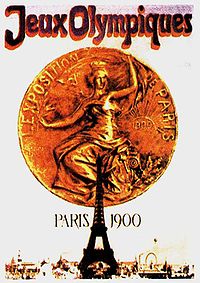
200px-joparis_1900 These noble sentiments expressed by de Coubertin in 1896 must have caused a certain amount of eye rolling and throat clearing, even at the first modern Olympiad, as he had just overcome a threatened boycott by the French Gymnastic Union which was incensed by the Germans being allowed to compete.

In addition, the Hungarians, part of the Austro-Hungarian Empire, paid their own travel costs and refused to take part as anything but native Hungarians under their own flag.

Irish athletes refused to compete as part of Britain and the Turks refused to take part at all, denouncing the Athens games as a tool of Greek expansionism in Asia minor.

The scene was thus set for over a century of huffs, strops, snubs, accusations and counter-accusations of sharp practice, boycotts, threats of boycotts and the international equivalent of the stamping of little feet and tossing of curls.

De Coubertin, having begun in the home of the original Olympiad, was anxious to take the second modern Olympiad to France.  Unfortunately, to do this, he was obliged to run the 1900 games as part of the French world fair – the Exposition Universalle International (EUI) – whose chairman, Alfred Picart, stated tactfully that all sports were for morons.  Consequently, the events were fitted in as and when the disaffected EUI officials felt like it, ran from mid May to late October and included bizarre sports such as fire-fighting, ballooning and pigeon shooting.  (No, not clay pigeon shooting, real pigeon shooting).

The competitors had also to deal with their events being shunted off into wherever the EUI could find space and the swimmers, banished to the fast flowing River Seine, found their exceptionally fast times being offset by an interesting variety of unpleasant skin diseases from the heavily polluted river.

The 1900 Olympic Games also featured the first accusations of cheating when, during the marathon, Arthur Newton of the United States  finished fifth but stated he had not been passed by any other runner during the race.  Another American, Richard Grant, claimed he was run down by a cyclist as he made ground on the leaders.

Eventually, Frenchman Michel Théato crossed the finish line first and France took first and second place.  The US was later to allege that Théato was actually from Luxembourg and held a passport for that country, so the stage was set for a certain amount of transatlantic friction over the event.

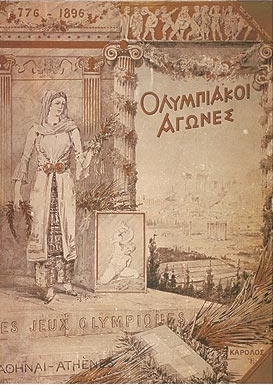
olympic-posters-1_0 Despite the France/US acrimony it was, predictably, the German participation which set Gallic teeth on edge.  The French president, Felix Faure, tried to keep the Germans out of the games and it was only persistent lobbying by de Coubertin and friends which ensured their participation.

However, having grudgingly accepted the presence of the evil ‘Boche’ at their games, the French went out of their way to make the German team feel as unwelcome as their means would allow.

The organisers refused to meet the German team at the station so that they were obliged to roam the city looking for their accommodation.  They were not allowed to train on any French equipment and were not informed of the timings of sporting events, resulting in the sprinters arriving at the stadium as the gun went off for the 100 metre race.

One morning the Germans awoke to find that their hotel had been adorned with the words “Cochons – a bas la Prusse!” (Pigs – down with Prussia!) and, upon returning to the hotel in the evening, the team captain, Fritz Hoffmann found an enormous pile of excrement in his bed.  His indignation at this was increased by, as he asserted,

This being the work of several persons.”

Obviously, you didn’t get to be captain of a German athletics team in those days if you displayed any kind of milksop unwillingness to delve around a pile of turds on your counterpane in order to find how many culprits had been involved.  I’d like to see Philipp Lahm try that one.

Things went slightly better for the Teutons in 1904 when the Olympics were held in St Louis in the US.  Not only did eight of their ten entrants win medals, but their bedding was completely free of any solid wastes.  The enormous US team – 432 of the 554 athletes were from America-predictably won most of the medals with twenty two golds, with two African Americans taking part for the first time.

However, an unfortunate sideshow to the Olympics were the Anthropology Games involving Africans, Asians, Filipinos and Native Americans, none of whom were eligible to appear in the Olympics proper as officials stated that, ”this type of man is hardly capable of Olympic calibre endeavour and, in any case, would hardly have understood the principles of amateurism.”

On the plus side for the Anthropology Games competitors, a local St Louis newspaper extolled their games saying :

“The meeting was a grand success from every point of view and served as a good example of what little brown men are capable of doing with training”.

Obviously, if heavy duty patronising was an Olympic event the US would have been well on the way to their twenty third gold medal.

The US contingent ….  refused to dip their flag to the Royal Box

The relatively peaceful 1904 Olympics were followed by a dramatic change of venue from Rome to London in 1908 owing to a natural disaster on Vesuvius.  There can’t have been many sporting events in history which have been cancelled owing to a volcanic eruption.

The opening parade at the White City was the usual brotherly fest when the Finns, whose land had been annexed by Russia in 1809, marched separately from the Russian imperial contingent and pointedly without a flag.   The US contingent, full of Irish first and second generation athletes, refused to dip their flag to the Royal Box, one of their athletes having previously stated,

This flag dips to no earthly king”.

Catcalls and boos from the pro-royal English crowd ensued and local newspapers later reprinted US pre-contest headlines containing such charmingly modest predictions as,

“American Athletes sure of success” and, “We will knock spots off Britishers.”  

The scene was set for a transatlantic head to head tussle and a series of protests and accusations flew from both sides.  The British accused the Americans of cheating in one of the heats for the 400 metres, the US runner was disqualified and his two team mates who had previously qualified withdrew from the final.

The British tug of war team, consisting of hefty Liverpool policemen, humiliatingly pulled the US team ‘over in a rush’ whereupon the Americans complained about their opponents heavy iron-reinforced boots which they referred to as ‘illegal equipment’.

In the marathon, the heroic Italian runner Dorando Pietri, leading the race by some distance, was so tired and disoriented by heat exhaustion that he ran the wrong way, fell down, got up, fell down again, was briefly treated by doctors and staggered to his feet stumbling towards the line, where he collapsed yet again.

They sportingly blamed this on the English weather

An Olympic official helped him up and half-dragged, half-carried him over the line where he collapsed once more.  He was taken off to hospital and, while he lay in critical condition, the US lodged a protest which was upheld despite a national outcry around Britain.

The German team, one of the initial favourites for the medals, performed less well than they and a disappointed Kaiser Wilhelm expected, coming in sixth in the medals table. They sportingly blamed this on the English weather; London’s heavily polluted air and the ‘hopelessly biased’ British judges.

This was echoed by the US after the Olympic medal tally ended with fifty seven golds for Britain compared to twenty two for the US. John Sullivan, the head of the Amateur Athletic Union in the US referred to the British judges as ‘cruel, irresponsible and utterly unfair’.

President Theodore Roosevelt referred to ‘so-called British sportsmanship’ and initiated a ticker tape parade in New York for the returning Olympians at which a papier-mâché British lion was dragged behind, jeered at and pelted by the crowd.

All things considered, I think we’d have to give the first four Olympics a bit of a failing grade on de Coubertin’s hoped for,

“… increasing friendly understanding among nations.”
Jan 062012
 

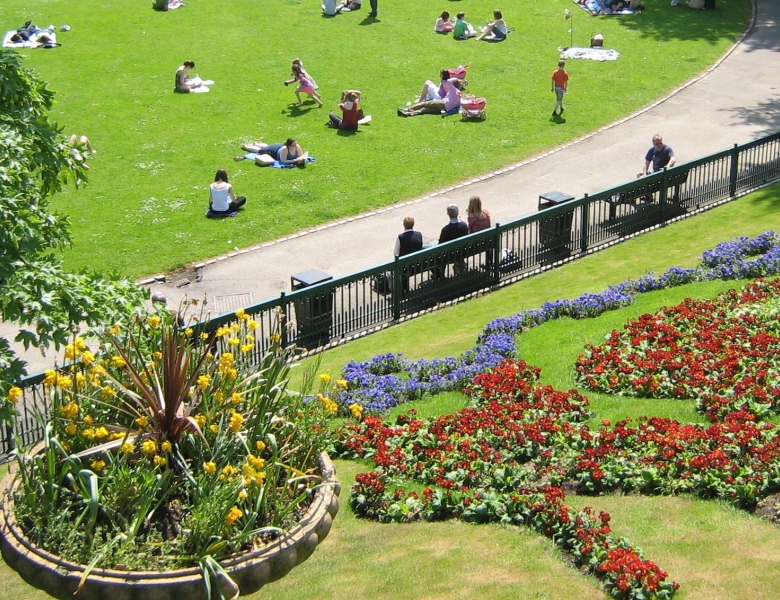
Over three years ago, Sir Ian Wood announced the City Square Project with the intention of replacing Union Terrace Gardens with “a cross between the Grand Italian Piazza and a mini Central Park.” It has since been renamed the City Garden Project. The cost of building the project is nominally £140 million, of which it has been proposed that £70M of this would be borrowed by Aberdeen City Council involving a tax scheme.  Mike Shepherd offers some analysis of current local government trends, the recession, and what it may mean for Aberdeen.

utg02pic So what is the justification being put forward for this expensive project, a project that has caused so much controversy since it was announced?

The project’s supporters allege the City Garden Project is needed to ensure that Aberdeen is attractive enough to retain energy professionals long term and to ensure Aberdeen’s economy is based on tourism post-oil.

For instance, an advert by ACSEF in the Press and Journal (January 2010) stated that:-

“Creating a new heart for Aberdeen presents a unique opportunity to put the city on the ‘must visit’ list.”

 Aberdeen City Council is £562 million in debt (2010 figure).
See:
http://www.scotland.gov.uk/Publications/2011/02/21143624/4

Last November, Perth and Kinross Council approved demolishing the listed Perth Town Hall to build a Civic Square in its place, a move that has raised much controversy.  The BBC reported:

“The council said many local businesses supported the civic square proposal. And council officers have argued that full demolition and reuse of the site as a public space would provide the most additional value to the local economy.  The cost of scheme is estimated at £4.4m, but the report said an additional 15,000 people per year would extend their stay in the city, with an extra 60,000 coming for events. “This would result in a combined additional spend per person per visit of £23 generating a total gross expenditure of £1.65m per annum,” it added.
See:
http://www.bbc.co.uk/news/uk-scotland-tayside-central-15742937

Perth and Kinross Council is £222 Million in debt (2010 figure).

A similar controversy has been raging in Cork, Ireland, where the struggling Cork Council has been involved in a plan to install the Sky Garden Project. Celebrity TV gardener Diarmuid Gavin’s Irish Sky Garden won the gold medal at the Chelsea Flower Show (It looks like a giant hanging flower basket).

  There is a pattern here. Local governments the world over are in serious debt

The Council agreed to put the garden on permanent display in the city’s Fitzgerald Park at a cost of at least €300,000, with more than €1.7 million given to the project by Fáilte Ireland, the Irish tourism body.

In tones, redolent of the Aberdeen controversy, the Irish Independent wrote:

“THE taxpayer could be hit with a further bill of over €100,000 in costs connected to Diarmuid Gavin’s award-winning garden.

“Workers’ Party councillor Ted Tynan said the council needed to clarify precisely how much the garden cost, and what the council would pay in transport, insurance and operating costs. He also expressed disbelief that the garden — including its 30-metre high floating ‘pod’ and crane — may only open for three months each year.

“I love gardens and flowers and parks, but this is absolutely ridiculous. You’d put a hell of a lot of flower beds around the city for this kind of money. We should keep our feet on the ground not in the clouds with a sky garden’,” Mr Tynan said

“There are 500 boarded-up council houses in Cork and 120 people with various disabilities waiting on home adaptations. But the funding to go to all this has been cut by central government,” he added.

“Last night, the council said support for the “iconic garden” was in line with the policy that led to the creation of successful visitor attractions in the city.”

“This is part of a long-term policy to create a necklace of top tourist attractions that will bring people to Cork, get them to stay longer here and spend more money here,” a council spokesman said.

“Fáilte Ireland insisted that the garden would generate significant tourism earnings.”

See: http://www.independent.ie/national-news/diarmuid-gavinrsquos-euro2m-lsquosky-gardenrsquo-growing-in-cost-2661548.html

There is a pattern here. Local governments the world over are in serious debt. Services and amenities are being cut, yet it doesn’t stop them from spending money on expensive big-ticket items that might bring visitors in.  There is a feedback loop between local government, chambers of commerce and national government that serves to create the syndrome, “if we build it, they will come”.

  While a worthy cause, this has caused controversy as the annual budget will be part-funded by the city’s Common Good Fund

Where local economies have failed as in Cork for example, tourism may be the last throw of the dice to engender outside income.  There will be much competition for the dwindling number of international tourists as the recession bites. Recent reports suggest that countries such as Greece and Spain will focus relentlessly on promoting tourism as the last glimmer of light in their busted economies.

Aberdeen has caught up on the trend of pushing long-term tourism. The local chamber of commerce have been promoting a new destination marketing organisation for the city called ‘Visit Aberdeen’.

While a worthy cause, this has caused controversy as the annual budget will be part-funded by the city’s Common Good Fund; £107,000 for 2011 / 2012 and potentially for the next six years also. Arguably this is more ‘commerce good’ than ‘common good’.

The draft business plan recognises the future of the City Garden Project / Union Terrace Gardens as a primary issue. It is to be hoped that an organisation part-funded by Common Good money will not be promoting the controversial development of a public park that lies on Common Good land.
See: http://committees.aberdeencity.gov.uk/mgConvert2PDF.aspx?ID=15678

Are the citizens of Aberdeen willing to support the allocation of scarce resources to “a build it and they might come” vision for the city, allowing a public park to be developed for the sake of possible future tourists? Or is this all pie in the sky stuff that will use up money desperately needed elsewhere and will result in the appearance of the Granite City changing forever?

You have the chance to decide yourself.  The referendum on the fate of Union Terrace Gardens will be held in February.


Dec 012011
 

Old Susannah looks back at the week that was, who said what to whom about what, and wonders what Saint Andrew would have made of it all.

dictionary Happy St Andrew’s Day! Old Suz is having haggis and whisky, or ‘swishky’ as the man at the next table is calling it. St Andrew’s Day reminds us of our national identity, more on that later. I read that Aberdeen is climbing up the list of ‘best places to live in the world’ and has reached the dazzling height of No. 52.

Well done everyone! And that’s before we get our glowing stadium at Loirston or our giant glass worm. We’ll be number 51 in the world before you know it.  Apparently factors like our low crime level feed into how the ratings are calculated. Congratulations to us all for living in this desirable paradise.

These statistics may or may not include the small minority of people who aren’t rolling in dosh like most of us are. The statistics on crime may or may not be being ‘massaged’ – after all, the top brass get nice bonuses if the crime levels are low. How could I think such a thing? Well, the newspapers this week may have something to do with it.

We’ve had a charming man just sent to prison; he kicked a four-year-old child in the head. Fair enough, they had been having an argument apparently.  You know what these toddlers can be like.

Another similar humanitarian’s gone down for 3 years for robbing children of their pocket money and jewellery, threatening to ‘slash’ some of them. The fact the victims were boys, girls and an autistic person just show that this particular thief was running his business in a non-discriminatory way.  He should be congratulated really. To be even more inclusive, this particular robber tried putting on a ‘Scouse’ accent.

Perhaps his career is inspiring to young people – a nine year old’s been caught stealing a car as well.  You’re never too young to learn.  I wonder if he at least brought a child safety seat on the job with him?

We’ve had older people robbed, conned and abused. Yes, in our 21st Century world, Aberdeen is the 52nd best place to live.  I’d say ‘safe as houses’, but we’ve had burglaries and fire-raising in the news as well.  Still, statistics don’t lie, and if there are experts who say we’re no. 52 in the planet, who are we to question it.

I heard something about some disruptive elements holding something called a ‘strike’. I just hope this won’t affect our place in the world quality standing. I can’t for the life of me see why anyone in such a highly-ranked city would have any reasons for unhappiness, although frozen salaries, cut pensions, closed schools, closed recreational facilities, cut school lessons, cut services and cuts to care homes might play a small role.

Someone should look into this.  Maybe if we just all looked at the brand new festive lights on Union Street, the rest of it wouldn’t matter so much.

That nice Mr Jeremy Clarkson had a solution for these ‘striking’ workers – he apparently said on air that he’d have them all shot in front of their families.  He thinks they get great pensions.  Please be a bit patient and don’t judge Mr Clarkson too harshly.  He’s got to work for a living, and probably only has a modest pension to look forward to.

It is not like him to be intolerant of other people, and as it’s the season of good will (or is it the season of ‘buy one get one free’ – I can never remember), let’s let Jeremy off the hook. We should be more tolerant, like he is.

Perhaps it’s time for some definitions.

Nationalism: (noun), The belief that a person or thing’s national origin is its most important and most defining characteristic.

Incidents of racism and nationalism are on the rise – not just in the UK at large, but here in 52nd best city, Aberdeen. Still, it’s important to remember just how important a person’s nationality is. If Donald Trump hadn’t reminded us that he has a granny from Skye, we might not have given his development the wink and the nod.

Pretty soon we’ll have the number one golf course in the world near the 52nd greatest city: it will be like paradise on earth. Believe it or not, on my mother’s side I can trace my direct ancestry all the way back to King Duncan, King Alexander and St Margaret of Scotland.

Armed with this information, I intend to ask Alex Salmond to give me privileges as well.  Maybe someone will even sell me some land in Westhills for a fraction of its value. National origin is where it’s at.

Of course if someone’s not Scottish, it’s OK to discriminate against them and you can always tell someone’s national origin by looking at them.

We know what a pure Scottish person looks like because of their Scottish characteristics. These Scottish traits come from the Egyptian princess Scota (for whom the country may be named). They also come from the Phoenicians who sailed here, the Celts who came here and the Vikings, Danes, and Norsemen who raided now and then. These pure Scottish traits also come from the Picts, and the Romans (whatever they may have done for us).

Later on continental settlers from travellers and sailors to kings and queens came from the continent. St Colomba came from Ireland, and the movement of people between Ireland and Scotland was massive. So yes – be proud you’re Scottish. After all, it’s not like a Scot is some kind of foreigner or something.

We could learn a lot from that nice lady on Youtube who had a wee bit of a go at foreigners coming over here to live.  It’s only been going on for three and a half thousand years or more as far as I can tell.  The lady in question is now helping the police with their enquiries.

St Andrew, for those who didn’t know, came from Galilee, and was Jewish-born convert to Christianity.  He had this crazy idea of preaching his religion (something to do with ‘turning the other cheek’, loving one another, and so on) to people in every country he could manage to travel to.

He travelled extensively in Europe and is also revered in half a dozen countries and the Greek Orthodox Church.  No doubt he’d be proud of the nationalism that seems to be taking hold of a few people here.  What he’d say to the giant worm or the monolith plans for Union Terrace Gardens is another matter.

Aberdeen Citizens Party: (noun) A facebook site with some 35 friends.

A wide range of rather strong opinions can be found on this site.  The Citizens Party is against Halal slaughter of animals (so am I).  It is all for capital punishment, and says that since 80 percent of people (really?) want the death penalty brought back it should be done.  I guess if a few innocent people get killed like happens in the USA, then the families can be given some kind of compensation payment. Fair enough.

This page is apparently run by one Patrick Wight; I’m told he has some form of hilarious act wherein he pretends to be a camp homosexual hairdresser named ‘Patrice’.  I really must catch that some time (perhaps around the time I want to define ‘tolerance’ more fully).

Old Susannah was surprised to read this on the Citizens page:

“Lets hope that a campaign of direct action can save Union Terrace Gardens and prevent the environmental damage which is to be inflicted upon it by Ian Wood and his yes men. The right to protest peacefully is a fundamental part of our society. We tend to forget that many of the human rights we cherish today are a direct result of protests by ordinary people who were prepared to go onto the streets ..”

I of course don’t want anything to stand in the way of Stewart getting his much-needed parking spaces, and Ian getting his eventual statue.  However, I found the above just a little bit of a contradiction to what a Patrick Wight wrote to Aberdeen Voice:-

“Message:
Not affiliated to any political party?
Your having a fcuken (sic) laugh!
Your promoting the day of action rally by the political left and the unions who want to wreck economic recovery and cause public misery across Britain.”

So – a protest is fine, but not a day of action rally by the unions.  I can’t quite work out why we have unions anyway, since we’re number 52 in the world.  It might have had something to do with workers in the past not having great rights (or any rights).  It might have something to do with the infamous New York City sweatshop fire in the Triangle building–  all the workers had been locked in and none escaped the fire.

But that was then and this is now.  Public sector workers have ‘gilt edged’ pensions; Jeremy Clarkson said so.  Let’s all get behind the Aberdeen Citizens Party and protest against the gardens, but complain about unions having a day of protest.  Makes sense to me.

Next week:  more definitions, including ‘slacktivist’ – someone who likes the idea of supporting a cause, as long as it doesn’t mean doing anything much.

Sep 212011
 

Students at Aberdeen University on Friday night draped banners around their campus and left messages of protest over the University’s recent decision to increase fees for so-called rest-of-UK (RUK) students to £9,000, making a degree from Aberdeen for RUK students more expensive than from a degree from Oxford or Cambridge. NineEight Aberdeen reports.

studentsupportpic The night before thousands of new students were due to arrive for Freshers week, a banner comparing the £9,000 yearly RUK fees with the Principal’s salary of £260k was dropped from the University’s iconic arches and messages chalked around the campus proclaiming support for recently announced strike actions and objecting to what many see as the creeping privatisation of Higher Education in the UK.

This summer has seen Universities across Scotland hike up tuition fees for English, Welsh and Northern Irish students, ostensibly in response to the last winter’s decision by the Coalition Government to increase the cap on tuition fees to £9,000 a year.

The action at AberdeenUniversity also follows students from across Scotland occupying a lecture theatre at Edinburgh University in response to the increase of RUK fees there.

A spokesperson for the group, NineEight Aberdeen said:

“These changes to Higher Education funding systems, as with the changes to public sector pensions, are absolutely not necessary and are driven by a government of millionaires, who incidentally all received free University education, intent on widening the already disgraceful chasm of social inequality.”

“This is a protest against the reckless decision of the SNP Government to increase the cap for RUK fees to £9,000, but also against the wider austerity agenda the Westminster Coalition Government is pursuing. The spiraling youth unemployment statistics speak clearly for the failure of these policies and Universities should be fighting tooth and nail against them. Instead, we have University managements all too eager to administer cuts, fee increases and privatisations under the guise of having their hands forced.”

Aug 182011
 

Old Susannah looks back at the week that was and wonders who’s up to what and why. By Suzanne Kelly.
dictionary

The leak’s leaked.  Those nice people at Shell seem to have been economical with the truth about their North Sea oil spill; they say they have been completely open and honest.  However, some half a dozen environmental/animal groups do not think so.

I know whom I am tempted to believe.  I hope Shell can do for us what it has done for Nigeria, farmers in Northern Ireland, etc. etc.  If nothing else, it is good to know Shell has gone into public relations overdrive and is pouring oil on troubled waters.

Back on dry land, it is hard to know where to start doing a round-up of this past week’s events in the ‘Deen and the wider world.  The Road Sense AWPR appeal has failed.  Helpfully, Kate Dean posted on a Facebook discussion thread (you see – she is down with the kids for definite) stating:

“I’m amazed that this topical community hasn’t seen fit to discuss today’s Court of Session ruling on the Aberdeen Western Peripheral Route.”

I told our Katie:

“To Ms Dean – nice to see you weighing in. I think you will find this ‘topical community’ and the Aberdeen Voice have historically dealt with both sides of the AWPR story. As the Voice is a weekly publication, no doubt some contributors will send in relevant items for next week’s issue. You would be welcome to write a piece as well”.

Alas!  Kate relied:

“I don’t think it would be appropriate for me to contribute to a publication which habitually refers to me in such a derogatory and insulting fashion”

I tried to explain that my writings are ‘satire’ (well, for the most part). Of course there is not much tradition of important politicians being satirised in Great Britain – well, only since the time of King John, and more recently Hogarth, Spitting Image and Private Eye.   (I would have also replied: “XXXX XXX XXX XXX XXX XXXXX”, but I could not figure out how to do redacted text on FB).  Perhaps I just do not know the meaning of the word ‘appropriate’ – time to see what can be learnt from Kate’s examples (see definitions).

Perhaps Kate thinks that is the end of the AWPR matter, and the necessary, environmentally-friendly, economical road will go ahead.  Well, we will see.  PS – my Facebook Home page tells me to suggest friends for Kate.  Any ideas?

And we have another nursing scandal; this time at Woolmanhill.

A nurse has allegedly been over-drugging patients, and gave a person a salt-cellar instead of their inhaler.  We are getting close to a medical scandal a week.  I wonder if all the cutbacks to frontline services might be related to frontline services going down the pan.

Old Susannah’s had a senior moment; I remembered writing about the brilliant designs shortlisted for the gardens, and thought I had done so in a column.  Turns out I had only done so on Facebook.  While trying to find what I did write, I googled my way upon this quotation:

“The gardens have the potential to be transformed in to a popular, attractive and vibrant green space in the heart of the city. The gardens have come under increasing pressure in recent years, with various schemes put forward to raise their level and develop them as a leisure facility. Care must be taken not to over-develop the space and potentially risk losing its essential drama and historical landform”.

- 2007, AberdeenCityCouncil Report

The above was the conclusion the City came to in (yet another expensive) report in 2007.  Since then a few things have changed, and commonsense has prevailed:  the only thing wrong with Aberdeen is that UTG is not vibrant and dynamic.  This is why we are all going broke, crime is shooting up, the independent shops are closing, and the streets are filthy:  it is the gardens – they are not used enough and are in a valley!

We may or may not get a vote on the Gardens’ future – but we have lined up five designers who have form when it comes to doubling and trebling their budgets.  I guess if you want something as beautiful, as functional and elegant as the Diana Memorial Fountain in Hyde Park, it’s going to cost.  Then again, an inflatable Jacuzzi (on sale via ‘Groupon’) would have been as pretty and functional – and costs a few million less.

I’m sure it’s because I didn’t study architecture in great depth, but at first glance I thought the shortlist was the most predictable collection of expensive hacks to ever build boring and unsuitable creations, obviously my mistake.

Still, the Diana Memorial Fountain designer is one of our fine finalists!  I hope you are as excited as I am.  Since I did not go into detail about the talented designers Malcolm Reading has lined up to fix our city’s problems and how much it is likely to cost and since I cannot find my writings on the matter to begin with, (but I did mention some of the references rxpell uses), here is a good article from rxpell that sums things up nicely:
http://rxpell.wordpress.com/2011/08/16/a-look-at-the-city-square-short-leet/

This article will help you decide which of our five finalists to vote for.  If you get a vote.  We do not know for sure, even though HoMalone’s promised us a vote, which would include leaving the gardens as they are.  But this is Aberdeen, and the government’s position changes more often than the weather.

(I would love to say I have been out at nice dinners and working my way through the ever-changing Brewdog menu, but for the time being my doctors have me on lockdown, and am forced to live off rice, tofu and yoghurt drinks.  Somehow this does not really suit me.  Still, I will be back doing the rounds as soon as I can).  But now for some definitions.

Appropriate:

1.  (adjective) fitting, proper, suitable, in accord with acceptable norms.
Am I ever embarrassed by Kate’s telling me that it ‘is not appropriate’ for her to write in the Voice, as we are derogatory about her.  Shame-faced, I asked myself what can I learn from her example of what is appropriate behaviour?  I came up with a few examples.

What is appropriate:

  • To be a supporter of the Cove Rangers, to be the president of its fan club,  have a husband who is a Scottish Football Association referee, and to be administrator of the family plumbing business (Brian J Dean) which sponsors the club – and to endorse plans to build it a new stadium without any qualms or conflict
  • To make comments to the media about how wonderful a new stadium for the Cove Rangers team would be, yet to sit as convener of the Loirston Loch hearing (despite opposition from community councillors) which is tied to Cove Rangers’ future
  • To comment to the Loirston Loch hearing that you attended a meeting where virtually all present voted against the stadium going ahead, but that you were sure a man there wanted to vote in favour of the stadium – but was afraid to (mind-reading is a skill every councillor should have)
  • When implementing swingeing budget cuts (and having thousands of people march against them calling for your resignation) to reply ‘I was elected to do a job and I am going to do it’
  • To accept dozens of tickets to concerts and events at the AECC in a single year, despite guidelines suggesting this might not be ‘appropriate’

Thank you Ms Dean – I will indeed learn much from you, and will continue my studies.

And to whom but Aberdeen’s first citizen should I next turn towards to learn about appropriate behaviour:  Mr Milne has it nailed.  Out of the goodness of his heart, he allowed people to actually comment on his stylish plan for Triple Kirks (the Press & Journal obligingly called the area an ‘eyesore’ in an article.  There goes that bothersome blurring of ‘editorial’ and ‘article’ again, which of course is not appropriate).

Those who did comment on the Triple Kirks plans marvelled at the giant glass boxes (never mind the peregrines).  At least Milne said as much, claiming the majority loved his ground-breaking design.

(Hmm, if only there were some nearby, empty space that could be converted to parking, the scheme would be even easier to approve – if they could come up with some kind of a plan…).  Anyway, those few who objected and left email addresses got a very appropriate follow-up email from a Milne company, which reads along the lines of:

“From: “sales@stewartmilne.com”

“Many thanks for your enquiry. We will forward details and information to you shortly. We’re here to ensure that buying your new home is easy and enjoyable, so if we can help any further, just let us know.   Sell Your Home in 5 Days”

Now if I were a sceptical, cynical person, I would ask myself:  is writing to people who opposed your plans and offering to get them a new home in an ‘easy and enjoyable’ manner something that could be construed as a bribe?  Well, the City says everything is fine, so I guess it is all appropriate.  I have dismissed the idea that offering sales help to people who were against you is at all wrong.

I hope this has cleared up what is appropriate and what is not.

Appropriate:

2. (verb) – to take by deceit or force that which belongs to another.
See: Union Terrace Gardens, City Garden Project, ACSEF, Donald Trump, Compulsory Purchase Orders.

Tradition:

(noun) custom or activity rooted in the past.
People are funny about their traditions.  We are being told by the City Council that painting the Lord  Provost’s portrait – and celebrating the glorious event with an expensive party is OK – as it is tradition.

Foxhunting (no, not with golf clubs and tame foxes, Mr Forbes) was a United Kingdom tradition going back hundreds of years; it was deemed cruel and barbaric, and therefore has been made illegal.  The Catalonia area of Spain has recently given bullfighting the coup de grace –  it is hard to imagine anything more barbaric than bullfighting masquerading as a ‘sport’.

I came under criticism (on Facebook again – I really must stay away from that thing) for saying Spain should consider doing away with bullfighting.  (PS – if you really think the bull has a chance, and there is no prolonged torture or pain, and it is a brave matador that fights a bull with only a cape to protect himself, then think again – PETA will put you right).

Someone said I was showing ignorance of Spanish culture and tradition.  Their point was that tradition was more important than the animal issues. I say “bull”.

The city could not afford to replace broken windows in schools only a few years ago, but wants to shell out on canapés for its elected officials and the usual suspects to celebrate the fact that its Provost is an oil painting.  Too right.  Without these traditions, we would start moving forward.  And the future is uncertain.  It is best to cling to what previous generations did – it is safe (well, maybe).

If we always paid for a portrait, then we had better keep paying for a portrait.  We might have to cut a few services, but let us stick to whatever was the more traditional course of action.  It is important to bear in mind that all traditions are equal in value and all are good.  Perhaps we could bring back ducking witches in the loch?  Yes, to question traditions is to question culture and nationalism – and where would be without nationalism?

In my world, it is the 21st Century.  The whole world is under different pressures than it was when these wonderful traditions came about.  There should be more enlightenment and compassion than brutality and superstition; we have run out of excuses.  But then I turn on the news, and realise that I have got it wrong again.

Old Susannah is now out to catch something for dinner, and possibly bash a few enemies over the head with my wooden club.  Now where did I leave my bow and arrows?

Next week:  hopefully some FOI news, more definitions, and a back-to-school special look at education.

Apr 292011
 

By Dave Watt.

Democracy – The belief in freedom and equality between people, or a system of government based on this belief, in which power is either held by elected representatives or directly by the people themselves. The Cambridge Online Dictionary

ballot-box Democracy is one of our modern society’s buzzwords and we all nowadays accept it as a given that stable communities should be free and democratic.
Democracy to us is a positive concept but in our history it is only in the last hundred and fifty years or so that Britain has embraced the idea of democracy.

Previous to this it was regarded, particularly by our rulers as being neither more nor less than rule by a howling mob.

It is, in fact, less than eighty-five years since women over 21 were allowed to vote and less than 100 years since august journals such as the Times’ editorial announced that:

The suffragettes are a regrettable by-product of our civilisation, out with their hammers and their bags full of stones because of dreary, empty lives and highstrung, over-excitable natures

About the same time, the good bit less august Daily Sketch , declared that:

“The name of a suffragette will stink throughout recorded history”

Obviously tabloid journalism was alive and kicking the underdog even back in 1912.

One might think that having achieved universal adult suffrage in 1928 that Britain had been a full modern democracy since then. However, there were still such corrupt anomalies on the go as the businessman’s vote whereby a business owner was given a vote for each shop or establishment he owned as well as a vote for his home address.

In addition, the gerrymandering of votes in Northern Ireland by the Protestant Establishment ensured that the native Catholic population was continually on the wrong end of the electoral process. In fact, one Protestant businessman actually had forty-three votes and although this was an extreme case, many of Ulster’s ruling Protestant elite had multiple votes until the Irish Civil Rights Movement of the mid 1960s.

However, here we are in the twenty-first century with universal suffrage for those over eighteen, nobody asks your religion when you turn up at the polling station and we would regard anyone campaigning to curtail women’s voting rights as being something of a loose screw.

In addition, the candidate will spend large chunks of their working week in Parliament and nowhere near the constituency in question

So, do we live in a democracy where one person’s vote is worth the same as another’s? Unfortunately not. If you live in a key marginal constituency – you will get an inordinate amount of media coverage, assorted party leaders will turn up and tell you and you fellow voters what a fine, discerning, intelligent electorate you are.

Your vote will be sought after by phone and occasionally by canvasser and you will be generally coaxed, cajoled and pleaded with to vote for Party A over Party B or vice versa.

However, if you live in a firmly committed area where they simply weigh the vote for Party A or B you will be largely ignored apart from the usual leaflets and the odd party political broadcast. The committed voter, like the poor, is always with us and, like the poor, can be safely ignored by any astute politician on the make.

Voting Systems - There are several types of voting system. The most common in Britain is First Past the Post (or FPTP). This is where a people in an electoral constituency vote for one candidate to represent that constituency. While this is ostensibly fair it is deeply flawed, as the list below will show by a specimen election result.

Aberdeen East

Total Electorate in Constituency 50,000 voters

Candidate A (Longer Sticks on Lollipops Party) 13,000 votes

Candidate B (Shorter Sticks on Lollipops Party) 12,000 votes

Candidate C (Don’t Waste Precious Wood on Lollipop Sticks Party) 10,000 votes

Candidate D (It’s a Bloody Shame the Poor Can’t Afford Lollipops Party) 5,000 votes

Turn out 80%

As you can see from this, although the Longer Sticks on Lollipops Party have won the seat they represent less than a third of the votes cast and in parliament will actually be representing the wishes of just over one fifth of the electorate despite a massive 80% turn out.

this is not much cop when it comes to electing people who are willing to represent the public’s interests

Consequently, bearing in mind that it would be a bold back-bencher indeed who would stand against the wishes of his political overlords (and their pet lobbyists) it looks like the poor voters in Aberdeen East better get bloody used to having longer sticks on their lollipops for the foreseeable future.

The defenders of this system frequently mump on about how important it is to have constituency member of parliament who will be dedicated to that area alone and will be accessible to its residents – obviously forgetting that candidates are more than occasionally parachuted in as a constituency candidate from outwith the area and that most MPs or MSPs will actually be able to answer a phone, read a letter or an e-mail while the brighter ones will even have learned how to read texts on their Blackberry.

In addition, the candidate will spend large chunks of their working week in Parliament and nowhere near the constituency in question.

The next style of voting system is the Single Transferable Vote (or STV) which I have been obliged to do the tedious arithmetic for on several occasions and the details of which I will not go into here, as you would be fast asleep by the time I had finished (if you aren’t already). Suffice it to say that each voter gets several votes and lists them in preference order and the lowest voted candidate is removed then the next etc. until one of the top few are elected.

This is probably more democratic than first past the post but is probably best suited for choosing your student representative when you’re at university than a political contest. This is used in local council elections, so you can see by recent events in Aberdeen that this is not much cop when it comes to electing people who are willing to represent the public’s interests but mainly keeps the same old faces in power while pretending to be a bit more democratic.

There was a move afoot after 2003 to have this system replace the Parliamentary List System – presumably by those in Holyrood who objected to having their cosy little club invaded by a crowd of Greens and Socialists in that year.

The Parliamentary List System (or Regional Ballot) is probably the most democratic of the systems at present in use in the UK but is only used in Scotland and Wales.

It’s democratic and it’s simple and most countries in Western Europe use it and have been using it for over fifty years

The principle behind the list system is that the voters second vote is for a political party within a larger electoral area known as a region. (A region is formed by grouping together between eight and ten constituencies.) There are eight Scottish Parliament regions and each region has seven additional seats in the Parliament.

The MSPs chosen to fill these 56 additional seats are known as regional MSPs. Regional MSPs are allocated seats using a formula which takes into account the number of constituency seats that an individual or party has already won.

However, the outright winner in any serious democracy contest would undoubtedly be Proportional Representation (PR), which is remarkably simple whereby every one in the country votes and all the votes are added up, and each party is allocated seats in the parliament according to the percentage of the votes they have been given. It’s democratic and it’s simple and most countries in Western Europe use it and have been using it for over fifty years.

Why don’t we? Mostly it is more of the previous objection to the aforesaid cosy little club being invaded by those pesky troublemaking Green and Socialist radicals who are presumably closed to the blandishments of the lobbyists, who infest the corridors of power like poisonous termites, busily undermining the democratic process for big business interests.

Voting
Despite the title of Ken Livingstone’s 1987 book pointing out:‘If Voting Changed Anything They’d Abolish It’, Should you bother to vote? Yes, you probably should, ideally. An awful lot of people fought an awful long time to get you a vote so you should probably get down there and stick that cross down. You never know.

From their point of view an oppressive Conservative government got into power in 1979 and has stayed there ever since

One day the electorate might get it right and we might find ourselves with a government that cares for the old, sick and impoverished, has everybody in a house and a job, doesn’t send poor kids from depressed areas off to kill other people’s kids for oil and profit and cares for the environment. You never know.

Who does vote and who doesn’t vote?
Affluent people tend to vote and the poorer people seem not to. Figures in Scotland show that there can be up to a 15-20% difference in voting figures between poorer and richer neighbourhoods even within the same constituency on occasions.

Why is this? Basically what the underprivileged have seen for the past thirty years is an ongoing attack on their quality of life by a succession of right wing free market supporting governments. From their point of view an oppressive Conservative government got into power in 1979 and has stayed there ever since. Consequently, their disenchantment with government and the democratic process has meant that this has taken a back seat to the struggle for a decent life.

In addition, with the advent of the Poll Tax, which was effectively a Sod-The-Poor-Tax many people on the poorer end of society became disenfranchised and simply dropped off the electoral roll by simply being unable to afford to pay the Poll Tax. Its replacement by the almost-as-unfair-Council Tax has obviously not induced these people to get back on the electoral roll.

From an electoral view the parties which have traditionally suffered most from this, have been the socialists who have considerably more support within the poorer sections of society but owing to this disillusion and the aforementioned virtual disenfranchisement have been consistently punching below their weight at election time. Even when they are doing well (and don’t have their hands round each other’s throats, vigorously choking the electoral life out of each other as the SSP and Solidarity are doing at present) this factor reduces their electoral impact.

Who pays for a political party’s election funds?
There is a strange sideways jump in public morality about election funding. To keep it simple: large financial concerns of various kinds will bankroll political certain parties election funding on the expectation that when the party gets into power then the large financial concern can reasonably expect the party in government to enact legislation which will increase their profitability. They are seldom disappointed in this.

Needless to say, whereas this would be regarded as mere bribery and corruption in everyday life, in politics it is just regarded as the norm. For example, Abraham Lincoln, on being elected back in 1861, discovered his Republican party had promised enormous and unrealistic concessions to so many business concerns that, being quizzed a few weeks after the election as to why he was looking so glum, famously replied that “There’s just too many pigs for the teats”.

The Last Word on Democracy
When I was a kid there was a series on TV about an idealistic young US senator which had an impressive voice over at the start, which said:

Democracy is a bad form of government…but all the others are so much worse“.

Something to think about anyway.