Feb 282013
 

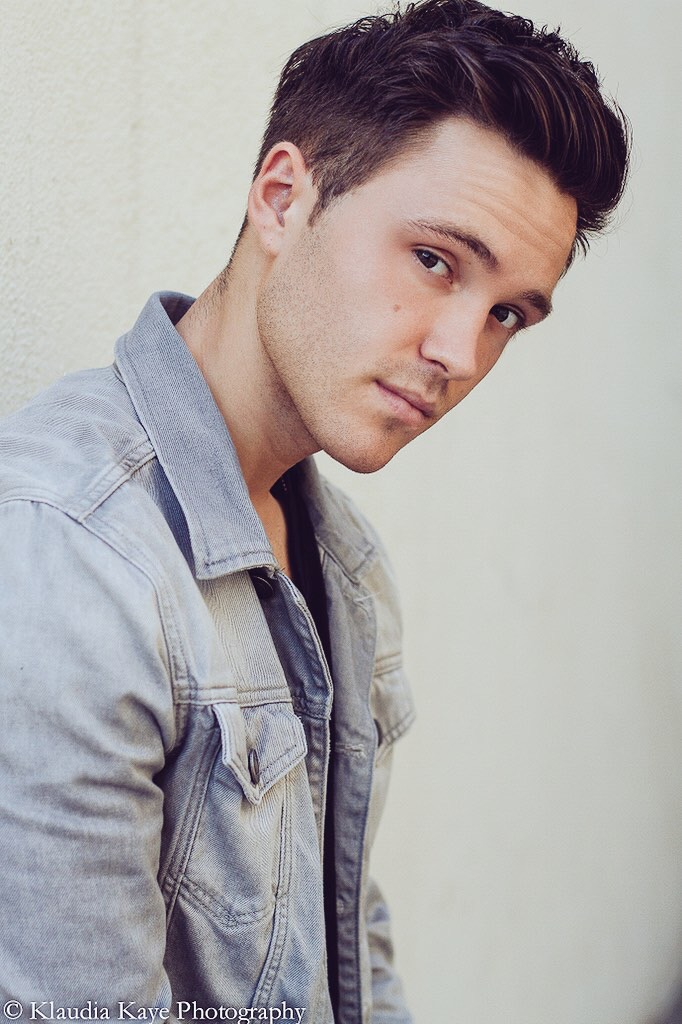
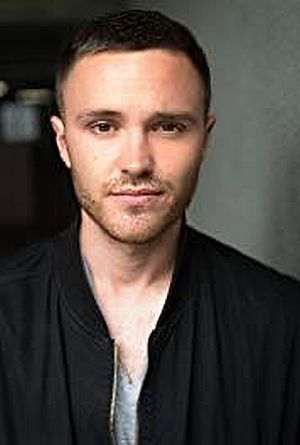
declan2 Declan Michael Laird has gone from the outskirts of Glasgow to Hollywood, via River City.  Since Aberdeen Voice’s Suzanne Kelly last spoke with him, things have been happening.

This year’s Oscars might be over and done with, but Laird’s career is just starting.

Declan’s in a car heading to a friend’s house when I get him on the phone. It’s been 8 months since we last spoke, during which he’s been busy.

“I’m just coming from an audition. It was for a pilot for a network on CW. I think it went well.  It’s pilot season just now; all the new series are being made.  I get scripts and then just give it my best”

It is pilot season; studios are testing out new actors to be in new shows.  Some will never make it to the screen at all; some will be given a test run, and the lucky shows will be televised.  CW network has come up with some long-running shows, some of which exceed the usual seven season maximum, including Supernatural, a cult classic with a huge following, and conventions.

It’s a warm sunny afternoon in California; it’s after ten at night in Aberdeen, and considerably colder.  Still Declan mentions that there’s a bit of a chill in the Hollywood air.

“I should be ashamed of myself for saying how cold it was.”

I agree with him, and rather undiplomatically I bring up the fortunes of his club, Celtic, which lost 3-0 to Juventus.

“It wasn’t a good week.  I watched it with another Scottish friend.”

I ask if he’s still playing in the Allstars, a team captained by Vinnie Jones.

“My football season starts next week, it stopped for the winter. I’m centre mid-field or right back.” 

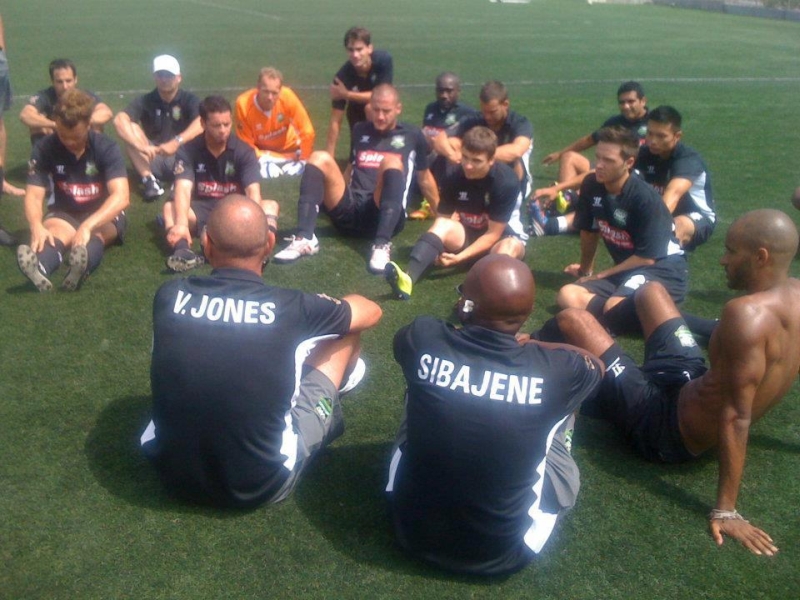
hollywood_all_stars_team_talk-2 He jokes that he’s ‘a lot younger’ than some of his team mates.  Laird spent most of his childhood pursuing a career in football before the acting bug bit.  A show reel of some of his work can be found here:-
http://www.youtube.com/watch?v=MKxeRsOINOg

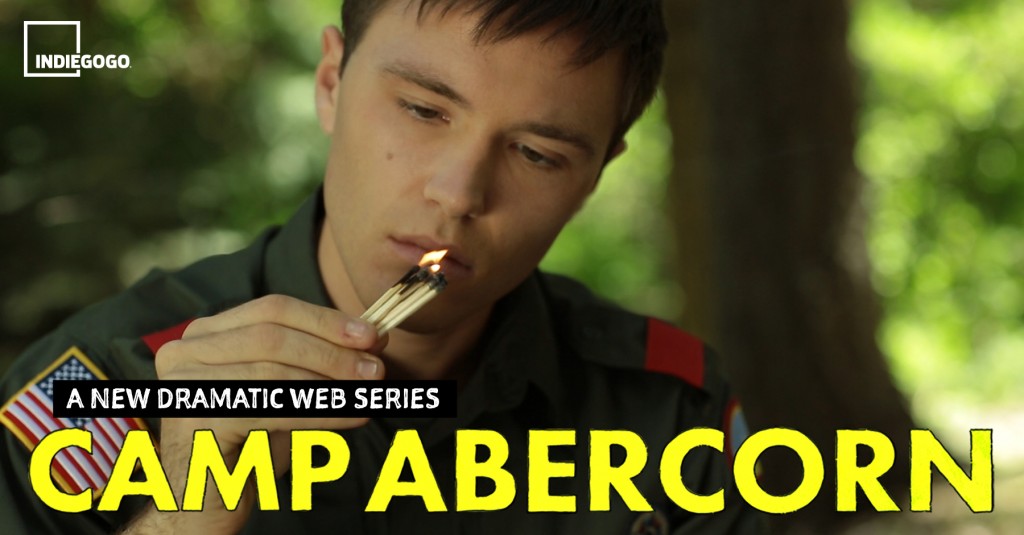
This includes work from RiverCity, and the short film ‘The Lost Purse’ which won a number of awards.

He and I were to have spoken when he came home to Scotland recently.  The glamour of Tinsel Town can’t compete with home.

“It was so nice to be back and see family again and have a bit of normality.  When you’re here (LA) everything is geared around the industry – acting, movies, scripts… It was nice to be home and have my mum call me ‘eejit’”.

So – what work exactly is going on for him?  I asked about the pilot that he was rumoured to have filmed.

“I can’t say much, but I can say the director is Guy Norman Bee.  He directed ER, Criminal Minds, Revolution and Arrow.   I taped in mid December   – it was great to get that and have a pilot under my belt.  The head of my school [The Stella Adler] can’t believe I got a pilot after having my 01 visa for four months.  I used my American accent which I’ve worked really hard on.  I can jump between the two accents now.  I have to go in and do my voiceover.  In this pilot the main character is my brother.  I’ll know in early June if it will air”

There is a trend at present for established actors to favour television roles over films.  Dennis Quaid,  for instance, is in the new series Vegas.  I wonder whether Declan’s got any preferences.

“Right now in my career anything that gives me a platform would be great.  But the way people might be looking at it, a movie is two hours; a show can go on for many seasons; and a character can develop over the course of time.  You can be on it [a series] for years and put your own stamp on it.”

How are things at the Stella Adler School?

“When I got my work visa, I still had a year of my course left.  The head of my school said ‘you’ve got a year left, your visa is for three years; drop from the full-time school and go part time.’  So I’m in class and not getting rusty and am going on auditions.  When I got the pilot they said, ‘we thought you’d get work’, and this justifies it.   I’m on their website with all these great, great actors, which is amazing.”

“My visa is for entertainment. It was good getting it because I don’t think many people my age get it.  To get the visa I got lots of support from Milton Justice, Mark Ruffalo  [AKA The Incredible Hulk from the Avengers], Ross King, Vinnie Jones: they were pretty great.” 

He’s not the only Scot around.

“Funny story. I was in Stella Adler and the lady in the office said there’s some Scottish group in doing a workshop. I think they left a few minutes later, I think that must be them.  I see this guy walk past, and it was one of my old school teachers! We both just looked at each other. He’d looked me up on Google, and he had me come into Hutcheson Grammar in Glasgow, and I did a talk to the school and later the drama department.  We talked about how I got into acting.   I think I managed to convince a few of them that moving out here was a great choice.”

“I’m very lucky that I have parents that support me; a lot of people don’t have that.   I think my mom will visit. Both our birthdays are at the start of April.”

“My best friend out here is from Aberdeen. I was getting my hair cut and suddenly this boy comes in; I hear Scottish and we determined he was from Aberdeen, and I was in Glasgow.  There’s a shared sense of humour, not everyone here gets sarcasm.”

“We do a lot of theatre. If you can do theatre, you can walk onto a television set because you’re never under more pressure than when you walk out onto a stage and have hundreds of eyes on you.  We do Arthur Miller, Tennessee Williams. When you read a Nickelodeon script it’s not the same.  With TV it’s often about a certain look, there’s so much about looks and rejection.  Theatre is much less of a beauty pageant.”

Laird’s car journey and our interview time are over.  I wonder where he’s heading now.

“I’m going to the gym, working on some school work and then maybe relax at a buddy’s with a movie or some Xbox.”

At 19 years old, Declan is in a very unusual, exciting situation. It bodes well that he’d prefer the gym and some relaxing over wild partying and ‘sleb-filled clubs.  He knows he has a lot of studying and work to do, and he’s staying level-headed and appreciative of his luck and those who have helped him.

“I’d like to thank John Jack Rodgers, the Head of the school – he’s so understanding about auditions and trying to get work while studying and getting the most out of you.”

Not that he needs it, but I wish him well.

  • Keep up to date with Declan on twitter at @DMLactor
Jul 262012
 

Aberdeen Voice’s Old Susannah can barely contain her excitement over the Olympics and Tartan Day, and reviews the week’s past local events. By Suzanne Kelly.

dictionary

Tally Ho!  I guess we’ve all had an exciting week, and with the Olympics upon us and Tartan Day around the corner, you can practically feel the excitement.

I am not sure whether we will need to deploy surface-to-air missiles on top of St Nicholas House to ensure Tartan Day goes without a hitch like they’re doing with the Olympic games (what could go wrong?).  I am not clear as to whether there will be a special ‘Tartan Day’ lane on our main roads for VIPs, either.

But in all seriousness, it should be fun.

There has been so much in the news these last few weeks about morals – people wanting to marry people of the same sex just because they’re in love; people committing moral crimes (like paying in cash for services) and so on; who’s to know what’s moral and what’s not any more?

As well as looking to our community leaders, movie stars and elected officials for guidance through the murky waters of morality, Old Susannah has some advice and of course definitions.

Moral Superiority: (Eng. phrase) – claim of holding a higher set of values and ethics than another person or group (not to be confused with smug, self-righteous, conceited, or small-minded).

Firstly, we are all shocked, angered and saddened by the main news, I’m sure.  Kirsten Stewart, Twilight and Snow White star is not snow-white like the rest of us after all.   Stewart has had a brief encounter with a married film director.

No doubt armies of Twilight fans in thrall to her Twilight co-star, Robert Pattison, will be baying for Stewart to be burned at the stake.  After all, Hollywood is no place for people to have affairs, and a star in a quick fling with a director is without precedent.

I’m sure all of us remember what it was like to be in our late teens and early twenties, and we all remember how responsible we were then, never making any mistakes, never experimenting, and of course always being faithful.

Being as good as we were is just as easy if you’re trying to fit into Hollywood and make your way in life in front of a lens.  Otherwise, there would be one or two examples of child stars who had unhappy, stormy lives.  It is important to remember that what goes on between the people involved is the world’s business, because they are famous.

let’s not forget either that it is OK for a man to cheat, but for a girl to do so is unacceptable

It must be Kristen’s fault, mustn’t it?  Helpless Hollywood director, all on his own, and a worldly twenty-something woman, and all that.  We owe a huge debt of gratitude to US Weekly’s campaigning, morally-superior investigative journalists and the editors who put them on the scent of this crucial news story.

Will Stewart and Pattison get together again?  Will they be happily married and never divorce?  I can barely sleep nights for thinking about it.

Other than that, there is something in the news about a bank scandal, and civilians including children being tortured and killed in a place called Syria.  Will get back to you on that boring stuff some other time, but for now best keep your money in your mattress.  (I have deliberately spared you any lame puns in the ‘Twilight’ vampire vein.  I didn’t think I’d earn your fangs if I wrote anything about what was at stake for Stewart and Pattison, and I didn’t want any hilarious jokes giving anyone a coffin fit.  Bad vampire puns suck).

Now that we’ve established we are all morally superior to Ms Stewart and her director, let’s not forget either that it is OK for a man to cheat, but for a girl to do so is unacceptable.  I hope Ms Stewart will look to other famous role models in Hollywood and Government for clues as how to be as morally acceptable, faithful and upright as they are in the future.

One last observation, courtesy of the Facebook page of George Takei (something popular with the young people I’m told).  In the Harry Potter saga, when the heroine’s boyfriend leaves her, Hermione goes on a quest to save the world.  In the Twilight saga, when the heroine’s boyfriend leaves her, Bella sits in a chair for three months, doing nothing but crying.  Hmm.

Morally Wrong: (Eng phrase) behaviour or opinions which go against prevailing standards.

Hooray!  The Coalition government is going after those who are ‘morally wrong’ – and they should know all about morals, shouldn’t they?

Exchequer Secretary David Gauke has publicly accused homeowners who give workers cash of helping them avoid tax.  Tax avoidance!  NO!  Our tax system is totally fair, and anyone who is doing jobs for cash is always a morally bankrupt criminal. And the government have more than a little experience with tax avoidance.

  The Government practices what it preaches, and no MPs are guilty of any tax evasion, book-fiddling, or expense padding at all

The Revenue has, after a few expensive meals and hospitality events, waived goodbye to tax which was owed to you and I by Vodaphone, to name but one multinational that hasn’t paid what it owed.  These few settlements made by the government to multinationals of a billion here and a few hundred million there can eventually add up to significant amounts, but nothing like the man who wants £50 for painting your hallway.

Rumour has it that even here in the respectable North East of Scotland, one of our very own billionaires changed some of his employment schemes to keep money offshore and out of the taxman’s pocket.  Wood that I could tell you who I was thinking of.

The Government practices what it preaches, and no MPs are guilty of any tax evasion, book-fiddling, or expense padding at all.  The government needs all the money it can get for worthwhile causes like buying more weaponry.  After we’ve taken care of the defence budget, we can throw a few scraps to the poor (but only the ‘undeserving’ poor of course).

Hopefully, we’ve got all the lazy MS, cancer-stricken, paralysed layabouts back into meaningful work (whether paid or not), so we should probably consider cutting back on social welfare programmes.    It might seem that there is one rule for the rich and powerful, and another for the rest of us, but I’m sure this is just illusory.

I admit that there are people who make a career out of avoiding tax who are involved in the building trade; they should be brought to book, and made to behave like MPs, bankers  and company directors.

Once Scotland is independent, it will all be different, I’m sure.   But remember, if you hire someone to paint your front steps or fix your garden, don’t pay in cash.  Try to pay them with a service in kind instead – let’s see how that would work.

Moral High Ground: (Eng. phrase) The position of superiority of those with codes and values above the prevailing standards in society.

Well, thank heavens for the Westboro Baptist Church!  Where would we be without them.  These followers of Christ (who once apparently had something to do with ‘love one another’ and ‘let he who is without sin cast the first stone’ and other outdated nonsense) are showing us the way.

  These people occupy the moral high ground, because they know what god would have wanted

They nearly came to Aberdeen once to spread the word against immoral behaviour like homosexuality, but they changed their minds.  Old Susannah was so looking forward to greeting them appropriately as well; so were several hundred others.  Perhaps they still will.

These people occupy the moral high ground, because they know what god would have wanted.  They helpfully show up at funerals for servicemen and women who were gay, and create delightful, enlightening events for the mourners, in the true spirit of Christianity of course.

Strangely no mainstream churches seem brave enough to join Westboro on its crusades against gays, blacks, Jewish people and others.  I wonder why.  When I have a chance, I think I’ll ask Westboro about some of its positions; I am starting to wonder if they are a bit racist and homophobic – and I’m not quite able to find the bits in the bible telling me God wants it that way.

I hope you’ve enjoyed this little update on what is and isn’t moral, and if you have any questions, just get in touch with Westboro.

Next week:  a romp through Aberdeen’s draft financial accounts – which everyone has the chance to examine until 18 August.

  •  Comments enabled – see comments box below. Note, all comments will be moderated.
Jun 142012
 

Aberdeen Voice’s Old Susannah continues her romp through Aberdeen City Council’s A to Z of services, and  considers two very different ‘Mr Smiths’, and dog’s dinners.  By Suzanne Kelly.

dictionary

Tally Ho!  The burning issues of the past week include Olympic torches and scorching internet debate following Annie Lennox’s article in the Guardian.  In this piece Lennox suggests that Aberdeen might have some issues  and that the City Garden Project is ‘a dog’s dinner.’

In the first place as Mr Tom Smith (ACSEF, City Garden Trust, guru of truth, etc. etc.) points out, Annie doesn’t have all the facts.  Mr Smith will be happy to supply them to her.  This will be a historic first, considering ACSEF’s previous economy with said facts.   But what a result!  Tom Smith’s kindly offered to meet Annie!  I bet she’s wondering what to wear to any such meeting and is all nervous and excited.  Who could blame a girl? (Do I get a meeting invite as well, Tom, seeing as I was head of one of the official referendum campaign groups?).

I’m happy to admit I don’t have all the facts, either –  I keep asking for them, but I still don’t have them.  For one thing, I don’t know what comments people wrote on the voting slips when the six shortlisted designs were on show.  At the time comments and votes were requested (and paid for by the taxpayer).  Somehow, a private company, Aberdeen City Gardens Trust, seems to have the votes.  Tom is one of the people with access to them, and won’t let us see the results.  It wouldn’t be helpful, you see, to release this information.

I also don’t know the concrete web’s final business plan and its financial projections.  I also don’t know what the architectural drawings specify in any detail.  I don’t know what went on at the many meetings held to further the web.  I only  have ’redacted’ (that’s with the details hidden) minutes of all those City Gardens Projects meetings you and I paid for (we’ve spent at least £600k on consultants and services for the granite web – you know, the project which won’t cost us a penny).  Call me over-cautious, but before I’d agree to borrow £90 million and commit to spending £140 million on a plan with no details, I’d want something a bit more concrete (excuse the expression).

I also don’t know the latest on Mr Smith’s front page P&J story from when he claimed UTG supporters were ‘harassing’ him and his family, and illegally hacking into his email.  You would have thought that had laws been broken, he’d have raced to the papers with the update. Otherwise, it just looks like a cynical manipulation of the press close to the referendum vote.    But all in all, I admit I don’t have these minor little facts.

But never mind the facts (which we’ve been asked to do so far) – once Tom’s had a word with Annie Lennox, she’ll be joining ACSEF, moving to Union Terrace and supporting the web.  Rumours that she has switched PR companies to Aberdeen’s BiG remain unconfirmed.

But Ms Lennox’ calling the Granite Web ‘a dog’s dinner’ in the Guardian was hardly fair.  Firstly, if you tried to feed such slop to a poor dog, it would slink away howling into the night, and the Scottish SPCA would step in, like they did to Dumfries & Galloway’s NHS supremo, one Mr Michael Keggens.  Because of his busy job and busy life, Keggens left his elderly dog without food and water, locked in the house for days.  Easy mistake to make I’m sure.

The Scottish SPCA were alerted to the dog barking, and found the poor thing alone in the house, caked in muck with not even water to drink.  Feeding the dog and returning a day later, the Scottish SPCA found the situation hadn’t changed.  Apparently living things need food and water, but you can’t expect someone high up in the NHS to know details like that.  Remember this the next time you hear of an elderly or infirm patient suffering dehydration. (PS – the Scottish SPCA is desperate for help just now, as are New Arc and Willows – if you can spare anything, please think about it).

Back to Mr Smith, well a Mr Smith anyway.  Old Susannah had a sudden urge this week to re-watch the old Jimmy Stewart film, ‘Mr Smith goes to Washington.’  Yes, it’s heavy on the sentiment and American values.  But the gist of the plot is this:  a corrupt, wealthy circle of small town businessmen and elected officials are milking the taxpayers; they have a crooked construction scheme (for a dam – a granite web would have been too far-fetched even for Hollywood).  These crooks have been sucking up public money, conspiring, and hiding the facts of their self-serving plans from the electorate.  This somehow sounds familiar.

In comes naive, honest Mr Smith, newly elected to the Senate, where people expect he will just do as the villains tell him to do.  He eventually finds out about all the corruption, and fights it (and he wins).  By the way, one of the most powerful weapons which the wealthiest crooked businessman has is his ability to dictate to the local press what to cover, how to cover it, and what to leave out of the news.

In the end ‘people power’ and truth win out over greed, corruption and manipulation.  I guess that’s Hollywood for you.  I’m still stumped as to why I thought of this film and wanted to see it again, but it will come to me.

Before I continue with my search through Aberdeen City Council’s A to Z of ‘services’, I’d like to say that I’m greatly looking forward to next Saturday’s (23 June) party in Union Terrace Gardens, courtesy of Common Good Aberdeen.  Hope to see you there.  And congratulations on the unanimous decision for a cafe in UTG to be run by Common Good Aberdeen volunteers, with 100% of profits going to improving the gardens.  A result in the truest sense.

I would also like to say a sincere thank you to the Guardian for its investigations, and to Ms Lennox (who can’t win – she gets it in the neck if she says anything, and gets it in the neck if she doesn’t.  But I dare say she knows what’s important and what she’s doing, and petty, small-minded criticism can’t stop her.  More power to her, as they say).

Now back to Aberdeen City’s A to Z of services.

M is for Marischal College: – Result!  ACC gutted this building, fitted it out with new furniture for some of the council staff, and boasted widely how wonderful it was – it only cost around £60,000,000 and it ‘came in on time and under budget’.  You can’t say fairer than that, can you?

Of course we never got to see a list of what the alternatives for council office space were (Old Susannah did do a FOI, knowing there is a ton of empty space owned by ACC out there – but was told this information was top secret).  Marischal may have been under budget, but what the budget was for other solutions was never disclosed.

Marischal workers are also under something else, and it’s not budget.  The problem I reported earlier with leaking toilet pipes hasn’t entirely been solved.  It must be kind of stimulating – you never know what’s going to land on your desk if you work at Marischal.

N is for National Fraud Initiative: – No, it’s not an initiative to strip the taxpayer of as much money as possible, it means that:-

“…Aberdeen City Council is required by law to protect the public funds it administers. We may share information provided to us with other bodies responsible for auditing or administering public funds, in order to prevent and detect fraud.”

We’ll have to wait and see if the new administration can do as well as the previous one at preventing fraud.  Let’s see – we had Councillor Cassie and his little financial embarrassment.  We had ‘care’ workers stealing from their elderly clients, we’ve had social workers buying themselves goods with our money;  we’ve had people at the council offices taking their work home with them (in the form of embezzled funds).

There is a saying: steal something small and you’ll go to jail; steal something big and they’ll make you a legend.  Steal an entire Victorian Park and put it into private hands to manage?  They’ll make you an ACSEF member.

O is for Open Data: – As the Council tells us,

“Open data is about increased transparency, about sharing the information we hold with the wider community to build useful applications.”

There is a link to this open data –

“We now have a linked data repository, available at: http://linkeddata.aberdeencity.gov.uk/ which provides a number of data sets as linked data. “

Please do be my guest and visit this link.  But if you’re looking for any controversial data, I’m not sure this will be much help to you.

P is for Package Holidays: – the City is giving us advice on consumer protection regarding package holidays.   Result!

I wonder whether the previous Lord Provost did a package holiday when he went on some of his essential world-wide trips in order to save the city some money.  His visit to Nagasaki clearly worked wonders, and I hear the Japanese want to get rid of some of their tedious green space to build granite webs.

There was a tartan created to commemorate the visit as well.  While we were spending all this money on his designer jeans, clothes, travel, portraits and so on, we sensibly have just auctioned off some of the artefacts from Thomas Glover House.  Glover, you may recall, was for all intents the man who most helped to open up Japan to the outside world, and his house in Aberdeen was a monument to him and his travels.

I wonder if they’ve sold the doorknobs, light bulbs and light switches from the Glover house yet?

Q is for…. nothing:  There are no entries.  Nothing about quality of services, quality of life, nothing.  That’s because things are so good, there’s nothing left to say.  (X has no listings, either, FYI).

R is for Rats:  If any of you have read the previous columns about the city’s A to Z of services, you will suspect correctly that this link takes you back to the city’s exterminator services.  The city will happily kill rats, rodents, insects, and a whole host of critters for you, for a fee.  And as we sadly know, they’ll shoot deer.

Next week:  Expect an update on the Tullos Hill deer slaughter story, the remainder of the alphabet, and a return to definitions as normal.

PS – I have learnt a great deal from the online debate sparked from the Guardian’s Annie Lennox story.  But most importantly, I’ve learnt you are not allowed to criticise a place unless you live in it.  Therefore, let’s have no more carping on about the situations in Syria, Iraq, Tibet, Myanmar, DRC, and so on.  Glad that’s settled.

  •  Have your say in the comments box below. 
Jun 142012
 

At age 18 Declan Michael Laird is getting a remarkable reception in Hollywood.  He is on a scholarship to the most prestigious acting school there is, he is playing football with celebrity expats, and he is having the time of his life.  Aberdeen Voice’s Suzanne Kelly catches up with Declan, and gets the gen on his story so far.

declanpic1 Declan answers the phone, and the first thing that comes up is weather.  Aberdonian readers don’t need me to tell them how this summer is going, but Declan’s interested.  “You’d be surprised – I do miss the damp weather sometime… the sun can get to you sometimes if you’re running around a lot.” he offers, “But I do love it, and I’m lucky.”

His voice is filled with enthusiasm (it sounds as if he is smiling and on the verge of laughing), and it should be.  He is in Hollywood pursuing a career as an actor.  Not bad for a teenager from Scotland.

I ask what he got up to today.

“I got up early, did some school work, then went to gym and tried to work out, then met friends for coffee – I’m off to class shortly.”

Class in this case being acting lessons at the Stella Adler Academy of Acting and Theatre.

“I was playing for  Greenock Morton FC and left school at 16 – I wanted to be  pro player.  I never thought about acting .  I was on a pro youth contract. 

“I came to Los Angeles on vacation, and there was a workshop at an acting school.  I was with my dad, and said I’d go in and give it a shot.  I’d never had the opportunity back home.  I went in and I loved it – I felt I had a knack for it – I did it, loved it, came home from LA and told my family that I wanted to give it a bash.  

“I got an agent in Glasgow and my first audition was for River City.   This was only a week or so in [to being signed by an agent], and I got the part. I’d never even been in the school play!  I did the audition the way I thought it should be done.  I got the call the next morning to say I got the part.”

“It was all amazingly sudden,” Declan tells me,

“I went to the first filming and decided this was what I wanted to do – the cameras, the actors, being on set was amazing.  Football, which had been my aim for 10 years, suddenly fell to the back.  I did a few short films back home with independent filmmakers. 

  he said, ‘You would be the first person since Robert De Niro to get this scholarship.’ 

“In December 2010 I got a call from Stella Adler School – (from Milton Justice who is an  Oscar-winner documentary maker; he was the man who took the workshop).  I had no idea I was doing the workshop in front of an Oscar winner – maybe that’s why I wasn’t as nervous as everyone else.  He said he was impressed, and there was a place if I wanted to go to LA.  

“I was signalling to my mum and she said it would be too expensive.  But I told him l’d speak to my parents and call back.  So I spoke to my parents, and called back to say we couldn’t really afford it.  He sort of laughed and said ‘we’re offering you the place,  it would be a full scholarship’.  Just as I was about to get my words out – I was speechless – he said, ‘You would be the first person since Robert De Niro to get this scholarship.’  – I thought I was being punked”.

Declan continues:

“So at that point there was only one thought – I was going to go.  So, fast forward  they wanted me in January – but I was still 17 –so  I came in August.”

Laird has a manger and an agent, not something that your average teenager winds up with after a few months in Hollywood by any standard, and work is coming in.

“I’ve just booked a film with award-winning director Stan Harrington ‘Lost Angels,’ which  starts filming this month.  I start in July – I’m excited about that.”

And from the tone of his voice, yes, he is.  There are other call-backs and opportunities which we discuss.  I look forward to watching where he’s going to next appear.

“I don’t even know the name, but there’s a movie being made in Scotland and the casting director’s wanting  to ’Skype’ with me to talk about.”   

There are other international prospects in the pipeline, and it will be interesting to see what choices Laird makes.

“It sounds far- fetched when I tell people.” Declan says of his experiences.

declanlairdfeat Indeed, one of the reasons I wanted to get in touch was that his story sounded far-fetched to me when I’d first heard it from his father.  Parents do generally tend to exaggerate what their children are up to, but with hindsight what his father told me was understated compared to the facts.

We talk about football.

“The good thing is I’m playing football as well .   Vinnie Jones is the coach; there are a few guys from Hollyoaks.  A lot of British actors, models and singers are coming from the UK, and here there’s not a lot of opportunity to play. 

“Vinnie rounds up everyone he can who is able to play.  

“Mark Wright is out here making a documentary.  He plays in the team on Sunday, and the show filmed it – you’ll see me playing with Mark and Vinnie shouting at us.”

I ask about visits home – wouldn’t a teenager so far from home miss his friends and family?

“I’ve only been back once – I went back at Christmas.  It is difficult sometimes, but this is where  I want to be, and I’m very determined.”  I’m more than convinced of the determination by this point.  “ People think I’m about 25 – being here alone has matured me a lot.”

“Ross King has been really helpful – he does the Hollywood scoop.  He heard about me coming out here, got in touch.   When I first came I didn’t know anyone.  He’s introduced me to people, takes me to the studio – he’s been great.”

I come back around to football – after all there are just a few issues with Scottish football at present.   Would he still be following his team?

“I am a Celtic supporter.  I don’t watch all the games, but there is an Irish bar in Hollywood that  shows the  Old Firm games.  My brother is a Rangers supporter and my dad’s a Rangers supporter as well.” 

Not wanting to linger on Rangers’ future or any family football rifts, I get back to acting.“What roles appeal to you?” I ask as what must be a fairly predictable question. 

“A lot of people seem to think they can see me as a bad boy – could be to do with the accent.  But I like comedy – I like making people laugh.  But I’m open to everything.   All the good roles are the bad guys.”

 I can’t argue there, and think of De Niro’s ability to be a terrifying villain (the remake of ‘Cape Fear’ springs to mind) as well as his considerable gifts for comedy.  I have little doubt Laird will be another master of both.

Will he wind up another ‘Lohan’?  Will he be jaded before he’s hit twenty?  Will he keep up the enthusiasm and energy which will be essential to win roles and handle the ups and downs?  I think so – but I ask about it.

“My family are so supportive – you meet so many people out here whose family aren’t supportive.  You can be out of work;  you can be in work.  But they support me in every way they can.”

Declan’s keen to say hello to his friends and family

“Hello!” 

“If I could say a special thank you to Jim Sweeney, who lives in Inverclyde.  When I was first starting he helped so much and I really appreciate it.”

I ask Declan for any last thoughts.

“It is amazing what I’ve achieved in the last 8 months – the events I go to, the people I’ve met. I feel like it’s meant to be.  That  sounds cheesy – but I’m a great believer in things that are meant to be.”

  • Keep up to date with Declan on twitter at @DMLactor
Apr 152011
 

deershotpic Voice’s Dave Watt poses the question – “When We Talk About ‘Culling’ Deer, What Do We Actually Mean?”

What this means is that a bullet and a deer’s body are going to meet at somewhere in between 600 and 3000 feet a second.  (These are the figures for a hand gun and an assault rifle respectively).

So what does this mean for the unfortunate deer?

I obviously don’t have input from deer that have been shot previously but as I’m a) ex-army, b) have studied the subject of warfare quite a bit and c) have spoken to several doctors about it, I have a fair idea of the horrors  which occur when a body and a bullet meet at a couple of thousand feet a second.

Richard Holmes in his book ‘The Firing Line’ points out that almost all wounds become painful when the initial shock wears off and some are utterly agonising from the start. “Wounded men scream, either because of the pain itself, or in sheer panic and terror”. Lt. Edwin Campion of Royal Warwicks described the noise coming from the darkness at Passchaendale:

“On all sides  came the groans and wails of the wounded men: faint, long, sobbing moans of agony and despairing shrieks.”

Michael Herr’s description of a wounded man shot and entangled in barbed wire is equally moving:

“We heard then what sounded at first like a little girl crying”, he reported,

“a subdued delicate wailing , and as we listened it became louder and more intense, taking on pain as it grew until it became a full , piercing shriek.”

The people I’m describing here undergoing these agonies are not freaks of nature, they are people like you and me. Hit by a bullet as they were, you and I and poor old Bambi up in Tullos would cry, writhe and shriek in undignified pain just as they did.  Luckily for you and me this scenario’s pretty unlikely but I’m not so sure about Bambi.

Sounds fun, doesn’t it? I bet old Bambi and his pals can hardly wait.

As a medical friend of mine pointed out, the dreadful thing about mammals is our sensitivity to pain and the equally dreadful fact that the organisms of dying mammals cling on to life with a ghastly pertinacity.

Additionally, unlike all that nonsense that Hollywood has been spouting over the years, the agony from a wound is in almost exact proportion to the severity of the wound.

Another grisly little aside to that is that unmarried men dying in the extremes of major wound agonies tend to cry on their mothers and married men on their wives. Isn’t that a lovely little statistic to take away and keep in some dark little corner of your mind? Perhaps as Bambi lies twitching in agony on the ground with his bowels loosened (yes, that happens too) he might cough out , with the spray of arterial blood, a choked cry for his ma or the cute little doe he’s been mating with. Who knows?

Even in the unlikely event that the poor old Bambi is fortunate enough to be hit with a head shot (which, despite Hollywood, are frequently not immediately fatal either) this is still hardly an enjoyable experience as Charles Carrington at the Somme had the disconcerting experience of speaking to a corporal as the man was hit by a rifle bullet:

“He was alive and then he was dying or dead, and there was nothing human left about him. He fell with a neat round hole in his forehead and the back of his head blown out.”

While Pte Le Brun of the Canadian Army referred to a comrade being killed beside him,

“His blood and brains, pieces of skull and lumps of burning hair spattered over the front of my greatcoat and gasmask”.

Sounds fun, doesn’t it? I bet old Bambi and his pals can hardly wait.

Finally, General Sir John Hackett writing an article on World War II films for the Sunday Times pointed out the inaccuracy of the depiction of casualties in  Hollywood films where:

“If men are shot ….they fall down like children in a game, to lie motionless. The most harrowing thing in real battles is that  usually don’t lie still; only the lucky ones die outright.”


Feb 252011
 
Hollywood And The Bomb – or Trivialising a Nuclear Holocaust 1945-1990 - Part 3.

Voice’s Dave Watt lifts the lid on the somewhat shady influences at work at the highest levels of post-war US government when McCarthyism and ‘Commie plot’ paranoia was rife. Not even Hollywood’s cinematic art was safe, it seems.

This final section of the series concentrates mainly on Hollywood and the Bomb in the 1970s and 80s with occasional trips across the Atlantic to compare their treatment of the subject with British filmmakers.

slim1-pickens-bomb The 1970s : An decade of détente, Strategic Arms Limitation Talks, humiliating end of Vietnam War for the US and the controversial deployment of short and medium range nukes amongst a largely unwilling European population but with the usual connivance of their governments.

The last instance of using nuclear war as a theme in the 1960s was curiously in the film Planet of The Apes (1968) where the human civilization is revealed to have been destroyed by a nuclear war thereby leaving the planet to the apes.

After this there was a largish gap in the 1970s until: Twilight’s Last Gleaming in 1977 starring Burt Lancaster and Richard Widmark. It tells the story of Lawrence Dell, a renegade USAAF general, who escapes from a military prison and takes over an ICBM silo near Montana, threatening to launch the missiles at the USSR and start World War III unless the President reveals the real reasons why America fought for so long in Vietnam. Control of The ICBM silo is duly recovered by the hero and some special forces sub-heroes although the audience are left in no doubt about the big business interests profiting from the US’s extended involvement in Vietnam.

The 1980s

With the appearance of Ronald Reagan and Margaret Thatcher on the scene in 1979/81 international relations took a turn for the worse with much sabre rattling, tub thumping and bear baiting of the mid-1950s variety (and the generation of an unpleasant ‘if you’re not 100% for us you’re against us’ mentality). Thatcher began this with Exercise Square Leg in 1980 despite huge protests by CND and other progressive organisations against it.

However, the campaigners against these chest beating exercises in fatuous optimism refined their strategies and Exercise Hard Rock in 1981 was cancelled by a massive CND campaign with 20 out of 54 county councils refusing to take part and many major cities declaring themselves Nuclear Free Zones.

It plays the devastation with a rather light hand – a bit like most US disaster movies with some photogenic survivors slightly mud and bloodstained

The next film with a nuclear theme was:  The Day After (1983) which portrayed a fictional nuclear war between NATO forces and the Warsaw Pact that rapidly escalates into a full scale exchange between the United States and the Soviet Union, focusing on the residents of Kansas and Missouri, as well as several family farms situated next to nearby nuclear missile silos.

It plays the devastation with a rather light hand – a bit like most US disaster movies with some photogenic survivors slightly mud and bloodstained in general although Jason Robards does develop an unpleasantly realistic radiation sickness near the end.

It was very lightweight (like most Hollywood offerings) – in fact, probably the  most horrendous shots of a nuclear attack in a Hollywood offering is in Terminator 2(1991) where a children’s play area is shown during a nuclear blast. However in ‘The Day After’ this is pretty sanitised and one gets the impression that help will soon arrive and everything will be back to normal.

Slightly more thought provoking was the film Special Bulletin.which was an American made-for-TV movie first broadcast in 1983 The film has no opening credits Instead, the program begins with a promo for a typical daytime morning lineup: previews of various shows, and a catchy network jingle, “RBS: We’re Moving Up!” Suddenly, an ominous “Special Bulletin” slide appears on the screen, with an announcer saying “We interrupt this program to bring you a Special Bulletin from RBS News.” It shows how a local TV crew, covering a dockworkers’ strike, become caught in the middle of a firefight between the Coast Guard and some people on board a tugboat sitting at a dock in Charleston, South Carolina.

This extraordinary TV movie — shot on video, to make it resemble a news broadcast — shows us how network news might cover a group of terrorists holding a city hostage with a nuclear bomb and in doing so creates extraordinary tension while also getting in subtle and pointed digs at the media.

The government tries to fool the insurgent group and storm the tugboat. The attempt fails disastrously and there is a nuclear detonation.

Interestingly, when this was shown, despite a disclaimer on air there was a certain amount of panic in the  Charleston area

The final shots are of a female reporter and her cameraman trapped on a nearby old aircraft carrier with huge fires blazing in the background and, clearly stunned and dazed, she is terrified of imminent radiation sickness. The cameraman then replays the detonation in harbour which contains nothing but a raging firestorm. At this, the TV anchor breaks down on air crying out and weeping.

There is a break and the next shots are from three days later where the news, with the typical banality of TV news, has gone on to cover all the other events around the world (strikes in Poland, a World Bank announcement) which have continued to occur despite the destruction of Charleston.

Interestingly, when this was shown, despite a disclaimer on air there was a certain amount of panic in the  Charleston area when the film was originally shown on TV.

Back in the UK, the next film up was Threads (1984) – a BBC television play set in the city of Sheffield depicting the effects of a nuclear war and its aftermath on the United Kingdom. The premise of Threads was to hypothesise the effects of a nuclear war on the United Kingdom after an exchange between the Soviet Union and the United States escalates to include the UK.

The primary plot centres on two families: the Kemps and the Becketts — as an international crisis erupts and escalates. As NATO and the UK prepare for war, the members of each family deal with their own personal crises. Meanwhile, a secondary plot centered upon Clive Sutton, the Chief Executive of the City of Sheffield serves to illustrate for the viewer the UK Government’s then-current continuity of government arrangements. The balance of the film details the fate of each family as the characters face the medical, economic, social, and environmental consequences of a nuclear war.

Both the plot and the atmosphere of the play are extremely bleak with the UK ending up as a declining medieval society in the throes of a nuclear winter.

Despite the apparent extreme bleakness Threads was actually based on the results for the previously mentioned (and almost unbelievably optimistic) Exercise Square Leg instigated by the Tories in the 1980 in which the Soviets obligingly decide to nuke bizarre out-of-the-way places like Eastbourne but not Central London. In addition, whereas a Soviet attack on the UK could engender up to 1000 megatons, Square Leg was based on an attack involving 239 megatons.

There’s an equally childish disposition towards happy endings despite the mega-deaths on display

Despite this the mortality figures were estimated at 29 million (53% of the population); serious injuries at 7 million (12%); short-term survivors at 19 million (35%) so even at Thatcher’s mindlessly optimistic best we’d all have had it.

The last film on the list is also a British film and is that unusual combination a rather harrowing cartoon.

When the Wind Blows 1986 depicts a nuclear attack on the UK by the Soviet Union from the viewpoint of a retired couple, Jim and Hilda Bloggs. [Voices by John Mills & Peggy Ashcroft]  The Bloggs live in rural Sussex and are confused regarding the nature and seriousness of their situation which is sometimes used to generate gentle comedy as well as darker elements. As the film progresses their situation becomes steadily more hopeless as they suffer from the effects of radiation sickness. The film ends on an extremely moving note, with both Jim and Hilda dying as they pray.

CONCLUSION – Hollywood : There was a period of more thoughtful filmmaking in the 60s and 70s but as usual it’s been lots of glitz, glorious technicolour, wonderful special effects, very little in the way of plot lines with rather childish bipolar worldviews of the US as basically good and Johnny Foreigner regarded as rather murderous and irrational demons. There’s an equally childish disposition towards happy endings despite the mega-deaths on display.

British films of the period tended to be rather more thoughtful, socially realistic and less given to mindless flag wagging – in general, somewhere in between the more cerebral European mainland films produced on the same subject and the rather shallow US films made during this period.

Feb 182011
 
Hollywood And The Bomb – or Trivialising a Nuclear Holocaust 1945-1990 - Part 2.

Voice’s Dave Watt lifts the lid on the somewhat shady influences at work at the highest levels of post-war US government when McCarthyism and ‘Commie plot’ paranoia was rife. Not even Hollywood’s cinematic art was safe, it seems.

This section concentrates mainly on Hollywood and the Bomb in the 1950s and 60s with occasional trips across the Atlantic to compare their treatment of the subject with British filmmakers.

slim1-pickens-bomb

Equally upbeat as per the Cheerful Charlie Reader’s Digest was the film Duck and Cover – a civil defence film/public guidance film which first shown publicly in January 1952.
Made with the help of schoolchildren from New York City who were, needless to say, shown ducking under desks and covering their eyes, it was shown in schools as the cornerstone of the government’s “duck and cover” public awareness campaign.

The movie stated that nuclear war could happen at any time without warning and U.S. citizens should keep this constantly in mind and be ever ready (presumably by carrying a school desk around with them).
This was followed up by another public guidance film called  The House in the Middle [1954] which was a short documentary film produced by the Federal Civil Defence Administration, which attempted to show that a clean, freshly painted house is more likely to survive a nuclear attack than its poorly maintained counterpart. As it turned out, however, this film was actually sponsored by the US National Paint, Varnish and Lacquer Association so I’d take its nuclear protection advice with a large pinch of salt.

Meanwhile, across the Atlantic in 1950, the first British Nuclear protestor appeared in the film Seven Days to Noon (beating the first Aldermaston March by a clear eight years).  Starring Barry Jones and Andrew Morell it showed a British scientist, John Willingdon, running away from a research centre with an atomic bomb which he has in a suitcase. He threatens to blow up the centre of London if the Government don’t agree to stop any further nuclear testing. Special agents from Scotland Yard try to stop him with help from his assistant and her fiancé. In a dramatic finish the scientist is accidentally shot a few minutes before the bomb goes off, the hero marries the heroine and everyone lives happily ever after. Nowadays it seems quite a thought provoking item for the time although in the original film blurb Willingdon the scientist was obligingly referred to as a madman.

Back to the US in 1951 there was a sci- fi film called Five which was a  post-apocalyptic US film. The title refers to the number of survivors of an atomic war that wiped out the rest of the human race. Fortunately for the survivors they all lived in the US, spoke English and were within walking distance of each other – just how lucky is that? This was, however, something of a benchmark as it was the first ever film to depict the aftermath of such a catastrophe.

Next film produced by Hollywood with a nuclear war theme was Invasion USA (1952) – basically a pro-military pro-government propaganda film which starts off with a group of anti-government, anti-war people in a bar in Washington decrying  the early military-industrial complex of those days.

However, the film goes on to show that while these misguided peaceniks are chewing the fat the evil robotic Soviets are plotting to attack the US with A-Bombs. The A-bombs duly arrive on American air force bases causing mayhem and after a series of horrifying disasters and the usual heroic resistance the few surviving peaceniks are predictably shown to conclude that their government and military were right after all.

their response to any military face confrontation with the Soviets would be a first strike nuclear attack

And I hope they were all thoroughly ashamed of themselves, too. The Soviets in this film were rather confusingly dressed similarly to Nazi SS men – Mind you it probably wouldn’t be too confusing to modern American audiences over 30% of who think the Soviet Union & Germany were on the same side in World War Two anyway.

There was a gap in Hollywood films involving actual nuclear war over the next few years but quite a few pro-military but specifically pro USAAF films. (Just keep remembering here those horrible, pro-commie, fellow traveller, pinkos in the US Navy have been defeated and the United States Army Air Force is the way to go.)

First of these was: James Stewart in Strategic Air Command [1955] , Stewart plays a USAAF Reserve officer recalled reluctantly to active duty to fly bombers for the Strategic Air Command. The film details the duties and responsibilities of being an Air Force strategic bomber pilot, and the strains such service places on family life. Happily, Stewart overcomes all these and goes on to enjoy his new military career defending the USA from the godless Commie threat.

Similarly in Bombers B52 [1957] Karl Malden plays a US air force sergeant who is tempted by a better-paying civilian job. After much moral deliberation Malden decides that he’s of more value in the service and goes on to enjoy his continuing military career defending the USA from the godless Commie threat.

The lack of films depicting a nuclear exchange is particularly significant during this time as the US military was irrevocably committed to the first use of nuclear weapons under the 1951 New Look Strategy -the concept being that the considerably more powerful Soviet forces represented such a world wide threat to US hegemony that their response to any military face confrontation with the Soviets would be a first strike nuclear attack.

In fact, the next film on the subject was produced well after McCarthy’s decline and is the bleakly realistic 1959 film On The Beach which is set in 1964 in the months following World War III. The conflict has devastated the northern hemisphere, polluting the atmosphere with nuclear fallout and killing all human life there while global air currents are slowly carrying the fallout to the southern hemisphere. The only part of the planet still habitable is the far south of the globe, specifically Australia but as the film ends it becomes apparent than everyone is either dying about to die.

Predictably the U.S. Department of Defence refused to cooperate in the production of this little item, refusing access to their nuclear-powered submarines and the film production crew was forced to use a non-nuclear Royal Navy submarine, the HMS Andrew.

The US contrived to lose seven nukes in the years after the WW2 which means that they’re lying around somewhere rusting quietly away.

Despite the loan of the HMS Andrew this did not indicate an anti nuclear stance by the British Government and, in fact, the then Foreign Secretary and future Tory Prime Minister Sir Alec Douglas Hume stated in June 1961 that in their commitment to NATO and the US that “The British people are prepared to be blown to atomic dust if necessary” which must have been news to most of the population.

Following the the international concern over the Cuban Missile Crisis in 1962 and the groundbreaking film of’ On The Beach’ and there appeared a reaction to this within the US establishment which contradicted the previously held view characterised by the Rand Corporation’s Herman Kahn ‘On Thermonuclear War’ (1960) which postulated the idea yet again of a ‘winnable nuclear war’.

This public outcry engendered by the Cuban Missile Crisis caused Kahn’s to amend his following books ‘Thinking About The Unthinkable (1962) and On Escalation (1965) backpedalled a bit and produced such delights as his Escalation Ladder (seehttp://www.texaschapbookpress.com/magellanslog41/escalation.htm) which ranges from Ostensible Crisis and Political, Economic & Diplomatic Gestures for 44 stages up to Unmodified Counterforce Attack or Spasm and Insensate War – which apparently means firing off everything nuclear you’ve got in the general direction of the enemy. According to Mr Kahn, 24 of these 44 stages involve a ‘nuclear exchange’.

Next film up was A Gathering of Eagles [1963] a movie about the Cold War and the pressures of Air Force command. Rock Hudson plays a USAAF Colonel, Jim Caldwell, who despite his misgivings is promoted to be a Strategic Air Command B-52 wing commander –. Needless to say Hudson predictably overcomes all the tribulations and pressures of command and like Karl Malden and Jimmy Stewart goes on to enjoy his new military career defending the USA from the godless Commie threat.

This film was heavily supported by the USAAF and SAC commander Curtis Lemay in particular as it showed SAC in the most promising light imaginable as intelligently led, competent and relentlessly efficient whereas they had been receiving a fair bit of flak for several major nuclear accidents. The US contrived to lose seven nukes in the years after the WW2 which means that they’re lying around somewhere rusting quietly away.

the last poignant scene is of nuclear blasts all over the globe as Vera Lynn sings ‘We’ll Meet Again’.

Curtis LeMay may be a name familiar to some of you as a rather deranged US superhawk very keen on using B52s in Vietnam and was extremely miffed when LBJ stopped him dropping a nuke in front of the threatened US marine base at Khe Sanh in 1967. His alter ego, General Turgidson, was played by George C Scott in the next film which is:

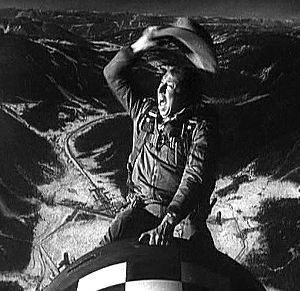
Dr. Strangelove or: How I Learned to Stop Worrying and Love the Bomb which is a 1964 American/British black comedy film directed by Stanley Kubrick, starring Peter Sellers and George C. Scott, and featuring Sterling Hayden, Keenan Wynn and Slim Pickens..

The story concerns an unhinged US Air Force general Jack D Ripper who orders a first strike nuclear attack on the Soviet Union, and follows the President of the United States, his advisors, the Joint Chiefs of Staff and an RAF officer as they try to recall the bombers to prevent a nuclear apocalypse, as well as the crew of one B-52 as they attempt to deliver their payload. The situation is made more critical by the Soviet Union having created a Doomsday Machine which will fire off a huge cloud of radioactive dust which will envelop the earth if a nuke hits the Soviet Union. The bomber eventually hits a tertiary target within the Soviet Union and the last poignant scene is of nuclear blasts all over the globe as Vera Lynn sings ‘We’ll Meet Again’.

A similar theme appears in Fail-Safe (1964) Sidney Lumet’s original 1964 film  employs a stylized and heightened dramatic structure in its nerve-crushing moral tale. When an off-course commercial airplane triggers the Pentagon’s complex “fail-safe” maneuver, leaving an arsenal of nuclear-bomb-carrying jet fighters at the ready, a mechanical error puts the entire world in danger of destruction.

Walter Matthau gives an uncharacteristic turn as an unpleasantly cold and contemptuous political scientist Prof. Groteschele, apparently based on  Herman Kahn. Henry Fonda plays the American president who manages with the Soviet Premiere to navigate the complex and urgent political trauma and prevent total destruction. As one of the American bombers makes it through to drop an A-bomb on Moscow the only concession the US President can offer to prevent all out war is to drop a similar bomb on New York.

This duly happens (thus incidentally invoking Mr Kahn’s Stage 29 of his Escalation Ladder ‘Exemplary Attack on Population’) and the countdown to the bomb hitting New York involves a series of movie stills taken in the streets of the city.

Back across the Atlantic, The War Game was a 1965 television film on nuclear war. Written, directed, and produced by Peter Watkins for the BBC’s The Wednesday Play strand, its graphic depiction of the impact of a Soviet nuclear attack on Britain caused dismay within the BBC and in government.

It was scheduled for transmission on 6th of August 1966 but the effect of the film was judged by the BBC to be “too horrifying for the medium of broadcasting” and it was not actually transmitted for 19 years and eventually appeared on the BBC in 1985, Presumably, following this timescale they’ll get around to broadcasting the appeal for Gaza in 2038.

Back in Hollywood the forces of good were still battling for God & Profit but a lot of public questioning was going on about US involvement in Laos and Vietnam and the next film revealed a certain ambivalence in US society.

In The Bedford Incident (1965) Richard Widmark plays the stern and unforgiving skipper of an American destroyer on peacetime patrol in North Atlantic waters as an element of the NATO fleet. He develops an obsessive determination to hunt down a Soviet submarine and as the danger in his compulsive chase develops a fatal incident occurs with the US destroyer firing off its missile and the Soviet submarine retaliating with its nuclear weaponry and both are utterly destroyed.

Part 3  (The 1970s onwards) -next week.

Feb 112011
 
Hollywood And The Bomb – or Trivialising a Nuclear Holocaust 1945-1990

Voice’s Dave Watt lifts the lid on the somewhat shady influences at work at the highest levels of post-war US government when McCarthyism and ‘Commie plot’ paranoia was rife. Not even Hollywood’s cinematic art was safe, it seems.

slim1-pickens-bomb Part 1.  Setting the scene – Government and film

First, let me say that films aren’t made in a vacuum. In a way they reflect the needs and desires of the society in which they’re made.

Sometimes they are made to reflect the interests of the ruling elite in that society and sometimes, rather more rarely, they’re made to challenge that elite and its world view.

Hollywood, and to an extent the British film industry produce, in general, films without an overt political message but this does not mean there is no political influence.

In the US, the military’s influence on Hollywood has been increasingly pervasive since the establishment of the Committee of Public Information in early 1917 to present the US’s entry to the First World War as a noble crusade and not as a desperate prop for that country’s massive investment in the failing Allied cause.

Following the Second World War, the Pentagon formally established its ‘film approval’ process and in 1948, set up a special Movie Liaison Office. With the onset of the Cold War, the US military demanded even greater control over the movies it ‘assisted’.

Producers and directors seeking access to military equipment, locations or personnel, or even Department of Defense archival footage, are required to have their work vetted by the Pentagon. Those prepared to reshape their movies in line with Pentagon directives are given substantial financial and technical help; those unwilling to accept its dictates are denied any assistance.

Since then, plot and character changes and outright historical falsification have been the most common demands made by the military, its stated aim being to encourage movies which boost ‘recruitment and retention programs’. Filmmakers are told that excessive foul language, alcohol and drug use, sexism, racism and other bigotry in the armed forces must be toned down and replaced with ‘positive’ portrayals. In fact it is not unusual for the Pentagon to demand entire scenes, even central characters, be deleted.

There’s a very good David L Robb book on the subject, Operation Hollywood: How the Pentagon Shapes and Censors the Movies.

So, bear this in mind as you read on.

Hollywood and the Bomb

My delving around revealed that the first nuclear war film made in Hollywood was a gem called The First Yank Into Tokyo, rushed out in September 1945, which featured a rather large American boxing star Tom Neal being parachuted into the land of the Rising Sun disguised as a Japanese soldier – honestly – to rescue a captured nuclear scientist.

two nuclear bombs have gone off in Japan and very few people in the West know that much about them

Predictably, he rescues the scientist and wins the heroine before the film ends with stirring music and an approving gravelly voice narrating over film of the mushroom cloud at Hiroshima – presumably engendered by work of the rescued scientist.

Washington Post film critic Jeff Hill described it as:

Not only the most racist movie I have ever seen, it is probably quite simply the worst film I have ever seen in any category of any motion picture ever

Needless to say, the real films taken by the US military showing what had actually happened in Hiroshima and Nagasaki were confiscated by the US government and locked away for 25 years, whilst any reports of the attacks were systematically discredited.

For example, within three days of Wilfred Burchett’s shocking dispatch on radiation sickness, The Atomic Plague appearing in the Daily Express on September 5 1945, the US military had a front page story in the New York Times disputing the notion that radiation sickness was actually killing people. Their news story included this remarkable commentary, “The Japanese are still continuing their propaganda aimed at creating the impression that we won the war unfairly, and thus attempting to create sympathy for themselves and thereby obtain milder surrender terms”.

John Hersey’s 1946 film Hiroshima, which moved beyond generalised images of a destroyed city to offer sharply-etched narratives of six survivors’ experiences, was also predictably rubbished and concealed by the US government as best it could.

So here we are; it’s the late 1940s – two nuclear bombs have gone off in Japan and very few people in the West know that much about them or their effects, and those who do go to great lengths to conceal the facts.

On the other hand, some who did know about the effects of the bombs did act and here we find the first and most unusual band of nuclear protestors.

The Admirals’ Revolt 1948-49

Ofstie’s evidence to the hearings was particularly crucial as his post war assignment was to the US Strategic Bombing Survey of Japan

Admirals are in an unusual position as far as military command goes. Whereas an army commander can be thirty to fifty miles behind the lines and his air force counterpart can be three thousand miles away from the action, an admiral is generally there with the fleet, taking the same risks and seeing the same carnage as the crews of the ships, possibly engendering a greater sense of social realism to war’s horrors.

Whatever the reason, in 1948 and 1949, during stormy congressional hearings on the US Air Force’s ill-fated and unbelievably expensive nuclear white elephant, the B-37 bomber, there appeared what was to be called the Admirals’ Revolt – a group of US senior naval officers consisting of Secretary of the Navy Sullivan, Admiral Denfield, Rear Admirals Ofstie and Radford, and about a dozen others supported by James Forrestal, the then US Secretary of Defence.

Rear Admiral Ofstie’s evidence to the hearings was particularly crucial as his post war assignment was to the US Strategic Bombing Survey of Japan, where he interviewed many surviving Japanese officials and civilians. In 1946 he was detached and was reassigned to the Joint Chiefs of Staff Evaluation Group and served at the Bikini nuclear tests.

So, here we have a fighting admiral who has seen death and destruction at close hand and knows about indiscriminate bombing and the effects of nuclear bombs. On October 11, 1949 he and Rear Admiral Radford testified before the Combined Services Defence Committee on the effects of nuclear warfare and concluded, ‘Strategic air warfare, as practised in the past and as proposed for the future, is militarily unsound and of limited effect, is morally wrong, and is decidedly harmful to the stability of a post-war world.’

Cue major uproar in the US armed forces and government.

President Harry H Truman, faced with this revolt, had a great deal of soul-searching to do. However, at some point, it was presumably pointed out to him that among the companies who were profiting massively from the B-37 fiasco and would benefit from future huge USAAF contracts, were those who paid his election expenses. The President and his cabinet predictably came down on the side of the USAAF and set the scene for half a century of nuclear brinkmanship.

the deranged and murderous Commies could start a nuclear war any minute

Defence Secretary Forrestal was hounded out of office, suffered a nervous breakdown and later committed suicide in rather suspicious Kelly-esque circumstances. The admirals involved in the revolt were either eased out of service or remained unpromoted until their retirement.

Truman’s eventual decision may also have been influenced by the events of August 1949 when the first Soviet nuclear bomb, codenamed Joe One, was tested in Kazakhstan.

In addition, the setting off of Joe One generated huge levels of paranoia and hysteria in the US which the government and the embedded media tried to use by generating two rather contradictory notions:

- the deranged and murderous Commies could start a nuclear war any minute.

- don’t worry, your government will show you how to survive it.

This dichotomy was to result in a recurring theme in the 1950s and such august publications as Reader’s Digest produced upbeat articles such as You Can Live Despite The A-Bomb and How US Cities Can Prepare For Atomic War, whilst nuclear bunkers were routinely referred to more prosaically as ‘air raid shelters’.

Next week: Part 2 – Films of 1950s and 60s