Mar 152012
 

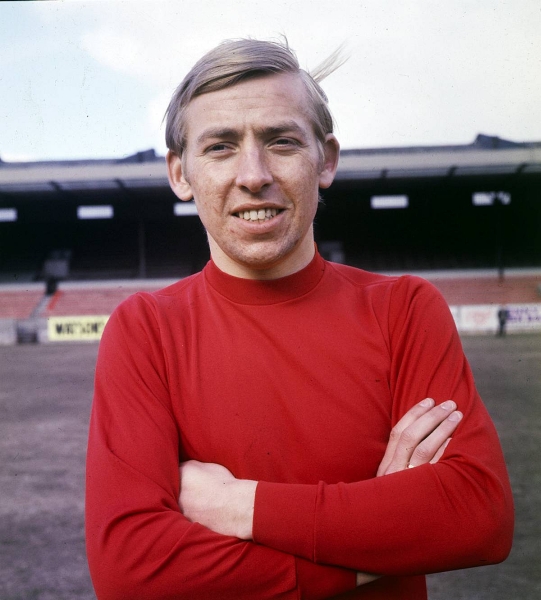
For the third time in less than a year, Dons fans and players of a certain age will be wearing mourning clothes, literally or figuratively. David Innes reminisces on Jens Petersen, a man whose dedication to the Dons in the 1960s makes him truly worthy of legendary status among Reds followers.

Jens Petersen It was with heavy hearts that we learned of the death of Jens Petersen, a stalwart servant of the mid and late 1960s whose brave battle against death ended in noble defeat on 8 March 2012.

This follows far too closely the deaths of Eddie Turnbull in April 2011 and Francis Munro in August last year.

Another one of the Reds family has gone, and it hurts.

For the many friends Jens made during his time at Pittodrie, the hurt is because they knew him, they appreciated his determination to succeed and the inspiring leadership that he offered, but most of all, the lasting friendship that they formed with someone who is unanimously regarded as one of the genuine good guys.

Among the fans who remember Jens, it hurts because we too have lost someone we looked up to, someone who played the game in its proper spirit and a man who took delight in meeting fans, taking an interest in them and making them feel that they, as much as the players, were all part of the same whole.

We have lost a hero.

Jens arrived in Aberdeen with fellow Danes, Jorgen Ravn and Leif Mortensen, all signed by Tommy Pearson in 1965, when Scottish clubs realised that Scandinavia was a new hunting ground for players of good quality who fitted into the Scottish style of play. Whilst Ravn and Mortensen left Pittodrie after a short while, Eddie Turnbull spotted that Jens had something special that would fit with the Turnbull football vision and not only kept him on at Pittodrie, but made him a key member of the first team.

In 1966, the jewel in the Reds’ crown was Dave Smith. His performances in midfield and in the curious “sweeper” role that Eddie Turnbull introduced meant that he was an attraction for bigger, more predatory teams. I recall, to a background of Yellow Submarine, the news coming through in August 1966 that our star had signed for Rangers and that the Dons were £45000 better off.

The money was unimportant; we had lost our most influential player. How, the devastated 9 year old me worried, could we go on without Dave Smith? Eddie Turnbull had a cunning plan: Jens Petersen.

What the Boss had seen in Jens was someone who could naturally play the role that Smith had made his own, a man possessed of an unflappable temperament, comfortable with the ball at his feet in defence or midfield, an athlete, excellent in the air and with an ability to break from defence with the ball, striking panic into the opposition, a sight to behold.

US sports fans were amazed that the players did not wear body armour

The statistics tell us that Jens Petersen made 203 appearances for Aberdeen and scored 11 goals.

These are merely numbers. Influence and dynamism cannot be enumerated.

It’s a long time ago, but I can still remember his late spectacular goal against Morton to put us into the League Cup semi-final in 1966, my uncle’s surprised comment, “Look, the Dane’s wearin’ san’sheen”, when Jens decided that a frosty pitch later that season needed alternative footwear, and his ill-luck in the 1967 Cup final where his shot into an open goal was miraculously saved by Celtic’s Ronnie Simpson’s sliding clearance from the goal line.

When Jens left the Dons in 1970, his number 6 shirt was bequeathed to Martin Buchan. That illustrates the level of talent at which he operated.

My own contact with Jens was limited to a couple of phone conversations about the 1967 Washington Whips. Chalky Whyte gave me Jens’s number and encouraged me to call him in Denmark. He answered in Danish. I said, “Hello, I’ve been given your number by Jim Whyte”. Jens’s response (and that of his wife Dora when I called on another occasion) was that he was delighted to speak to me, but before he spoke about the USA in 1967, how were his friends at Pittodrie?

My lasting memory of the discussion was that he was asked by a US interviewer, “Petersen, have you ever burst a ball with your head?” and that US sports fans were amazed that the players did not wear body armour. His English, and Dora’s, was better than mine and he was a joy to interview.

Chalky, Ally Shewan and Ian Taylor have often spoken to me about the friendship they maintained with their great pal Jens and their memories and anecdotes will help ease some of the hurt that these guys and their colleagues are feeling.

Jens was only just 70 when he died, which is no age at all these days, and he was an outstanding athlete, still running marathons into his 60s.

The Northern Lights are significantly dimmer with his departure.

Image Credit: Aberdeen Voice is grateful to Aberdeen Football Club for use of Photographs. 

Feb 032012
 

In the concluding part of Voice’s interview with author Maggie Craig, she talks of life as a NE inabootcomer who’s only been here for 20 years. By David Innes.

maggie-craig-2011-2 How do you write? A laptop in a particular place? The classic 500 words every day no matter what, which you go back and edit later on?

Not quite. 500 is a paltry number of words. 2000 is a good total for the day. I have a computer upstairs and I go up there and work for the morning until about one or two o’ clock. I write about ten thousand words, six or seven chapters, and then go back and start shaping it. I think of it like how my auntie used to make butter, patting it into shape.

The book I’m writing just now started because I saw a photo of a man’s face and there was something about his eyes made him look very sad.

He’s turned into a character in eighteenth century Edinburgh although his name’s Catto. His family’s from around the Methlick area, so Aberdeenshire is coming into it.

You’ve said that you admire what Aberdeen Voice is doing, but you believe there’s a lack of radicalism in the North East.

It’s not something I’ve ever been made aware of, although living out here I feel very dislocated from the city. But when I go into Aberdeen I don’t feel a heartbeat. You get that heartbeat in Glasgow although I know because that’s my own place, I would feel it. I was almost surprised when I saw Aberdeen Voice and I thought, “That’s great, there are radicals in Aberdeen!”, but the whole presentation of Aberdeen is that corporate, business “let’s go to the Oilmen’s Ball and we’re all doing charity for Marie Curie”  thing, so you’re not seeing that radicalism on the street.

I’ve been coming to Aberdeen and the North East since I was a wee girl and there’s so much there but much of it’s occult. I’m really interested in the folklore but it needs to be explored. North East people seem to be terribly backward at coming forward. What infuriates me is when you go into the bank or the Post Office and they stand so far back and you go, “Go forward! You’re the bloody customer!” It’s almost like you’ve got your cap in your hand.

Well, let’s discuss the Turra Coo.  Let’s marshal the arguments

When I was speaking to the kids in Ellon, I said, “I don’t think the Turra Coo reflects very well on the North East”, and one girl looked horrified. She’d obviously been brought up to think that the Turra Coo was a great story, but you had to be very careful about political views as you could lose your job.

I have this friend who, when she was at school, only twenty or thirty years ago, was told because she was a farm labourer’s daughter, “You’ll never make anything of yourself”. That’s what’s been done to young minds. She’s an intelligent girl, but doesn’t think that she is because she’s been told she’s a neep. There are a lot of entrenched attitudes, I think. You have to teach people to think for themselves, to give them self-esteem. That’s so important.

The kids at Ellon Academy impressed me. They’re getting a good education, but it’s so focussed on them passing exams and not, “Well, let’s discuss the Turra Coo. Let’s see what you think. Let’s marshal the arguments”. It’s stimulating to change your mind on something you were brought up with. Or not, of course.

There’s a meeting in January about some cultural development in Aberdeen. They’re using the usual jargon, it’s going to be a “step change” in the cultural life of the city and Aberdeenshire, but what I liked was that they’re saying that culture should not always be associated with the money it can earn. Culture and creativity should be there for their own sakes. Aberdeen needs more of that, I think, as it all seems to come down to the bottom line.

I’m sure industry’s highly-successful. I’ve met radical people who have worked for oil companies but you don’t say anything there either, do you? You might be the equivalent of Not Required Back.

It would be interesting to research it, to see who got into trouble for standing up for the laird.

So will you write something about this area?

People always ask if I’m going to write about Aberdeenshire, but I’ve not really got under the skin of it. When I found out my mother was from the Haddo House estate I thought that was interesting and could be something to look into, to find out what was going on, but that’s going to come later.

There are wee snippets. I’m fascinated byAberdeen Harbour, the Shore Porters and so on, so I’d love to write something about that.

I did a talk about a non-fiction book to an Aberdeen Ladies lunch a couple of years ago and that tribal thing was so funny. I don’t sound like I come from the North East, so people make judgements that you’re an inabootcomer. But when I said to them that my mother came from Barthol Chapel, it was like, “come in”, they embraced me.

That’s not always the way though. Naively, I thought that since my mother came from near Oldmeldrum, that might help, but to some people even not that far away from there, it might as well be Istanbul!

Thanks to Maggie for giving her time to talk so passionately about her work and what drives it. We fervently hope that her muse inspires a book about her adopted Aberdeenshire and NE Scotland.

Jan 272012
 

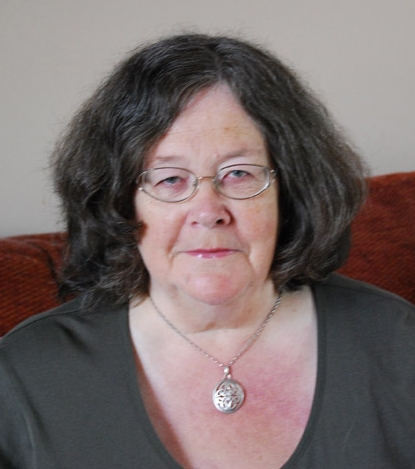
Maggie Craig’s writing catalogue includes highly-rated and very readable insights into the 1745 Jacobite Rebellion and Red Clydeside. It was only natural then, when David Innes and Maggie met that a political discussion would ensue.

maggiecraig2pic You’re obviously a radical, given the content and viewpoint of the Jacobite and Red Clydeside books.

I think the worst thing that happened to Britain was Margaret Thatcher. Someone tried to tell me that she had a human side. I said that I didn’t want to talk about Margaret Thatcher as we would fall out if we did.

I wouldn’t wish ill on anyone, but that’s one grave I would dance on because she skewed Britain. I’m not at all anti-English and I hate the Scottish nationalism that is, because that’s a divide and conquer thing.

I remember when she was in power and I was a tourist guide taking German visitors around and they would often say, “I really admire your Mrs Thatcher”, and I’d think, “I’m working, I must be careful here”, but I knew I was tired when I said, “We wouldn’t have had beggars in the street like we do now before Margaret Thatcher”. If you’ve got beggars in the street, there’s something seriously wrong with your society.

I was in Aberdeen for the book signing at Waterstones in October. It was about 6 o’ clock and I’d parked up Huntly Street way and I passed the Cyrenians where there was a crowd of mainly men. I thought, “It’s a soup kitchen! Here in the oil capital of Europe there are people queuing up for a bowl of soup”. You wonder if there shouldn’t be a levy on the oil companies – they haven’t really done much for Aberdeen, have they? They haven’t really left any sort of cultural development behind them.

I think people don’t realise that they themselves have power. Maybe the one blessing of the financial crisis is that people who have been turned into consumers may think again. Shopping centres are the new cathedrals, and it’s almost become like ‘Brave New World’ where people just have to get the latest model of phone. It used to be that you just worked and didn’t have the money to buy the goods you produced, but now we’ve got this circle where you can buy all these goods; but do we need them all?

There’s nothing wrong with honest trade. We need oil to keep our houses powered. I don’t want to go back to candles, to that simple greeny thing. I think I’m quite anti-green and that there’s quite a Fascist strand in a lot of green thought. I went to see the Trump development.

I know people don’t like him and his ways, but I was quite impressed by the people telling us what they were going to do. I thought, “That means I can get down to those dunes where I couldn’t get down before when Menie was a shooting estate”. I’m horrified too, by how we’re being forced to accept windfarms, industrialising the countryside. It’s just people making a buck, little to do with greenness.

  I believed in that and now it’s been destroyed. Now it’s been shown to be brutal

I suppose there have been entrepreneurs who have had social consciences but then they claw their way over everyone else. I don’t know the full story of Andrew Carnegie, but I don’t suppose he was lily-white as he made his way up the greasy pole.

I do think there is a ‘zeitgeist’ thing going on, where people are saying that we ought to think about society and community. I slightly despair of the anti-capitalist protestors because they don’t seem to know what they want, what they’re in favour of. It seems a bit vague and woolly. Someone said it was irrelevant that they went to Starbucks to buy their coffee, but to me that’s an issue.

My dad was a member of the Scottish-USSR Friendship Society based in Belmont Street in Glasgow’s west end, and we would meet people from the USSR, who were probably carefully selected, and here on holiday, and they would talk about Robert Burns. Then Prague happened and things went downhill after that. I was about 17 and it felt personal. I thought, “I believed in that and now it’s been destroyed. Now it’s been shown to be brutal.”

The Communist experiment failed. You think about the Russian people, “How much more can they suffer?” because a strong man like Putin always seems to emerge in Russia and just take the country and use it. You wonder, “Is old-fashioned socialism really the answer?” but capitalism stinks, so maybe I’m as bad as the anti-capitalist protestors and don’t know what is the middle ground and what we should be doing. I’m not sure how we can use the old left and right thing any more.

I’m coming round to thinking that everybody should get some sort of a basic wage, but that’s too radical isn’t it?

There’s this dichotomy with the Scottish left. There’s a nationalism and a pride in Scottishness, but there’s also the feeling that the workers don’t have a country – but they do. The workers of Germany, for example, have lots of reasons to be proud of Germany and their own culture.

The Labour Party has moved too far away from its roots and has become perceived as an anti-Scottish party. I think Johann Lamont has a helluva mountain to climb to persuade people that they’re not. I like Alex Salmond. I think he’s very sharp operator, like when he swooped down on to the lawn at Prestonfield House in the helicopter. Someone had produced a poster with Alex Salmond as Che Guevara, “El Presidente” and you can see how that could be dangerous, so I’m angry with the Labour Party for being useless, for taking their eye off the ball.

I think people who are working class kids made good felt that the Labour Party was saying to them that they had to pay higher taxes. But they’d only just clawed their way up to a better situation, so there was to be no help to get your kids to university, that you had to do it all yourself. There’s a problem there in that the politicians themselves were in quite comfortable positions, but they were almost preaching.

I think it’s been advanced before, but I’m coming round to thinking that everybody should get some sort of a basic wage, but that’s too radical isn’t it? It would also give you buying power which would help the economy. If you’re making widgets, someone’s got to be buying them.

I was talking to a woman earlier who said that she couldn’t afford to work and look after her children so she decided to give up work. I wondered when we’d got to the stage where a woman looking after her children was considered not to be contributing to society. It disturbs me that you’re expected to be out there doing some god-awful job rather than being with your kids.

Although Maggie’s only lived in the North East for 20 years, she still sometimes feels like an ‘inabootcomer’. In the concluding part of our chat, she talks about this corner of the planet, and drops a hint that she may find inspiration to write about North East Scotland.

Jan 192012
 

We continue our serialisation of David Innes’ interview with author Maggie Craig. Her two books on the Jacobite Rebellion, the evocatively-titled ‘Damn’ Rebel Bitches: The Women of the ‘45’, and ‘Bare-Arsed Banditti: The Men of the ‘45’ are critically-lauded. She explains why she looks at that fractious period of our heritage from a different angle to that usually taken by historians.

maggie-craig-2011-2 You’ve written two books on the Jacobites – where did that inspiration come from?

That came from a novel called The Flight of the Heron by DK Broster which an uncle gave to me. I loved it, and it’s my Fahrenheit 451 book, the one I’d save from the flames.

But like an awful lot of Scots, what I knew about the Jacobites is from that novel, a high romance about friendship and so on.

And although the folk songs are great, they sometimes get things a bit mixed up. Then, when it was the 250th anniversary of Culloden in 1995, I’d started to write a novel set in that period and I needed a baddie, so I went looking for a Campbell. I found a Macdonald saying, “We’ll surrender, but only to a Campbell”.

That was a light bulb moment when you think, “History’s not as simple as you’re taught it is”. Why were they prepared to surrender to a Campbell? They must have respected that guy or thought that he’d give them a better deal, so I started researching it and I got interested in the women because, well, Flora bloody Macdonald is all you’re presented with. I didn’t try to debunk her but she’s such an unacceptable kind of female, standing there while the Prince kisses her hand and I think, “Nah, there must have been women doing different things from that” so I went looking for the women first of all.

They’re attached to their men, of course, so you get a lot of stories about the men too, including the Jacobites of Aberdeenshire and Banffshire. There was a huge amount of Jacobite support in this area. They called them the Lowland regiments, but there were a lot of Episcopalians in Aberdeenshire who would tend to fight for the Jacobites because they were persecuted for supporting the Stuart cause. They couldn’t meet for a proper service, only in twos or threes.

There was a lot going on around Banff and Duff House. The Duffs, of course, were on whichever side was winning as they’ve tended to be. You can’t blame those who hedged their bets. If you had a farm or an estate and you had tenants, and there would have been people who cared about their tenants, you had to be cagey because you didn’t know which way it was going to go – and the consequences of failure were horrendous.

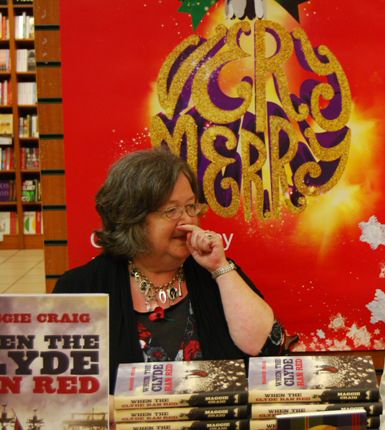
abdsigning About eighty people were hanged. A lot of Aberdeenshire was laid waste. I’ve quoted that, “the people of Strathbogie were back in their fields but they’re as inclined to rebellion as ever”. I thought “Wow”. You don’t get that impression nowadays, where people keep their heads down and don’t say much about getting involved in politics.

Although when I went to speak to kids in Ellon about ‘When The Clyde Ran Red’,  I said, “It’s harder to be a radical on a farm, isn’t it?”. When you’re working for a farmer and you don’t have your comrades about you then it’s harder to stand up and say, “I don’t think this is right”.

I think there’s a kind of hidden history of Aberdeenshire. The anniversary of the Battle of Harlaw was a huge missed opportunity to help tell it.

So you feel that Jacobitism and the Rebellion needs to be re-evaluated as a radical movement.

It’s said that history is written by the winners, but to a large extent that history has been written by the losers and the greatest losers, you could say, have been the West Highlands. That’s fair enough – the devastation, the burnings, the rapes, the murders, shooting the boys and shooting the old men and all that stuff, but I think that has skewed our vision of it. It’s dangerous, because you always see it through your own perspective.

I’m a Scottish nationalist (with a small n) and having read a lot about the Rebellion, I think a huge amount of it was about wanting to reverse the Act of Union. There was no democracy in those days and the only focus for discontent was Charlie, so he funnelled in a lot of different people.

There was a lot of criticism of him because he could be very high-handed, but he was the only way they were going to get regime change, so my take on it is that it was a kind of Rainbow Coalition. It brought in a lot of people and it was kind of before its time. We’ve got the Enlightenment in Glasgow and Edinburgh and probably Aberdeen – I don’t know and it’s something people need to research – but this was still pre-Industrial Revolution where the weavers and the like became radicalised. I think if it had happened fifty years later, things could have turned out differently.

When you read about the eighteenth century, you always hear about the power of the mob which would gather together in whatever town. I think that’s radicalism, but they’re always presented as a bunch of drunken yobs. If you look at the 1730s Porteous Riot about the Malt Tax, people are asking, “Why is London taxing us and why are they taxing us so severely?” After the ’45 they didn’t try any of the leaders in Scotland because they didn’t think a Scottish jury would convict. I think because the whole North British project took off after that.

 people say that it’s sentimentality. It’s not. It’s love. It’s death and feeling.

There couldn’t be a rocking of the boat in North Britain and some Scots became very successful. I see someone like Andrew Marr as being very like an eighteenth century Scot – he’s gone to London and sort of sold out, hasn’t he? I like his programmes, but he’s sold out his Scottishness.

We can get caught both ways. If you say that the Scots have always had a great sense of justice you’re told that you’re just being sentimental, or that you’re looking at the world through rose-coloured spectacles, but then there’s the ‘Jock Tamson’s bairns’ thing which does unite us. I think there’s almost a natural democracy, a collective “That’s no fair, you’ve got to do something about it” attitude that unites us, and it’s not a bad battle cry!

My daughter and I came back from Switzerland via Paris a couple of weeks ago and there were eight London lawyers, all about 40, on the Eurostar. Now there’s nothing wrong with having a wee refreshment but they got more and more offensive about the working classes who “couldn’t get up off their arses and do anything” and they said, “Let’s get some fizz” and bought three bottles of champagne and they got worse and worse. Of course the rest of us just sat and did nothing, but they were such a stereotype of that ‘I’m alright Jack’ attitude. One said, “Why should we care about healthcare for poor people?”

We Scots can be our own worst enemies, though. We’ve got someone like Robert Burns, who’s world class and who unites the North East and Ayrshire, but people say that it’s sentimentality. It’s not. It’s love. It’s death and feeling.

A local Rotary Club thought it was being radical when I was the first woman to propose the Immortal Memory at their Burns Supper. I said that Burns slept around and that if I’d been married to him I’d have slapped him into the middle of next week. Even saying that raised a few eyebrows. I wasn’t saying anything that isn’t known and I still admire him for his humanity. We need to reclaim him for the radical he was.

I looked briefly at Thomas Muir of Huntershill, a radical. We don’t look back to the friends of the people. In the 1790s these men and girls were totally admirable and put their lives on the line to say that workers ought to have rights. There’s so much of our history that we aren’t taught.

I was delighted to see that Red Clydeside is now in the Higher curriculum but in history classes the ’45 is viewed as a crowd of misguided romantic people. That’s a very narrow point of view and it’s time we opened it up. Sometimes the way they treat Red Clydeside is as dry as dust. The history’s got to be about the people and those people were fallible, they made mistakes – and sometimes you point out that someone regarded as a hero was rotten to his wife.

That’s where we leave this part of the interview, but of course this led to discussion of the current political situation, which we’ll carry in the next issue.

Those of you who want to meet Maggie and hear a bit more about her influences have the opportunity on Saturday 21 January when she and fellow writer Kenneth Steven will be at The Central Library, Aberdeen at 11.00 to talk about their love of books.


Jan 192012
 

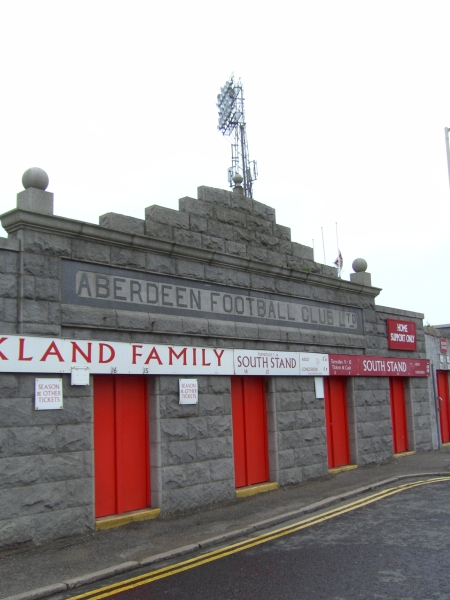
Foiled by Jock Frost, David Innes got his weekly fitba fix last weekend at Pittodrie. Paying more than three times the cost for about a tenth of the entertainment he relishes in the proper mannies’ fitba Highland League environment is an indicator of why attendances might be falling. He’s thawed out, and here are his thoughts.

merkalnd1pic We Dons fans have learned to be canny, although air-headed, cliché-addicted professional sports commentators still accuse us of living in the 1980s. Only my fashion sense, Chick.

So, when the pre-match talk centred on the potential for the Reds to achieve top 6 SPL status, we backed off. We’ve been down in the gutter this season already, and believe me, we were looking at few stars.

We know better than to hope.

And it’s a good job that we’ve gone from Real Madrid to realism. We created fewer chances in 90 minutes of honest, earnest endeavour than in almost any match I’ve seen at Pittodrie in my 46 years of attendance.

Our squad is solid. Even the loss of Richard Foster has had little obvious effect as Clark Robertson, surely a future star, calmly did the left back stuff and on-loan Mark Reynolds looks skilful on the ball, able in the centre of defence and comfortable wearing The Sacred Red. Apart from a late slip which Jason Brown rescued, Andy Considine is an effective centre half. He must surely get his ability from his ma.

Upfront, Mohamed Chalali opened brightly but faded after sustaining an injury. Scott Vernon, though, is suffering from not getting the service he needs from midfield and often finds himself dropping back to pick up balls which he would prefer to see served to him in the box. That’s where he’s at his best. He’s the most effective and consistent penalty area centre forward we’ve had since Arild Stavrum’s departure for Istanbul left linesmen with curiously well-developed flag arms.

Our problem is between defence and attack, in the bit where we should be making chances for the strikers. So Milsom who gives us some width on the left was missing but there seem to be few alternatives when he’s missing. Neither Ryan Jack, who proved his youthful fallibility by having a poor game by his own standards, nor Chris Clark who was, well, he was Chris Clark, were able to make much of things on the wings. I’ve seen more width on a Mod’s lapels.

As it turned out, Rory McArdle, a solid centre half was played at right back. He didn’t do much wrong, but hearty and committed though he is, a right winger he isn’t. For his endeavour and his determination to keep overlapping when it patently isn’t his strength yet always being back in position to repel the few Kilmarnock attacks of any note, he was my man of the match.

We have twelve days to try to add a creative edge to our satisfying solidity before the transfer window closes – or “slams shut” as cliché demands. We seem to have sorted out the issues which saw us go on that scary losing streak in October and November, but it’s still not pretty to watch and victories will be scrambled and nervous single goal affairs rather than comfortable, carefree, toorie-at-a-jaunty-angle net-bulging festivals.

Without the creativity of wide players or a wily tricky schemer to take on a couple of defenders and deliver a decent standard of final ball to the strikers, we’ll struggle to make the split in the top 6 and falter in the Cup after we complete unfinished business against Queen of the South.

Over to you Broon and Knoxy mins.

Jan 122012
 

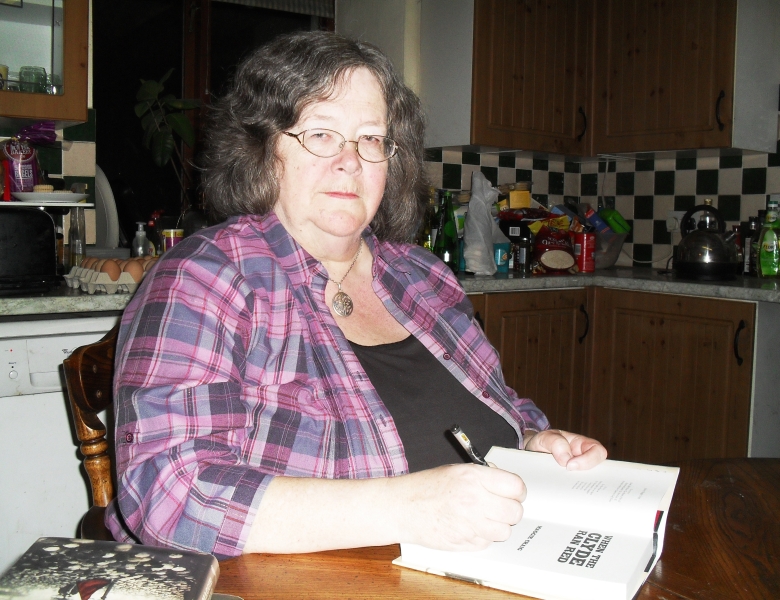
Voice reviewed ‘When The Clyde Ran Red’ a few weeks ago. So impressed was David Innes with Maggie Craig’s excellent take on a vital part of Scottish history, that he spent an afternoon in her cosy kitchen on the wrong side of the Balloch, discussing the book’s background, her passion for the subject, and much more besides. Here is Part One of that interview.

maggiecraig2pic How much of your background is in ‘When The Clyde Ran Red’?

A lot of my background. My dad was very involved with Labour politics and was an Inverness town councillor in the 1940s. He moved to Glasgow and became election agent for Cyril Bence, the Labour MP for Dunbartonshire East after Davie Kirkwood, in the early 1950s.

My dad was born in Coatbridge in 1913, so grew up during the Depression. We were told stories about them going over the farmer’s dyke to nick a few neeps and the farmer turning a blind eye because he knew everyone was really hungry.

In fact my dad’s in the book. I discovered a big pile of my dad’s papers which showed he’d written to the Commissioner of Distressed Areas about the Scottish Allotments Scheme for the Unemployed. He was a great gardener and a railwayman and you know how these two things go together.

People say, “Let’s not talk about politics”, and you think, “If you ignore politics it won’t ignore you”. It was my dad’s lifeblood. I remember him crying about a neighbour’s baby who’d died and they’d no money even for a coffin. This would have been, I suppose, in the early 1930s. They wrapped the baby up in brown paper, and he said, “Tied up like a bloody parcel”, because nobody had any money.

There was always the big hoose and the mine owners. He went apoplectic about Sir Alec Douglas Home, who they were working for at one point, because they were living in the lap of luxury when their workers were living in poverty.

My dad was one of about ten and they were really a bright, clever family, and there was this idea that girls who were clever were going to work in factories at 14 and the boys didn’t get a chance either. It was such a waste of potential.

I remember my aunt telling me about how the doctor would come out. It cost five shillings, but they’d a good doctor who’d say, “I’ll get it next time, Liz”. My aunt says they were on first name terms with the doctor, who must have been an idealistic man who saw himself on the same level as the miners he was treating. When you think of some doctors now who insist on their status, it’s an interesting turnaround.

You grew up in the Glasgow area?

I grew up in Clydebank. My dad then got a job as station master which moved us from Clydebank to Bearsden, quite an interesting culture shock! My mother had come from a farm, and the station house we lived in came with a third of an acre of ground which my dad was proud of. It was semi-rural. He came from Carnwath and loved being in the country.

If you go there now the industry’s gone and it’s back to being a rural area. A lot of these Clydeside places were. There were shipyards and tenements, but you went up to the farm to buy eggs. I think there was a love of the land even in industrial areas.

My mother’s from Barthol Chapel on the Haddo House Estate and she used to talk about Lord and Lady Aberdeen. I don’t think her family was as poor as my dad’s, but she told me that her mother sometimes had to sell their butter and buy margarine. That really hit me – the one benefit of being on the land is that your children are going to have healthy food, but that wasn’t always the case.

I think their rural background helped them speak fantastic Scots. There are words my mother used that we still use, like “fair forfochen”. Because my dad came from what he called the Upper Ward of Lanarkshire he had that rich Scots and that’s all running through the book too.

I think there’s an obvious really good prose rhythm in the book, and that possibly explains it, but it’s your passion for the subject that really shines through.

I grew up with it and thought a couple of years ago that it was time I wrote another non-fiction book. I thought, “What do I feel passionately about?” and the book’s the answer.

I went and looked at some of the other books and some of them are pretty dreadful. The Legend of Red Clydeside is hard going, and you come up against the party line quite often. The Marx Memorial Library gave me permission to quote from Helen Crawford which a lot of people said they wouldn’t allow.

You also have to make a judgement about what’s been written and have to say to yourself when reading some of the memoirs, “You’re presenting yourself in a bit of a heroic light here”. I love the wee vignettes, and I don’t think they’re frivolous. Like when James Maxton gives Davie Kirkwood a clean hanky when he gets arrested because he always liked to have one. Somehow you think, “Well, that’s true!”

I think I had a passion to write about it because it seems to have been forgotten. People are talking about austerity nowadays, and I think, “Not yet”. We’re not at the level of poverty where people couldn’t go to work because they didn’t have a pair of shoes, or they had to share a pair of shoes with their sister.

We’re now seeing the prospect of our children doing less well than we did, which is very hard because you want your children to do better than you’ve done. Both my husband and myself are working class kids who’ve made good but you feel as though you’re almost being hit for that – the idea that if you can afford to send your kids to university, you have to bear this cost. This is fine, but you don’t have the cushion that someone like David Cameron has. I had to have a full grant to go to university otherwise I couldn’t have gone.

Next week: The author speaks about her books on the Jacobites, ‘Bare-Arsed Banditti: The Men of the ‘45’ and ‘Damn Rebel Bitches; The Women of the ‘45’, and how this period of Scottish history is misunderstood and worthy of re-evaluation.

Those of you who want to meet Maggie and hear a bit more about her influences have the opportunity on Saturday 21 January when she and fellow writer Kenneth Steven will be at The Central Library, Aberdeen at 11.00 to talk about their love of books.

Dec 212011
 

It was an emotional day in Pittodrie’s Richard Donald Stand on December 17 when the AFC Heritage Trust and the club’s Former Players’ Association unveiled their memorial to Eddie Turnbull, Dons manager from 1965-1971. It was a bitingly cold morning, but Voice reporter Faye Keith was there to capture the warmth.

Eddie Turnbull Memorial Before inviting Eddie Turnbull’s daughter Valerie Low and his granddaughter Carolyn to unveil the permanent memorial, Heritage Trust Deputy Chairman David Innes described Turnbull as “among the greatest Dons’ heroes of all” and read tributes to their mentor from former goalkeeper Bobby Clark and 1960s skipper Ally Shewan.

Clark’s own admiration for the man he followed from Queens Park to Pittodrie in 1965 is summed up by his admission that the training sessions he runs in the US, nearly fifty years after he and Turnbull first worked together, are still based on techniques that he learned under the man they still call ‘boss’.

Valerie spoke unplanned and off-the-cuff in the most emotional tribute of the day when she praised the kindness of the Dons and “Eddie’s boys” to the man himself and to the Turnbull family. Some of these boys wiped away a tear as she told them:

“You respected, feared and loved him, but he adored you”.

The final words of the day came from Martin Buchan who read a message sent by the Dons’ legendary defender Henning Boel. Ian Taylor interactively contributed his version of Turnbull’s own unique method for dealing with Henning and the Scots/Danish language barrier before the 1970 Scottish Cup final.

As well as Buchan, Shewan and Taylor, Dons of the Turnbull era including Harry Melrose, Paddy Wilson, Alistair Sandison, Jimmy Wilson, Joe Harper, Jim Whyte, Tommy Wilson, Ron Keenan, Tam McMillan and Ian Cumming attended, testimony to their shared respect and admiration for a true Aberdeen legend. One fan, learning that Ernie McGarr was in attendance, said that this was no surprise, as it was an icy morning and there was a gritter parked outside.

Eddie himself would have laughed loudly at that. So would Ernie. It was that sort of day.

The obvious affection these men still have for each other is proof that Turnbull was a team builder of a rare and very special kind and the memorial is a simple and dignified tribute to a great football man.

The memorial is on public display in the Richard Donald Stand concourse and will be given a deserved place of prominence in the new stadium.

Nov 242011
 

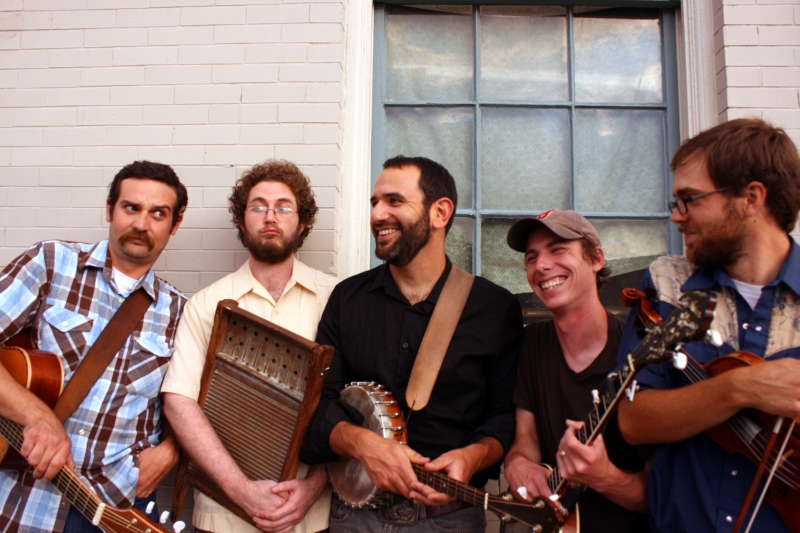
Voice’s David Innes reviews the new CD by Pharis & Jason Romero,  ‘A passing Glimpse’, with more than a passing interest.

pharispic Taking time off from building high quality banjos in a British Columbian forest, Pharis and Jason Romero, both already well-known in their own right in North America, release A Passing Glimpse, a delicately simple but emotional debut as a duo.

Drawing heavily on traditional ‘old-time’ sources and with accompaniment unadorned beyond their own instrumentation, A Passing Glimpse is a triumph of melodic and harmonic simplicity.

Their own compositions, credited largely to Pharos, including the outstanding ‘Forsaken Love’ and ‘Lay Down In Sorrow’, stand tall alongside those of The Carter Family, Leadbelly and others.

In delivery, the harmonising is resonant, intuitive and made to sound effortless, never better than on Dottie Rambo’s gospel ‘It’s Me Again Lord’. Limiting the instrumentation to guitar and banjo and featuring Jason’s considerable picking skills in tight, disciplined solos and an inspired instrumental attack on ‘Cumberland Gap’, adds to the back porch organic atmosphere of an album which has been an ever-present in American and Canadian roots charts since its release.

PHARIS & JASON ROMERO
A Passing Glimpse
(LULA RECORDS)
www.jasonandpharis.com

Nov 242011
 

Deliberately resisting the attraction of the undoubtedly arcane and twisted plots of this year’s Broons annual, David Innes evaluates Maggie Craig’s take on exciting revolutionary times on Clydeside a century ago.

clydepic When Lenin appointed John MacLean, perhaps Red Clydeside’s most-revered socialist son, Soviet Consul for Scotland in 1918, the reputation of Glasgow and its industrial satellite towns as the most likely crucible of any UK workers’ revolution was sealed.

In the aftermath of Bloody Friday in January 1919, the militia, backed up by tanks was in George Square, the Riot Act had been read to an assembly of tens of thousands of working people and Scotland’s own socialist revolution seemed inevitable.

When The Clyde Ran Red faithfully documents these tumultuous events which took place in what must have been life-enhancing times, but Maggie Craig achieves much more than re-documenting tales and phenomena well-known to historians and socialists.

In what might be regarded as a primer for the more in-depth and heavy duty histories and biographies listed in her book’s bibliography, she chronicles forty years of the people’s history through the experiences of those closely involved and those affected by events which showed that change was possible if the determination of the people was present and stout, resolute leadership given.

Not only are the iconic heroes of the struggle – Maxton, Muirhead, Kirkwood, Shinwell, Johnston and others – celebrated for their unstinting efforts as leaders in the battle for liberty, equality and fraternity, the lesser-known local heroes of rent strikes and trade disputes are also lauded. The little victories against oppression and exploitation, the author illustrates, are just as vital in changing lives as headline-grabbing larger scale changes.

There is obvious pride in her own Clydeside roots as Craig relates the day-to-day realities of struggles, defeats and wins for working people, describing the Singer dispute, the building, moth-balling and eventual launch of Cunard’s Queen Mary and the Nazis’ terrifying and murderous Clydebank Blitz in 1941.

Whilst these histories are well-known, the author brings new life to their re-telling from the perspective of residents, citizens and workers directly involved and affected.

Craig’s previous form as a novelist, with seven previous publications in this genre, is obvious and welcome as When The Clyde Ran Red is an immensely-readable social history of headily-exciting times and fiery, determined human spirit.

When The Clyde Ran Red
Maggie Craig
Mainstream Publishing
http://www.rbooks.co.uk/product.aspx?id=1845967356

Nov 212011
 

The usual Keith battle cry of “Come on Maroons” was always going to carry ambiguity when Banffshire’s finest were drawn against similarly-attired Arbroath in the Scottish Cup 3rd round. David Innes took up his regular spot beside the Kynoch Park dugouts to report for Voice.

ball1 After last week’s farcical Kynoch Park abandonment due to floodlight failure, Keith’s Scottish Cup tie against Arbroath was never likely to fall victim the same way. Not when the 200 additional Lichties come to town in noisy and good-humoured spirit. With Arbroath among the SFL Division 2 pace-setters and Keith’s unpredictable form, the clever money was on a comfortable victory for Paul Sheerin’s more experienced squad.

Possibly taking inspiration from Culter’s plucky draw in the early kick off, Keith matched Arbroath’s aggression and pace with no-nonsense safety first defending and might even have had a penalty when the visiting ‘keeper seemed to foul Graham Lonie who himself had just been booked for a challenge where he clearly won the ball.

Arbroath made chances but Keith no 1 Andy Shearer kept them out and a stunning double save from two point blank shots was a first half highlight.

Arbroath spent the early part of the second half putting pressure on Keith, but resolute defending, with Shearer continuing his earlier defiance, kept Keith in it. They almost took the lead, in fact, when Cammy Keith hit the post and when Jonny Smith came on to help the lone striker upfront, they began to trouble Arbroath’s defence.

It was well into injury time when an error by Garry McNamee saw Arbroath’s Steven Doris set free in the Keith box. Inevitably, he went down under a tackle, heroic Keith stopper Kris Niddrie was red-carded, and player manager Paul Sheerin coolly did the needful with the penalty. 94 minutes gone and a cruel exit for the brave Maroons.

All the more galling for a Highland League club was the loss of tournament sponsorship money for innocuous looking yellow cards for Lonie and McAskill and Niddrie’s injury time red.

The draw for Round 4 of the Scottish Cup will be made on Tuesday 22 November. Arbroath will feel fortunate to be in it and will rarely face a fiercer challenge than they did at Kynoch Park.

It’s back to auld claes and porridge for Keith. Due to progress in the Cup, participation in the Aberdeenshire Cup final and enforced idleness as Buckie and Forres replayed cup ties when due to visit, Keith have already lost ground by five games. Add the need to rearrange last week’s abandoned Deveronvale game and the inevitable postponements due to the upcoming Banffshire winter and it’s going to be a long season.

They can take heart, however from this brave performance. Repeat it on a weekly basis in the league and the Maroons will have a huge influence on the destination of the 2011-12 championship flag.