The 30-year-old engineer was handed a community payback order and put on the sex offenders register for five years; there was no fine and no custodial sentence.
The parent, who cannot be named for legal reasons, said:
“I just never want anyone to suffer like this if I can help.”
There are things parents can do to keep children and young people safe. The website Tutorful makes these recommendations:
Ensure you talk with your children to make sure they understand why those age limits are in place. The companies behind these platforms have these limits in place to help protect young children from potential online dangers.
Find out what platforms your children use. If you know what platforms your children are accessing and using, then you can read into the age limits for these and also how safe they really are. Knowing this information can help you protect your child.
Install software/filters to stop your children accessing inappropriate sites. There are many pieces of software that can allow you to block access to certain sites that you feel may be inappropriate for your children.
Make sure your children know they can always come to you with any issues. Ensuring your children know that you will help them with any issues they may have online can help prevent them from keeping any problems to themselves and enabling them to get worse.
Teach your children to be aware of strangers online and that if they don’t know someone who’s trying to talk to them the best thing to do is not reply and block them.
The parent we spoke to said:
“I would just like to warn parents to constantly check their children’s gadgets & look out for any change in behaviour & not put it down to low moods just being a teenager. Also to be on guard even around family as sometimes these are the people to be most wary of.”
“Crazy how white Republicans got other white Republicans scared of Muslims and Mexicans when all along they needed to be scared of other white Republicans…” – Cyrus McQueen, author, Tweeting Truth To Power: Chronicling Our Caustic Politics, Crazed Times, & The Great Black & White Divide.
“Anti-vax conspiracy theories and COVID-19 denial are gateway drugs that introduce well-meaning people to the far right. Before they know it, large numbers are hooked on QAnon.”
– George Monbiot
Trump spent decades inciting violence, culminating in rioting and deaths in Washington DC on 6 January 2021. Now he says he won’t condone violence (or is that what he’s really saying?)
Suzanne Kelly, Aberdeen Voice contributor and campaigner explains why the leopard has not changed his spots.
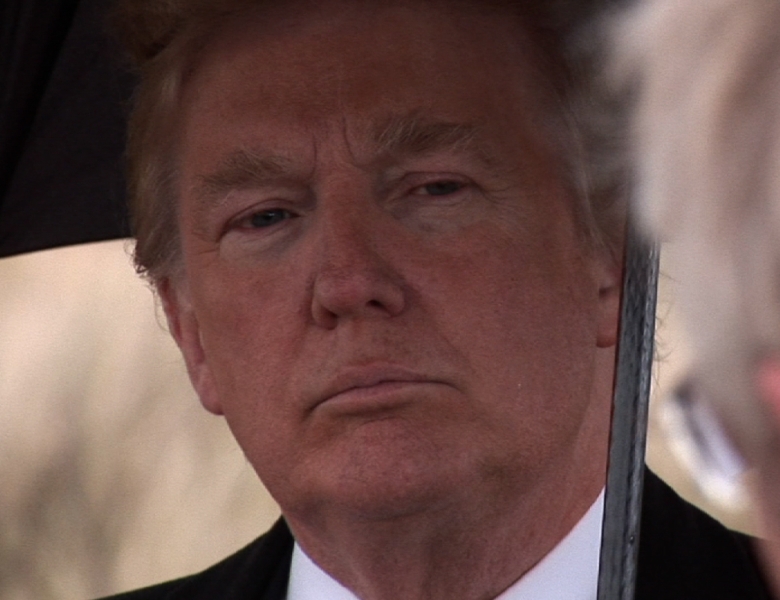
Armed, angry white men and women were invited by Trump to a rally in DC. Trump told the mob to march on the capitol and he’d be with them (he wasn’t).
The warning signs were ignored. The violence was pre-planned, orchestrated. The National Guard was held at bay. Five people are dead, more were injured.
Trump watched the violence unfold on TV; he would not speak to aids or answer requests to stop the forces he invoked.
His after-the-fact denunciation of ‘political violence’ is perversely being taken as a call to arms by the extremists – who are openly calling for more such events. His impeachment is essential; he is a danger to us all.
Signs of his disordered mental state, his contempt for people and the environment were visible at Aberdeenshire’s Menie Estate before his election. Aberdeen Voice, Tripping up Trump, Aberdeenshire councillors including Martin Ford, Debra Storr, Paul Johnston and film maker Anthony Baxter all could have attested this man was the last person to be put in charge of a multicultural country.
Aberdeen Journals Ltd told you Trump was going to bring 6,000 permanent jobs and millions into the local economy annually and ‘enhance’ the irreplaceable environment.
Fast forward, and there are less than 93 permanent jobs, the course is permanently in the red, and the unique SSSI areas are destroyed.
Aberdeen Voice’s many calls over the years to local and national officials and official bodies as to where he got the money for the purchase from fell on deaf ears.
Here are some of my thoughts on why Trump is in power, why people still believe him, and what we need to address in order to stop more carnage.
Trump: the most damaging, divisive president ever.
It takes honour and integrity to own mistakes and Trump has neither quality. His youth included allegations of draft-dodging (he was healthy enough despite alleged bone spurs to play collegiate basketball) and sending in ringers to take exams in his stead.
He is credibly accused of preventing non-white people from obtaining leases for his Manhattan properties. He wanted the innocent, framed ‘Central Park Five’ to be executed.
His fondness for capital punishment saw him reinstate the death penalty; as rights watchers will tell you, many US death row inmates were denied due process, have mental health issues, and some have been found to be innocent after their execution. Some were black – convicted on circumstantial evidence by all-white juries.
Trump has invoked violence many times, whatever he may be saying now.
Trump told an assembly of police that it was OK with him if they harmed suspects.
He called for hecklers at his rallies to be ‘roughed up’.
He called journalists – the very people tying to tell the truth about the man –‘enemy of the people’ and said they should be ‘roughed up’.
When I spoke on The O’Reilly Factor about my petition to ban Trump from the UK under our hate speech laws, I was cut off before making many of my points and with no warning: but the last point I got in was that Trump planned to execute terrorists and their relatives. I still can’t believe this didn’t shock more people.
America is supposed to stand for justice, not ex-judicial execution of innocent people.
Trump is a racist (the KKK endorsement of his 2016 bid for the presidency is a clue); he lacks empathy, and will deceive without remorse. He has no regard for law, fairness or human life. He frequently calls for violence and fails to speak out against it when it comes from the far right and the white supremacist: his lack of condemnation encourages them.
Hate speech, racism, neo-Nazism: how the ignorant, angry and easily-led are funnelled
Claiming Muslims should be banned from air travel ‘until we figure out what the hell is going on’, Trump threw unjust suspicion on Muslims, including the seven to 14 million Muslim Americans.
This was not a dog whistle; this was Trump prejudicially linking all Muslims to terrorism. Those who thought my desire to ban him for hate speech might do well to remember his ban which unfairly harmed many. And as any observer of American terrorism can confirm, most of America’s terrorists have been white males.
Hate crimes are at their highest levels for 16 years according to the FBI.
Responding to Trump’s many calls to hate and violence, people like William Celli decided to build bombs to target Muslims. Trump’s comments about Mexicans and Hispanics have led to many assaults; in one case two suspects told police ‘Trump is right’.
Trump fanatic and would-be bomber Cesar Sayoc targeted Democrats and CNN. His defence lawyers wrote that:
“in this darkness, Mr. Sayoc found light in Donald J. Trump.”
Sayoc ‘Found light’ in Donald; sadly, so do many disaffected people, opportunist evangelical preachers, the NRA, GOP climbers, and racist groups like the KKK.
David Duke is the ridiculously-titled ‘grand wizard’ of the KKK. It endorsed Trump as their presidential candidate, and Duke said the Charlottesville rioting which took Heather Heyer’s life was ‘a turning point’.
From the time Trump said of the white supremacist march ‘there are fine people on both sides’, he’d given a clear signal he would condemn neither violence nor racism. He deliberately fanned those flames, even if he didn’t manage to overthrow the government.
It’s Christianity Jim, but not as we know it.
There is no doubt that MAGA rallies created a community of like-minded Trump followers. These events called together every person who wanted a saviour, and the extremist evangelists used the far-right version of Christianity that these Trump acolytes had been raised on.
Artwork showing Trump as a Christ-like figure (as if); photos showing Trump surrounded by adoring televangelists – all this helped those who were already trained to be obedient to their preachers be obedient to the man their preachers endorsed and called saviour. It made Sayoc a terrorist.
The lunatic hypocrisy of claiming to be a follower of Jesus while simultaneously toting semi-automatic weapons, chanting ‘lock her up’, assaulting rally hecklers, and calling for death to the press doesn’t occur to any of these people. Their preachers are asking for donations, not soul-searching.
Here is a hilarious take on her absolute madness of Paula White
Compliant? The evangelical child in some of these sects grow up believing by constant reinforcement they are the only people who will be saved, that the superior race is white, and the superior sex is male.
Home-schooling is prevalent, and I believe plays more of a part in the radicalisation of people than many will admit.
The girl children? Many are trained to be subservient like our rushed-through newest Supreme Court Justice Coney Barrett. For many extremist evangelists, girls are to get married, be servants and be fruitful and multiply. Sex before marriage is strictly out.
All these QAnon extremists protesting about invented satanic child abuse? They need look no further than child marriage, legal in 46 states. When was the last time a QAnon protestor targeted this abuse?
Do these evangelists and Trump really believe one of their key recruitment planks – that all abortion is wrong? Trump asked his girlfriend to get one. Trump also raped Ivana per her written statement by the way. Very Old Testament.
If I had my say, every school age person would spend at least a few months in a non-home-school setting to mix with children of other backgrounds. Ensuring no one is schooled only in a vacuum might help end the vilification of other religions, other races and nationalities.
If nothing else, the evangelical girl child could be shown it is illegal to be married off against her will, and she can have a career other than as a mother.
And if I ran the world, there would be no marriages in America for anyone under 18, and all parties under age 21 would have to be seen alone before the ceremony to confirm they are not being coerced, and offered support if they are.
Tele-preachers and the NRA also insist an AK is a ‘God-given right.’ The hell it is.
Gun culture: how the NRA fuels paranoia.
A Senate subcommittee declared the National Rifle Association to a Russian asset, awash with Russian money. NRA chiefs gave illegal operative Russian Marina Butina and Putin pal Alexander Torshin access to members of Congress.
What was once an educational tax-exempt organisation now pumps tens of millions of dollars into Congress, some of that from Russia.
It will not brook any changes to US gun law. NRA-funded Senate Majority Leader Mitch McConnell prevented the Senate from voting on bipartisan gun law bills. Did America’ founders know automatic weapons existed – yes, as the NRA says, claiming all guns should be legal.
Did the founders have weapons that could kill 58 and wound 527 others from a great distance as we tragically saw in Las Vegas? No.
Should every incel, every angry racist own an assault rifle?
The NRA says yes.
The parents and loved ones of the over 40,000 shot in 2019 and 2020 say no.
In terms of ‘cancel culture’ – gun deaths cancel thousands of voices each year, and Mitch McConnell cancelled the Senate’s right to even vote on the matter. If he were confident the American people and the Senate did not want gun laws changed, he would have let the two bills be heard.
There is supposed to be a well-regulated militia: instead we had teen Kyle Rittenhouse driven to a protest by his mother where he killed.
‘Do you wanna be in my gang?’ Psychological manipulation.
Lonely? Friendless? Not promoted at work? Involuntary celibate? QAnon wants You.
A whole world of similarly-damaged souls awaits and you will be welcome, whether or not you’re a preposterous self-styled shaman who live streams from mom’s basement. If you’re feeling the financial pinch, it can’t be because of people like Trump, paper billionaires whose many bankruptcies have sent small businesses to the wall; it must be because a woman or a non-white person ‘took’ your job.
It is easier and cheaper to get recruited by QAnon than it is to either get mental health help, get involved with making positive change, or make real friends in the real world. The USA needs urgent medical health care reform, the kind Trump has tried to dismantle.
I have done as much of a dive into this culture as I care to. In fringe websites the insurrectionists share whispers of violence to come on Biden’s inauguration day.
Some think Trump is the messiah. They are happy, some of them, to wear Nazi regalia – and in doing so align themselves with the horrors visited on adults and children alike, despite QAnon using the fictitious pizzagate child abuse conspiracy as a recruitment tool.
The message seems to be that Nazi concentration camps were either invented or the children abused and murdered on an industrial scale somehow don’t count (viz the detestable ‘Camp Auschwitz’ shirt and Nazi symbolism worn by the insurrectionists).
However, invent a child abuse scandal now 100% discredited involving Satan and Hilary Clinton, and crying people will take to the streets holding signs about pizza parlours and baby-eaters while sporting a swastika tattoo.
These people don’t seem aware Trump did all he could to catch teen beauty queens naked at his pageants, or that he’s accused of many cases of sexual assault. There is no logic, no joined up thinking.
These echo chambers that sprang up following Q Anon’s overdue defenestration from Twitter, YouTube, Facebook reinforce the camaraderie, the anger of these misfits. They goad each other into more and more extreme views and actions. Something needs to be done.
As I am writing, Reuters confirmed that the mob intended to ‘capture and assassinate’ members of Congress. We must find, arrest, try every single one of these people.
Hate Speech.
Enacting laws concerning hate speech – like the UN and many countries have will help stop the abuse which has led to violence throughout this country’s history.
This is nothing to do with freedom of speech. The right to free speech has many exemptions. The founding fathers foresaw some of the potential future misuses – but none of them can have dreamed of it being used to remind Jewish people of the horrors of Auschwitz.
Trump spurred me to try to ban him from the UK under our hate speech laws. As a New Yorker living in Aberdeen, watching this man being treated as a star made me feel ill.
I knew of his discriminatory policies, his greed, his xenophobia. I didn’t care if I looked like a fool. Over 586,000 people agreed with me and we got a debate.
Who knows? We might even have got the Home Secretary to apply the law to a billionaire that had already been applied to more than 100 other hatemongers.
In the end, the night before the debate, MP Paul Flynn, slated to chair the debate decided to call the press to slate my petition (without letting me know he was doing so). ‘We might make Trump a martyr’ he told me. Parliament did deliver a good smackdown – but the Home Secretary did not apply the law to Trump.
JK Rowling made a joke about the petition at a New York literary gathering.
I was invited to write a riposte piece, and I did so, even knowing all of Harry Potter fandom would attack me to support her. I wonder if she sees the difference between hate speech and free speech now; I’d like to hope so, having been the target of hate speech herself of late.
What I didn’t get is that in her books the magical government was being taken over and most people were afraid to stand up to the spread of hate speech, but there you go.
Every time someone flies a confederate flag; every town that has a memorial to a civil war figure who tried to preserve slavery is a declaration of hate to black citizens from white supremacists. Every glorification of those who slaughtered Native Americans is a hate crime. I can’t shake the feeling that while all this division rages, the billionaires are laughing at the rest of us.
Billionaires like Trump (wherever his money is actually coming from; happily, there are signs it may be drying up).
If a Native American child or an African American child cannot wear their hair in a way reflective of their culture in school, then why are we letting people wave symbols celebrating slavery or concentration camps in gestures designed to intimidate and provoke fear and anger? I don’t understand.
The speech turns to violence, and these symbols have power.
If anyone wants to cry how unfair it is Trump’s been removed from social media for repeated rule breaking, fake news and hate speech, think again. He’s deliberately gagged people with lawsuits, confidentiality agreements (even extending to cooks in Scotland) and used his massive press connections to mock and ridicule opponents from Biden through to farmer Michael Forbes.
Can we please make Justice blind again?
Some of the argument against doing so aside from Flynn’s Chamberlain-esque appeasement was ‘Trump may be president someday’.
This alarming use of future potential is seen in America, where it gets many privileged white male offenders released from serious charges eg Brock Turner.
What if we had banned him from the UK? Would the GOP still have seen him as being presidential material? Perhaps not. Would things have been worse had the UK banned Trump? Worse how? – I’d like to know.
We’re seeing more flawed illogic applied to the insurrectionists by their sympathisers in the GOP: ‘Don’t impeach Trump, it may make insurrectionists angry’.
They are already angry. And armed. The law is not supposed to care how rich you are or if applying the law equally to all will make white supremacists angry.
The self-styled shaman is being given the organic meals in prion he demanded because of his ‘religion’. Meanwhile, as noted by various Native American groups, when Native people wind up in US jails, they are absolutely laughed at and ignored.
Symbols of hate belong in the trashcan.
The confederate flag shows the bearer approves of slavery, and wants it back.
Statues of confederate generals towering over parks and town centres show deference to the people who tried to preserve slavery and contempt for descendants of slaves.
A swastika patch or tattoo, or a ‘Camp Auschwitz’ shirt shows the world the bearer hates everyone who’s not a Nazi.
A MAGA hat suggests the wearer wants to ‘Make America Great Again’. It shows support for a KKK-endorsed white supremacist who ridicules minorities and incites violence against virtually everyone who is not a white male. It is the symbol of the Trump rally, a sign you would suspend your logic and values (if any) to be part of a mob.
The far right, the conspiracy believer, etc have also commandeered symbols of the crusaders, arcane symbols and invented symbols. This is all part of the ‘I need to be in a crowd and be one of the mob’ mentality we saw running through the Capitol.
Can we chuck these and other such inflammatory, hate-provoking emblems now? Other countries have.
We don’t need miseducation.
If there were a better, balanced system of education that also taught tolerance and life skills (I mean, we even have people who now believe you can fall of the edge of our flat world), we would all be better off.
It would not be so easy to convince people that Bill Gates is a reptile from another dimension who is trying to forcibly inject nanobots and trackers by unleashing a fake virus scare.
When I was in school, I remember ages devoted to names and dates of the Revolutionary War. About a quarter of that amount of time was spent on the history and culture of the rest of the world. Mistake. It was later I learned of the atrocities committed against Native Americans (including by Lincoln) and slavery.
When we studied slavery in school – and this I remember to my dying day: we read two different accounts of women who had been plantation slaves.
One was entitled ‘Lordy Them was Awful Days’ and she told of being whipped and salt being rubbed in her wounds. The other woman said slavery wasn’t so bad: I kid you not. And then we moved on.
It was as if every coin has two sides – a flaw seen in current day news reporting.
Slavery does not have another side. We also had in our textbooks the horrific photos of lynched black Americans, with white people standing under them socializing. Did my teacher explain how horrific this was? If so, their words are lost on me though that photo remains burned in my head.
Do the confederate flag-wavers even know what the reality was for so many? Do they even want to? A better, complete education that shows America’s many flaws could help. Teach logic, how to frame arguments, critical thinking, and how not to be a racist.
What are we going to do today? Pending violence.
As mentioned, I’ve been going on these twisted far-right sites to see what is going on. These people do think, as reported in the news, that Trump wants more violence and has sent secret messages to QAnon in his latest word salad of a speech.
They and others point to his saying ‘I cannot emphasise that there must be no violence…’ as a call to arms.
With Trump having established that he is barely literate, we don’t know what he actually meant. Hilariously, he says he can never condone violence, despite having called for violence on many occasions.
However, the conspiracy theory force is strong with these insurrectionists.
Some claim he tapped out in Morse Code the letter ‘Q’. Really? The man can’t spell ‘coffee’.
These people are looking for signs. If you look for signs, the brain will find them even where they don’t exist. A decent education could have taught the ‘I saw the Virgin Mary in my slice of toast’ brigade how the mind works to create images and patterns, but there you go.
These people want a violent, bloody revolution. They want to take over America. They are using internet sites to make their plans. Many of them are police and/or former armed forces members (we need a Venn diagram of white supremacists who have been in the police and who have needlessly killed non-white suspects).
Some of their helpers are congresspeople. They cannot win, but they can certainly harm and kill.
Ignoring them and hoping they will disappear is not an option. I am not an expert, but I think my suggestions have some merit for the future. The present needs to be the focus now.
In my opinion, we need to: immediately declare QAnon, the KKK, other hate groups terrorist organisations and remove terrorism supporters from Congress. Any congressperson/police officer who gave the insurrectionists help must be removed from office and charged.
No one gets into Congress without going through the metal detector. No guns get into Congress.
Every single insurrectionist from Trump down to the last one needs to be charged with all applicable charge from sedition and insurrection through destroying federal property.
We need to shore up what the 1st and 2nd Amendments mean.
We need to change the laws so there are no more Kyle Rittenhouses.
Anyone who is in QAnon or the KKK is not fit to be in law enforcement or law-making, and needs to be removed from office. We need more scrutiny of how these ideas are getting into the heads of the violent, and address the root causes (extremist evangelism, poverty, poor education etc).
We cannot just forget this happened and heal without cleaning up the source of infection and getting rid of the poison. We need to have Biden and Harris stabilize our country and Make Hate Hateful Again.
Unfortunately, we need to do this about 80 years ago at a minimum. But let’s start today.
Comments enabled – see comments box below. Note, all comments will be moderated.
Doctors have issued a warning published in a British Medical Journal, that grapes are a ‘choking hazard’ to small children after two Scottish children have died choking on the fruit in the last few years.
45 deaths in Scotland in 2015 among people of all ages were due to choking on food.
Parents already know not to give toddlers under three years old, toys with small parts.
Every mum and dad is well versed on the dangers of marbles and tiny building blocks but foods often aren’t given the same consideration.
Hotdogs, Grapes and Sweets Risk
The top three foods that children choke on are hotdogs, grapes and sweets because they are exactly the right shape to obstruct an immature airway. Not only do sweets cause dental problems, they are a major choking risk to children. Cherry tomatoes are also a problem and if parents don’t slice them into smaller pieces, they can become lodged in the throat. Babies and under 5 year old’s are at much greater risk of choking accidents because their trachea is so small.
Aberdeenshire Boy Dies
Five year old Aberdeenshire boy, Louis Emaho died in 2012 after choking on grapes at an after-school club. Staff at the club attempted to dislodge the fruit when it became apparent that he couldn’t breathe. He was suctioned by ambulance technicians and given CPR but despite their efforts was dead on arrival at the hospital.
17 Month Old Toddler Dies
In another case, a 17 month old boy died died when he was eating lunch with his family after choking on grapes. His parents attempted to clear his airway but were unsuccessful so they dialled for an emergency ambulance. Initial attempts at CPR failed because the fruit was still blocking the airway so paramedics met the ambulance crew on route to the hospital and were able to remove it via laryngoscopy (a telescope that allows the doctor to see into the back of the throat and extract objects).
Medical staff were unable to revive the little boy.
A Lucky Escape
A third child narrowly escaped death when he began choking on grapes in the park. An ambulance crew was already nearby and were on the scene within minutes. They were able to remove the grape and the child began breathing again, although he had two seizures as a result of the oxygen starvation and signs of brain swelling. After being placed on artificial ventilation for five days. Just six days following the removal of his vent, he was well enough to go home. Miraculously, he showed no signs of any disability.
Advice for Parents
Due to these infrequent but tragic incidents, NHS Health Scotland has updated their childcare guidance and now suggest that parents chop up fruits like cherry tomatoes and grapes into tiny pieces, remove any pips and stones and avoid whole nuts. They also advise that it is safer to cut larger fruits into slices rather than chunks, as this makes them thinner and less likely to get stuck in the throat and they urged that parents supervise their young children when they are eating.
What To Do If Your Child Chokes
Check your child’s mouth for blockages and remove any you can see. Don’t poke your fingers down their throat or you could push it down even deeper and make the situation worse.
If your child can’t cough due to the blockage, place him face down across your lap and slap him in the middle of his back between his shoulder blades, five times in succession. If he is a baby under one year, make sure you support his head with your other hand.
If the blockage isn’t dislodged, begin chest thrusts. In an older child, you can do this by kneeling behind him and putting your arms around his upper waist, under his arms. Make a fist and place it between the ribs and the navel, then place your other hand over your fist and make a forceful inwards and upward thrust. Do this five times and then check your child.
Babies need a different type of thrust. If your baby is under one year, you can perform chest thrusts by placing him face up on your lap, along your thighs and put two fingers in the middle of his breastbone. Push sharply five times in succession.
If your child has lost consciousness, dial 999 and use speakerphone so that you can still do back thrusts or CPR until help arrives.
No other European country has attempted to enact a programme of this level of mandatory state intrusion into family life than the Scottish Named Person scheme is attempting. Suzanne Kelly looks at recent developments, reaching conclusions and making recommendations.
The Named Person Scheme is a complete shambles, whatever anyone’s political views on the SNP.
It is rolling out in August – despite no one from the First Minister down to the front line Named Persons being able to say for certain whether or not it is mandatory. Local authorities seem bound to bear most of the costs.
It has already been rolled out in places under the clunky and completely misleading moniker ‘Getting It Right For Every Child’.
One of the first approved Named Persons has been struck off teaching. Government-funded quangos and other organisations are queueing up like obedient circus animals to say what a great thing this is for children.
Groups concerned with human rights, rights of the child and abuses of power by the State are condemning it. It’s an out-of-control catalogue of failures and misleading statements set to put the State above the family.
The proponents tell you that they simply want children to be protected from abusive families. There is absolutely nothing in this scheme that seems to seek to provide protection from abusive teachers and authorities, and nothing in it to tackle the long-running, highy-damaging problem of bullying in schools. No, the only ‘enemy’ of the child that the scheme’s fans want to protect children from is the child’s family.
Chilling accounts of the pilot scheme are attracting some (but perhaps not enough) press coverage.
A girl in Aberdeen was pulled from her classes, asked lots of questions by a ‘nurse’ she’d never met before and who had not identified the purpose of the questions, which included highly personal ones.
A father finds a whole ream of documentation has been built up about a child’s runny nose and nappy rash – and a child being declared by a Named Person to be ‘depressed’ (Depression of course being a serious mental health condition requiring a physician’s diagnosis. Nevertheless, the child’s observed ‘depression’ is now on a permanent record for them and their family).
Questions about the scheme and its precursors have been met with a few answers, a number of conflicting answers, and a good deal of evasion.
Here are some of the issues which every young person and family should be aware of, and also some recommendations for those who have decided they do not want any part of this scheme.
Cautionary Tales for Families:
1. The Fairy Tale – Don’t worry about any perverts or abusive individuals becoming Named Persons:
“Anyone undertaking the Named Person role, such as Health Visitors and Head Teachers, will have already undergone a process of checks and vetting through the Protecting Vulnerable Groups (PVG) scheme which checks their suitability to work with children.”
That was the official line from a Government spokesperson in July last year.
The Fact – Teacher appointed first Named Person State Guardian has been struck off.
As the Scotsman reports, Elgin teacher Dayna Dickson-Boath was a named person; she was struck off for sharing fantasies of abusing children. In court it was found she:
How did someone get this far into the educational system without being found out? How did the ‘checks and vetting’ promised by the Named Person Scheme’s administrators fail so profoundly? The scheme’s spokespeople are refusing to comment on whether or not disgraced former Aberdeen music teacher John Forrester – currently secretary of the Parent Teacher Association in Auchenblae – would have been a named person or not. Forrester was investigated over an alleged affair with another pupil previous to this, and was meant to be supervised – yet started this relationship.
Could you imagine a person like that asking you or your child questions of any kind let alone about whether they were on the pill or had their period? The State wants this control over children, but when it came to this case of a student running away from home and then marrying her music teacher as soon as she was 16, the State decided it ‘was not in anyone’s interest’ to pursue a case against him. Well, it wasn’t in the state’s interest, anyway.
The authorities are happy that their vetting procedures are fine which saw a woman with sick child-related fantasies. They also didn’t find anything wrong with a 44 year old teacher having a clearly improper relationship with a 15 year old girl (maybe it’s OK because the couple swore they didn’t have sex until she was 16). So what kinds of things does the State actually object to so strenuously that they must be recorded?
2. The Fairytale – No new powers, child or young person will know what information is being shared:
Those in government determined to get the scheme approved have written:
“The legislation brings no new powers for teachers, or any other professionals.”
and,
“The Act does not introduce any powers over a child for the Named Person role,”
and,
“There are no powers in the Act plans to routinely gather and share information, or records. If there is a concern about wellbeing then relevant public bodies will share information proportionately and if relevant to addressing a concern. The child or young person will know what is being shared, for what reason and with whom and their views will be taken into account.”
– [email to S Kelly of July 2015]
The Fact – Thumbsucking, nappy rash, and a parent’s perceived refusal to take advice on thumbsucking:
So, perhaps you think that your child will just have a couple of pages about whether or not they’re happy, in serious trouble, have serious concerns to be addressed. Think again. By the time a toddler is sucking its thumb – now a reportable incident as is a parent’s lack of concern for it – expect dozens of pages of spying to have been amassed.
As the Scotsman reported, an education professional decided to try and obtain the records for their family The massive report, which was largely redacted, recorded that the father didn’t seem to take the Named Person’s advice about thumb sucking. Did he have to? Is that the type and level of detail that the State should get involved in? Is there an official position now on thumb-sucking?
The Scotsman’s article reads in part:
“Contained within a 60-page document that had been compiled about his family, the note referred to a blister which had appeared on the toddler’s thumb as a result of the childhood habit. It also suggested Smith contact his GP if the blister became “hot to touch or very red”.
“Smith, whose name has been withheld to protect the identities of his children, grew more alarmed as he leafed through the document, the vast majority of which had been redacted.
“The surviving extracts appeared to indicate that the minutiae of his family life had been recorded in painstaking detail for almost two years, under a Named Person scheme which has been introduced in his part of the country ahead of its final roll-out across all of Scotland in August. A separate note made by the Named Person charged with keeping an eye on the academic’s two little boys was concerned with nappy rash.”http://www.scotsman.com/news/revealed-what-can-happen-when-a-named-person-reports-on-your-children-1-4089077#ixzz44lR69DmU
Maybe this level of detail wouldn’t be so intrusive if the State showed as much interest in the children it has taken into care. Maybe this level of reporting doesn’t have any cost implications – even though it clearly has Human Rights implications (family life being a cornerstone of EU Human Rights legislation). Or maybe Mr Smith and others could simply exercised their rights to opt out of the Named Person Scheme?
Myths? Fairytales? The ambiguity of opting out and of the scheme’s costs:
So, do people need to comply with this programme? The government’s spokeswoman advised in July 2015 advised:
“No. As we have said before, there is no obligation for a parent, child or young person to engage with the Named Person. The legislation brings no new powers for teachers, or any other professionals.”
– [email to S Kelly July 2015]
Surely if the First Minister says it’s not mandatory, that is grounds for anyone to disregard a NP?
During First Minister’s Questions at Holyrood, Ms Davidson asked:
“Are parents who don’t agree with this scheme able to stop their child from having a named person and withdraw their child from all named person provisions?”
Ms Sturgeon responded:
“The named person scheme is an entitlement, I think it is a good and sensible entitlement. It is not an obligation. It helps children and families get the support they need from services when they need it.
Perhaps ‘Mr Smith,’ reading the 60 page report on his toddler and seeing himself criticised for not paying attention to the NP’s thumb-sucking advice might disagree with Sturgeon on the undermining of families.
If it is not possible to predict in advance which children might be vulnerable, then that would come as a surprise to paediatricicans, hospitals and social workers. Perhaps what I needed is not this Kafkaesque scheme, but far better training and funding for the professionals who are charged with finding children who are at risk. Of course in some tragic instance, it is the State that fails our children.
From the girls in care who were physically abused by police (who drove them to a secluded spot and made them walk without shoes in manure while threatening then), to the tragic girls in care who jumped to their deaths – the state does not always get it right for the very people they have deemed at risk.
Wouldn’t logic dictate spending more resources on the risks we know about and looking for potential risks based on hospital records and clear indicators rather than from spying on each and every child in Scotland? It doesn’t get easier finding a needle in a haystack by adding more hay to it. So is it mandatory – and as bad as this Daily Mail article makes it seem?
As the First Minister is at odds with some of the NP evangelists, who can say? Why they want this database which any NP can add to and almost anyone in government can access raises alarm bells.
The word is that Sturgeon wants out of this ludicrous scheme – probably before we all start realising that the costs are coming from our taxes – and that the cost could be extremely exorbitant. Money has already been spent on a ludicruous, patronising song and a play for children (although anyone over 4 years old will fee their intelligence is being insulted).
The less-than-catchy anagram ‘SHANARRI’ (something to do with children’s rights) is a song rolled out by the Hopscotch Theatre Company and bankrolled by the taxpayer. Schools pay £400 to have the theatrical troupe come to their school to teach the children this state-supporting dogmatic song.
To call it a train wreck would be to do a huge disservice to train wrecks. Watch the video here, if you are able to stomach it:
“Let’s hold a vigil for every individual to play a part in the greatest team” the song suggests.
So, what is this one team we’re all meant to join and who’s in charge of it. This is the worst kind of brainwashing propaganda there is. Anyone associated with this should be ashamed. Alas, the comments are disabled on the video, no criticism will be brooked.
Just Say ‘NO’
There are more reasons to scotch this Scottish scheme. Here in the meantime are some tactics that might be useful.
School pupils – if you are old enough to understand the issues, and if you decide you don’t want to answer questions about whether you house is cozy, you like your siblings, or anything personal, tell your parents how you feel now. Get them and you to write a letter for you to both carry with you and for you to give a copy to your school head.
It should say:
‘I do not want to participate in any questions about my home life. The First Minister said that the Named Person scheme is not mandatory. I have told my parents how I feel and they support my decision not to answer personal questions or to have any notes kept about how I might be feeling.
‘If I have any problems, I will take them to an adult I feel comfortable discussing them with. I understand that one of the rights I have is to be respected. I am asking you to respect that right and leave me my privacy.’
Write to your elected representatives as an individual or as a family and say how you feel – here is an easy way to find them: www.writetothem.com/
If someone asks you questions at school that are personal – ask them politely to tell you why they are asking. Show them the letter. Tell them that you have chosen not to participate in the Named Person scheme and you don’t wish to discuss it further. If you don’t know who they are, ask for their name.
Ask them for a list of questions they intend to ask you. Be aware that they are possibly going to start asking you questions as if they are just having a friendly conversation – if questions start getting uncomfortable or personal, you are always allowed to say you don’t feel it’s an appropriate subject to talk about and that you will let them know if you do want to talk about anything.
Keep a list of every time you are asked questions, what the questions are, your answers, and who is asking them.
If you ever feel pressured or threatened by anyone be they a relative, peer or a teacher or person in authority, tell someone who you trust about it straight away.
For teenage girls – it seems as if you might be in for the worst excesses of this scheme. It seems like your doctor or clinic might now be supposed to tell your named person if you want anything to do with birth control. Girls are being asked questions about their periods, sex and other items which you probably don’t want written down in a record somewhere.
Stand your ground, politely say now. If you are worried about your doctor revealing any information, remember that you can get some forms of birth control at the chemist, which won’t go on any record. But be safe, whatever you choose to do.
For adults – if your child doesn’t want to participate, see advice above. Further, think about asking your school for information about who your child’s Named Person is: turn the tables on them.
Tell them that you don’t want to participate, especially as you first want to know: Named Person’s criminal records, length of time teaching, whether they or any of their relatives, acquaintances have ever been on the sex offenders’ register. Ask them what qualifications they have to be asking questions which are very personal and which could have psychological implications.
If you/your child wants to find out what information is already being held about you, do a Subject Access Request.
Make sure your child knows what I going on, and when they decide whether or not they want anything to do with this scheme, support their decision.
There is a chance commonsense, human rights, and logic will yet put this scheme on the scrap heap where it belongs. This might be too optimistic. We have a scheme no one knows whether it is mandatory or not, no one is sure of the cost or the scope of it, and those at the heart of grilling you or your children have already been proven to be disturbed potentially violent people with unhealthy interests in children.
Best advice? Be careful (and/or consider home schooling).
Comments enabled – see comments box below. Note, all comments will be moderated.
[Aberdeen Voice accepts and welcomes contributions from all sides/angles pertaining to any issue. Views and opinions expressed in any article are entirely those of the writer/contributor, and inclusion in our publication does not constitute support or endorsement of these by Aberdeen Voice as an organisation or any of its team members.]
A loon is noo wy’in in 15 steen is his wecht At the age o eleeven Wi obesity is haen a fecht . Some fowk they are ca’en fer Ma an Da ti be teen in han Chairged wi child neglect An as parents shud be banned . Noo ere’s na doot ava His wecht is ower the tap Bit is it the loon’s fowks Fa shud be takkin the rap? . Did they neglect ti tell him Faist food cwid be ti blame? Or did they pile his plate Fan the loon he aet at hame? . Bit chairgin ‘em wi neglect Aat’s takkin things ower far Jist supply him wi a bicycle Ban him fae usin bus an car
Noo a hiv ma ain theory Aboot foo the loon’s aat size Maybe ower muckle burgers Tapp’t aff wi some French fries . It cwid o coorse aa bi doon Ti a faulty faimily gene Far the loon he his a likin Fer jam tarts an clottit cream . A hope fer the laddie’s sake He manages ti lose wecht An his parents dinna hiv ti Tak on lawyers in a fecht . The nanny state is on the mairch Fit next wull they rail agin? Maybe fat fowk ha’en sex Cos they’re causin an affa din? . We cwid maybe aa bi dee’in Wi losin poonds roon the middle If mannies canna see their willie Fin they gyaang ti hae a piddle
In a fit of pique Duncan Harley rages against the machine for what its worth.
Big Brother, Corrie and now Benefits Street are at odds with much of normality in the UK.
Following the revelations about Saville using Auntie Beeb’s dressing rooms to groom over one thousand vulnerable children for sexual purposes it’s really quite surprising that anyone even watches terrestrial TV in the land of Logie Baird.
With the advent of Roku and Netflix, who really wants to be confronted with folk at the front door demanding money with menace.
– Hello sir or madam, I am a licensing authority enforcer. How are you tonight?
– Mainly fine, why do you ask?
– It’s just a courtesy really.
– Good. I have corns due to my age and a problem with my eyes.
– Yes, we have the power to destroy your credit rating.
– Oh, is that good? I don’t watch TV much.
– Why is that?
– I am blind and deaf.
– Can I come in to your house please to discus this delicate matter?
– Actually, under the terms of my moral obligation to be disgusted by the BBC’s failure to safeguard my childhood fantasies regarding Top of the Pops, veteran broadcaster Stuart Hall and those Daleks who turned out to be just plastic studio props with toilet plunger’s sticking out the front, I think not.
– OK, that’s all right then. Good day sir or madam. We have the power to destroy your credit rating.
You pays your money and you get what you pay for though and at €170.28 a pop, the licence fee raises some £3.6bn per year for those such as Mark Byford, the former deputy director general of the BBC, who defended a controversial pay-off package that saw him leave the BBC with £949,000 in his bank account.
Byford left the BBC in 2011 after being made redundant as part of a drive to cut the number of highly-paid senior executives at the BBC. He told BBC Radio 5 live’s Victoria Derbyshire:
“I absolutely don’t think it was greed on my part at all”.
He said the pay-off was “properly approved” and added:
“I absolutely think I’ve done no wrong.”
A report by the National Audit Office released in July 2013 criticised the BBC for paying out £25m in severance pay to 150 outgoing senior BBC managers which was some £2m more than their contracts stipulated.
Mr Byford’s payment was revealed to be the highest at £949,000, after 32 years of service at the BBC. That’s around 65 thousand licence fees. Good money indeed!
In contrast the Albanian licence fee is 800 Lekë (€5.81) per year and in Bosnia and Herzegovina where the civil war and the associated collapse of infrastructure caused very high evasion rates it is around €46 per year. Seemingly the somewhat desperate Bosnian authorities collect the fee via telephone bills. BT with a vengeance perhaps?
Mind you Albanian State TV was until quite recently mainly showing Norman Wisdom movies from the 1960’s and Bosnia has yet to recover from the effects of the international outrage following the ethnic cleansing of the country during the Balkan genocide.
As for Coronation Strasse, lips may well be sealed until the result of an upcoming court case involving street TV star Bill Roach is settled.
According to the Guardian:
“a woman alleges she was led to men’s toilets and made to perform sex act during studio visit at the age of 14.”
“The court were told by two women that Coronation Street actor Bill Roach sexually assaulted them in the toilets at the programme’s television studios when they were teenagers. The now 63 year old complainant told Preston crown court that Mr Roach “pulled her into the men’s toilets and forced her to masturbate him.””
If indeed true, this is disturbing testimony.
Then there’s that case unfolding against Mr Rolf Harris of Tie Me Kangaroo down fame plus something about It’s a Knockout host Stuart Hall who is currently in jail after finally admitting 14 counts of indecent assault on girls as young as nine between 1967 and 1987
With Lord McAlpines untimely death the national press may wonder whether to publish and be damned or to stay silent and appear uncertain.
Somewhat famously, Lord McAlpine was completely and wrongly accused of sexual misconduct. Various bodies such as the BBC wrongly implied that the now dead peer was a paedophile. Some of his friends attribute his demise entirely to the completely unfounded allegations. Many will feel sorry for the peers sad last days.
The BBC will be plunged into a major crisis with the publication of a damning review, expected next month, that will reveal its staff turned a blind eye to the rape and sexual assault of up to 1,000 girls and boys by long time disc jockey Jimmy Savile in the corporation’s changing rooms and studios.
Dame Janet Smith, a former court of appeal judge, who previously led the inquiry into the mass murders by local GP Dr Harold Shipman will seemingly say in her final report that the true number of victims of Savile’s sexual proclivities may never be known but that his behaviour had been recognised by BBC executives who took no action.
Many in the UK currently wonder why they are paying a licence fee to fund a shameful publicly funded system which appears to ignore not only the law but also morality.
The UK requirement for a dog licence was abolished in 1987. Prior to this dog licences were mandatory but the requirement was widely ignored with only about fifty percent of owners having one. The final rate for a dog licence was a meagre 37 pence.
The TV licence should perhaps follow suit very soon.
A YouGov poll for The Telegraph recently found that almost two thirds of those surveyed agreed that the licence fee should be abolished because so many households had satellite or cable television.
The “Stop BBC Bias” campaign is encouraging “refuseniks” to register with it by phoning 09012 702 414 or by visiting its website – www.bbcbias.org although as of the time of writing the site is unavailable due to “technical problems.” It’s on error 404 seemingly.
A BBC spokesman recently said:
“Our policy is and always has been clear. If you don’t have a licence and are using televisual equipment, you’re breaking the law.”
There perhaps lies self interest.
Comments enabled – see comments box below. Note, all comments will be moderated.
In the second of a new series of topical commentaries, Duncan Harley reflects on Life, the Universe and Everything. A sideways look at the world and its foibles.
Carnegie Libraries
Scotland has a tradition of public education second to none and libraries have been at the forefront of the disbursement of knowledge since the establishment of the Leadhills Miners Reading Society in Lanarkshire.
Founded in 1741, it is the oldest subscription library in the British Isles.
Research by The Carnegie UK Trust in 2012 shows that Scots still love libraries, with over three-quarters believing they are either very important or essential to their community, with 61% reporting having used a library at least once in the last year – a higher figure than any other part of the UK.
The Trust is one of over twenty foundations established by Andrew Carnegie in the 19th Century and almost certainly funded a local library near you.
The name of the game was:
“improvement of the well-being of the masses of the people of Great Britain and Ireland by such means as are embraced within the meaning of the word charitable and which the Trustees may, from time to time, select as best fitted from age to age for securing these purposes, remembering that new needs are constantly arising as the masses advance”.
The result was a massive step forward in the emancipation of the working folk of Scotland.
This image above is of Inverurie’s Andrew Carnegie Library. Built in 1911 as an addition to the rather striking Italian style 1863 Town Hall, it has a rather functional and even stern appearance. This was I am sure down to the architect, one Harbourne Maclennan, who seemingly was a specialist in designing papermaking factories, including those in Culter, Stoneywood and Woodside in Aberdeen.
Mind you, in many ways it is quite apt a designer of the means of producing paper should be instrumental in the experience of the end user.
“Titanic sinks, North East Man Loses Pound in Broad Street”
On Saturday I purchased the Independent and the Guardian at a cost of £3.90. Somewhat unusually, I even took a peek at the Sun and the Mail but I would try to avoid the Sunday Post the next morning, which is quite easy since it only has made-up news no one would believe anyway.
Billed on its website as:
“a colourful, upbeat paper, with pages packed with news, views and features of a particularly Scottish flavour and part of Scotland’s culture for many years, successfully retaining the best of the old with the zest of the new”.
I feel quite dizzy when confronted with a copy. Recent front page headlines include “Esther Blasts Savile Probe” and a “Free Photo Print For Every Reader”.
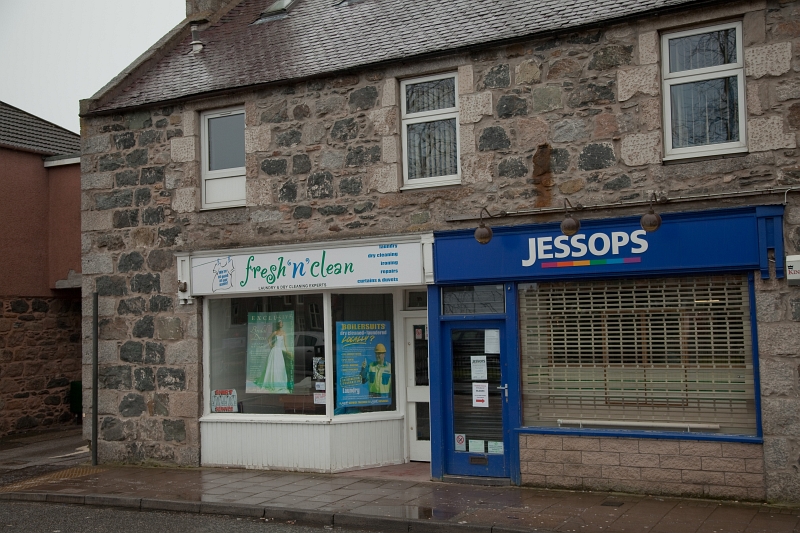
The victims of Savile and 1370 redundant Jessops staff members will no doubt be very amused.
I digress. I bought the newspapers because I am a voyeur of all things odd. We all are to some extent, I think.
Folk used to turn up at public hangings in Aberdeen city centre. The condemned person would be forced to walk out of the townhouse windows onto the scaffold, make a wee speech in front of the assembled crowd, then hanged for all to view. There are many contemporary accounts of such judicial killings in the book Hangman’s Brae by Norman Adams, which I highly recommend.
One is a somewhat heart-rending recount of the execution of Kate Humphrey in 1830. Convicted of the murder of her husband, her last words were:
“I die innocent, I loved my husband, I love my life, Jesus Christ have mercy on my soul.”
Upon which her body dropped. It took six minutes for her to die and afterwards her corpse was transported to Edinburgh to be dissected at Dr Alexander Munro’s dissecting rooms. A sad end, indeed, but good reading if you like that sort of stuff!
I have to report, however, that I am so far unable to read about that Savile man in my newspapers of choice. It’s not because I am a coward or a wimp. It’s not because I cannot face the issues. It’s not because the issues are unimportant.
In fact, it’s the opposite.
When that man in Dunblane, whose name should never be mentioned, murdered all those children a few years ago, the site of the atrocity was demolished, the law in Scotland was changed to prohibit the ownership of guns without good cause and the press focused mainly not upon the perpetrator but on the victims and the need for change. Rightly so, in my opinion.
In the case of Savile, the reporting often seems to be sensational in the extreme and directed purely towards the selling of newspapers at the expense of good, unbiased articles. The victims seem to have been somewhat sidelined.
I sincerely hope those who suffered at Savile’s hands can have closure on what is an horrific situation. The press, however – including that newspaper we all like and love in the North East, which carried “Savile Victim in Aberdeen” as a front page headline – should back off and show some respect.
That headline seemed to be proclaiming that Aberdeen was not going to be left out of the scandal.
The oddest thing about Savile is that for decades he was known by many in power to be a rapist, paedophile and sex offender, yet they did nothing much about it until after his death.
Reminds me of Ronnie and Reggie Kray, somehow. Actresses, bishops and even policemen loved to have their photographs taken with the jolly pair. They kept order in the East End of London, after all, and most importantly, they loved their old mum.
Mind you, they did have an unfortunate habit of nailing folk to coffee tables to convince them of their errant ways.
Comments enabled – see comments box below. Note, all comments will be moderated.
Old Susannah comments on UK Government proposals to access emails between all citizens in the name of preventing Terrorism.
There will be dancing in the streets, celebrations at public squares (as long as they are vibrant, dynamic and have connectivity), and rejoicing all ‘round: the government has found the way to stop terrorism! Result! Yes, the government is getting rid of terrorism. And your basic right to privacy.
Why didn’t we think of it earlier, we are all wondering. Yes, the Government has decided it has the right to record each and every email you receive and send. And that is how terrorism will be stopped once and for all.
I’m happy to give up my private life forever in order for government snoops to be able to catch the bad guys. I’m thrilled to be treated like a new prison inmate every time I want to get on a plane. I’m sure you are as well.
So what if there are the occasional cases of disabled and/or elderly people being strip searched for having mobility aids. If the occasional frightened child is separated from its parents to be frisked, then so be it. It’s the price we pay for having the fantastic safe and secure lifestyles we have.
It was said by an American founding father, Benjamin Franklin that ‘They who can give up essential liberty to obtain a little temporary safety, deserve neither liberty nor safety.’ How times have changed.
You could also wonder how secure your business secrets will be when they are intercepted by unknown government spooks. Do people ever mis-use information? Hardly ever. The slightly paranoid J Edgar Hoover kept files on American citizens, and would occasionally blackmail people into doing his bidding. Liberty and Justice for all, except if the FBI wanted you.
That would never happen here. Of course a senior police official was recently found guilty of accessing data on an ex-partner of his right here. I’m sure this was just a one-off, no need to trouble ourselves about it.
It’s also a very good thing that terrorists would never use the Royal Mail. Except for those charming people who sent bombs to Celtic’s manager, that is. No one would ever think of using the post for smuggling, planning terrorist attacks or anything else we should concern ourselves with. Phew!
It would be terrible if there were any civil disobedience over this great move. For instance nothing is stopping you from going to an internet cafe, and creating a free email account under the name of john smith. If enough people did this, and only sent or checked emails at internet cafes, then this little snooping plan of our kind government’s would be toast.
Old Susannah thinks this great scheme might run into a few wee problems anyway. For one thing, I keep getting all sorts of ‘spam’. Multiply all the emails selling you drugs or which try to get your personal details out of you by the country’s population, and you’ll need a bank of computer storage just to keep the spam.
Celebrity Blog from Cattie the Millipede and Milly the Caterpillar
Greetings everyone from our safe house in Torry, where we were airlifted to after our beautiful meadow home on Tullos Hill was destroyed – for a LibDem election pledge. We are surviving the cold snap OK, because we have lots of dead leaves to hide under to keep warm. (gardeners should always leave some dead leaves or other mulch around to keep plants – and creatures like us – warm).
We are even more worried now about our old friends on Tullos Hill. The deer have nowhere near as much gorse to shelter in and it’s cold. The birds lost lots of their shelter too when the gorse was ripped out. We are fine – but we wish our friends were, too.
Election Notes
The Labour Party have announced they would – end the Granite Web in its tracks if elected! Rather than borrowing £140,000,000 to put concrete ramps over our garden, chop down 250 year-old trees to turn into wood chip, they seem to want to spend time and energy on helping people.
Gerry Brough, city employee who has generously volunteered to work on the project is said to be incandescent with rage. So no change there then.
Peter Williamson was kidnapped as a child in Aberdeen harbour and taken to the American Colonies where he was sold as a slave.
On gaining his freedom, he was kidnapped by the Indians, living with them and eventually escaping from them. He then spent three years in the British Army fighting against the French and the Indians, only to be captured again, this time by the French.
As part of a prisoner exchange he was repatriated to Britain in 1757.
In Plymouth he was released from the army with a purse of six shillings. This was enough to get to him to York, by which time he was penniless.
He managed to persuade some local businessmen to publish his book, titled The Life and Curious Adventures of Peter Williamson, Who was Carried off from Aberdeen and Sold for a Slave. This sold very well and gave him enough money to return to Aberdeen in June 1758, fifteen years after being kidnapped.
He had several hundred copies of his book with him, some of which he managed to sell on the streets of Aberdeen. The book eventually came to the notice of Councillors and merchantmen in the city, and although nobody was named, they did not like what they read. The Procurator Fiscal lodged a complaint with the Provost and Magistrates, stating:
“that by this scurrilous and infamous libel … the corporation of the City of Aberdeen, and whole members whereof, were highly hurt and prejudged; and therefore that the Pursuer (Peter Williamson) ought to be exemplary punished in his person and goods; and that the said pamphlet, and whole copies thereof, ought to be seized and publicly burnt.”
A warrant was issued for his arrest. He was taken from his lodgings and brought before a Magistrate at the courthouse. Peter was asked to repudiate publicly everything he had said concerning the merchants of Aberdeen. Until he agreed, he was to be imprisoned and his books seized. After a short time in the Tolbooth (a jail in the Aberdeen Town House), he was bailed and stood for trial. On being found guilty, he was told to lodge a document with the court confessing to the falsity of the book and to pay a ten shilling fine, otherwise he would be imprisoned. This he reluctantly agreed to, leaving Aberdeen and moving to Edinburgh.
In a ceremony watched by the Dean of the Guild, the Town Clerk, the Procurator Fiscal and the Baillies, the offending pages were sliced from 350 of Williamson’s books and publicly burnt at the Mercat Cross by the town hangman. The remaining pages were never returned.
In Edinburgh, Peter contacted a lawyer and started planning for a legal challenge. He opened a coffee shop which became frequented by the Edinburgh legal fraternity and he started to teach himself Scots law. The year 1760 saw the start of an extended phase of courtroom battles against his persecutors in Aberdeen. In 1762, he was successful in getting the result of the Aberdeen trial reversed and was awarded costs and a £100 in damages.
The results of his investigations had revealed the names of the businessmen behind his kidnapping. These were Captain Robert Ragg, Walter Cochrane (the Aberdeen Town Clerk Depute), Baillie William Fordyce, Baillie William Smith, Baillie Alexander Mitchell, and Alexander Gordon, all local merchants with a share in the ship, Planter.
Further litigation ensued. Witnesses were found and they were mainly men who as boys had managed to escape kidnapping. The father of a boy who had sailed with Peter Williamson to the Americas testified. He said that while the Planter had been moored at Torry, his son had returned to him and refused to go back. He claimed that Captain Ragg and others involved had spoken again and again with him in the street, warning him that he would be sent to the Tolbooth if he didn’t send his son back to the ship. The boy went back.
The main incriminating evidence was the so-called “kidnapping book”. This was a ledger detailing all the expenses of the slave-ship venture. It mentioned Peter Williamson by name and included entries such as:
“To one pair of stockings to Peter Williamson, six pence; To five days of diet, one shilling and three pence.”
One entry read:
“To the man who brought Peter Williamson, one shilling and six pence.”
Eventually in 1768 the case was proved. Peter was awarded damages of £200 plus 100 guineas costs.
Child slavery was endemic in Aberdeen and elsewhere in the 1700s. The plantations in the American colonies were desperate for labour. The Book of Bon Accord (Robertson 1839) records that:
“The inhabitants of the neighbourhood dared not send their children into town, and even trembled lest they should be snatched away from their homes. For in all parts of the country emissaries were abroad, in the dead of night children were taken by force from the beds where they slept; and the remote valleys of the Highlands, fifty miles distant from the city, were infested by ruffians who hunted their prey as beasts of the chase.”
Skelton (2004) mentions that it was estimated that 600 boys and girls were abducted and sold for slavery between 1740 and 1760 in Aberdeen and the North-east. On the voyage alone that took Peter Williamson, there were 69 youngsters on board.
A BBC website accompanying a radio series on the history of the British Empire fills in some background from the period:
“Most accounts of British slaving date from the 16th century with the shipping of Africans to the Spanish Main. But less discussed is what happened to English and Scots eight, nine and ten year-olds in places like Aberdeen, London and Bristol. Many from those places were sold for forced labour in the colonies.
London gangs would capture youngsters, put them in the hold of a ship moored in the Thames and when the hold was full, set sail for America. Many authorities encouraged the trade. In the early 17th century authorities wanted rid of the waifs, strays, young thieves and vandals in their towns and cities. The British were starting to settle in Virginia. So that’s where the children went.
This was a time when it was common enough in Britain to have small children as cheap, or unpaid labour. In 1618 one hundred children were officially transported to Virginia. So pleased were the planters with the young labour that the then Lord Mayor, Sir William Cockayne, received an immediate order from the colony “to send another ship load.” See: http://www.bbc.co.uk/radio4/history/empire/episodes/episode_36.shtml
Sources:
*Joseph Robertson: “The Book of Bon Accord”. Aberdeen 1839. *Douglas Skelton: “Indian Peter. The extraordinary life and adventures of Peter Williamson”. Edinburgh, 2004. *Peter Williamson “The Life and Curious Adventures of Peter Williamson, Who was Carried off from Aberdeen and Sold for a Slave”. York, 1757.
 By Suzanne Kelly.
 Armed, angry white men and women were invited by Trump to a rally in DC. Trump told the mob to march on the capitol and he’d be with them (he wasn’t).
 By Anne Foy.