Apr 062012
 

Old Susannah comments on UK Government proposals to access emails between all citizens in the name of preventing Terrorism.

dictionary There will be dancing in the streets, celebrations at public squares (as long as they are vibrant, dynamic and have connectivity), and rejoicing all ‘round: the government has found the way to stop terrorism! Result! Yes, the government is getting rid of terrorism. And your basic right to privacy.

Why didn’t we think of it earlier, we are all wondering. Yes, the Government has decided it has the right to record each and every email you receive and send. And that is how terrorism will be stopped once and for all.

I’m happy to give up my private life forever in order for government snoops to be able to catch the bad guys. I’m thrilled to be treated like a new prison inmate every time I want to get on a plane. I’m sure you are as well.

So what if there are the occasional cases of disabled and/or elderly people being strip searched for having mobility aids. If the occasional frightened child is separated from its parents to be frisked, then so be it. It’s the price we pay for having the fantastic safe and secure lifestyles we have.

It was said by an American founding father, Benjamin Franklin that ‘They who can give up essential liberty to obtain a little temporary safety, deserve neither liberty nor safety.’ How times have changed.

You could also wonder how secure your business secrets will be when they are intercepted by unknown government spooks. Do people ever mis-use information? Hardly ever. The slightly paranoid J Edgar Hoover kept files on American citizens, and would occasionally blackmail people into doing his bidding. Liberty and Justice for all, except if the FBI wanted you.

That would never happen here. Of course a senior police official was recently found guilty of accessing data on an ex-partner of his right here. I’m sure this was just a one-off, no need to trouble ourselves about it.

It’s also a very good thing that terrorists would never use the Royal Mail. Except for those charming people who sent bombs to Celtic’s manager, that is. No one would ever think of using the post for smuggling, planning terrorist attacks or anything else we should concern ourselves with. Phew!

It would be terrible if there were any civil disobedience over this great move. For instance nothing is stopping you from going to an internet cafe, and creating a free email account under the name of john smith. If enough people did this, and only sent or checked emails at internet cafes, then this little snooping plan of our kind government’s would be toast.

Old Susannah thinks this great scheme might run into a few wee problems anyway. For one thing, I keep getting all sorts of ‘spam’. Multiply all the emails selling you drugs or which try to get your personal details out of you by the country’s population, and you’ll need a bank of computer storage just to keep the spam.

Perhaps we should all go back to sending letters.

If anyone wanted to sign a petition against this great piece of legislation, although I can’t think why they would, the online petition is at http://www.avaaz.org/en/stop_the_big_brother_law_a/?tta

Celebrity Blog from Cattie the Millipede and Milly the Caterpillar

Greetings everyone from our safe house in Torry, where we were airlifted to after our beautiful meadow home on Tullos Hill was destroyed – for a LibDem election pledge. We are surviving the cold snap OK, because we have lots of dead leaves to hide under to keep warm. (gardeners should always leave some dead leaves or other mulch around to keep plants – and creatures like us – warm).

We are even more worried now about our old friends on Tullos Hill. The deer have nowhere near as much gorse to shelter in and it’s cold. The birds lost lots of their shelter too when the gorse was ripped out. We are fine – but we wish our friends were, too.

Election Notes

The Labour Party have announced they would – end the Granite Web in its tracks if elected! Rather than borrowing £140,000,000 to put concrete ramps over our garden, chop down 250 year-old trees to turn into wood chip, they seem to want to spend time and energy on helping people.

Gerry Brough, city employee who has generously volunteered to work on the project is said to be incandescent with rage. So no change there then.

Nov 252011
 

Voice’s Old Susannah takes a look at the week that was in Aberdeen and beyond and concludes that this is no country for old men (nor for old women, people with special abilities, school children and infants or animals either).

dictionary

Old Susannah has been busy this past week.  There was an excellent two-day conference at Fyvie Castle.  The speakers seemed to believe our heritage, buildings, archaeology and environment are being affected by something they called ‘climate change’. Hard to believe, but some of these speakers think that our weather and climate are changing.

I’ve no idea why they would come to such a conclusion.  There was some person from the Met Office (whatever that is), who seems to think a case can be made for climate change because he has statistics that show it’s happening now.

Stranger still, he thinks this climate change might be somehow linked to people burning lots of ‘fossil fuel’.  If anyone hears any news about this unlikely story, please let me know.

The general thrust of the conference was that our ancient buildings are under moisture and temperature stresses they’ve not faced before, and many are at risk of actually crumbling.  Something called ‘Skara Brae’ in the Orkneys might get washed out to sea before long.

This would not be a huge loss. As far as I can see, it just a bunch of old stones.  The site is crying out for a nice high rise building, holiday homes, shops and parking – if not a monolith and a giant glass worm.  As to our wildlife, seasons are getting wetter and warmer, affecting growth and breeding cycles.  This is no time to be a bird of prey (or any other type of wild creature either.  Just don’t mention deer).

Despite the fact these animals are protected, we still have people who poison, shoot, and loot eggs.  Mixed with the changing seasons and related change in availability of food, things look rather bad for these creatures.

This two-day course was run at Fyvie Castle by the Scottish Traditional Building Skills Centre, an organisation which trains people (of all abilities) in the skills needed to maintain our historic built heritage.  The Traditional Skills people seem to think preserving Scotland’s historic buildings and monuments is a worthwhile thing to do.  (If certain local developers have their way, this centre won’t be needed much longer).

Further information is available on their website:
http://www.traditionalskills.com/

We must have skilled craftspeople in future who can ensure the glass worm/teletubbieland, concrete ramps, etc.  will remain beautiful, as I’m sure they will be when they are built.

I couldn’t help going away from the conference thinking what I’d do if I had £50 million burning a hole in my pocket.  It might involve a little bit of BrewDog, but it would not involve getting rid of listed trees to build a carpark with decorative worm.

It would have been very hard for staff to figure out that this frail woman had a wound so deep you could see her bone

I was glad of the two-day course and its speakers, if for no other reason than there’s not much else going on in the wider world for me to write about this week.  I think I heard something about an American policeman offering some protesters a peppery snack treat, and there may be one or two minor problems in Europe and the Middle East.

I also get the feeling that there might be some financial issues concerning our European economic paradise.  Other than that, I’ve not much to say just now.

Close to home, news these past few weeks has been short on happy endings.  For one thing, the Monolith was not shortlisted as a Union Terrace Garden design.  But looking through recent news items, I conclude this is no country for old men.  Or old women, women, people with special abilities, school children and infants.  And this is definitely no country for animals.

For example take the case of 87 year-old Jamesina Mackenzie who died from a bedsore which became so exposed you could see the bone.  This didn’t happen in the ‘dark’ or middle ages; it’s just happened.

So let’s move on to a definition or two.

Bedsore: (compound noun, English) A type of pressure sore caused by the sufferer lying prone in one position without movement over time.  A wholly avoidable type of ailment.

The owner of the Highland ‘care home’ where Ms Mackenzie suffered with the sore that killed her told an inquiry into the death that his staff ‘did the best they could’.   According to this  manager, the problem was that ‘…there had been some errors in staff’s record keeping’.  What would have been the result if they were negligent or slacked off, Old Susannah wonders.

I was glad to hear the staff did the best they could.  After all, paperwork can be pretty heavy going.  It would have been very hard for staff to figure out that this frail woman, who must have been in excruciating pain, had a wound so deep you could see her bone.  You would have to have some kind of medical background to work that out.

Older people are always happy to sell up their own homes

My granny had been head nurse of a hospital in Massachusetts.  The old-fashioned, primitive way to prevent bedsores was to encourage movement and if necessary, actually help people to move.

This hospital was very inefficient in that it had more nurses and doctors than managers.  Far too much money was spent on patients’ food, and far too much time was spent on actually caring for people.  I’ll bet the place didn’t even have a good profit margin.

Care Home(compound noun, English) a residential institution dedicated to long-term care offering rest and re-cooperation of infirm people, usually elderly.

‘Care home’ – the word even sounds warm, safe and snug.  The problem is running these homes costs money which could be put to other use.  Older people are always happy to sell up their own homes so they will be able to afford a care home of the type which looked after Ms Mackenzie so well.

Saving money and keeping a home in order to have something to leave to your children is so passe.  Sure you might get one or two dozen stories a month about older, frail people being abused in care homes, but who are you going to believe – them and their relatives, or the highly-paid (sorry – highly-trained) caring staff who run these places for profit.

Since most regional authorities and councils decided to ‘outsource’ their care responsibilities, there may have been a few minor hiccups or injuries and deaths.  But outsourcing is here to stay.

Still our City council knows best, and despite the collapse of a major private care home operator, Aberdeen is still looking into privatising more of its homes.  Which leads me to a definition I might have already done, but seems to need updating.

Outsourcing: (noun; modern English) To take a service or operation away from its parent/owner and have it run by a third party.

We are desperate to save money in Aberdeen (those portraits and jeans for the Lord Provost don’t pay for themselves, you know) and in order to do so, we are giving our money to consultants.  The totally impartial consultants come in and look at your business.  They decide which services should be outsourced, and then the money saving starts instantly.

clearly they just want to give the best care possible to your grandparents or children.

Coincidentally, they often want to outsource the same services that they are able to provide.  Old Susannah has yet to hear of a consultancy saying ‘let’s hire more people so we can run things better and have nicer schools and care homes’.

This just proves that the consultancies are impartial businesses which have to make tough choices.  It must be very hard for them indeed.

After the consultants have been paid a modest sum for their expertise, the city fires/lets go/lays off its existing staff who initially performed the services.  That’s a saving right there in salary expense.  In the case of childcare or nursing homes, this may upset the clients initially (the word ‘client’ as used by the City is an old, infirm or young human being to the rest of us).

The ‘clients’ may lose any relationship they’ve built up with their previous carers, but never mind.  If you play your cards right, you might even fire enough people to pay part of the consultant’s bill.

The economics of outsourcing get greater for the city involved.  Now that they are no longer providing a non-profit service with taxpayer money, they turn the taxpayer money over to people who exist to make a profit.  It might seem as if these private operators would cut a corner or two to make money, but clearly they just want to give the best care possible to your grandparents or children.

In the old days you might have thought the purpose of paying tax was so that the government could provide you the services you needed, but which were not designed to be money-making businesses.  If we read the odd case of an older person abused (or given a salt shaker instead of an asthma inhaler as happened recently), then that’s the breaks.  The other breaks often involve bones.

Thankfully in these modern, enlightened times, we realise that making money is more important than anything else.  Including poor Mrs Mackenzie and the other stories that don’t make the paper.

Stop Press!  Aberdeen City Council has approved its budget! Read all about it here in this unbiased City Council report:  

http://www.aberdeencity.gov.uk/CouncilNews/ci_cns/pr_budgetrevcap_100211.asp

It’s all central government’s fault for not giving us lots more dosh.  This might be in part because we waste so much of the stuff on monolith research, portraits and so on, but hey.  You will I’m sure be happy to know that only a few hundred posts will either go unfilled (keeps the existing staff busy covering lots of jobs – they enjoy it) or will go altogether.

Re-roofing an unfit building makes as much sense as anything else going on here

We’re holding on to teaching assistants, which is interesting because we’ll be cutting expensive, boring music and art lessons for children.  If you don’t have time to visit the city’s website, then just rest assured of one thing:  the 50 metre swimming pool is still very much in the cards.  Result!

We may pay for it from the Common Good Fund (remember the good old days when this was c. £35 million? Things have changed).  To help balance the books, it looks as if Tullos Swimming Pool will stay shut.

Old Susannah is told that it recently had brand new lights installed, and its roof is brand new.  Which is odd, because the city now say the building is unstable.  Re-roofing an unfit building makes as much sense as anything else going on here.

Consultants have also produced a brilliant 10 page report (took about a year to do, as you can imagine), showing that Aberdeen has many more swimming pools per population than other parts of Scotland.  Of course these consultants counted in all the pools we’ve got:  Ardoe, Palm Court, etc. etc.  I guess the families of Torry will just have to hop into their BMWs and pay to swim for a day at a hotel pool once Tullos is gone.

Still, we’ll have saved money, and we may eventually produce a swimmer who may win a shiny medal.  If Aberdeen wins an Olympic medal in a few decades, we’ll all agree it’s been worth it.
Nov 172011
 

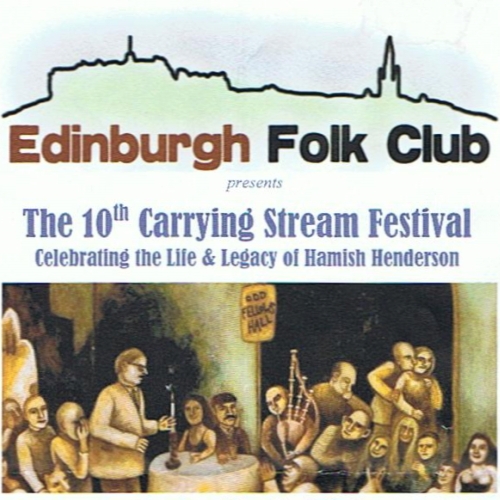
As part of Edinburgh Folk Club’s Carrying Stream Festival, an annual celebration of Hamish Henderson’s life and legacy, Will Kaufman brought Hard Times and Hard Travellin’ – The Songs of Woody Guthrie to the Pleasance Cabaret Bar. Fittingly, this was on Remembrance Day. Voice’s David Innes attended and reports in.

carryingpic_0 Joe Klein’s masterly Woody Guthrie biography and John Steinbeck’s Grapes of Wrath set the benchmark, as far as this reviewer is concerned, in documenting the US Dustbowl phenomenon, its resulting human tragedies, scar tissue which continues to disfigure the increasingly-hollow American Dream.
There is now, however, a new source of information, a 21st century interpretation of those hardest of times and of the hushed-up and damped-down radicalism which ensued.

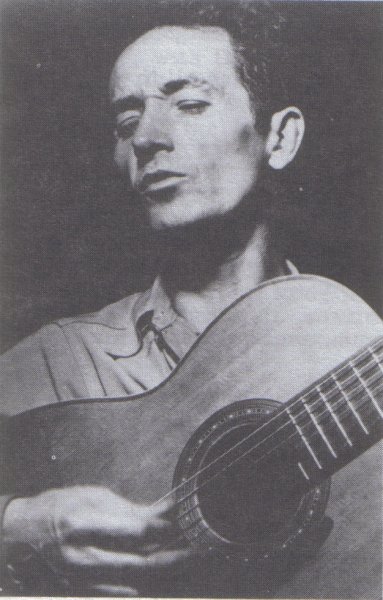
Will Kaufman, a New Yorker who enjoys professorial status in American Literature and Culture at the University of Central Lancashire, has published Woody Guthrie, American Radical, in which he focuses on Guthrie’s radicalism and political activity, reclaiming this wiry, uncompromising American cultural icon as a champion of the oppressed, from the sanitised public romantic notion of Guthrie as a hick Dustbowl minstrel.

Kaufman is no stuffy, dusty, robed academic though. His love of Guthrie’s song canon and keen appreciation of Woody’s entertaining establishment-baiting writing and broadcasting has seen him take to the road and publicise his book and interpret Woody’s songs through live documentary.

Live documentary? A Macbook, an open-tuned Martin guitar allied to Kaufman’s expansive knowledge, dazzling digital fingerboard dexterity and sonorous singing voice made his visit to Edinburgh Folk Club a mesmerizing experience. Bringing a Macbook into a folk club shows that Kaufman himself is as radical as the subject of his show.

He describes Woody’s timeline, fleshing out this skeletal summary with contemporary 1920s and 30s pictures and social and political history of those times. Guthrie’s songs are the backbone of the performance but Kaufman draws on other songs of the era to illuminate further the hardship and hostility endured by Dustbowl refugees and those radicalised by inequality and authoritarian brutality. He encored not with a Guthrie song, but Steve Earle’s Stetson-doffing Christmas In Washington:

woody So come back Woody Guthrie
Come back to us now
Tear your eyes from paradise
And rise again somehow
If you run into Jesus
Maybe he can help you out
Come back Woody Guthrie to us now

The presentation is not without criticism of Guthrie, however. Kaufman counsels those who have yet to read his subject’s autobiographical Bound For Glory to “set the bullshit detectors to maximum” and ensures that Woody’s less-savoury proclivities are not ignored in a haze of hero homage.

To be as academically and musically gifted as Kaufman demonstrates he is, yet to remain as honest and true and entertaining as evidenced by the live setting, are comradely qualities that Woody Guthrie himself would surely have appreciated.

Woody Guthrie, American Radical by Will Kaufman is published by The University of Illinois Press and is available by contacting nickesson@combinedacademic.co.uk or by telephoning 01494 581601. We’ll see what we can do about reviewing it in Voice.

Oct 132011
 

As conversations go, our own Suzanne Kelly found her recent discussions with former Robert Gordon University Principal Dr David Kennedy fascinating. As always, conversations lead to discussion of inter-connected events. Here, in a further interview extract, Dr Kennedy talks frankly about how personal and societal standards, values and morality have changed and how individual actions have affected and influenced matters, perhaps unintentionally, on a much larger scale.

moneycalculator We had been discussing land use and EU farming bureaucracy, and how, for many farmers, European subsidies had made them rich.
See: Aberdeen Voice article  ’Dr David Kennedy On Land Use And Farming’ )

Dr Kennedy is in no doubt that elected politicians have much to answer for, on numerous issues in addition to agricultural policy.

“It‘s a bizarre state of affairs. These are supposed to be highly-intelligent people elected to represent us. The sad truth is, as one old friend used to say, ‘they are just filling their own pooches’. And that’s absolutely true. Some investigative journalist did the work on MPs’ expenses and when her work was made public, we saw the full extent of their greed. The MPs’ expenses scandal was an absolute disgrace, but that is nothing compared to what is happening in Brussels.

“Morality is fast disappearing for some reason or another. There is a lack of integrity and it now seems that it doesn’t matter what you do as long as you are making money. Trump boasted on his website of brutality, toughness and greed. Are these behaviours we all really value?

“Why do humans behave in this way? Well, it’s a long story involving conditioning the human brain. This began in a scientific way early in the last century, not by Joseph Goebbels as we are encouraged to believe, but by an American named Edward Bernays, nephew of Sigmund Freud, who could, fairly, be called the father of advertising, propaganda, and public relations. He knew how to play on the pleasure and pain centres of the brain. Goebbels was an avid pupil of Bernays.

“Brainwashing didn’t begin with the wicked Chinese, or the godless Communists, or even the evil Nazis. It began in America, where it has been perfected over the years, and we are all subjected to it. Trump is simply one example of The Big Lie. Anyone who analyses the mainstream media will readily see how words are used, not to inform, enlighten and clarify, but to mislead, confuse and confound. And it is all done to amass wealth”.

“There has been a massive cultural change. I’m 80 or so, and I look at changes such as wealth-creation, sustainability, satisfying our needs and the problem of waste. The thing is, in about the last 30 years the speed of technological change has been bewildering. Sixty years ago an Edinburgh academic, Professor CH Waddington, looking at the future, predicted that, given the rate of change in the accumulation of knowledge, it would eventually be impossible to keep up with all the changes. I think what he said has come to pass.”

Pressed for an example, Kennedy continued.

“Take micro-electronics. When I was a young man you learnt about thermionic valves and their use in radios. A few years earlier, radios were powered by accumulators that seemed to weigh a ton. Electrical engineers who were brought up on thermionic valves, then had to learn about transistors, and the technology of valves was forgotten. Transistor radios were very much smaller and easily carried around. Noise pollution increased. A new technology had to be learned, which lasted for about 10 years before being replaced by the silicon chip. Things are getting even smaller.”

There are serious issues with the UK’s higher education system – tuition fees, devalued degrees, an imbalance in the areas of tertiary learning where we can’t all be Media Studies graduates, poor employment prospects and very grim student loan burdens. What, I asked, are Dr Kennedy’s views on where these problems came from? Where does he think we are heading, and what can be done about it?

Again, the issues of personal morality and values were raised.

“I think it is fairly easy to see where the problems come from. They arise from economics. Mrs Thatcher radically changed the basis of economic life in Britain famously claiming, ‘There is no alternative’.

“This assertion has been accepted by all the major political parties and involved rolling back the state, decrying collective activities while promoting individualism, standing on one’s own two feet. Since then, we have seen the rich getting richer and the poor getting poorer. This is another example of Trump’s mantra, ’greed is good’.

“So, education is no longer thought of as being for the greater good of society. Health is no longer thought of as a basic necessity, best provided by an all-inclusive system. Caring for the elderly through a comprehensive system of pensions paid for whilst one is healthy and working is now too great a burden.

“Instead, leave it to the individual and let the market decide what should be provided, and for whom. This is completely against the 1940s wisdom of William Beveridge and the subsequent foundation of the welfare state. And, of course, the same attitude prevails when it comes to protecting the environment – nothing must be allowed to stop the onward march of progress”.

More from this fascinating conversation will appear in future issues of Voice.

Image Credits:
 Pound Man © Chrisharvey | Dreamstime.com
Calculator and Money © Timothy Nichols | Dreamstime.com 

Jun 182011
 

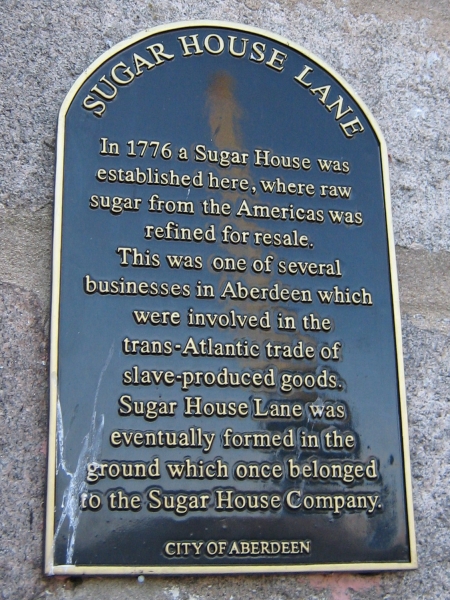
sugarhousepic1 With thanks to Mike Shepherd.

Peter Williamson was kidnapped as a child in Aberdeen harbour and taken to the American Colonies where he was sold as a slave.

On gaining his freedom, he was kidnapped by the Indians, living with them and eventually escaping from them. He then spent three years in the British Army fighting against the French and the Indians, only to be captured again, this time by the French.

As part of a prisoner exchange he was repatriated to Britain in 1757.

In Plymouth he was released from the army with a purse of six shillings.  This was enough to get to him to York, by which time he was penniless.

He managed to persuade some local businessmen to publish his book, titled  The Life and Curious Adventures of Peter Williamson, Who was Carried off from Aberdeen and Sold for a Slave. This sold very well and gave him enough money to return to Aberdeen in June 1758, fifteen years after being kidnapped.

He had several hundred copies of his book with him, some of which he managed to sell on the streets of Aberdeen. The book eventually came to the notice of Councillors and merchantmen in the city, and although nobody was named, they did not like what they read. The Procurator Fiscal lodged a complaint with the Provost and Magistrates, stating:

“that by this scurrilous and infamous libel … the corporation of the City of Aberdeen, and whole members whereof, were highly hurt and prejudged; and therefore that the Pursuer (Peter Williamson) ought to be exemplary punished in his person and goods; and that the said pamphlet, and whole copies thereof, ought to be seized and publicly burnt.”

A warrant was issued for his arrest. He was taken from his lodgings and brought before a Magistrate at the courthouse. Peter was asked to repudiate publicly everything he had said concerning the merchants of Aberdeen. Until he agreed, he was to be imprisoned and his books seized. After a short time in the Tolbooth (a jail in the Aberdeen Town House), he was bailed and stood for trial. On being found guilty, he was told to lodge a document with the court confessing to the falsity of the book and to pay a ten shilling fine, otherwise he would be imprisoned. This he reluctantly agreed to, leaving Aberdeen and moving to Edinburgh.

In a ceremony watched by the Dean of the Guild, the Town Clerk, the Procurator Fiscal and the Baillies, the offending pages were sliced from 350 of Williamson’s books and publicly burnt at the Mercat Cross by the town hangman.  The remaining pages were never returned.

In Edinburgh, Peter contacted a lawyer and started planning for a legal challenge. He opened a coffee shop which became frequented by the Edinburgh legal fraternity and he started to teach himself Scots law. The year 1760 saw the  start  of an extended phase of courtroom battles against his persecutors in Aberdeen. In 1762, he was successful in getting the result of the Aberdeen trial reversed and was awarded costs and a £100 in damages.

The results of his investigations had revealed the names of the businessmen behind his kidnapping. These were Captain Robert Ragg, Walter Cochrane (the Aberdeen Town Clerk Depute), Baillie William Fordyce, Baillie William Smith, Baillie Alexander Mitchell, and Alexander Gordon, all local merchants with a share in the ship, Planter.

Further litigation ensued. Witnesses were found and they were mainly men who as boys had managed to escape kidnapping. The father of a boy who had sailed with Peter Williamson to the Americas testified. He said that while the Planter had been moored at Torry, his son had returned to him and refused to go back. He claimed that Captain Ragg and others involved had spoken again and again with him in the street, warning him that he would be sent to the Tolbooth if he didn’t send his son back to the ship. The boy went back.

The main incriminating evidence was the so-called “kidnapping book”. This was a ledger detailing all the expenses of the slave-ship venture. It mentioned Peter Williamson by name and included entries such as:

“To one pair of stockings to Peter Williamson, six pence; To five days of diet, one shilling and three pence.”

One entry read:

“To the man who brought Peter Williamson, one shilling and six pence.”

Eventually in 1768 the case was proved. Peter was awarded damages of £200 plus 100 guineas costs.

Child slavery was endemic in Aberdeen and elsewhere in the 1700s. The plantations in the American colonies were desperate for labour. The Book of Bon Accord (Robertson 1839) records that:

“The inhabitants of the neighbourhood dared not send their children into town, and even trembled lest they should be snatched away from their homes. For in all parts of the country emissaries were abroad, in the dead of night children were taken by force from the beds where they slept; and the remote valleys of the Highlands, fifty miles distant from the city, were infested by ruffians who hunted their prey as beasts of the chase.”

Skelton (2004) mentions that it was estimated that 600 boys and girls were abducted and sold for slavery between 1740 and 1760 in Aberdeen and the North-east. On the voyage alone that took Peter Williamson, there were 69 youngsters on board.

A BBC website accompanying a radio series on the history of the British Empire fills in some background from the period:

“Most accounts of British slaving date from the 16th century with the shipping of Africans to the Spanish Main. But less discussed is what happened to English and Scots eight, nine and ten year-olds in places like Aberdeen, London and Bristol. Many from those places were sold for forced labour in the colonies.

London gangs would capture youngsters, put them in the hold of a ship moored in the Thames and when the hold was full, set sail for America. Many authorities encouraged the trade. In the early 17th century authorities wanted rid of the waifs, strays, young thieves and vandals in their towns and cities. The British were starting to settle in Virginia. So that’s where the children went.

This was a time when it was common enough in Britain to have small children as cheap, or unpaid labour. In 1618 one hundred children were officially transported to Virginia. So pleased were the planters with the young labour that the then Lord Mayor, Sir William Cockayne, received an immediate order from the colony “to send another ship load.”
See: http://www.bbc.co.uk/radio4/history/empire/episodes/episode_36.shtml

Sources:

*Joseph Robertson: “The Book of Bon Accord”. Aberdeen 1839.
*Douglas Skelton: “Indian Peter. The extraordinary life and adventures of Peter Williamson”. Edinburgh, 2004.
*Peter Williamson “The Life and Curious Adventures of Peter Williamson, Who was Carried off from Aberdeen and Sold for a Slave”. York, 1757.

Read the full story here: The Life and Curious Adventures of Peter Williamson

Jun 102011
 

sugarhousepic1 With thanks to Mike Shepherd.

Peter Williamson was kidnapped from Aberdeen harbour in 1743 and shipped as a child slave to the American colonies. Following the death of his master, he married into a wealthy family and set up a farmstead on the frontiers of the province of Pennsylvania.

On the 2nd of October 1754 his farm was raided by Indians, set ablaze and Peter was captured and used as a slave by the Indians to help carry booty from their raiding expeditions.

After two months in the winter camp, the Indians set off with Peter on a new raiding campaign.

“I began to meditate on my escape; and though I knew the country round extremely well, having been often thereabouts with my companions, hunting deer and other beasts, yet was I very cautious of giving the least suspicion of such my intention. However, my keepers thought proper to visit the mountains in search of game for their sustenance, leaving me bound in such a manner that I could not escape.  At night, when they returned, having unbound me, we all sat down together to supper on two polecats, being what they had killed, and soon after (being greatly fatigued with their day’s excursion) they composed themselves to rest as usual.

Observing them to be in that somniferous state, I tried various ways to see whether it was a scheme to prove my intentions or not; but after making a noise and walking about, sometimes touching them with my feet, I found there was no fallacy. My heart then exulted with joy at seeing a time come that I might in all probability be delivered from my captivity, but the joy was soon damped by the dread of being discovered by them, or taken by any straggling parties. To prevent which, I resolved, if possible to get one of their guns, and if discovered die in my defence rather than be taken. For that purpose, I made various efforts to get one from under their heads (where they usually secured them) but in vain.

Frustrated in this my first essay regarding liberty, I dreaded the thoughts of carrying my new design into execution; yet after a little consideration, and trusting myself to divine protection, I set forward, naked and defenceless as I was. A rash and dangerous enterprise!

Such was my terror, however, that in going from them I halted and paused every four or five yards, looking fearfully towards the spot where I had left them, lest they should awake and miss me; but when I was about two hundred yards  from them I mended my pace, and made as much haste as I could to the foot of the mountains, when on a sudden I was struck with the greatest terror and amaze at hearing the wood-cry, as it is called, and may be expressed – Jo hau! Jo hau! – which  the savages I had left were making, accompanied with the most hideous cries and howling they could utter.

The bellowing of lions, the shrieks of hyenas, or the roarings of tigers, would have been music to my ears in comparison to the sounds that then saluted them.

They now having missed their charge, I concluded that they would soon separate themselves and hie in quest of me. The more my terror increased, the faster did I push on; and scarce knowing where I trod, drove through the woods with the utmost precipitation, sometimes falling and bruising myself, cutting my feet and legs against the stones in a miserable manner, but though faint and maimed, I continued my flight until break of day, when, without having anything to sustain nature but a little corn, I crept into a hollow tree, in which I lay very snug and made thanks to the Divine Being.

But my repose was in a few hours destroyed at hearing the voices of savages near the place where I was hid, threatening how they would use me if they got me again. However, they at last left the spot where I had heard them, and I remained in my circular asylum all that day without further molestation.

At night I ventured forward again, frightened and trembling at every bush I passed, thinking each twig that touched me to be a savage.”

After three days on the run he spotted what looked to be a white plantation.

“In the morning, as soon as I awoke, I continued my journey towards the nearest cleared lands I had seen the day before, and about four o’clock in the afternoon arrived at the house of John Bell, an old acquaintance, where knocking at the door, his wife who opened it, seeing me in such a frightful condition, flew from me like lightning, screaming into the house.

This alarmed the whole family, who immediately fled to their arms, and I was soon accosted by the master with his gun in his hand. But on my assuring him of my innocence as to any wicked intentions, and making myself known (for he took me to be an Indian), he immediately caressed me, as did all his family, with a deal of friendship, at finding me alive, they having all informed of my being murdered by the savages some months before.

They for two or three nights very affectionately supplied me with all necessaries, and carefully attended me until my spirits and limbs were pretty well recruited, and I thought myself able to ride, when I borrowed of these good people a horse and some clothes, and set forward for my father-in-law’s house in Chester county, about 140 miles from thence, where I arrived on the fourth day of January, 1755.

Now returned, and once more at liberty to pursue my own inclinations, I was persuaded by my father-in-law and friends to follow some employment or other; but the plantation from whence I was taken, though an exceeding good one,  could not tempt me to settle on it again. And their being at this time a necessity for raising men to check those barbarians in their ravaging depredations, I enlisted myself as one, with the greatest alacrity and most determined resolution to exert the utmost of my power in being revenged on the hellish authors of my ruin.

General Shirley, governor of New England, and commander-in-chief of his Majesty’s land forces in North America, was pitched upon to direct the operations of war in that part of the world.

Into a regiment immediately under the command of this general, was it my lot to be placed for three years. The regiment was intended for the frontiers, to destroy the forts erected by the French.”

From: Peter Williamson “The Life and Curious Adventures of Peter Williamson, Who was Carried off from Aberdeen and Sold for a Slave”. York, 1757.

To be continued.


Jun 032011
 

With thanks to Mike Shepherd.

peterwilliamsonpic Peter Williamson was kidnapped from Aberdeen harbour in 1743 and shipped as a child slave to the American colonies. Following the death of his master, he married into a wealthy family and set up a farmstead on the frontiers of the province of Pennsylvania.
On the 2nd of October 1754 his farm was raided by Indians, set ablaze and Peter was captured.

This was never going to be the cross-culture-bonding-with-the-native-Americans epic beloved of modern Hollywood films, but something more prosaic. Peter was captured as a slave to help carry booty for the Indians from their raiding parties on frontier farms. His experiences during this time were brutal. Once the summer raiding season had ended, the Indians returned to their winter camp.

“A great snow now falling, the barbarians were a little fearful lest the white people should, by their traces, find out their skulking retreats, which obliged them to make the best of their way to their winter quarters, about two hundred miles farther from any plantations or inhabitants; where, after a long and tedious journey, being almost starved, I arrived with the infernal crew.

The place where we were to rest, in their tongue, is called Alamingo. There were found a number of wigwams full of their women and children. Dancing, shooting and shouting were their general amusements; and in all their festivals and dances they relate what successes they have had, and what damages they have sustained in their expeditions, in which I came part of the theme. The severity of the cold increasing, they stripped me of my clothes for their own use, and gave me such as they usually wore themselves, being a piece of blanket, a pair of moccasins, with a yard of coarse cloth to put round me instead of breeches.

They in general wear a white blanket, which in war time, they paint with various figures, but particularly the leaves of trees, in order to deceive their enemies in the woods. Their moccasins are made of deer skins, and the best sort have them bound round the edges with little beads and ribbons.

On their legs they wear pieces of blue cloth for their stockings, they reach higher than the knee, but not lower than their ankles. They esteem them easy to run in. Breeches they never wear, but instead thereof, two pieces of linen, one before and one behind. They are very proud, and take great delight in wearing trinkets, such as silver plates round their wrists and necks, with several strings of wampum (which is made of cotton, interwoven with pebbles, cockle-shells, etc) down to their breasts; and from their ears and noses they have rings and beads which hang dangling an inch or two.

The females are very chaste and constant to their husbands, and if any young maiden should happen to have a child before marriage, she is never esteemed afterwards. As for their food they get it chiefly by hunting and shooting, and boil or roast all the meat they can eat. Their standing dish consists of Indian corn soaked, then bruised and boiled over a gentle fire for ten or twelve hours. Their bread is likewise made of wild oats or sunflower seeds.

Scalping knife, powder and shot, are all they have to carry with them in time of war – bows and arrows are seldom used. They generally in war decline open engagements; bush fighting or skulking is their discipline; and they are brave when engaged, having great fortitude in enduring tortures or death. No people have a greater love of liberty or affection for their neighbours; but are the most implacably vindictive people upon the earth; for they revenge the death of any relation, or any great affront, whenever occasion presents, let the distance or time be so remote. To all which I may add they are inhumanly cruel.

At Alamingo I was kept for near two months until the snow was off the ground. A long time to be amongst such creatures and naked as I almost was. Whatever thoughts I might have of making my escape, to carry them into execution was impractical, being so far from any plantations or white people and the severe weather rendering my limbs in a manner quite stiff and motionless. However, I contrived to defend myself against the weather as well as I could by making a wigwam, with the bark of the trees, covering the same with earth, which made it resemble a cave, and keeping a good fire near the door.

At length the time arrived when they were preparing themselves for another expedition against the planters and white people; but before they set out they were joined by many other Indians from Fort Du Quesne, well stored with powder and ball they had received from the French.

We arrived at the Blue Hills where we encamped for three days. A council of war was held, when it was agreed to divide themselves into companies of about twenty men each; I was left behind with ten Indians. Here being left I began to meditate on my escape. “

From: Peter Williamson “The Life and Curious Adventures of Peter Williamson, Who was Carried off from Aberdeen and Sold for a Slave”. York, 1757. To be continued.

May 272011
 

Voice’s Old Susannah casts her eye over recent events, stories, and terms and phrases familiar as well as freshly ‘spun’, which will be forever etched in the consciousness of the people of Aberdeen and the Northeast.

dictionary

To the amazement of the entire City, the Rapture came and went this Saturday without our Council floating away through the skies to heaven. Some American religious-types (who are not nutters at all) believed this past Saturday was the date for the righteous and holy to ascend to heaven.

However, since Kate Dean, Donald Trump, Stewart Milne and HoMalone have been seen walking the earth since Saturday, we can conclude that the Rapture was nonsense (or the date was wrong anyway).

Those who believed in the Rapture also believed that Hell on Earth would follow for those left behind. I hear the Council is working on it.

Then again, that’s maybe why Dean, Trump, Milne and Malone are still among us. Any similarity between these four local dignitaries and the four horsemen of the Apocalypse is purely coincidental. Some say Hell doesn’t exist except as a state of mind. If it does exist, I’ll be its got lots of concrete, parking, chain stores – and level access from all sides.

So the Rapture didn’t come Saturday.  But then when my mini polytunnel started floating out of my garden to the skies with the high winds on Monday night (along with a few roof slates), I wondered if the Rapture hadn’t just been delayed by a day or two.

Speaking of delay, I am told that Marischal College is not exactly up and running yet, despite Monday being the official opening date. It’s just not like our Council to be imprecise or miss deadlines, I admit. I guess if even the Council aren’t reliable 100% of the time, then God can be a few days late with his Rapture too.

I have a friend in Torry who is most concerned about Marischal being delayed – he is more than happy to have waited a couple of years for the Council to fix the leaky roof over his head, knowing that Marischal was given priority.

Even if the great building isn’t fully functional, citizens are still overjoyed that any ruts in the road surrounding Marischal have been smoothed over. After all, we wouldn’t want visitors to Aberdeen to get the wrong idea and think we had any potholes. And it’s only cost you and me £60 million, £80 million or somewhere in between, depending on whom you talk to.

This next definition may not fully make up for the Rapture not happening – but it’s the next best thing. I bring glad tidings of great joy: Aberdeen has launched another Consultation!

Open Space Audit: noun – another consultation.

Yes, another one. The Open Space Audit is a specific consultation asking for public opinion and which like previous consultations leaves a wearying feeling of deja vu.

Open Space: the final frontier. These are the consultation papers of the Flagship Enterprise Committee, whose continuing mission to seek out new green spaces and destroy ecosystems – to boldly develop what no council has developed before.

I hadn’t realised it, but there are still one or two green spaces that haven’t been carved up by developers – I mean which still need connectivity and improvement. You should feel very flattered: these important people want to know your opinions on these ‘new’ green spaces.

I only hope this time we are smart enough to give them the opinions they want, unlike when we turned down the opportunity to improve and ‘connect’ Union Terrace Gardens (which will still be ‘improved anyway – don’t worry). If previous consultation exercises are anything to go by then I’m happy to help. After all, it is a privilege to give up a few hours to read massive consultation documents, digest hundreds of pages of council-speak, set my thoughts on paper – and still be totally ignored.

“How do they always get it so right?” I hear you ask. Well, there is a scientific scale the Council uses to decide what the results of a consultation mean:-

  • if 300+ people want something left alone, and 2 people want the same thing changed – then change it  (like the comments on Union Terrace Gardens made during the last local development plan)
  • if people don’t object to a deer cull they didn’t know about – then get on with the deer cull, however many thousands of people and community councils beg you not to.
  • if more than half of respondents to a consultation (let’s say about gardens for instance) don’t  give the answers that the council or ACSEF want- then it means the consultants should have ‘massaged’ the results better – and it means the people didn’t understand what they were supposed to do.

Anyway, back to this exciting Consultation at hand.

Right: we have these ‘new’ green spaces, which obviously can’t be left as they are – we have to improve them. Some of them are even hard to get to. I therefore hope we will be building carparks in the Cairngorms and some connectivity enablers (shopping malls) on Loch Ness, which would increase the economic viability of the region as well.

What good is an open space if you can’t park, shop and eat at it? But rest assured – this is a local plan for local people. If you wish to read the 43 page main document, then please be my guest.

I was fascinated to learn Union Terrace Gardens is not really a city centre park (as if you need me to tell you). It is obviously a local park that “generally serves a smaller catchment area than city parks but can contain specific attractions. Most visitors will be from the immediate locality but some will travel further to use specialist facilities, e.g. sports centres or horticultural features in season.” (Aberdeen City Council Parks Hierarchy document, 1998). Glad to have helped with that.

Here is a highlight to entice you into reading the consultation papers:-

The Open Space Strategy has very close links with other strategies such as Aberdeen City’s Nature Conservation Strategy and should not be considered as a standalone document for delivering wider environmental benefits. Links to the various relevant policies and strategies are provided in Figure 1.

Supplementary Guidance on Open Space has been developed in parallel with this strategy, and sets outs the Council’s approach towards planning and development of new open spaces.
See www.aberdeencity.gov.uk/openspace

I think they are really going for a literary prize with this one. Again, I don’t understand what makes green spaces with bronze age burial grounds or Victorian garden features ‘new’ green spaces – even after reading all the helpful literature.

You will be pleased to find a fetching diagram with arrows, nice colours and shapes and soundbites at ‘Figure 1′. A free Brewdog to anyone who can explain it to me.

Whatever it means, it links to the Nature Conservation Strategy, so that’s OK then. Presumably this strategy includes taking a beautiful, unspoilt hill like Tullos, letting people set it on fire for a few decades, suddenly calling it new, saying it’s under-used, killing (“managing”) whatever lives on it, and putting 40,000 trees on it for the benefit of future arsonists.

Nature Conservation: noun – to find any remaining land, cull or ‘manage’ any nature that’s there, change it into something else, and to act like a Conservative who’s smelled money.

So you see, some of these green spaces have wildlife – which will consume the green stuff on the green spaces – so we need to ‘manage’ the wildlife. With guns.

How Nature ever managed in the past without HoMalone’s help is anyone’s guess. There are even ‘birds of prey’ which go after the captivity-bred, helpless, battery game birds found on some estate without paying for what they eat. Quite rightly we are continuing to poison these freeloaders, as witnessed recently at the Glenbuchat Estate in Strathdon.

Accidentally of course, a golden eagle got hold of a banned pesticide, carbofuran, and was ‘managed’ successfully by a painful death. Thankfully this kind of event will soon be a thing of the past, as we’re ‘managing’ to finish off the birds of prey quite nicely.

The fox which Mr Forbes bravely killed – sorry – - sorry ‘managed’ at his golf club was a dangerous wild beast.  A wild beast which normally would have eaten worms, and which was the size of my cat.

But we do have an even more serious issue: Ms Malone is still ‘desperate’ to plant her tree for every citizen. First things first, right?  The deer might eat some of the trees. Just for your reckoning, 40,000 trees divided by the 30 deer the City says live on the hill is equal to each deer consuming 1,333.33 trees. Food for thought.

When there are conflicts like this in nature between deer and vicious predatory beasts, there can be only one solution. However Ms Malone hasn’t resigned yet. Please keep your complaints to the City Council coming. You might want to ask HoMalone what’s going to stop people burning the new trees for that matter.

I eagerly anticipate sending in my response to this Open Space consultation. But once again, I must put up my hand and admit I am not smart enough to have any opinions until I have read the ‘Supplementary Guidance’ document. At only 38 pages, it’s a really brief read. It starts by telling you

“Access to good quality open or green spaces is important in contributing to a greener, healthier, smarter, safer, stronger, wealthier and fairer city”

How this city could get any fairer is beyond me. Still, you start by reading that sentence, and by the end of the document you’re brain hurts so much you’re ready to get a gun and start blasting seagulls like Mervyn New, or culling deer like HoMalone. This set of consultation documents is hypnotic persuasion at its best.

I am not sure I can handle waiting – but in due course there will be ‘The Open Space Strategy Strategic Environmental Assessment Report.’

When this is released, expect scenes reminiscent of when the final Harry Potter book was released as people queue in the streets to be the first to get their copy. To tell the truth, I can’t even figure out what the title means.

To sum up, our Aberdeen City plan is inclusive (unless you are an endangered species, fox, gull chick or deer), and your opinion counts. Tell the Council what you’d like it to do with its consultation. And its trees for every citizen.

Community Signature: noun – a positive outreach project which makes people in Torry feel a great sense of community.

People colour code triangles on a piece of paper. A valuable (£25,000 at my last count some years ago) exercise which isn’t in the least bit preposterous or patronising.

Let’s start defining this wonderful initiative by visiting its description on the City Council’s web page:-

“So what is a Community Signature?

“The Community Signature is a picture of the community. It’s built up by people sharing their views on what Torry is like as a place to live and work. The discussion’s really important because we all have lots of different views and experiences. The group also colour in a grid with green, yellow or red to reflect what works (community strength), where there is room for improvement (community opportunity) and what does not work at present (community barrier)”.

As you can see, nothing patronising there at all. The police, the city (that’s you and me as taxpayers), and the Foyer have spent tens of thousands of pounds on this colouring-in exercise. Not that we would have spent the money on saving the Tullos Hill Deer, had we been given any choice.

Once a Torry quine or loon has used a few coloured pencils, they are part of the community, are involved, and get a warm, fuzzy feeling. The fuzzy feeling may be a symptom from the logic employed by this scheme. But I don’t want to ruin the experience for you.

Get yourself some paper and coloured pens. Make some triangles – green for strengths the Council has, Yellow for what’s not quite great, and red for what is completely beyond the pale of what any reasonable, rational person should put up with. On second thoughts, just get yourself a green pen. Draw a few triangles. Talk about your feelings. That’ll be £25,000 please.

There is a newsletter, too. Value for money indeed. It reminds me of the guy in the States who’s made a small fortune from the Rapture – he took money to look after your pet dog or cat once you’d floated up to the clouds. Very creative and enterprising indeed – and not at all a rip-off.  I offer a similar service to anyone who’s going to be drinking flaming mojitos on the lake of fire instead of going to the pearly gates.

That’s all I can cope with. I’m going to get some green pens, start drawing triangles, and then read nearly 80 pages of the Open Spaces consultation. Definitely time to leave Brewdog tonight – there is a giant Stoat behind the bar that says it’s his birthday. Perhaps the Council has some policy covering stoats – Ms Malone should be told.

Next week (unless Rapture happens) – appeasing volcano gods, register of interests, and conflict of interests.

May 262011
 

peterwilliamsonpic With Thanks to Mike Shepherd.

Peter Williamson was kidnapped from Aberdeen harbour in 1743 and shipped as a child slave to the American colonies.

Last week’s article gave Peter’s own account of his kidnapping; this week describes what happened next.

Peter was bought for $16 by a fellow scot Hugh Wilson and indentured to serve him for seven years. Hugh was humane and looked after Peter well providing him with an education.

“With this good master I continued till I was seventeen years old, when he died, and as a reward for my faithful service, he left me $200 currency, his best horse, saddle and all his wearing apparel.

Being now my own master, having money in my pocket, and all other necessaries, I employed myself in jobbing around the country, working for anyone that would employ me, for near seven years.  When thinking that I had money sufficient to follow some better way of life, I resolved to settle, but thought one step necessary to follow some better way of life. Thereto was to be married, for which purpose I applied to the daughter of a substantial planter, and found my suit was not unacceptable to her or her father, so that matters were soon concluded upon, and we were married.

My father-in-law, in order to establish us in the world in an easy, if not affluent manner, made me a deed of gift of a track of land that lay on the frontiers of the province of Pennsylvania containing about 200 acres, 30 of which were cleared, and fit for immediate use, whereon was a good house and barn. The place pleased me well, and happy as I was in a good wife, yet did my felicity last me not long.  About the year 1754, the Indians began to be very troublesome on the frontiers of our province, where they generally appeared in small skulking parties, with yellings, shoutings and antic postures, committing great devastations. “

The fateful 2nd of October 1754, my wife went from home to visit some of her relations. As I stayed up later than usual, expecting her return, how great was my surprise, terror and affright, when about eleven o’clock at night I heard the dismal war-cry or war-whoop of the savages and to my inexpressible grief soon found my house was being attacked by them.

I flew to my chamber window and perceived them to be about twelve in number. They making several attempts to get in, I asked them what they wanted. They gave me no answer, but continued beating, and trying to get the door open. Having my gun loaded in my hand, I threatened them with death if they should not desist. One of them that could speak a little English, threatened me in return, “That if I did not come out, they would burn me alive in the house. If I would come out and surrender myself prisoner, they would not kill me”. Little could I depend on the promises of such creatures, and yet if I did not, inevitable death by being burnt alive must be my lot.

Distracted as I was in such deplorable circumstances, I chose to rely on the uncertainty of their fallacious promises, rather than meet with certain death by rejecting them; and accordingly went out of my house with my gun in my hand, not knowing what I did, or that I had it. Immediately on my approach, they rushed on me like so many tigers, and instantly disarmed me. Having me thus in their power the merciless villains bound me to a tree near the door; then they went into the house, and plundered and destroyed everything there was in it, carrying off what movables they could; the rest together with the house they set fire to.

Having thus finished the execrable business about which they came, one of the monsters came to me with a tomahawk in his hand, threatening me with the worst of deaths if I would not willingly go with them, and be contented with their way of living.”

From: Peter Williamson “The Life and Curious Adventures of Peter Williamson, Who was Carried off from Aberdeen and Sold for a Slave”. York, 1757. To be continued…

May 202011
 

With Thanks to Mike Shepherd.

sugarhousepic1

In 1743, thirteen year old Peter Williamson was kidnapped from Aberdeen harbour and shipped as a slave to the American colonies. He endured many experiences there, being captured by the Indians and held by them for three months, escaping to join the British army to fight against the French.

He eventually managed to return home to Aberdeen, where he declared that the local merchants and magistrates had been complicit in his kidnapping. They imprisoned him, only releasing Peter after he signed a declaration that his accusations were untrue.

He later sued a number of Aberdeen officials in the High Court, winning his case. It was revealed in court that as many as 600 local children had been kidnapped and sold into slavery between 1740 and 1746. He wrote an extraordinary book on his experiences, The Life and Curious Adventures of Peter Williamson, Who was Carried off from Aberdeen and Sold for a Slave.

This is how it starts:

“Know, therefore that I was born in Hirnlay, in the parish of Aboyne, and County of Aberdeen, North Britain, if not of rich, yet of reputable parents, who supported me in the best manner they could, as long as they had the happiness of me under their inspection; but fatally for me, and to their great grief, as it afterwards proved. I was sent to live with an aunt in Aberdeen.

When under the years of my pupillarity, playing on the quay, with others of my companions, being of a stout, robust constitution, I was taken notice of by two fellows belonging to a vessel in the harbour, employed (as the trade then was) by some of the worthy merchants of the town, in that villainous and execrable practice called Kidnapping; that is, stealing young children from their parents, and selling them as slaves in the plantations abroad.

Being marked out by these monsters of impiety as their prey, I was cajoled on board the ship by them, where I was no sooner got, than they conducted me between the decks to some others they had kidnapped in the same manner. At that time I had no sense of the fate that was destined for me, and spent the time in childish amusements with my fellow sufferers in the steerage, being never suffered to go upon deck whilst the vessel lay in the harbour, which was until such a time they had got in their loading, with a complement of unhappy youths for carrying on their wicked commerce.

In about a month’s time the ship set sail for America. I cannot forget that when we arrived on the coast, we were destined for, a hard gale of wind sprung up from the southeast, and, to the Captain’s great surprise (he not thinking he was near land) although having been eleven weeks on the passage, about twelve o’clock at night the ship struck on a sand-bank off Cape May, near the Capes of Delaware, and to the great terror and affright of the ship’s company, in a short time was almost full of water.

The boat was then hoisted out, into which the captain and his fellow villains – the crew – got with some difficulty, leaving me, and my deluded companions, to perish, as they then naturally concluded inevitable death to be our fate. The ship being on a sand-bank, which did not give way to let her deeper, we lay in the same deplorable condition until morning, when, though we saw the land of Cape May, at about a mile’s distance, we knew not what would be our fate.

The wind at length abated, and the captain (unwilling to lose all her cargo), about ten o’clock, sent some of his crew in a boat to the ship’s side to bring us onshore, where we lay in a sort of a camp, made of the sails of the vessel, and such other things as we could get. The provisions lasted until we were taken in by a vessel to Philadelphia, lying on this island, as well as I can recollect, near three weeks. Very little of the cargo was saved undamaged, and the vessel entirely lost.

When arrived and landed at Philadelphia, the capital of Pennsylvania, the captain had soon people enough who came to buy us. He, making the most of his villainous loading, after his disaster, sold us at about $16 per head.  What became of my unhappy companions I never knew; but it was my lot to be sold to one of my countrymen, whose name was Hugh Wilson, a North Briton, for the term of seven years, who had in his youth undergone the same fate as myself, having been kidnapped from St. Johnstown, in Scotland. “

From: Peter Williamson – The Life and Curious Adventures of Peter Williamson, Who was Carried off from Aberdeen and Sold for a Slave, York, 1757. To be continued…